

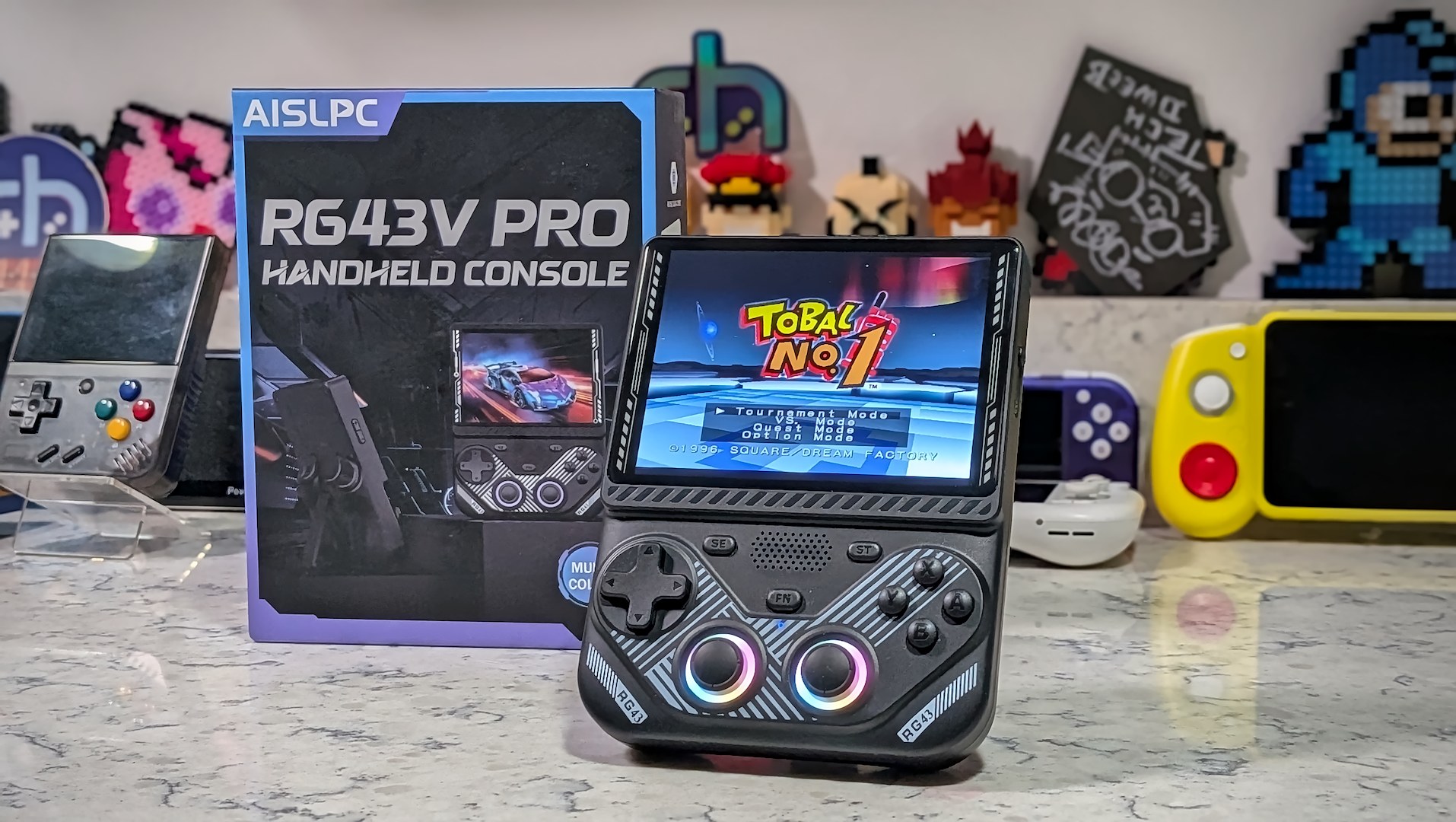
There was a time in the emulation scene, not so very long ago, where almost all clone-type budget systems were released under the single Game Console white label. The Game Console moniker remains, but manufacturers are starting to step into the light to show off their unique designs in the space and try to differentiate themselves from the pack.
AISLPC made a bold swing in the budget category last year with the release of the R36T. A handheld that used design over raw hardware power to make itself stand out. With AISLPC’s recent releases like the RG52 Mini, RG43H Pro, and now the RG43V Pro, the company continues its course with increased branding on both packaging and the handheld itself.
Has AISLPC done enough with the RG43V Pro to stand out from the likes of other recent budget releases like the R36MAX2? Let’s find out whether this new budget button-masher has the legs to stand out from the rest of the clone world.
The device reviewed was provided as a review sample by AISLPC. This had no bearing on the conclusion of the review, nor did AISLPC have the opportunity to make edits or changes to the review before publishing.
Affiliate links might be present where applicable, and we may earn a commission on product purchases using those links at no extra cost to you.
RG43V Pro Specs
If you look back on my review of the recent AISLPC RG43H Pro, you’ll see that this is essentially the same device in a vertical format. The underlying hardware is the same, but where the RG43H Pro seemed to be designed with a younger gamer in mind, the RG43V Pro is clearly meant to be a handheld catering more to enthusiasts, albeit ones on a budget (aren’t we all these days).
All specs are listed as they appear in the manual from AISLPC. Browsing listings for the device will throw up some varying specs, as is often the case with clone listings.
| Hardware | |
| CPU | RockChip RK3562 |
|---|---|
| GPU | Mali-G52 2EE |
| RAM | 1GB |
| Display | |
| Screen Size | 4.3-inch |
| Resolution | 1024 x 768 |
| Aspect Ratio | 4:3 |
| Refresh Rate | 60Hz |
| PPI | 297.67 |
| Storage | |
| Internal Storage | 4GB |
| External Storage | microSD |
| Battery | |
| Battery Capacity | 4000mAh |
| Connectivity | |
| Wi-Fi | 2.4GHz |
| Bluetooth | ❌ |
| Cellular | ❌ |
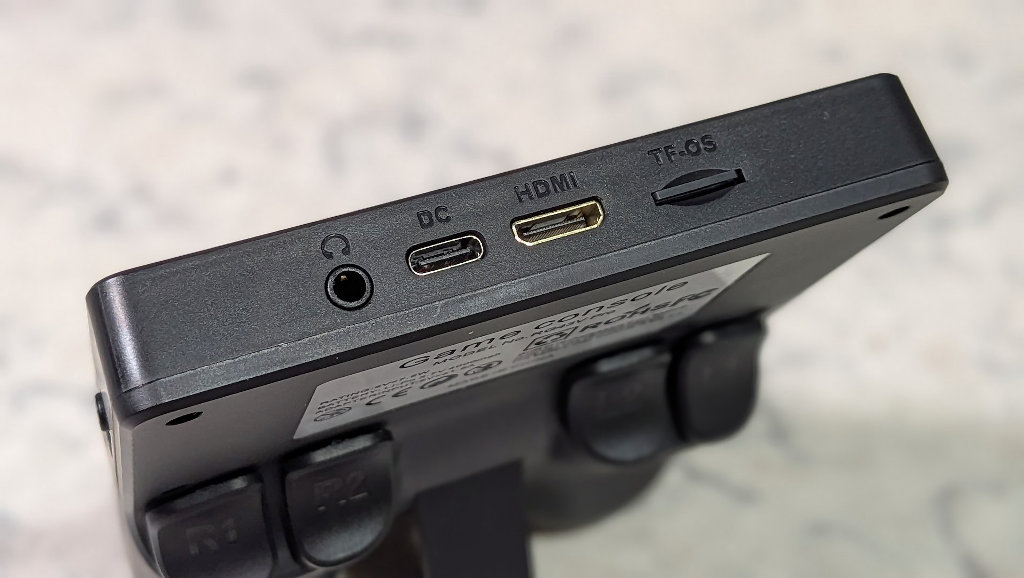
| Ports | 3.5mm Audio Jack, microSD, Mini HDMI, USB-C |
| Video Out | Yes |
| Controls | |
| Sticks | Hall Effect |
| Triggers | Digital |
| Shoulder Layout | In-line |
| D-Pad | Top Left |
| Audio | |
| Speakers | Stereo |
| Speaker Location | Front-facing |
| Headphone Jack | Yes |
| Audio Notes | Single vibration motor |
| Physical | |
| Dimensions | 283 x 83.8 x 20.8mm |
| Weight | 231g |
| Form Factor | Vertical |
| Software | |
| Operating System | Linux (EmuELEC) |
| Additional Details | RGBox |

Controls
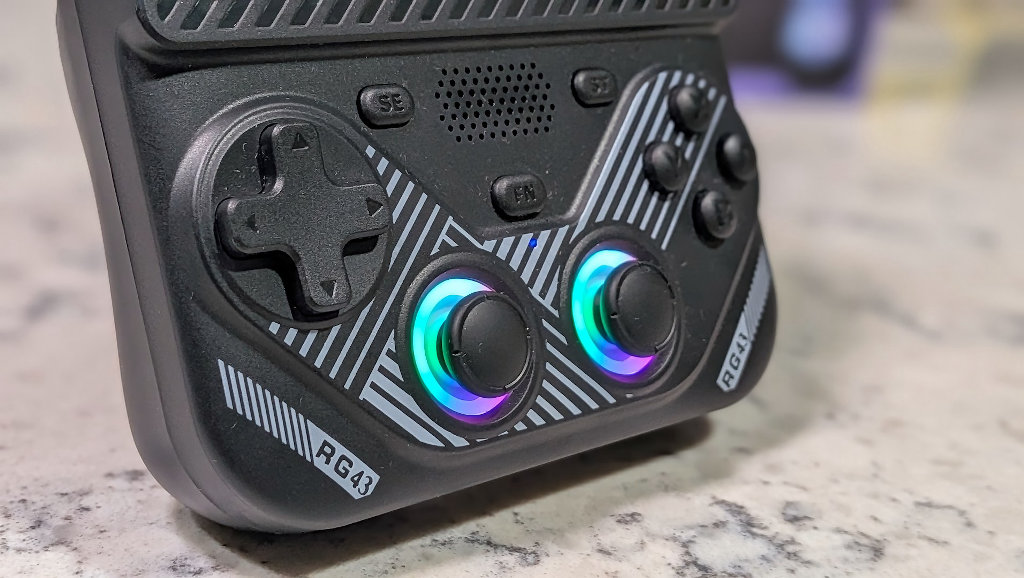
The largest upgrade in my mind on the RG43V Pro vs its horizontal cousin is the implementation of a more traditional cross-style D-pad. The RG43H Pro used a convex circle design that was serviceable, if a bit lacking when it comes to precision. That design made sense when you look at it from the angle that the RG43H Pro was designed more for younger players.
This vertical design seems much more purposefully intended for a user who’s a little further along in their handheld emulation journey, and needs the platforming precision and repeatable fireballs offered from a more traditional control design.
AISLPC has included dual Hall Sticks on the RG43V Pro, and it’ll be up to you to decide if the layout is one that will work for your playstyles. Personally, I’m not a big fan of playing anything that requires constant dual-stick use on a vertical handheld.
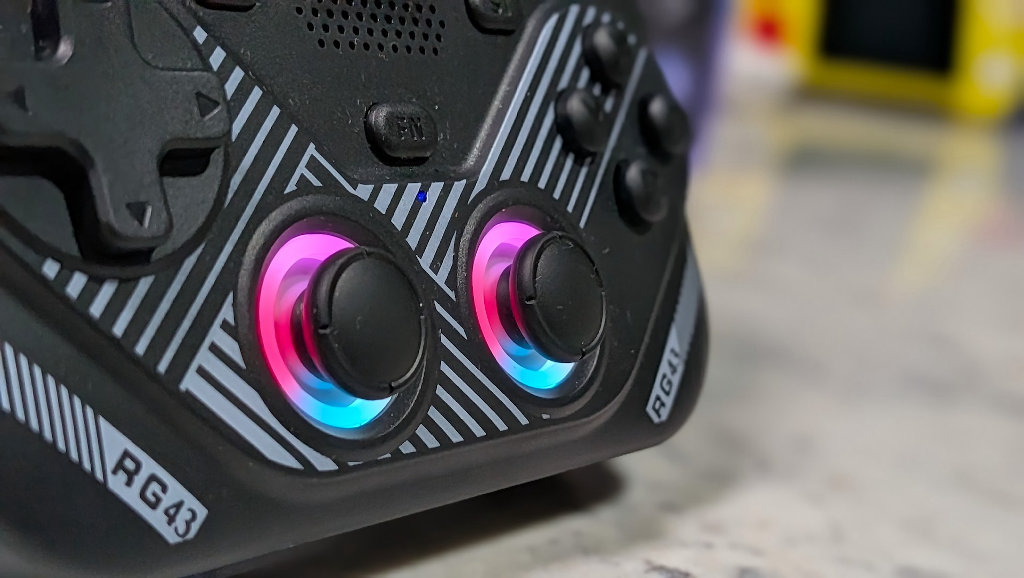
It’s just a personal preference and something I feel is better suited to a horizontal design. If you were using both at the same time, I can imagine hands getting fairly cramped after a while, and at times, your thumbs would almost certainly collide due to the limited spacing between the two sticks.
The RK3562’s performance ceilings keep things mostly in the realm of single-stick analog systems like the PSP and Dreamcast anyway, so I don’t see the stick layout as a big issue. There if you want it, and nice to occasionally have that right stick when I need one.
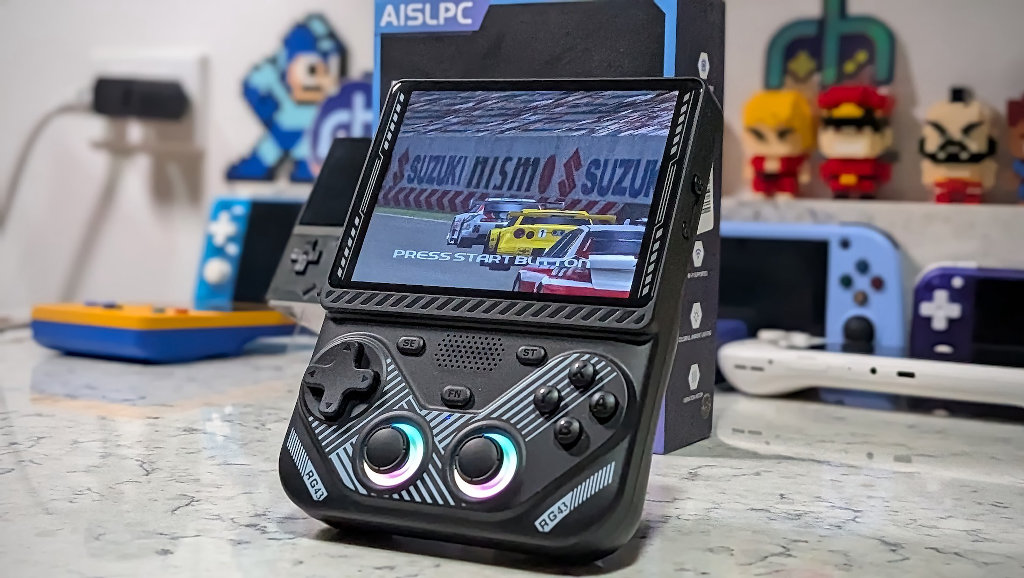
Rear triggers are the same micro-switch story that we’ve been repeating since the original R36S. They are functional and work reasonably well for the libraries that they were intended for, but pressing that micro-switch on a hollow-backed shell creates a clacking sound in use that can be quite annoying for others in the room. I’d love to see a padding or something similar applied to these in the future to try and tighten the experience down a little bit.
Ergonomics
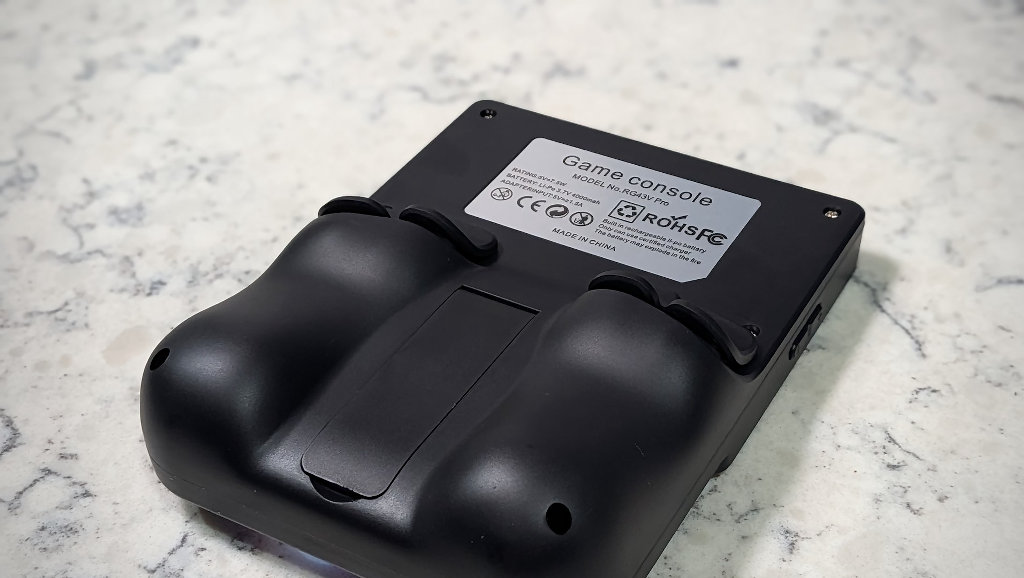
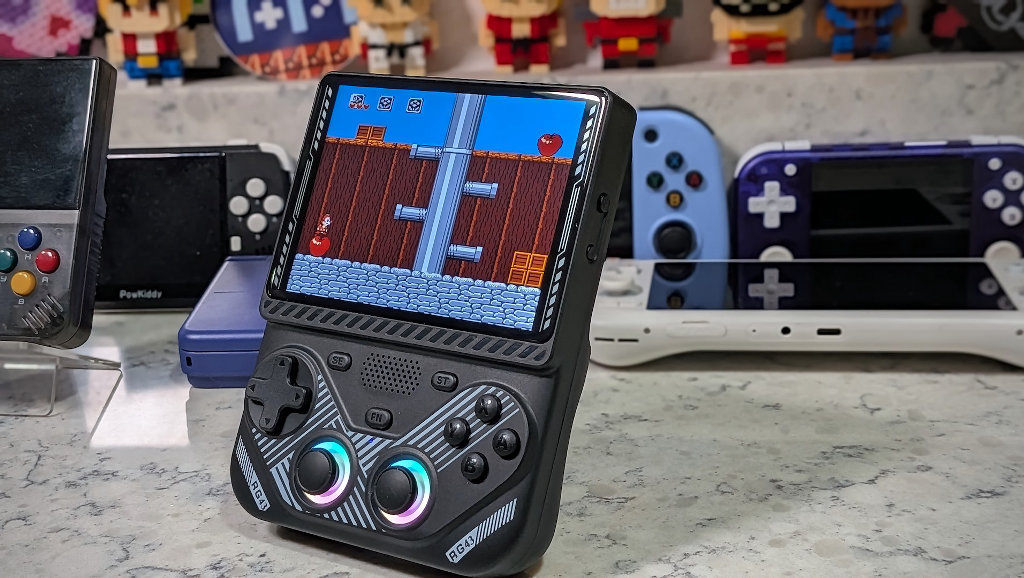
The RG43V Pro has a curved back-end as we’ve seen on a number of other budget devices. The curves on this unit are a little less pronounced than on some of the competition, and due to the large 4:3 aspect of the display, there’s enough width to the whole package that my knuckles aren’t slamming together when gripped around the back of the handheld.
Controls on the face of the RG43V are raised ever so slightly from the rest of the device. I found that this creates a natural resting point for my thumbs that might have felt a bit awkward were the handheld a more flat-faced front.
That’s Right, There’s a Kickstand
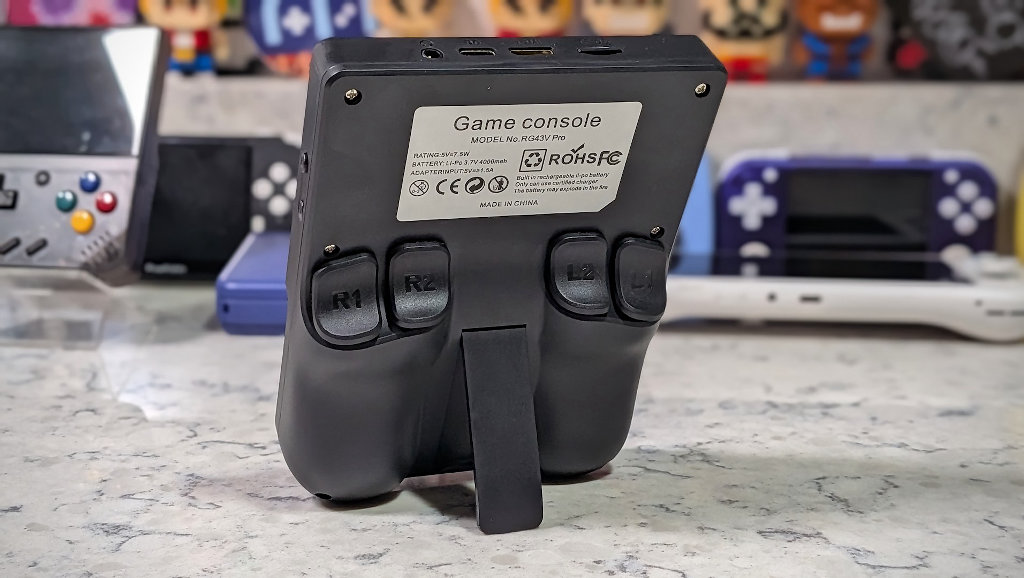
When you review as many of these budget emulation handhelds as I do, you’re always looking for what the manufacturer has done to make things special. A design quirk, an ergonomic difference, or even something like a performance knob.
To avoid being lumped in as “just another clone”, designers will implement a feature that differentiates the offering from the rest. AISLPC has done so with the RG43V Pro by adding a kickstand.
Now I’ve owned multiple Nintendo Switch consoles in the 9 years of the system’s life, and despite scoffing at the idea at first, I’ve ended up making use of the included kickstand on all of them. It’s one of those things that you don’t believe you’ll ever need, but once a use case arrives, you’re very glad that it exists.
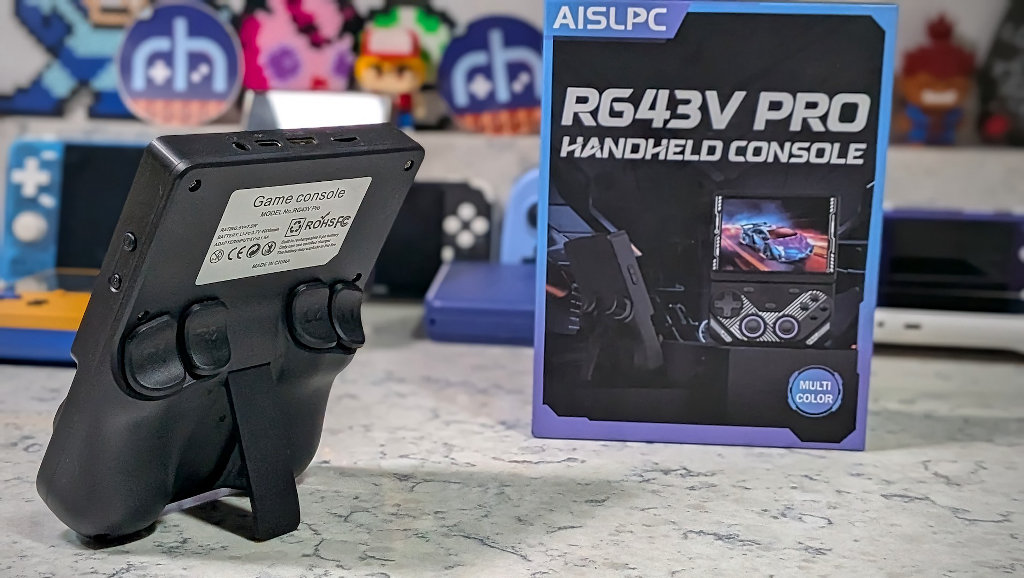
The kickstand on the RG43V Pro gives the handheld a more natural fit to be used with external controllers or displays. While the practicality of playing directly on the device screen might be limited, the kickstand does offer the perfect way to quickly transform a portable gaming system into an impromptu entertainment center console by way of the mini-HDMI-out port. To be fair, this HDMI-out functionality existed on the RG43H Pro as well, but something about that dang kickstand just makes me want to use it here.
As the RG43V Pro lacks Bluetooth, you’ll have to use 2.4Ghz controllers with dongles for external control. That means either building a tower of power with USB adapters or plugging in an external hub for multiple devices, as there is only a single USB-C DC port on the handheld. In practice, however, I was unable to get an 8BitDo controller and dongle to function with the RG43V Pro.
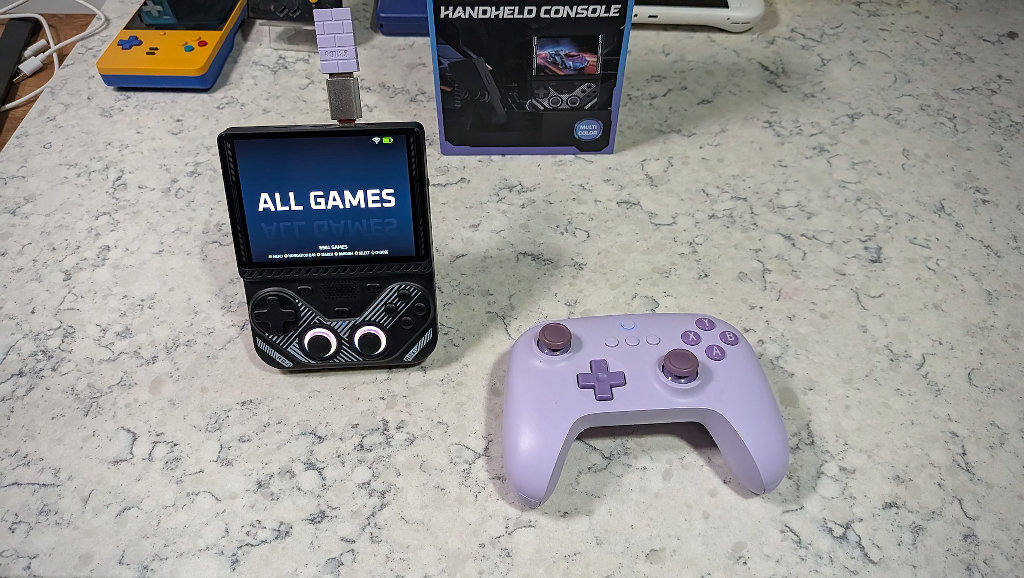
The controller seemed to recognize the dongle and connect, but that was as far as I was able to get. Nowhere in Retroarch could I get the controller to show up. Maybe you’ll have better luck than me or a future update can smooth out the experience.
The puzzle pieces for a console-on-the-go are there, but it does feel a bit like you have to force them to fit together in order to create the larger picture. The included HDMI out port might be better applied to solo gaming or device video capture.
Software/OS Experience/Performance
The EmuELEC and custom RGBOX dual-boot firmware package from the RG43H Pro is here on the RG43V Pro as well. As I’d mentioned in my horizontal review, holding down the power button on the RG43V Pro in EmuELEC will bring up the normal Power-Off and Reset options, but also the choice to reboot into the “RGBOX” front-end.
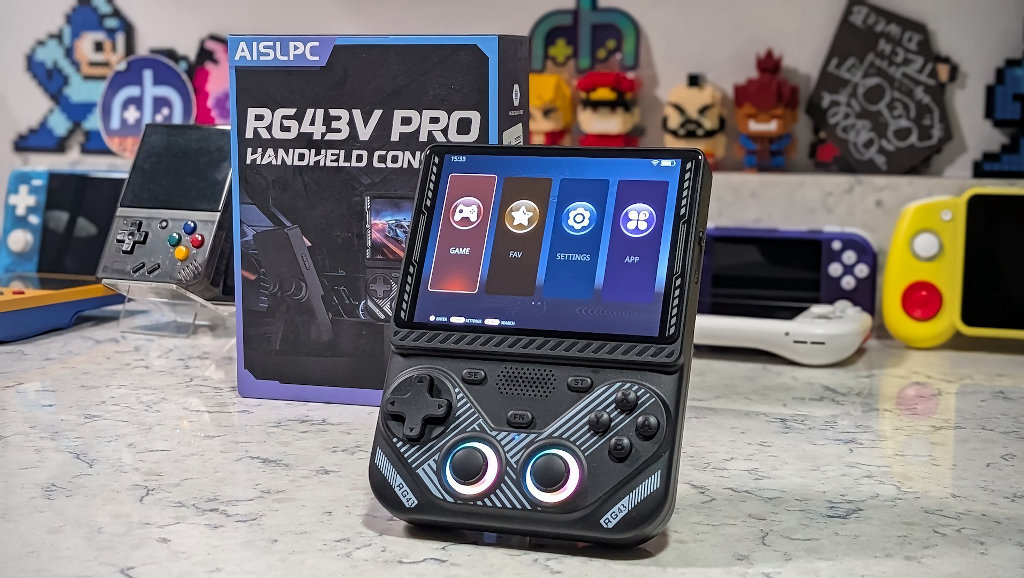
The RGBOX side of the boot choices is reminiscent of an Anbernic stock OS offering in appearance, and it seems to work just fine. I’d still prefer EmuELEC from a presentation perspective, but it gets the job done. The main allure for using the RGBOX half of the console will come with the Download section. Like the RG43H Pro before it, this was an Amazon unit, and as such, anything to do with Nintendo has been largely stripped out to avoid legal entanglements.
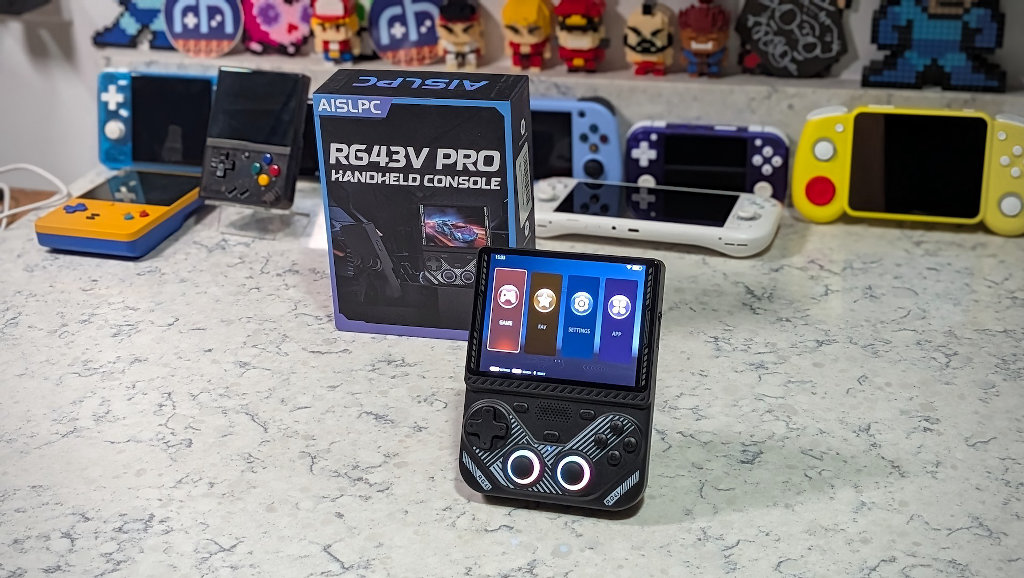
If you’re already an emulation enthusiast, then you know your best move will be to replace the included micro-SD card with a name-brand version that will be more dependable and load it with your own ROM collection. For those who lack the ability or confidence to bring over their own collection, it’s nice that they’re provided a path forward, albeit with a few extra steps vs a unit you pick up directly from China. Whether you want to use the Downloader app is between you and your ISP, so just tread carefully.
Gaming performance is on par with other devices using the RK3562 chipset. It’s a step up from the RK3326 for sure, but don’t expect miracles. The handheld can comfortably play PSX and earlier, with Dreamcast, N64, and PSP libraries being largely playable, and even up-scalable depending on the title. Heavy hitters on these systems will still require some tweaking to get to playable, but a large majority of titles should be available to you.
Display
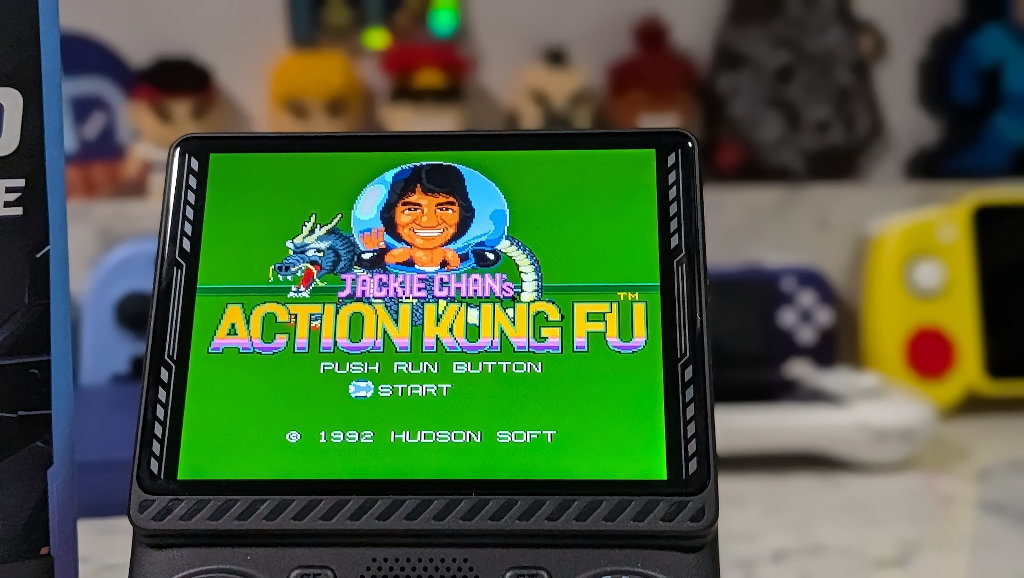
As with so many other parts of this review, the screen on the RG43V Pro is the same as what appeared on the RG43H Pro before it. At 4.3 inches at 1024 x 768, the panel is pushing some decent pixel density for its size. The results are a sharp picture that looks fantastic and vibrant on classic systems, especially in sprite-based games.
The RG43V Pro display has a lip that sticks it out a little further than the lower half of the console (though the controls are raised as well, as we’d said earlier). This lip actually helps align the top and bottom of the screen with some included bezel design around the sides. It’s a small detail, but I didn’t notice any of the light bleed or visual anomalies that had popped up from time to time on the horizontal layout.
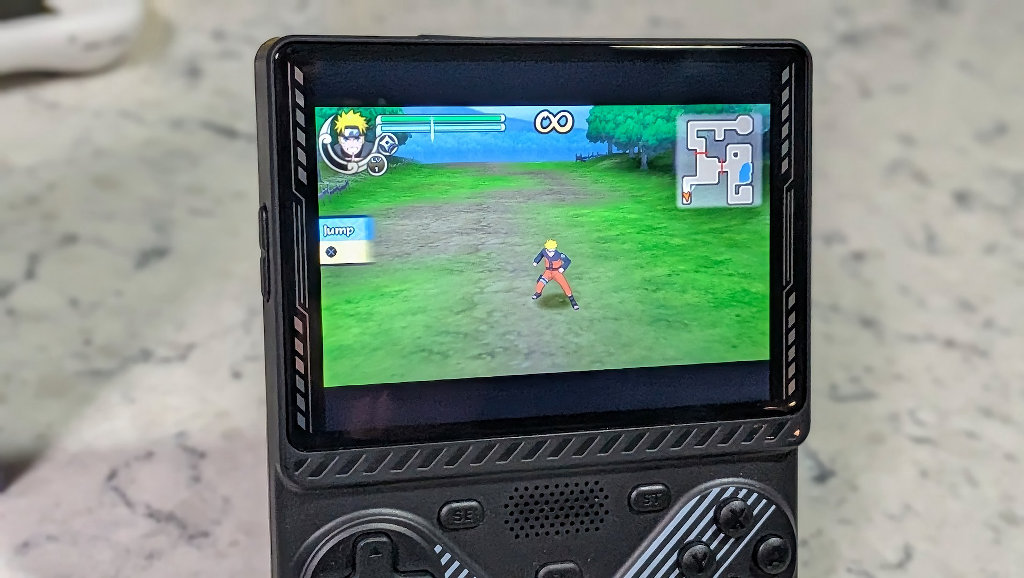
The difficulty with clone systems is that you can buy 5 devices with the same model number, and depending on who and where they came from, you might have a different physical display panel variant in each one of them. Judging by some of the other listings for the RG43V Pro on AliExpress, this might be the case here as well, as there are some sales pages that report the screen resolution as 1024 x 600.
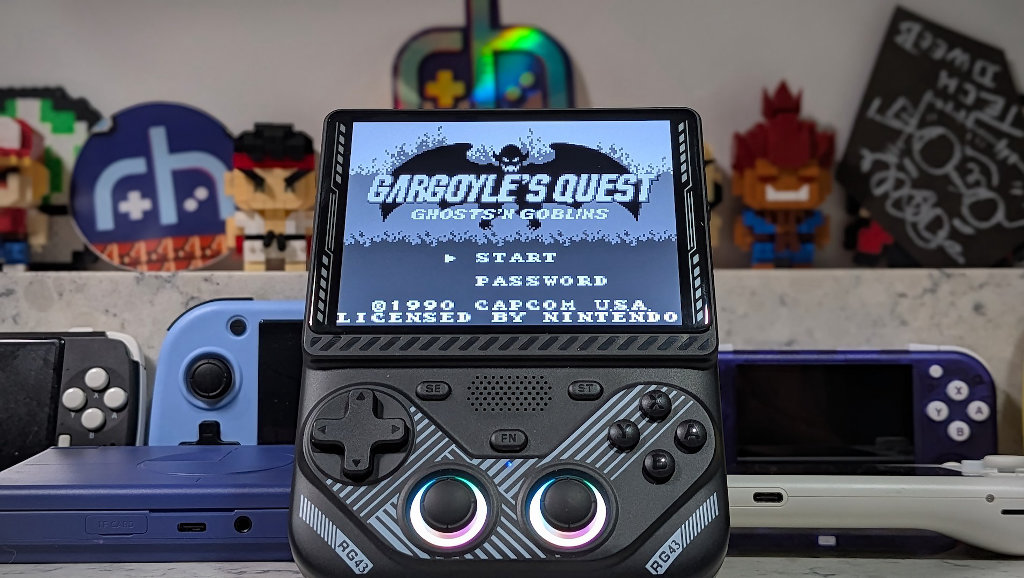
Who knows if that’s a stat variation that needs editing, or if it actually represents a different device panel. To ensure your experience is as close to mine in the review, I’d recommend ordering directly via AISLPC or one of their official vendor channels.
TL/DR
Given the number of devices that have been popping up in the last few months, I think it may be fair to say that the RK3562 could be something of a new budget standard over the RK3326, which undoubtedly has to have been run through every possible permutation at this point. I don’t think we’ll see the latter go away entirely any time soon, but as time goes on, users expect more performance.
The RK3562 isn’t any type of generational leap forward, but it is perhaps a cost-conscious solution to squeeze a little extra out of a budget package at a time when component prices are headed towards the moon.
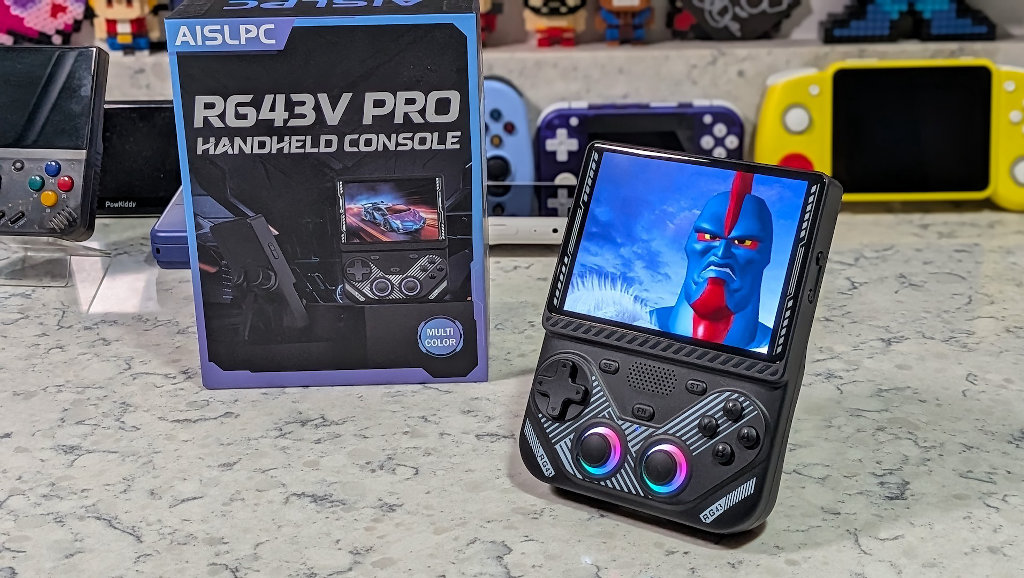
If the RG43H Pro was a decent, albeit flawed in places, budget handheld, and one especially well-suited for kids, then the RG43V Pro is its older cousin. A little more mature, a little more refined, and comfortable wearing several different hats. Though I wish the external controls and display options were a little more intuitive. Bluetooth and a second USB-C port could have gone a long way here, but I suppose that budget handhelds have to save costs somewhere.
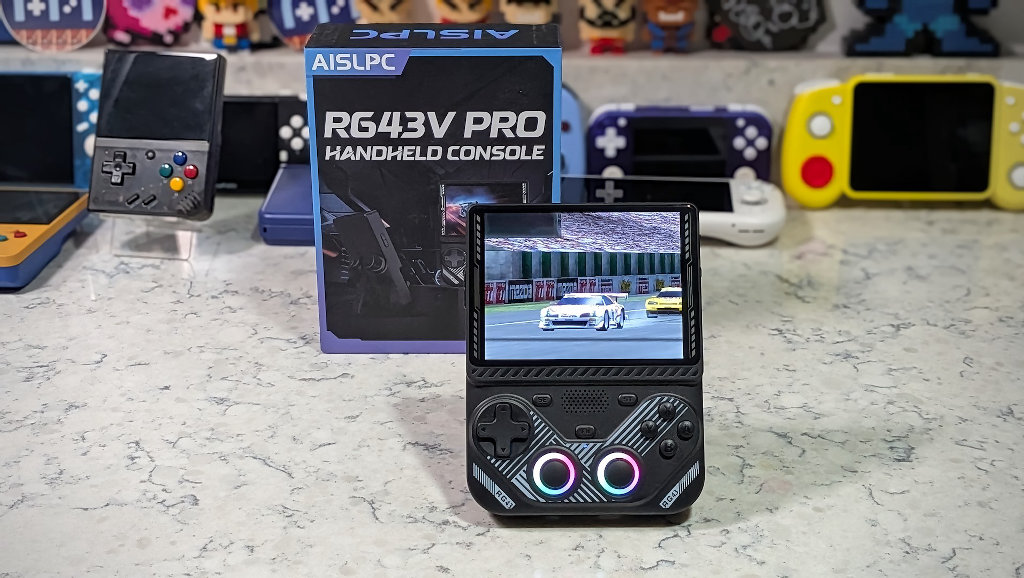
I applaud AISLPC’s use of more traditional controls with this unit, and the overall design and fun additions like the kickstand prove that you don’t need to reinvent the D-Pad to make a name for yourselves in a crowded clone space.

1 Comment
I often wonder who is buying the low, low end models. It is a bit underwhelming spec-wise and that storage / RAM really limits what can be played on this, to the point of wouldn’t it be better to either spend a few bucks more and get something that handles more, or even just go out and pick up an old (original) handheld system? I think it might be better if the categories were more defined “Beginners”, “retro curious”, “tweakers” (in the sense someone just buys a handheld to constantly twiddle with settings), and “experienced”. Almost a rating system so people know what to really expect when shopping