

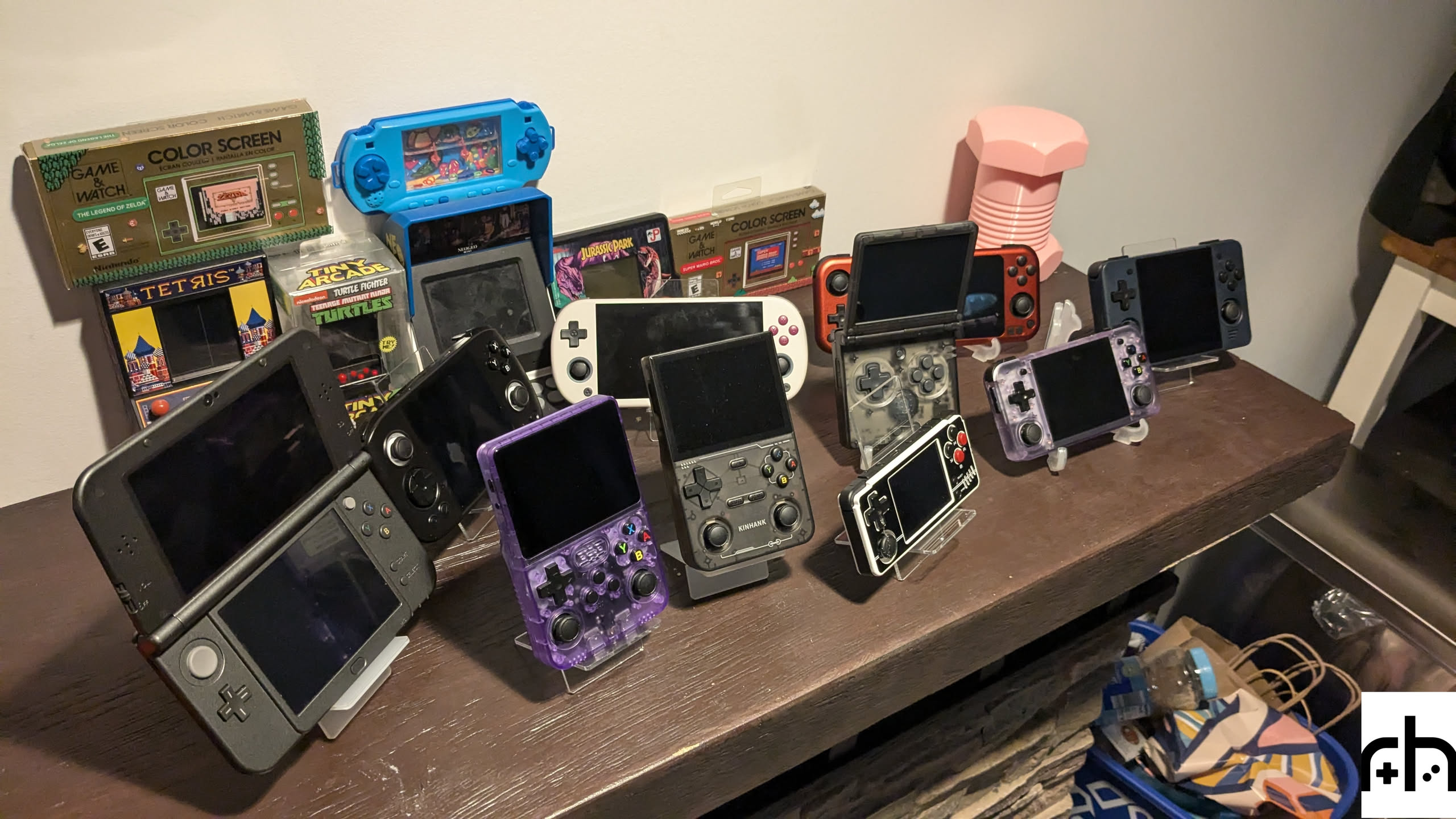
The rapid release cycle of emulation handhelds means often trading one device for another. Upgrading in search of that perfect retro experience that exists only in the ether. Forever chasing the perfect-device dragon.
There’s no doubt that this is a consumerist hobby that encourages collecting, whether we set out with that intention or not. But the thought that’s been knocking around my head lately is this: even in a hobby space as young as ours, there are already a litany of devices in the graveyard. Abandoned SKUs, never to be resurrected.
That got me thinking..are these handhelds going to start becoming collectibles soon?
The 3DS Was A Warning Shot
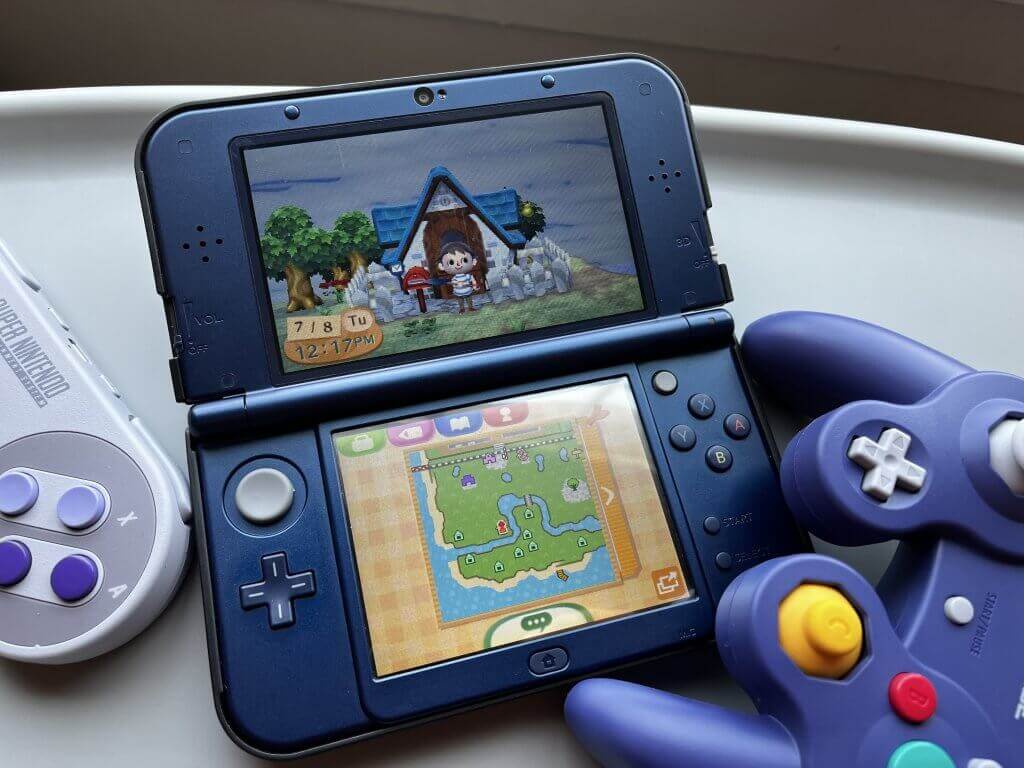
To get a clearer idea of where I think we could be headed one day, we need look only to the Nintendo 3DS.
In the years surrounding the release of the Nintendo Switch, you might have been able to hop onto your local Marketplace listing or eBay lot, and score a “New” 3DS model for $100. Owners had been eager to unload them in order to fund the purchase of Nintendo’s latest hybrid handheld.
Then something happened. Nintendo ceased production of the 3DS and shut down its online stores. The market flipped on its head. Suddenly those $100 units were fetching $300-$500. Now? They start there and keep going.
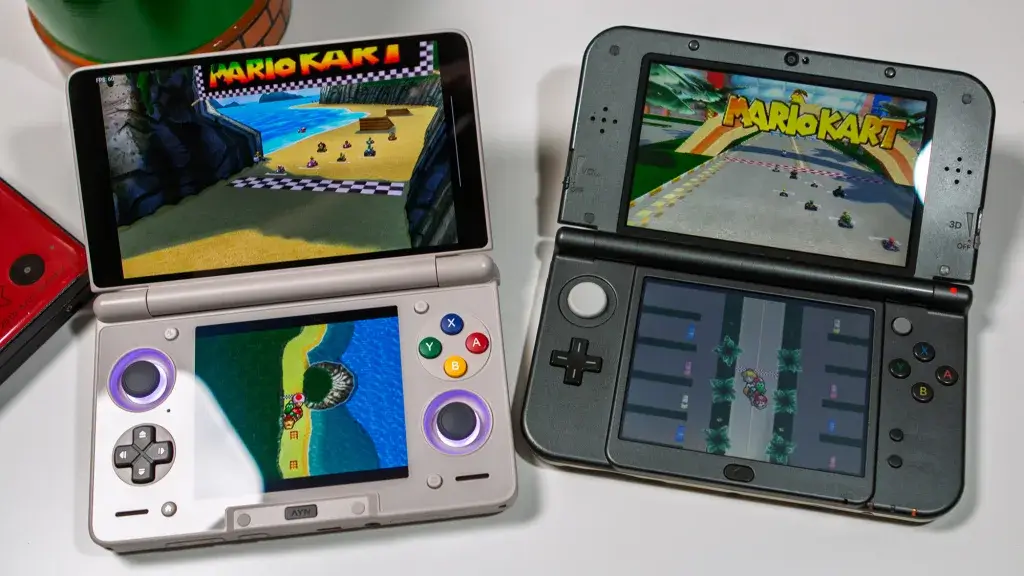
Why? Because production ending means the number out in the world is now finite. Even if there were millions and millions of units sold, there was still enough demand to rapidly shock the market. It isn’t as if the 3DS was any less great of a system just because it wasn’t being made anymore. For a lot of people, it may have been their first foray into gaming, and now that they want to reconnect with that at a later age, there’s a premium.
Now take a look at the emulation world. There isn’t any one-device behemoth in emulation handhelds that measures as even a flea on the Nintendog’s back, but the sheer speed of product cycles, coupled with what are often low-unit production runs, means maybe someone will pine to reconnect with their AYN Thor the same way current buyers did for their 3DS’.
There’s a Line…
There’s an uncomfortable truth about writing any article about collectibles and what items may retain their value in the future, and I want to address it head-on because I’ve lived it.
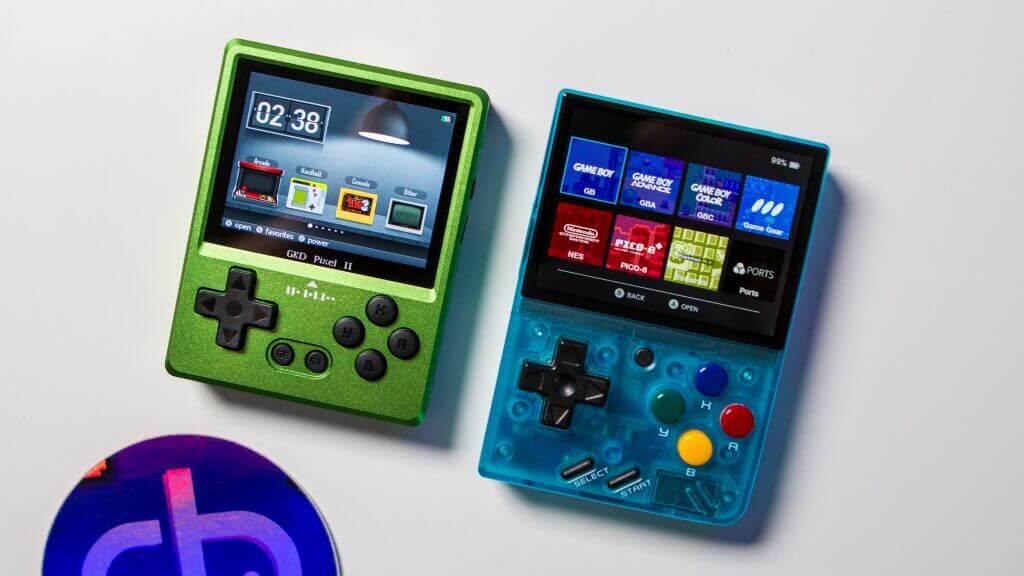
This isn’t an investment thesis telling you to stash Miyoo Minis in a drawer for 10 years because they might be popular with the next generation of young adults with disposable income. That’d be insane.
I used to collect the real retro titles from my 80s and 90s youth. For more than a decade, I enjoyed nothing more than sifting through yard sales, flea markets, thrift stores, and more in search of gold. It was the hunt for treasure that made the whole hobby fun — not in the interest of flipping the items for profit, but finding the missing gems out there just waiting to join my collection. The holes in my soul left from a childhood without an NES to ever call my own.
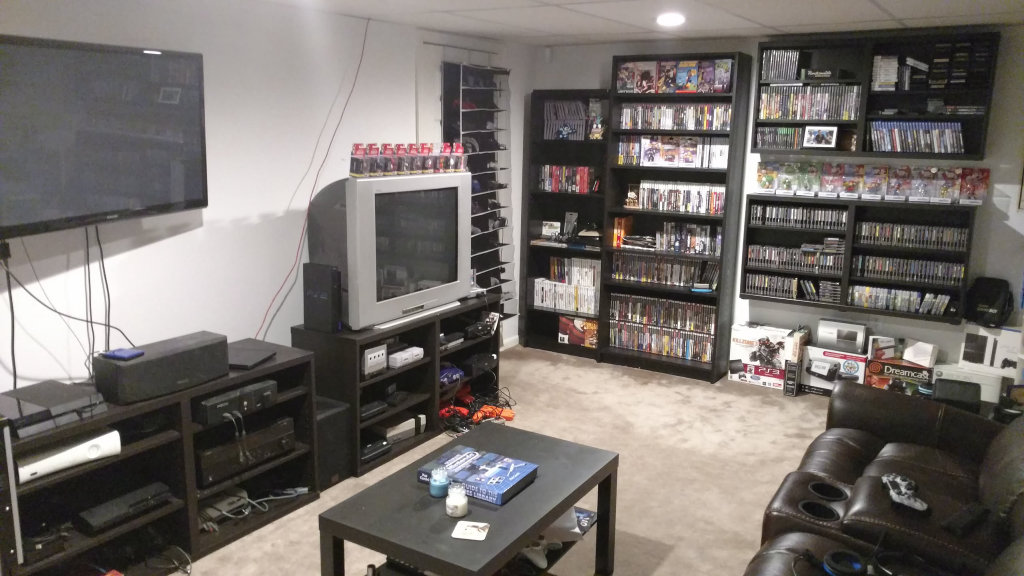
Then one day, I was done. Nothing was fun anymore. What was a casual treasure hunt had seemingly turned into a competitive sport overnight. There had been signs, but with the COVID lock-downs came renewed public interest in old hobbies, and then the speculators and vultures came in right behind. In 2023 I packed it all in a trailer and sold it off at a convention for whatever Pricecharting said was fair.
The proceeds went directly into furnishing the basement where my emulation handhelds currently reside. They even sit on the very same IKEA shelves that used to house some of my games collection. It’s the circle of nerd life.
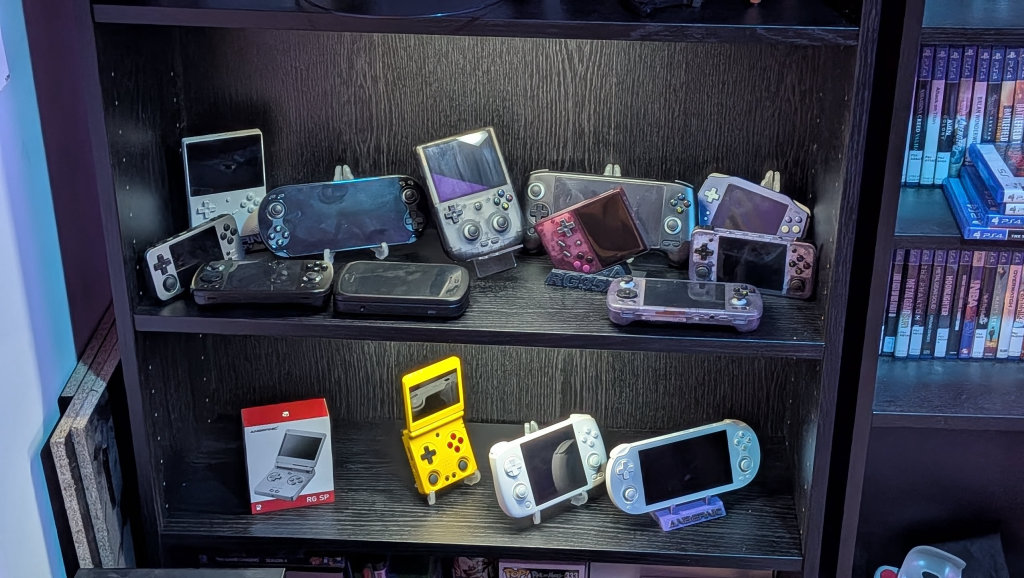
That’s not to say I don’t still have plenty of games. I held on to some truly sentimental pieces, as well as my PS4 era libraries onward. I still love owning the games I love, especially physically. I have an extensive Blu-ray collection that’s mostly appeared in the years since I parted with the bulk of my collection. Records and CDs have made their way back into my life in recent years as well. In an increasingly digital world, it’s nice to connect with things you can hold and consume in a purposeful way sometimes.
Where I’m going with all of this: in a world where people have fewer and fewer options to own games, what else will players form bonds with besides the systems where they first experienced those titles?
If you’re a younger person who wasn’t around when these games were first released, you may not have any attachment to physical cartridges. Be that as it may, I’d bet if you first played a game that you loved and found meaningful on a retro handheld, you’d have some sentiment when you look at that handheld. “Should I really sell the first handheld I beat Final Fantasy VI on in the summer of ’24? On that trip? Remember…?”
Rarity Through Volatility
The RAMpocalypse surge in component pricing and market adjustments relating to ever-changing US tariff policies has rippled out to nearly every conceivable market. Manufacturers that had been offering premium SKUs for users who wanted more RAM pulled back. Options that had existed previously were no longer available. I was getting ransom texts from DHL letting me know that if I wanted to see my handheld, I was gonna have to pay. In short, stuff kinda sucks. The market isn’t in the same place it was in 2022-2024. It is what it is.
The Retroid Pocket G2 strikes me as a perfect example. I preordered a unit when they were announced out of little more than curiosity about its new Snapdragon G2 Gen 2 chip. With margins on handhelds being slim already, it simply wasn’t economically viable for Retroid to continue selling the G2 at its original $200 price-point. They’re then left with the decision to raise prices on the unit and face consumer backlash, or just retire the SKU and work on the next device where they can trim costs to increase margins, and consumers will be more ready to accept the price-blow on a new device.
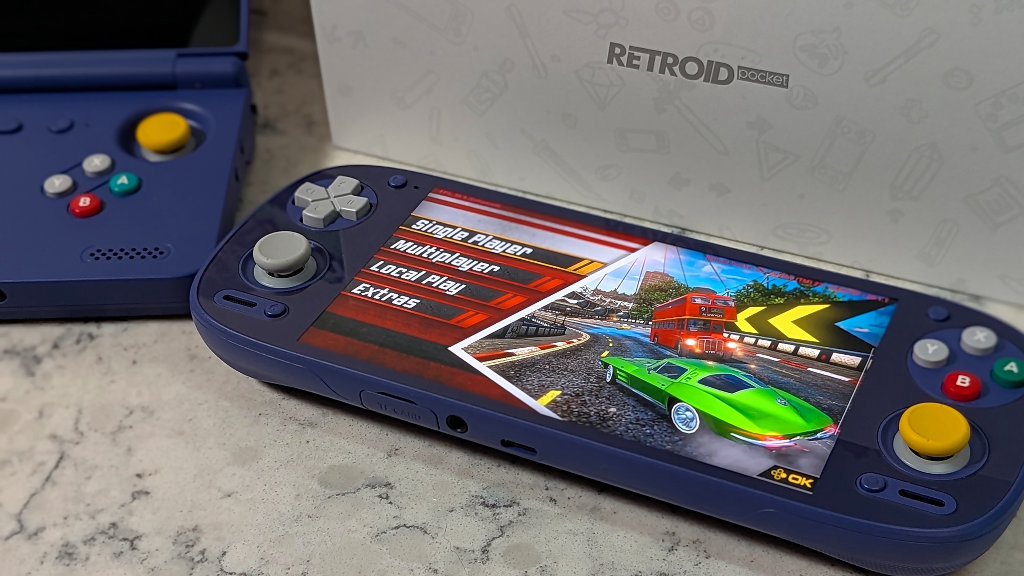
Rather than anger the customer base, Retroid instead steered people back towards the existing Retroid Pocket 5 (which had less bells and whistles compared to the G2), while pushing hype for their upcoming Retroid Pocket 6, where they could better control pricing and manage spec expectations.
Through no action of my own other than dumb luck and outside market forces, the $200 G2 unit I pre-ordered now sells used for closer to $300. Unless more are made, that number is only likely to increase over time as enthusiasts who missed out initially try to search out the missing piece in their collection. Now I have myself a collectible. It just kinda happened.
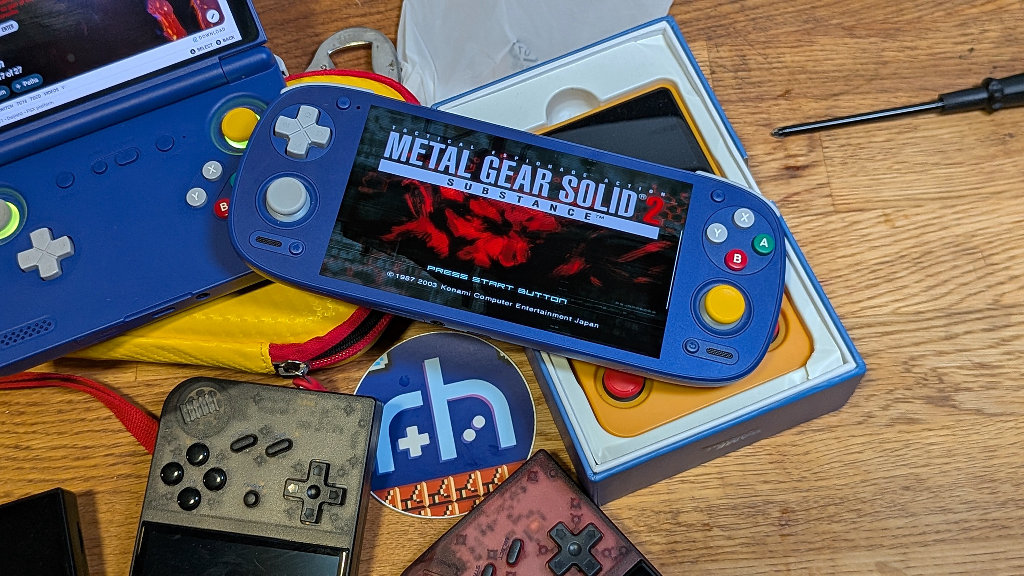
The G2 is just one example where the company was forced to pivot because of outside forces, but that’s not to say it’s the only reason devices are discontinued or become collectible. Some designs like ice-colorways were only ever intended to limited runs. Sometimes, like in the case of the Miyoo Mini v1/v2, the company simply runs out of components. Old blackberry displays don’t grow on trees.
The supply was always going to be finite. And sometimes a design just flops and causes the makers to walk away. Hardcore enthusiasts may have seen a gem that didn’t translate into sales numbers, and they want it for their collection. There are a million ways for our hobby favorites to end up as inadvertent collector’s items, but then there’s also…
Turn & Burn SKUs and Artificial Scarcity
While most of the major producers are guilty of it on some level, there’s nobody in our hobby that can touch AYANEO. Their runs are limited, their designs are many, and their costs are often some of the highest in the hobby.
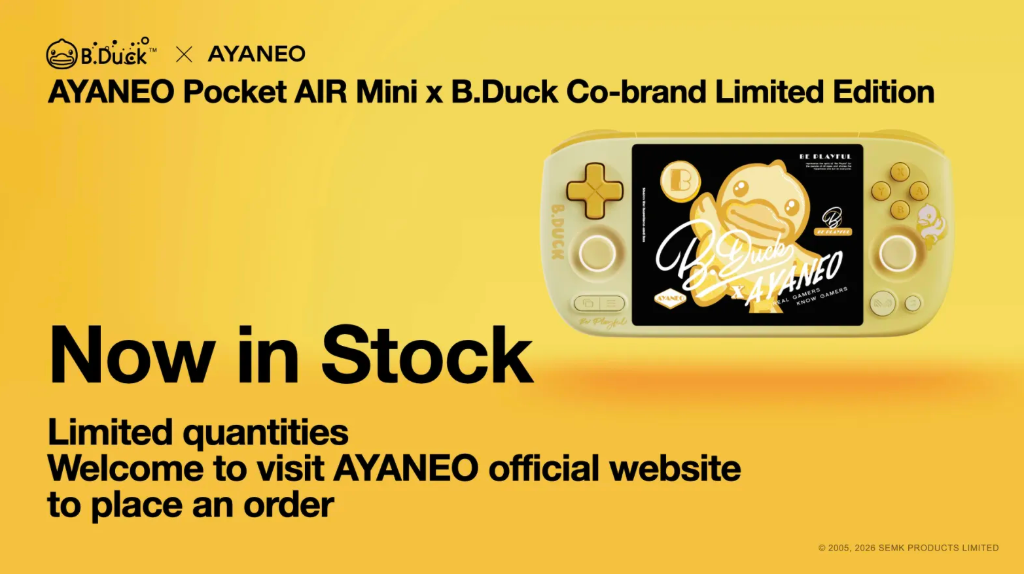
AYANEO is a company that has never done much for me. The Pocket Classic that I reviewed is the only device of theirs that I’ve ever used, and it was exactly what I thought it would be. A polished, well-made handheld, that did an amazing job at delivering a great gameplay experience. I also decidedly concluded that my prior thoughts about the company were fair. It was too much. The device bordered on gaudy. The midlife-crisis-mobile of handhelds. I’d feel as ridiculous daily driving that thing for Mario Kart as I would commuting in a Corvette.
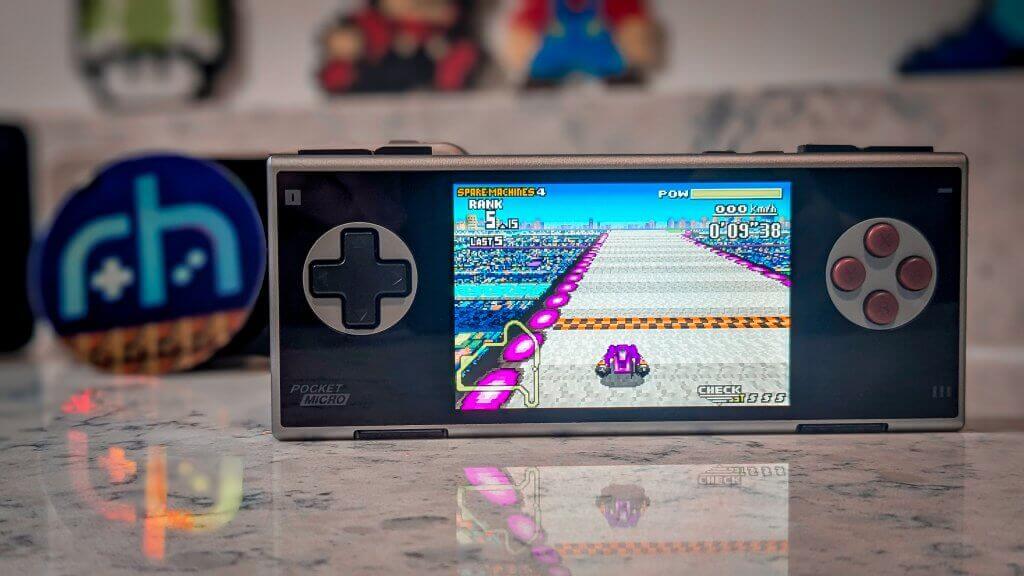
It isn’t just that I think that most of their handhelds are overkill, it’s more that I just don’t dig how the company chooses to do business. As I’ve never been the AYANEO guy, the constant barrage of chatter in the RH Discord often floats right past me. I just don’t really take any notice, because I know that it’ll be another limited-run design SKU that costs a fortune, and will be difficult to obtain. I can’t be bothered.
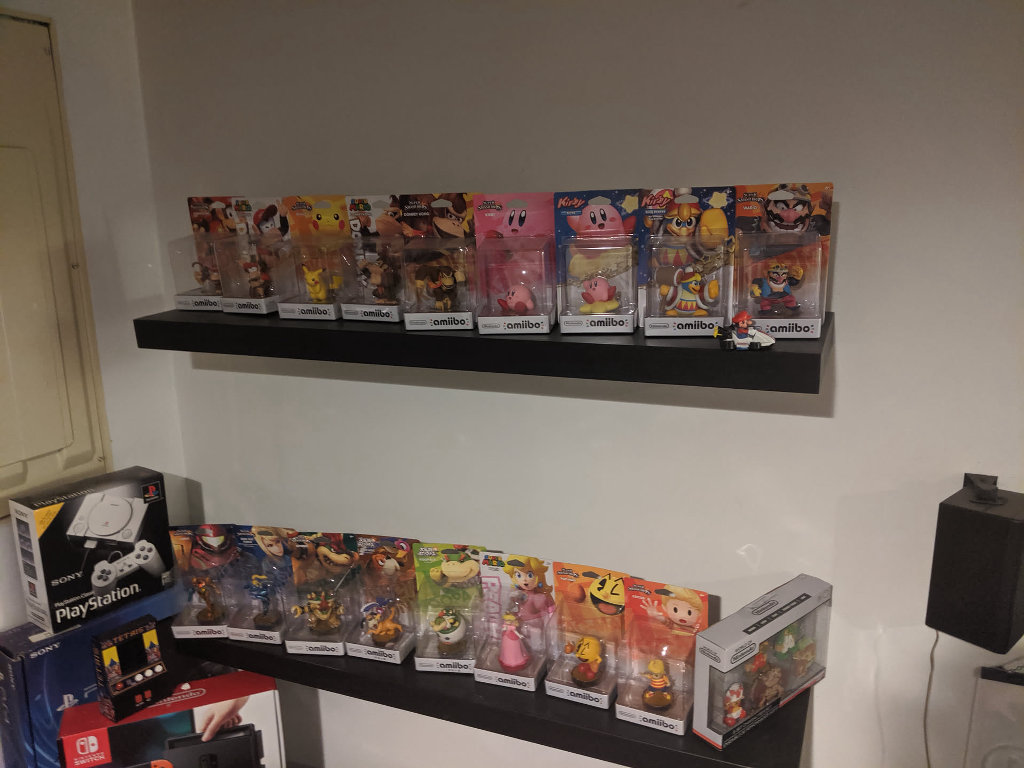
You don’t have to look too far to get a sense of where some of these brands would develop artificial scarcity as a marketing technique. Nintendo practically wrote the book on the practice. When Amiibos first released in 2014, Nintendo intentionally limited production on certain figures, and made retailer-exclusive deals on others. Amiibos are nothing more than cheap molded plastic with an NFC tag inside. The purposefully limited-run figures saw their values explode on eBay and left fans feeling that if they didn’t snatch every new figure at launch, they might miss out next time. FOMO is a powerful motivator in the nerd world.
Other Nintendo stunts like the NES Classic Edition’s limited initial production run and the head-scratcher of a limited release window that was Super Mario 3D All-Stars on the Switch only drive the point home further. This isn’t incompetence or poor planning; it’s a cunning business strategy. Exploitative and anti-consumer, sure, but cunning nonetheless.
Static Perfection: Why Software Doesn’t Kill Our Handhelds
Modern electronics are often hamstrung by the operating systems running on them. I can recall being metaphorically laughed out of the room about 10 years ago when I suggested that Apple were using software for planned obsolescence. Nobody apologized when they’d pay a $500 million dollar settlement years later after admitting that’s exactly what they were doing. Fortunately, we handheld enthusiasts don’t have to worry about that.

Unlike phones that receive security and OS updates on a near daily basis, emulation handhelds are largely static. Sure, you might have a device running a technically unsecured Android build that’s a little older, but so long as you take minor precautions like isolating it on your Wi-Fi network, and avoiding doing your banking on an old Android unit, you should be perfectly fine. There’s no incentive for the manufacturer to intentionally sabotage the functionality of old devices. Not yet, at least.
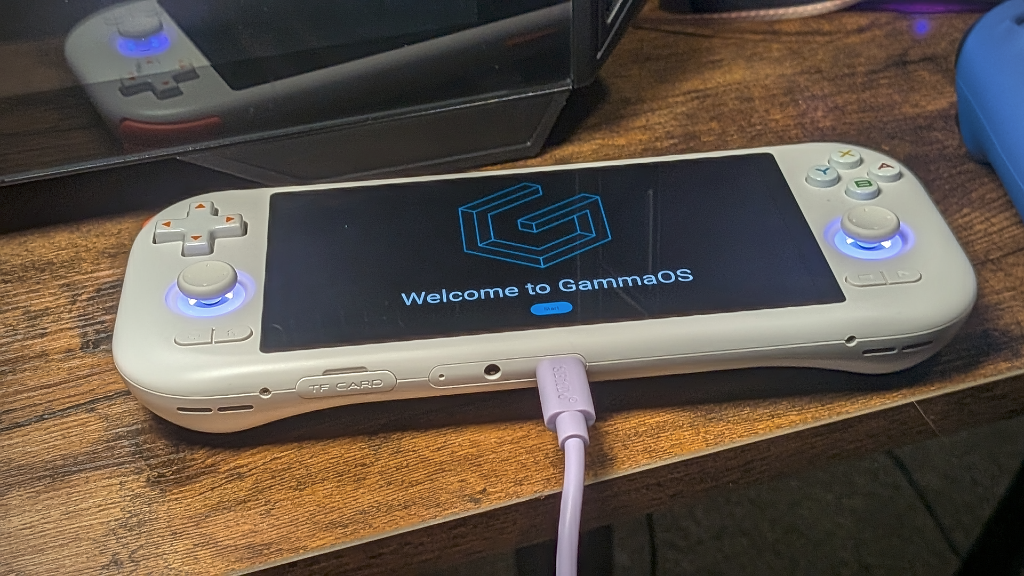
What I’m saying is that these emulation handhelds can reach a point of static perfection with software. It’s almost a key part of the hobby. Take what is decent hardware, and improve it to the best version of itself it can be via community software. OSes like GammaOS, Onion or Garlic, etc etc leave these devices in place where they’re already the best they are likely to ever be. You don’t have to worry about the next update pushing a bunch of debilitating crap that you don’t want. They will continue to exist as they have for years to come, and work just fine.
Will They Survive?
This is where the rubber is going to meet the road a bit in my argument. Many of these handhelds simply weren’t designed to last the way something like a Nintendo handheld might be. More premium manufacturers are tearing these walls down all the time, but in the budget space it’s all about how cheaply you can get the job done. That doesn’t necessarily translate into longevity, but if history teaches us anything, it’s that these life cycles aren’t written in stone.
Disc rot was supposed to have eaten away at all my old games and CDs stored on physical media from 30+ years ago. It just hasn’t happened in my experience. If you take care of your stuff, your stuff will take care of you. Things get damaged or broken over the years, it can happen, but very rarely do I encounter the piece of media that is just entirely bricked by time. Game Boy cartridge batteries can be replaced, but sometimes they just last. Hell, my copy of Zelda on NES still handled saves just fine.
Where I do have concerns with the cheaper handhelds lasting is in the usual suspects list.
- Batteries: While I’ve never had a device battery go all spicy pillow on me, or god forbid, combust, it remains a real concern, especially years down the road. We’ll have to see how things pan out over time, but I think regular charging care and maintenance go a long way.
- Ribbon Cables: These delicate little information highways are not always dependable for the long haul. They can crack or snap over time if not stored properly. Or sometimes they just slip out, and without the knowledge or confidence to explore the problem, one would be forgiven for just assuming the device had died.
- SD Cards: This is one we all know in the hobby. Cheap micro-SD cards that often come packed in with budget handhelds can corrupt easily. Nobody should be depending on them for long-term storage options. The flip side of that coin is that I still have brand name cards from 15 years ago that I’ve treated with very little care and still putter along great. Just swap them out when you get the handheld, and worries can be kept to a minimum.
Closing Thoughts
If you read all of this and think “Who cares!? The devices in 2030 will be 10x better at running all of this stuff anyway!” I’d advise you to pause for a moment. Our current RAM shortage has exposed how we’re reliant on a few key manufacturers for crucial components, and where once Moore’s Law was thought of as inevitable, it’s currently eviscerated.
The future is not guaranteed. And even if it were, I’d feel sorry for anyone who has been around this hobby for a while and hasn’t developed a connection with at least a couple devices. If these are just things to be consumed in pursuit of the next, then I fear you’ve missed the point. Spend enough time with any device and what may have at first been annoying quirks, can quickly develop into a charming bond — the same way people love imperfect possessions like cars.
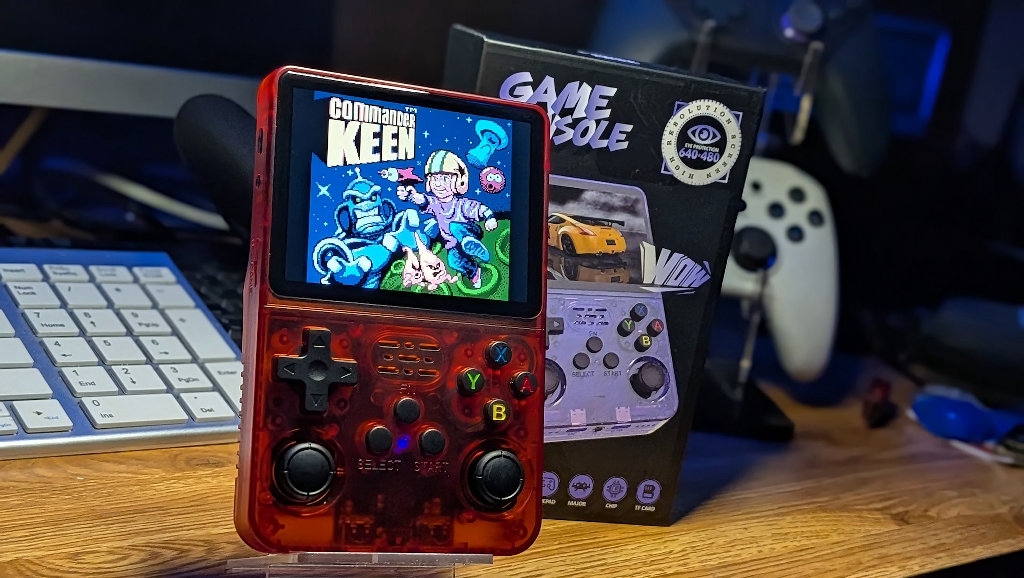
I never would have expected to write a love letter to the R36S or a defense of e-waste when this whole thing was getting started. I formed connections with devices that I found amusing at first, and learned to love later.
Nostalgia is a funny thing. I often associate things with the memories they bring back, and I like honoring my favorite devices with their own spot on the shelf. Maybe someone else will want some of those devices someday too. Not just for the memories they might evoke, but because of their place in history in a finite market that’s moving faster all the time. Either way, these handheld emulators might be worth hanging on to.

5 Comments
I spent a lot of time lurking on here don’t ever comment, but this was just so beautifully written and offers some really original insight that I simply cannot get anywhere else. The standard of quality on RH is unmatched. Keep up the excellent reportage.
I appreciate the kind comments 🙂
Great article.
As for longevity of retro consoles – simpler ones without onboard NAND storage should be pretty safe from dying of just an old age, IF their bargain bin battery (most of the $150 and below segment) isn’t grows to spicy pillow destroying PCB or/and screen in the process. Softtouch finish will become sticky, rubber on sticks will disintegrate (just checked my New3DS nonXL, best version, soft part of the stick turned to goo after being not used for about 2 last years). As for android ones – I’m pretty sure that cheap devices WITH NAND would randomly fail just from sitting on a shelf. On that note – I’m surprised that there isn’t any mass reports of consoles-consoles dying due to NAND just corrupting after not turning it on, just like with WiiU.
As for collectibles – I believe that something like GCW-Zero, Dingoo a320 and RG350 line can be considered collectable, they were one of the first (using same chip or being 90%+ compatible) dedicated emu consoles with a ton of community support with ton of interesting software. Their competitors with closed OS are e-waste, if you aren’t nostalgic to one due to owning one at the time.
Newer handhelds with real ArkOS – rocknix (not just clone of a clone with a single fork of it) could be interesting as well, just it’s too many models with little reason to being released it a first place, not just becoming collectible in a distant (?) future. Something like RK3326, RK3566 or H700 is enough to play retro games and not think about emulation quality, but how many models are made – I’ve counted 65 with these CPUs just from somewhat reputable brands. Something like portmaster is a more interesting story. There are non 0 chance that newer consoles would use much newer CPUs and ports just wouldn’t work or work only with some games with manually fixing them. Not everything would be repackaged to work on newer stuff and that’s okay.
Old lower end Android handhelds – I don’t believe that they could be interesting later (as they are not interesting now). Hunting for a older android APKs isn’t fun, especially if it wasn’t pirated on some old forum that hopefully works AND by some miracle download links are alive (or at least their warez was archived by something like IA). Looking at how badly Github works under Microsoft I wouldn’t be surprised if they start to delete older files from releases tab, just to save some pennies (actually it’s really $$$).
Thanks for the read!
It’ll definitely be interesting to see how the retro emulation handheld will change regarding the collectibility or lack thereof in the hobby.
I feel like the real “landmark” handhelds will likely get pricey and expensive. Miyoo Mini, RP5, Odin 2, AYN Thor, all of the ones with a lot of hype that a lot of people played. But I can’t really see people wanting to pay $200 in 10 years to own one of the Ambernic 35XX device though, for example, even though they’re relatively well loved.