

Dual screens! Clamshells! Confusing ergonomics! You’re looking at what’s basically been the theme of 2026 when it comes to handhelds. Up until this point, our dual screen options had essentially been the OneXSugar, the AYN Thor, and last year’s Anbernic RG DS, but in the last month or so, Anbernic and Retroid have decided to help fill the gaps and dump onto us a good few more options.
Whether that’s the Duo line occupying everything from $150 to $250+ or Anbernic’s latest release sitting just under $100; today’s RG DS Plus. It’s bigger, possibly better, but also a downgrade from last year. But is it a clamshell worth considering? Well that’s what I’m going to find out, and you’re coming along for the ride.
Disclosure:
The devices reviewed were provided as review samples by Anbernic. This had no bearing on the conclusion of the review, nor did Anbernic have the opportunity to make edits or changes to the review before publishing.
Affiliate links might be present where applicable, and we may earn a commission on product purchases using those links at no extra cost to you.
Anbernic RG DS Plus Specs
At a base price on Anbernic’s website you’re looking at $95 plus any shipping they may charge you for. This is in line pretty well with Aliexpress, but one thing I’ve noticed is that a lot of sales bring the prices down really quick.
An example of this being Anbernic’s ebay page offering the RG DS+ for $117, but the regular 20% off sale hit, bringing it down to $95 shipped. Which knowing you get ebay’s “better than nothing” customer support certainly adds a bit of value. So definitely shop around, but this is absolutely a sub $100 device, and the specs show it.
| Hardware | |
| CPU | RockChip RK3568 |
|---|---|
| GPU | Mali-G52 2EE |
| RAM | 1GB |
| Display | |
| Main | |
| Screen Size | 4.3-inch |
| Resolution | 1024 x 768 |
| Aspect Ratio | 4:3 |
| Refresh Rate | 60Hz |
| PPI | 297.67 |
| Secondary | |
| Screen Size | 4.3-inch |
| Resolution | 1024 x 768 |
| Aspect Ratio | 4:3 |
| PPI | 297.67 |
| Storage | |
| Internal Storage | ❌ |
| External Storage | 2x microSD |
| Additional Details | Expandable up to 2TB |
| Battery | |
| Battery Capacity | 4000mAh |
| Est. Battery Life | 6 hours |
| Charging Speed | 5V/1.5A |
| Connectivity | |
| Wi-Fi | Wi-Fi |
| Bluetooth | Bluetooth 4.2 |
| Ports | 3.5mm Audio Jack, microSD, USB-C |
| Controls | |
| Sticks | 1x |
| Triggers | Digital |
| Shoulder Layout | Shelf |
| D-Pad | Top Left |
| Audio | |
| Speakers | Stereo |
| Speaker Location | Front-facing |
| Headphone Jack | Yes |
| Physical | |
| Weight | 344g |
| Form Factor | Clamshell |
| Software | |
| Operating System | Linux (ARM) |

Build Quality and Ergonomics
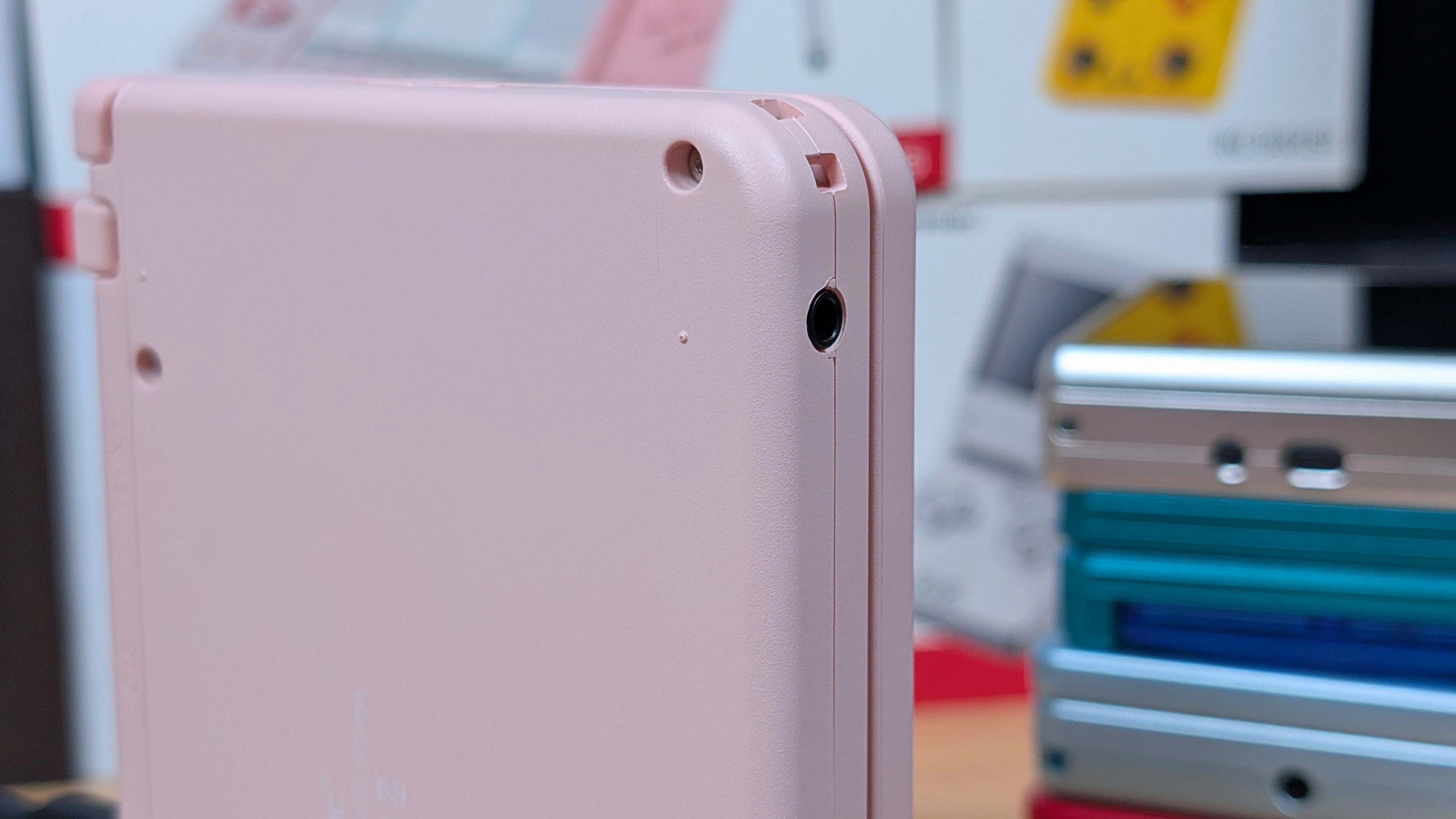
When it comes to the build of the RG DS+ I think that’s one of the upgrades you’re looking at. While it feels just as weighty as the original RG DS, the edges of the devices are way more pleasant to hold as they’re rounded rather than chamfered. The plastics on the RG DS+ are this interesting matte texture rather than the combo smooth and glossy plastics on the RG DS.
That being said, I know they’ve updated the original RG DS to be matte on top rather than glossy, so that may be a moot point. Overall though, it has Anbernic’s traditional well built qualities to it, and it’s all the better for it.
That being said, my pink unit does pick up marks from other devices quite easily. After setting it on top of the black RG DS+ for a bit, I picked it up and found there are a couple small black marks on the bottom where the two were in contact. So be careful there.
As for ergonomics, it’s probably one of the best dual screen clamshells I’ve held. It’s absolutely massive, beating the width of my DSi XL, but I don’t think it’s terrible. It’s comfortable to hold, and the d-pad is in a great position too. My one gripe is that I wish the face buttons had been brought up slightly to be inline with the dpad. It would have made the device slightly more comfortable. Overall though, this is a massive improvement over the RG DS, and I’m all for it.
Controls
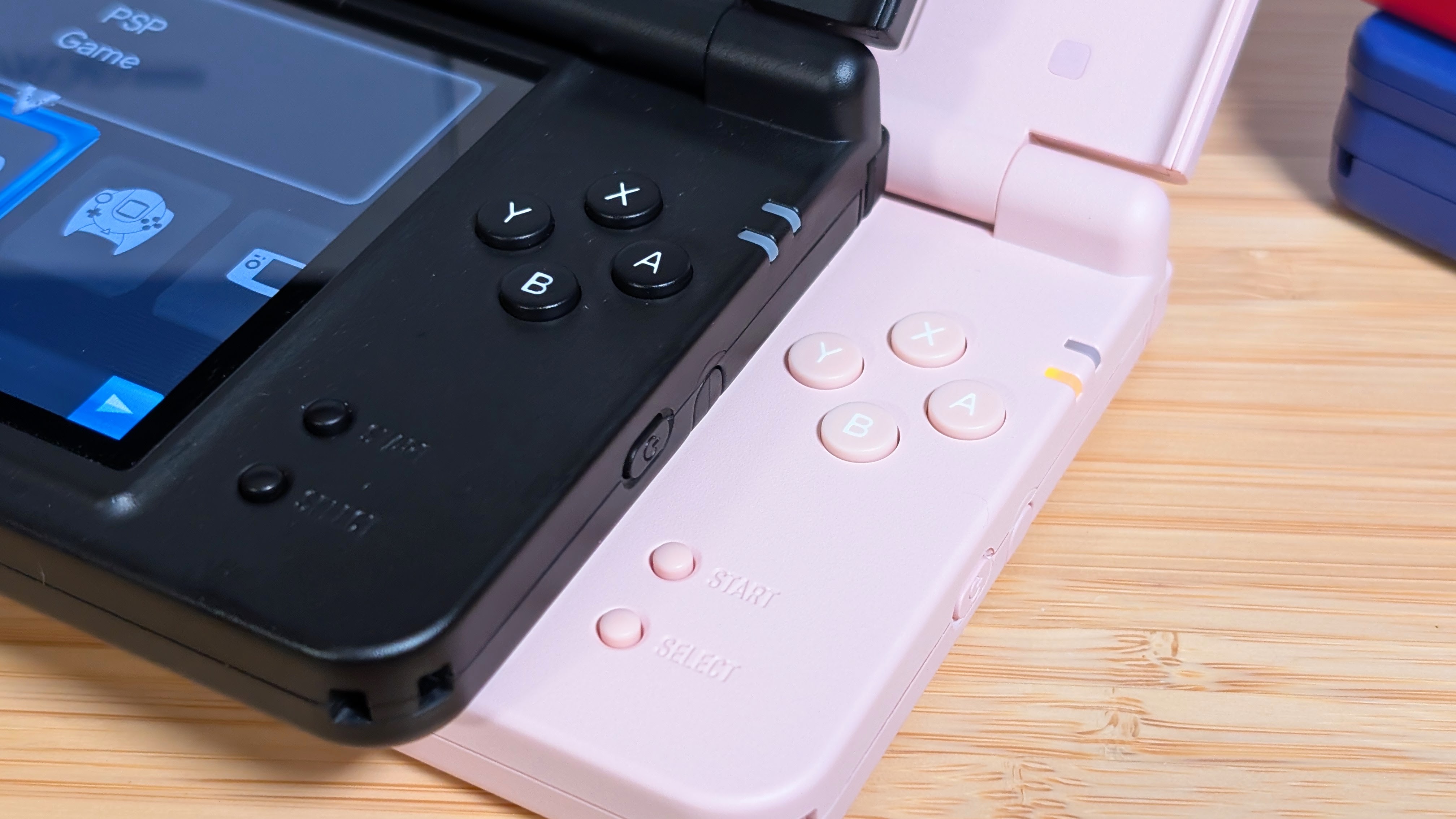
Speaking of upgrades, the controls of the RG DS+ are improved too. The face buttons have a heartier click to them, which feels both more satisfying and more responsive. The sticks are the same, but there’s only one this time, which isn’t a big loss in my eyes. The shoulder buttons are quieter than their predecessor, but still comfortably clicky to the point where you can definitely hear it without headphones.
But the biggest improvement is in the dpad. The old one was smooth with an awkward divot in the middle. It had some pretty shitty feeling clicks, and pivoted at best with the same speed as I do when I wake up at 5am. The DS+ on the other hand mimics the DSi XL a lot more closely, while making it a bit larger. This is probably one of the better clamshell dpads out there. Only being usurped by my GOAT. The RP Flip 2.
Displays
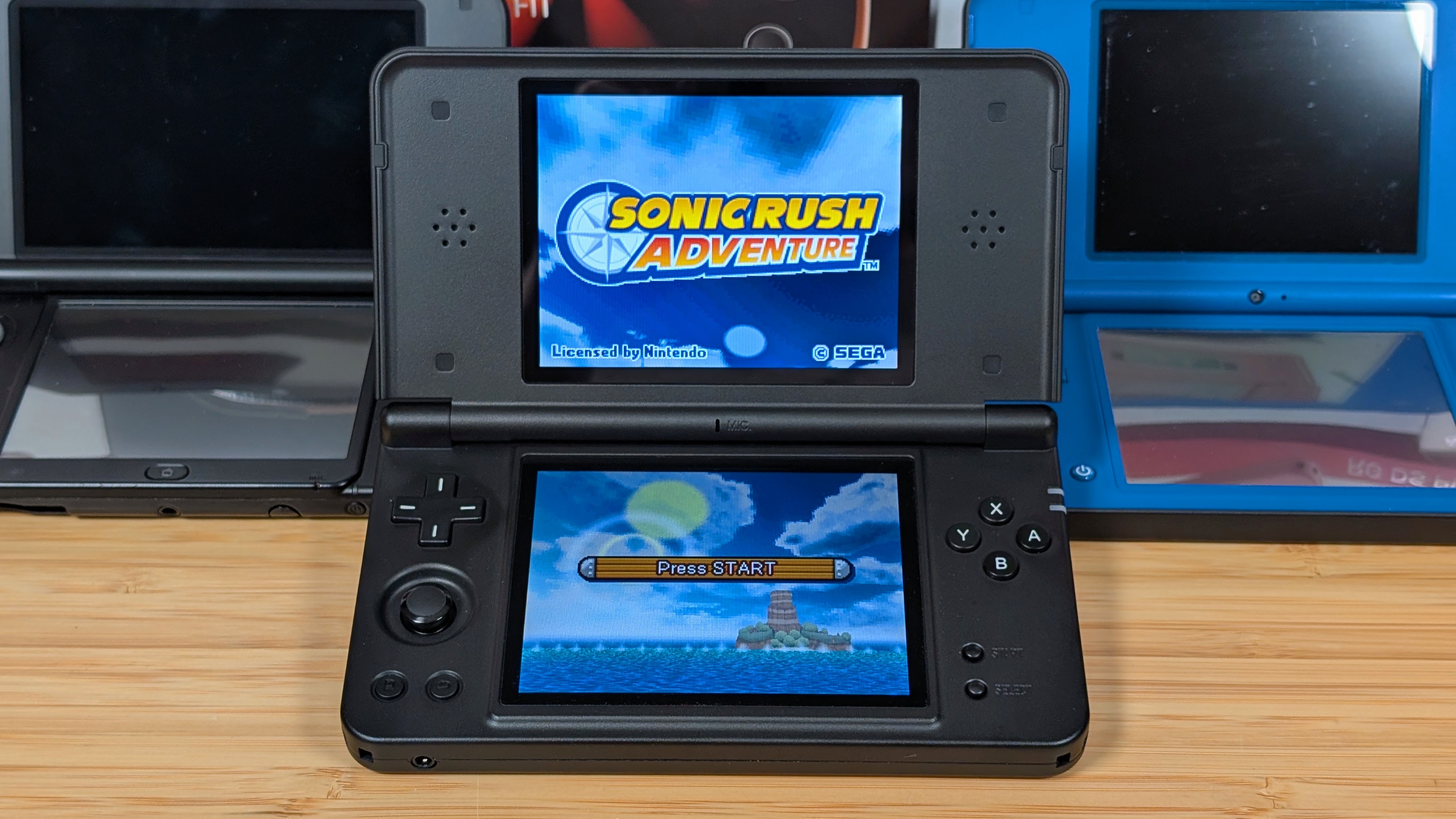
Now there’s not just one display to talk about, but two! Which should be a given considering it’s a DS Clone. You’re getting two 4.3 inch, 1024×768 IPS panels. Both displays are nice, bright, and show off their games with great vibrancy. They are only IPS panels, but they really are not bad ones. When it comes to the resolution, you can equate it to something like the TrimUI Brick or Brick Pro with their 3.2 and 3.95″ displays that hold the same resolution. Unfortunately it’s not perfect scaling for everything, but for DS obviously? It scales an ideal amount.
As for touch, I’ll talk a bit more about it in the gameplay segment, but I find the responsiveness to be fine, though not perfect. Partially I think that comes from the stylus included, but I’m sure it’ll also be improved thanks to software gains in the future.
One potential downside that I do want to note about the screens, particularly the top one, is that when I go to move it, you can easily see the pressure changing on the top screen. Almost like you’re making it bleed in all new areas of the display, though it does go away when you let go of the top half of the handheld. That just brings a new level of concern for me personally.
Software
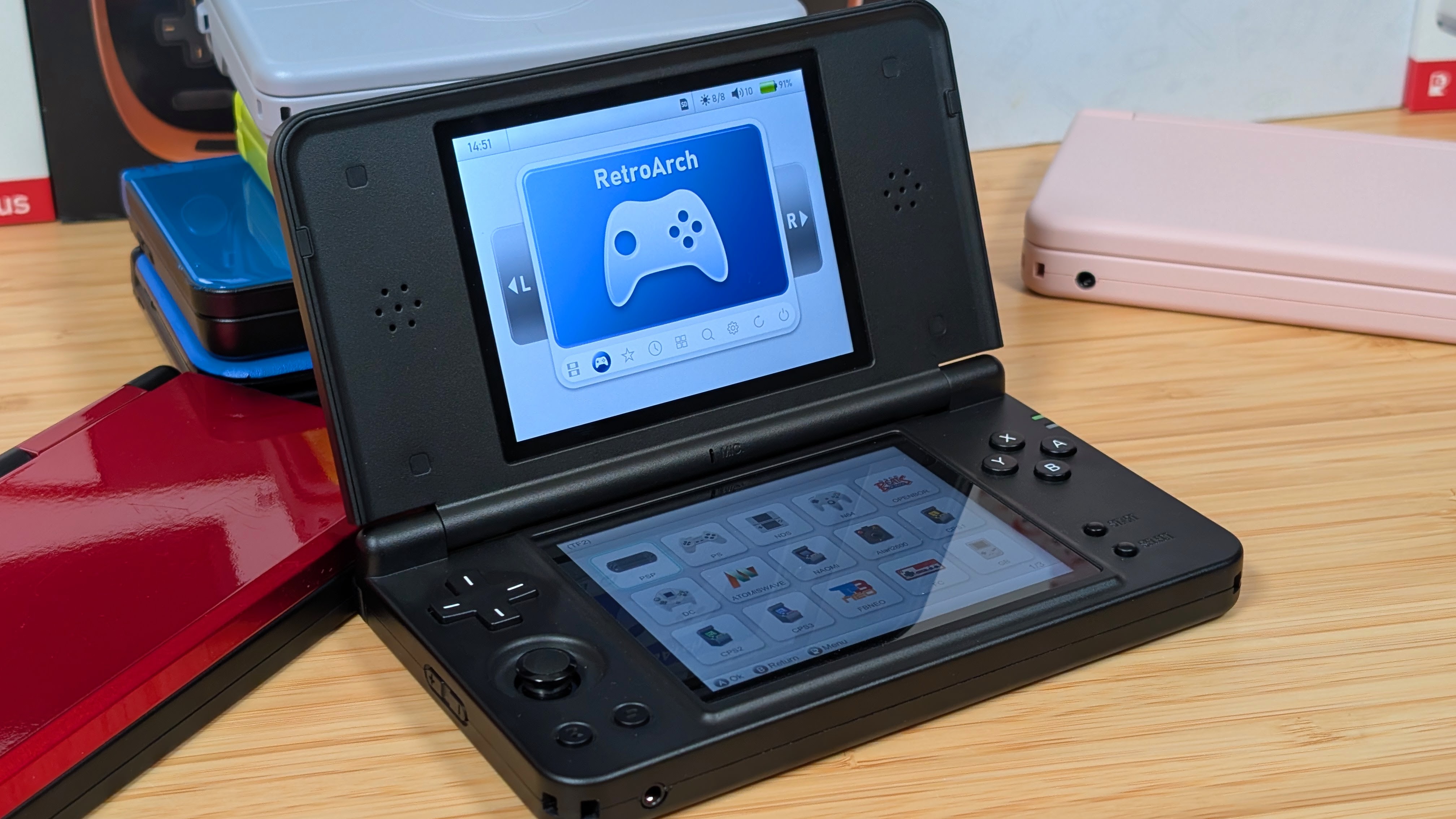
When it comes to software, you’re looking at three main options in the (hopefully) near future. GammaOS just had its first release prior to release and I’ll talk about it a bit later. The other option is going to be ROCKNIX, which, while it has its full setup for the RG DS already, at the time of writing, hasn’t quite released anything for the RG DS+ yet. That’s probably the one I’ll be looking for, as I can see this being a pretty solid DS and Portmaster setup.
As for Anbernic’s StockOS? It’s a lot better than it used to be. The firmware is setup nicely for two screens, it looks visually appealing, and that stupid button navigation sound can be turned off as always. Booting into games is as easy as it’s ever been, and this time around there’s even a new emulator from them in the form of NNDDSS. It’s a… glorious name, but one that just seems to be completely competent for general DS gameplay. And speaking of-
Gameplay Experience
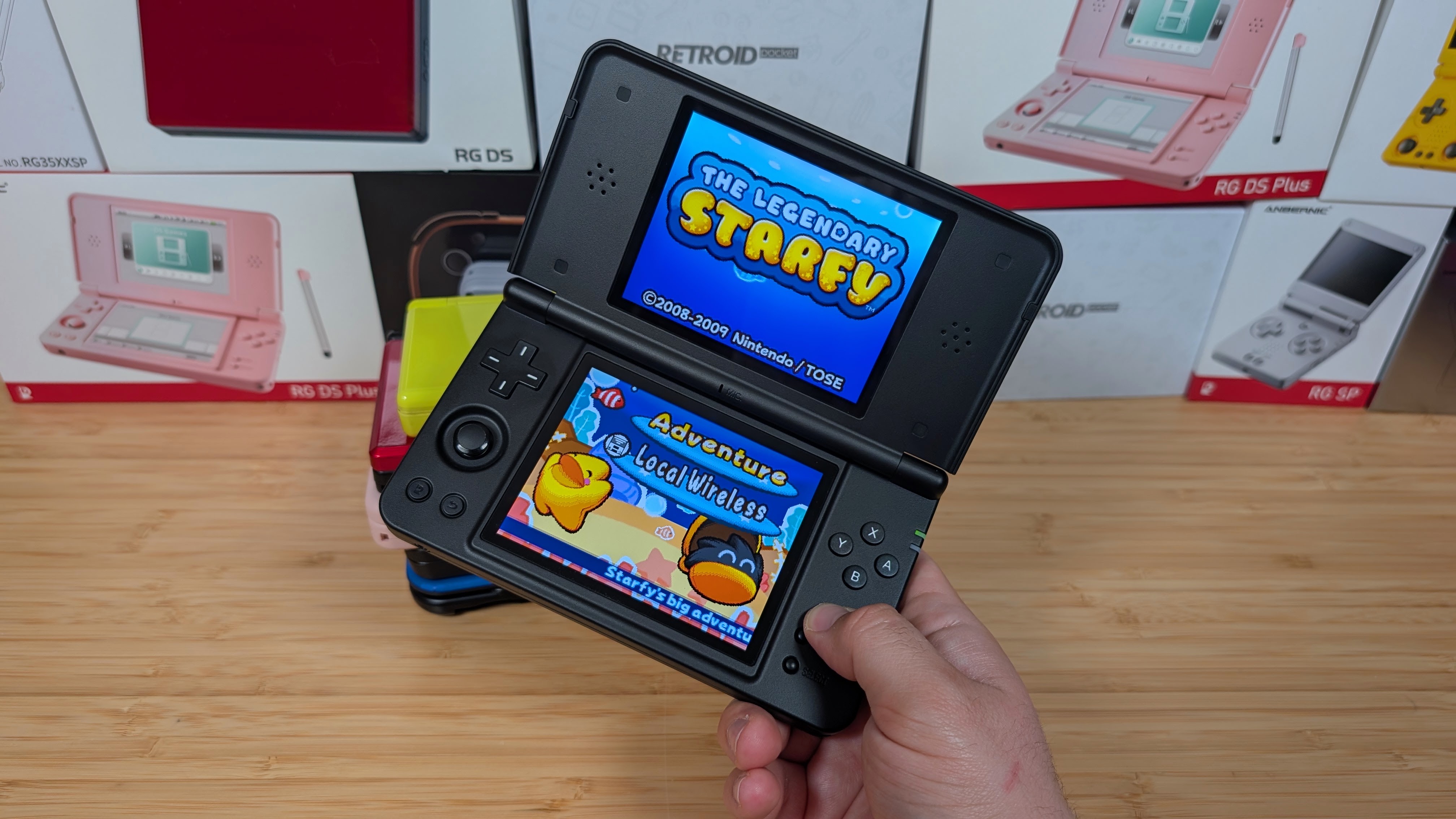
The gameplay experience of the RG DS+ is pretty well what you’d expect. Being an interactive update over the RK3566, you can expect everything to work well on either of the 4.3” displays. 4:3 content fills them out perfectly, and unless you need dual sticks, PS1 is going to be great as well. Nintendo 64, Dreamcast and PSP are the next steps up, and while they’re competent, I wouldn’t completely recommend them. PSP especially just due to how awkward, and awkwardly slow it’ll appear on the displays. But there’s one system that stands out above the rest.
Nintendo DS is obviously built for this system. With a screen that’s a nice 4x upscale you can expect crisp details, albeit at 1-2x resolution scaling. NNDDSS and Drastic both hold up alright for the RG DS+, and as a whole make this the perfect DS alternative. The built-in stylus also helps the experience too. Personally I wasn’t a big fan of the rubbery tip that comes standard with the RG DS Plus, but thanks to a post from Russ over at Retro Game Corps (small channel; check him out), I found there are some even better 5mm tips worth checking out.
For $9, it’s a no-brainer and is going to be what helps me through the Professor Layton series once more. One thing to keep an eye out on is the delay between the stylus and screen. While it’s more than playable for me personally, I know a lot of people out there are going to be sticklers about it, so I find mentioning it at the very least will be worth it to most of you.
Late Add-Ons
GammaOS
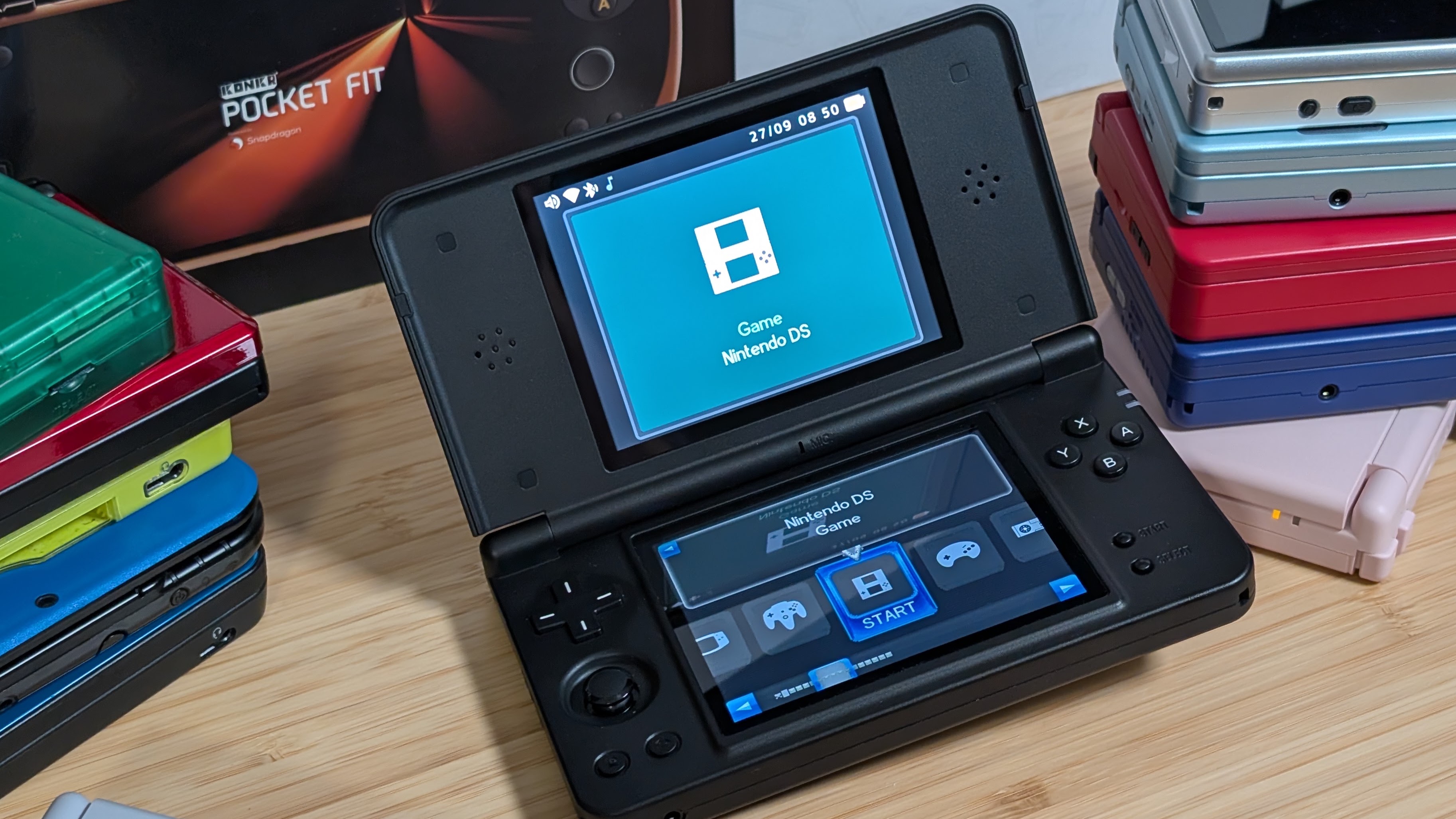
During the completion of this review, Gamma was kind enough to send over a beta build of GammaOS for me to try out. Built in are your usual themes of XMB, Minima, and DSi. But you also have a custom ES-DE styled interface in this build that would certainly be great. While I haven’t had the most time to test things, I can say that I think GammaOS on the RG DS Plus will be a great option in the long run.
You have a very authentic DS styled menu, and you can easily just add your DS roms and go. It’s certainly not perfect at the moment, and the fact that it’s still in beta definitely shows that. I’ve run into a few issues with stability, but strangely enough they only seemed to happen once. That being said, by the time this releases to Patrons, I will definitely be able to recommend the Gamma Route.
Death Comes for Us All
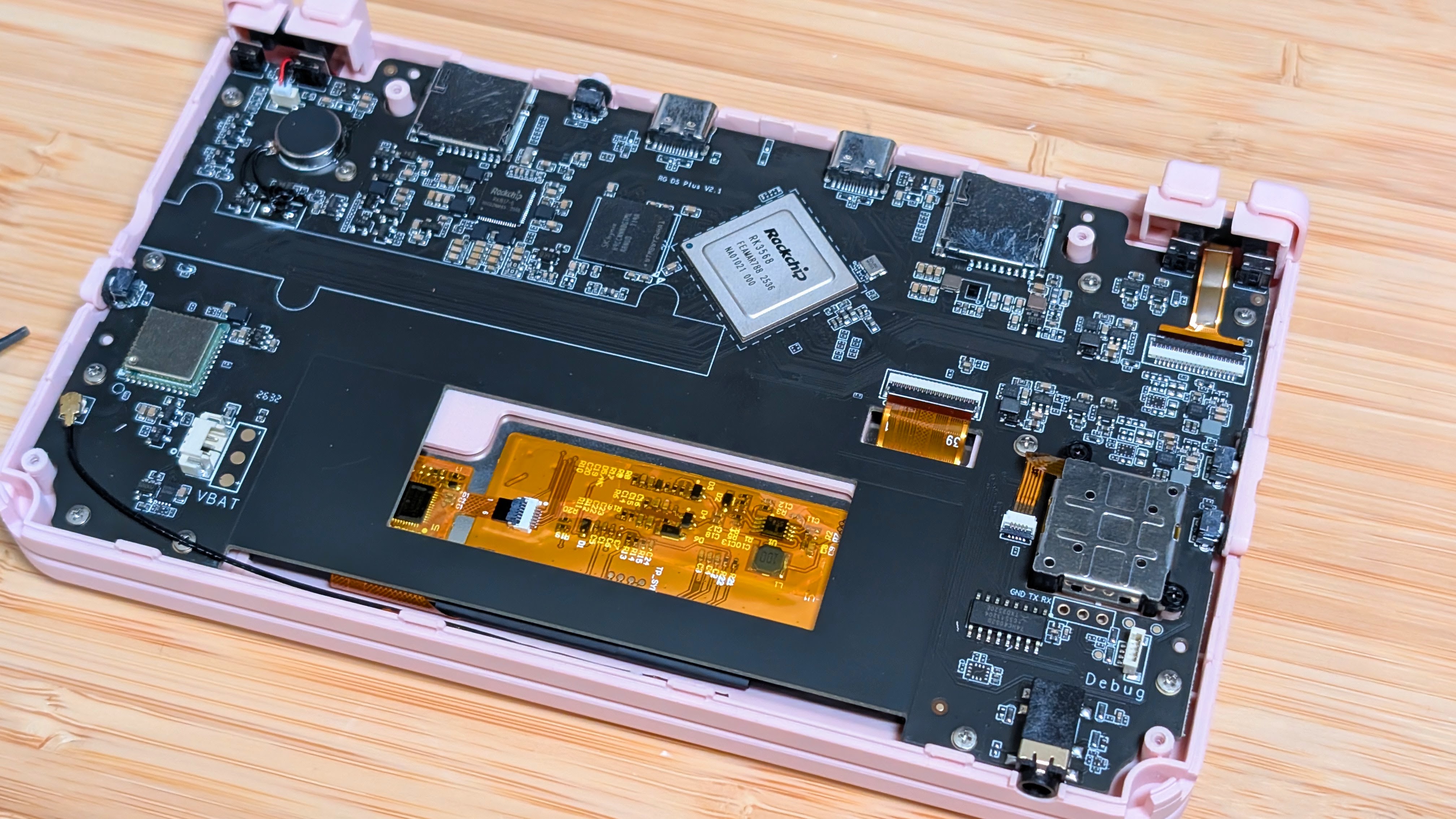
One last late mention for the review, but one that I think is more important than anything else. It’s important to remember these are built to be cheap handhelds. And that goes down to the components as well. If you noticed, I’ve had numerous pictures with both a black and pink unit in this review, but you never saw the pink one’s screen well there’s a reason for that.
During the photographing portion of the review, I attempted to charge the device (which you can see the light in some images) however following that, when trying to turn on the Pink RG DS+ simply gave up on me. After troubleshooting by removing the battery, changing SD cards, and trying a long time on just a 5 watt brick, it never came back to life.
But now it’s a parts machine on its way to RH User, and Saturday Morning Podcast Host Trihaeck.
Competition
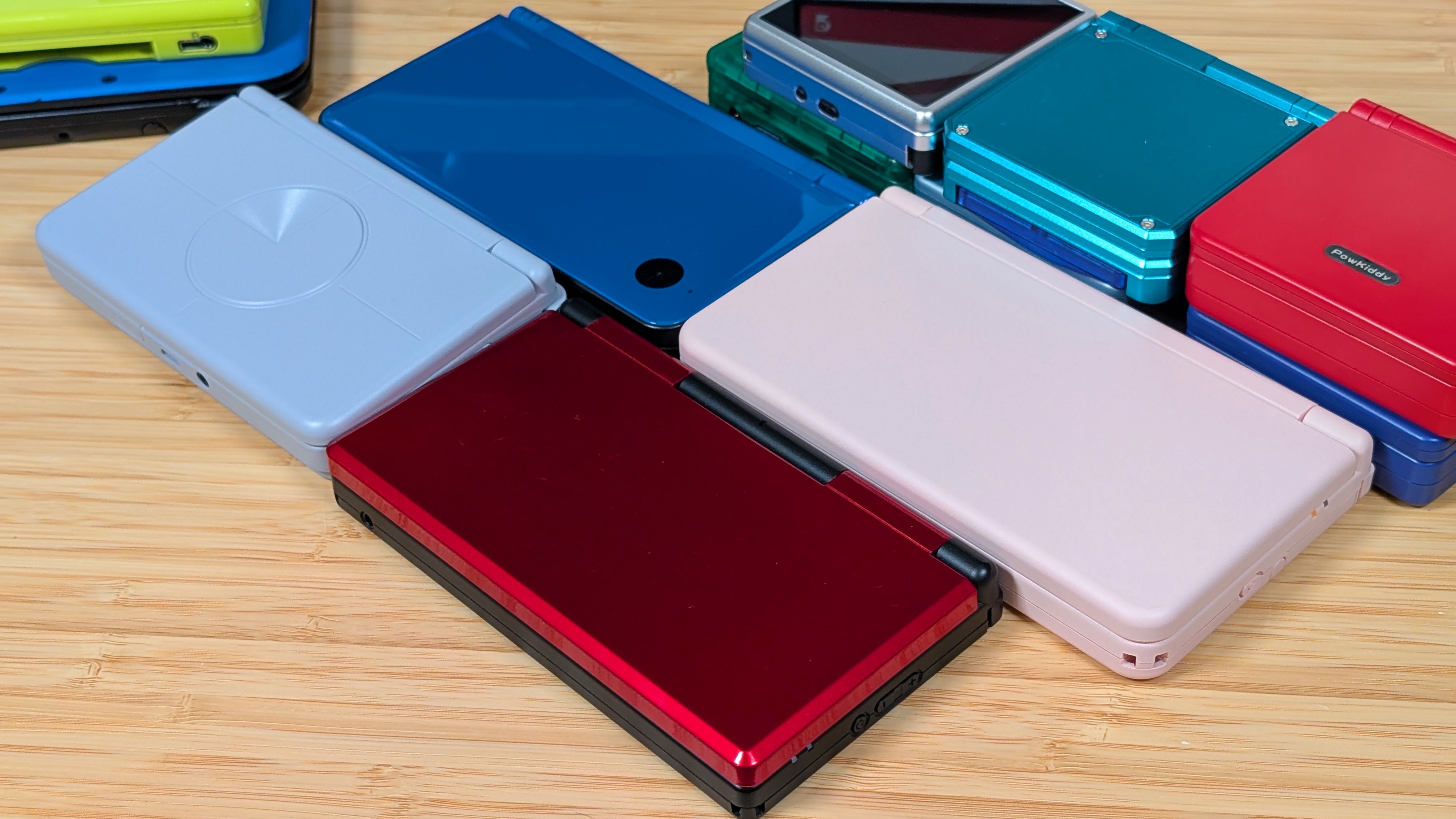
Competition… What is there anyways? For the sub-$100 price point you’re looking at this and the Anbernic RG DS from last year. Technically speaking if you want a Nintendo DS capable device that’s not dualscreen or clamshell, the MagicX Mini Zero 40 is capable, but not recommended in this regard. The screens are simply too small for me.
Stepping above that is the RP Duo Lite and Lite Plus for 50 and 100 dollars more. They’re both bigger LCD displays, but neither do integer scaling, and in the case of the standard Lite, barely offer more performance in the Android software available. After that the Lite Plus, Duo, and Thor for $200+ are more than twice the price, offer way more performance and quickly skirt into 3DS handheld territory rather than bespoke DS Device. The competition just isn’t there at the moment. And then there’s Youniq’s Dual Screen… Anyways.
Final Thoughts
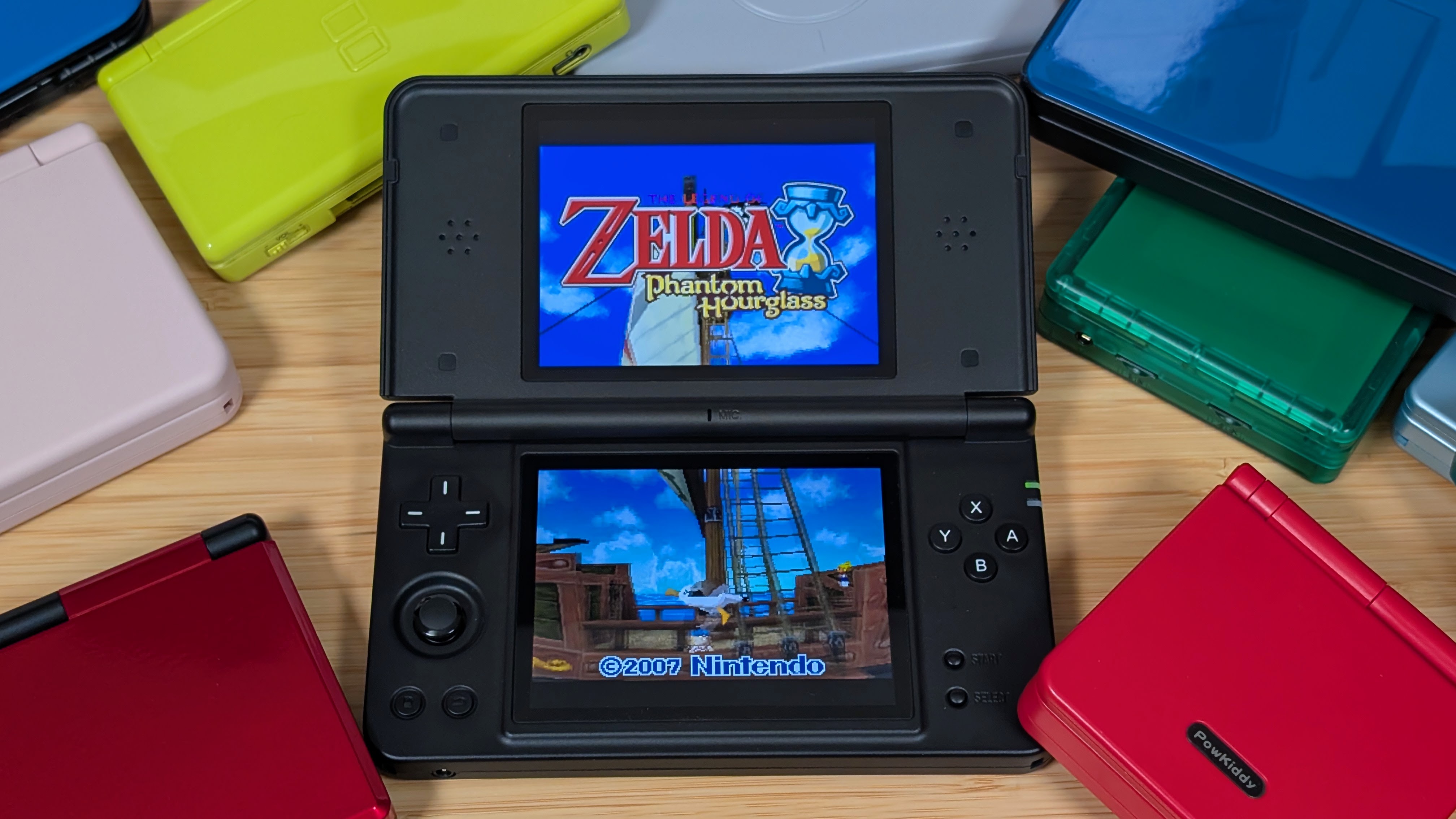
If you’re looking for a cost effective DS capable handheld that doesn’t feel like garbage to hold, the RG DS+, despite its many downgrades from the original is a total upgrade in terms of feeling. I prefer this in just about every way from the original. While the lack of eMMC is a shame, I’d rather use Gamma than Anbernic’s Android build. While 1GB of RAM is a shame, most of the Linux software available right now doesn’t require it, and most of Anbernic’s H700 devices are 1GB of RAM anyways.
It’s a game of cat and mouse to catch the best price with the rising costs of everything else, and I think Anbernic matched it well. I’ve been fairly ho-hum on Anbernic this year with their releases. The 55G1 had potential with a different chip. The RG Vita Pro had potential with a different everything except the chip.
And the Vita just kinda sucked. But modern Anbernic is doing a lot better when they’re creating bespoke systems that emulate the look and performance of the device they’re following after. This and the RG SP, have been my favorite devices of the year from Anbernic, and I hope they follow this trend further.
Anbernic PSP Go sized handheld when?
