

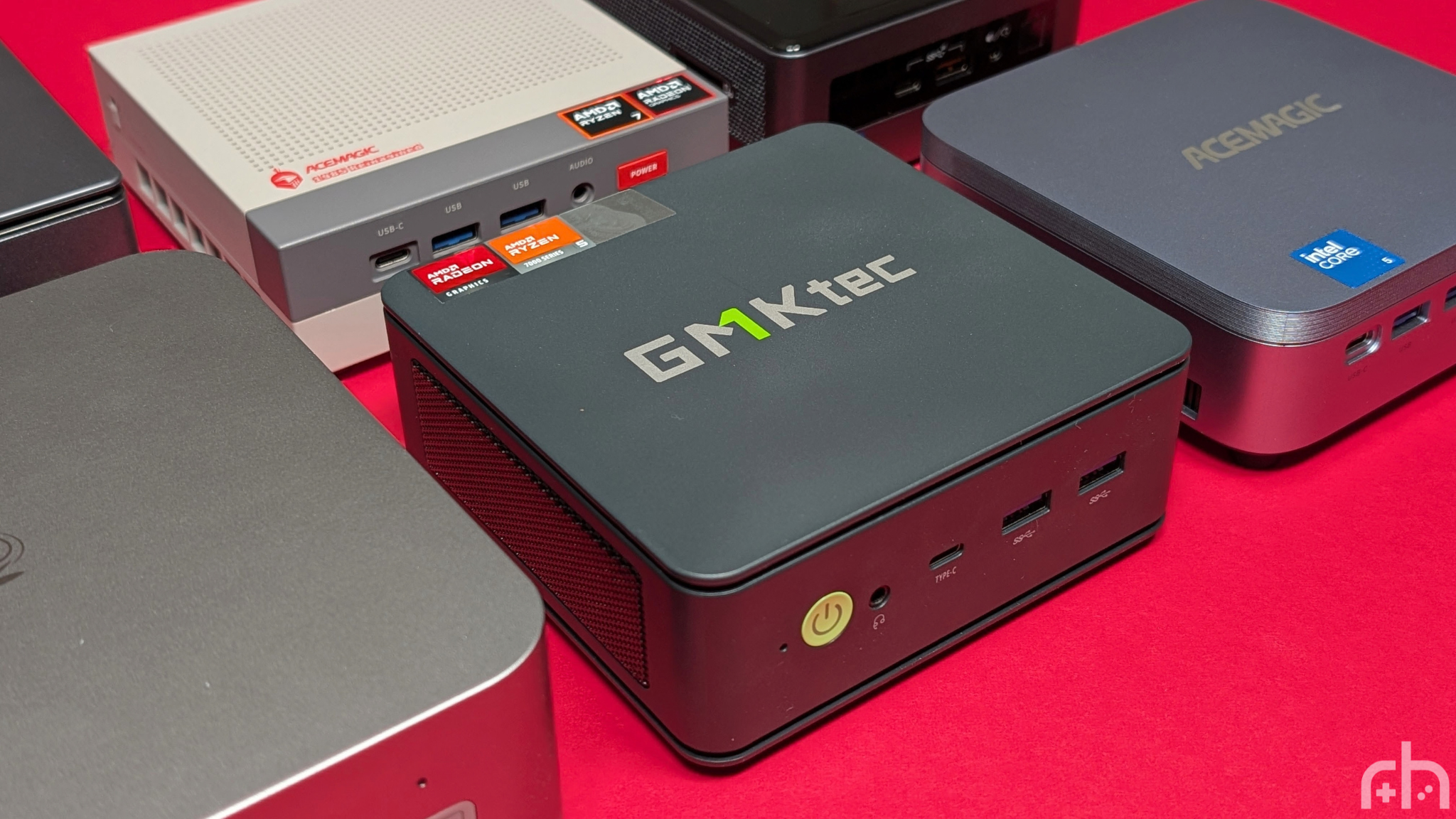
Do you remember when it was pretty easy to remember CPU tiers? Intel i3, i5, i7. Then they went about adding i9’s, Pentiums, Celerons, all that jazz before AMD rolled in with Ryzen. Kept it simple with their own Ryzen 3, 5, and 7. Eventually added in the base model Athlon, and the higher-end Ryzen 9.
Despite all of the insanity with how CPU’s are named now, like a 7730U being less powerful than a 7640HS one thing always feels standard. The “Ryzen 5” moniker represents the middle of the road, the best value, the thing most people could grab and be content with.
So how’s that stack up in Mini PCs? Well, GMKTec sent over its M6 Ultra to review. Powered by the Ryzen 5 7640HS, and its Radeon 760M graphics, it’s about time to see if the Ryzen 5 is still for everyone. Or if you need to take the step up.
Disclosure:
The device reviewed was provided as a review sample by GMKtec. This had no bearing on the conclusion of the review, nor did GMKtec have the opportunity to make edits or changes to the review before publishing.
Affiliate links might be present where applicable, and we may earn a commission on product purchases using those links at no extra cost to you.
GMKtec M6 Ultra Specs
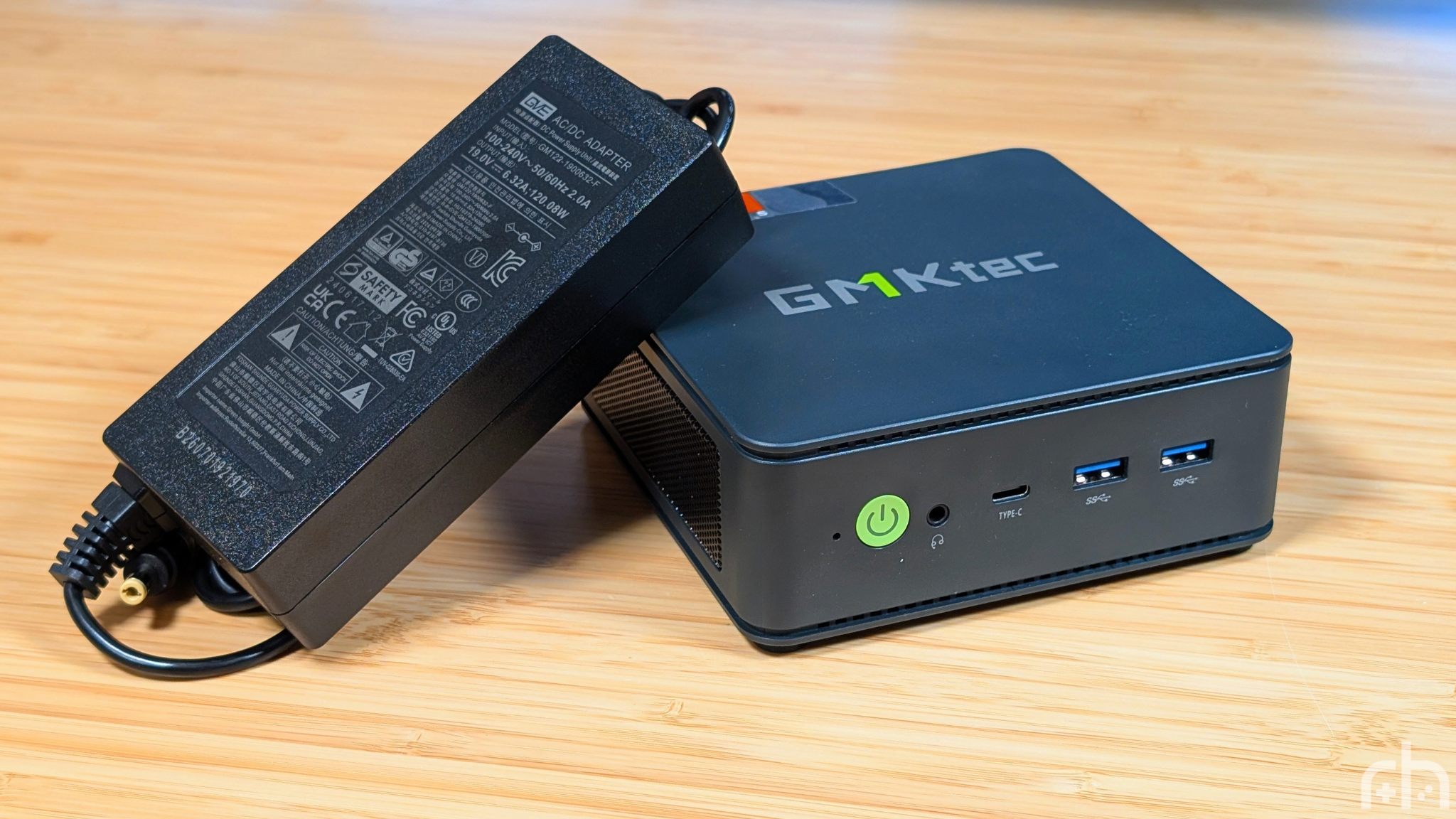
If you’re looking to pick up the M6 Ultra for yourself, there’s a couple of options for you. The versions with RAM and storage run from $460 to $630, depending if you want the 16GB/512GB configuration or want to double the RAM and storage with the 32GB/1TB version.
If you choose to go barebones, that’ll set you back $270 on the GMKTec website. But do be aware that with it being DDR5 RAM, you’ll need a good bit of money to upgrade the system. So take stock on what you do have before you choose to make the jump.
GMKtec M6 Ultra
- Manufacturer
- GMKtec
- CPU
- AMD Ryzen 5 7640HS
- GPU
- AMD Radeon 760M
- RAM options
- Storage options
- Wi-Fi
- Wi-Fi 6E
- Bluetooth
- Bluetooth 5.2
- Ports
- Dimensions
- 128.8 × 127 × 47.8mm
- Weight
- 528g
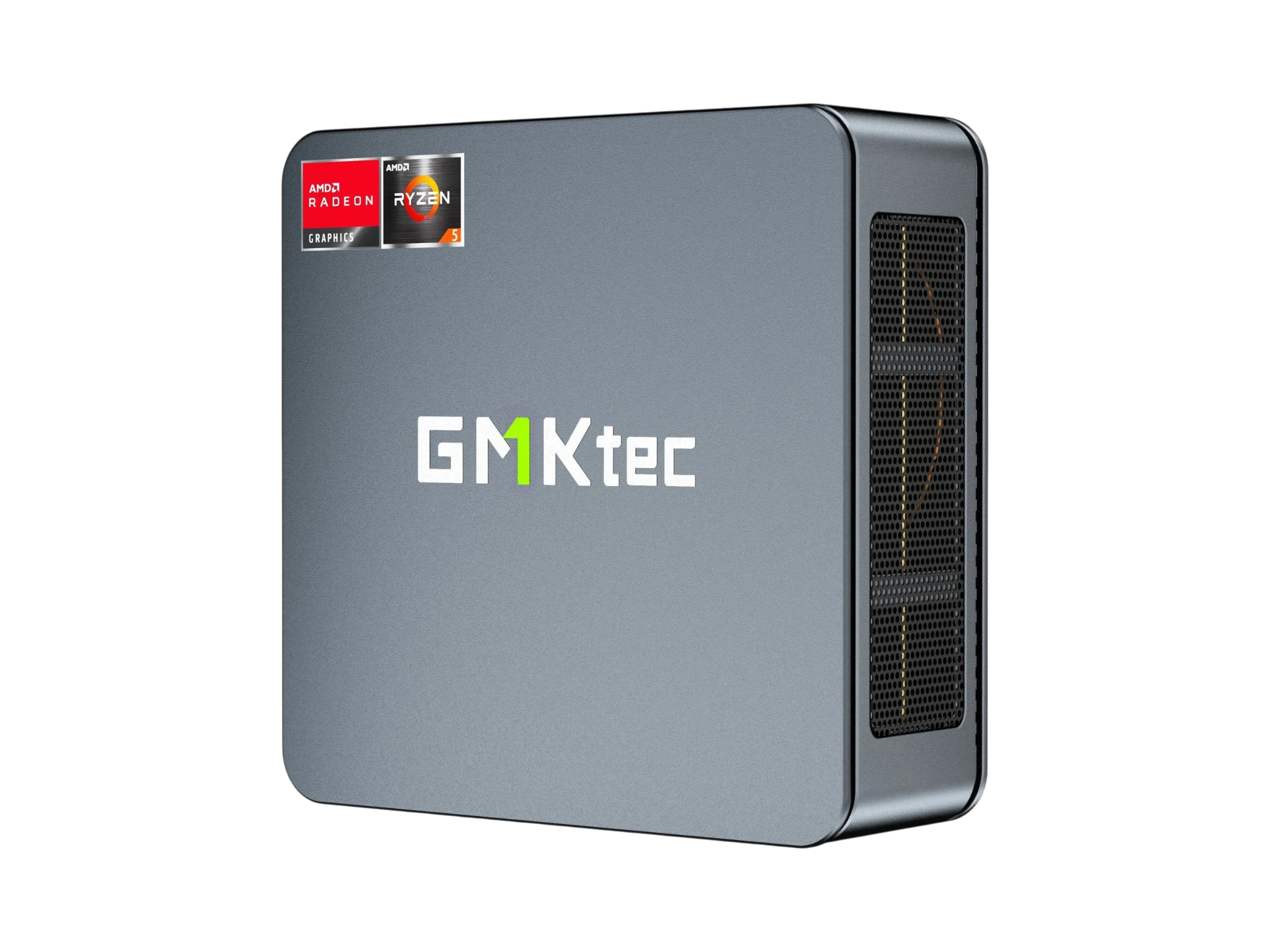
Build and Expandability
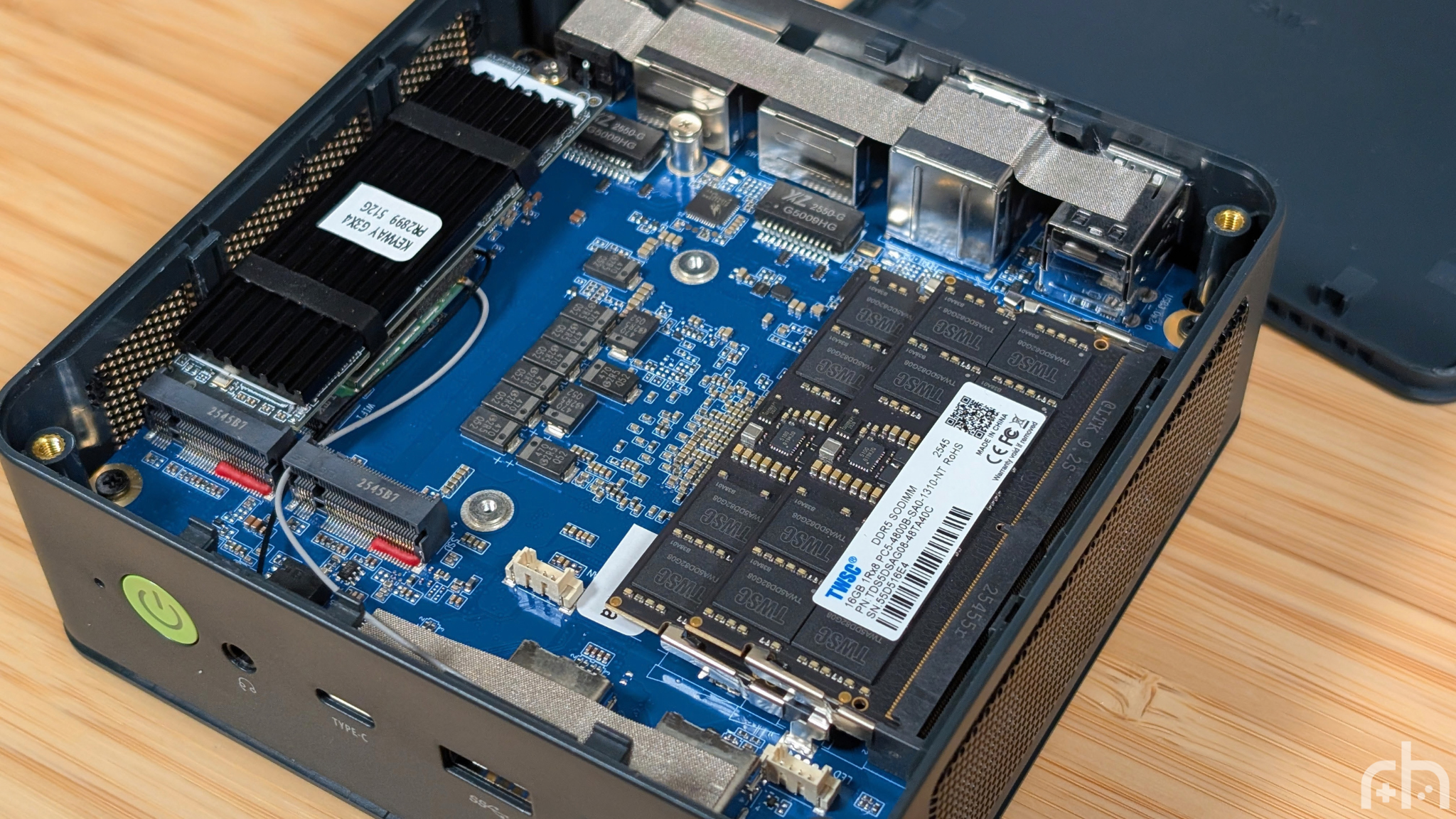
When it comes to the build quality of the M6 Ultra you’re getting a solid combination of materials. Yeah the shell is entirely plastic around the outside. But when you grab it to move the thing, you can tell it’s sturdy.
And that’s because the grills, vents, and likely the inside have a metal frame to help the rigidity of the device. Some mini PC’s will end up skimping and providing a single plastic outer shell, but at the very least GMKTec steps in and gives you a solid device from top to bottom.
Expandability is solid too. RAM, Wi-Fi, and SSD can all be changed and upgraded once you’re inside. But rather than peel away feet to access screws, you just peel up the top and pop those tabs to reveal screws on the top.
Once you get those in, release the last plastic latches, and flip the can cover over to see the guts. It’s a nice change of pace versus some other options, but I think I prefer getting into something like the M7 Ultra over this.
Performance
Here it comes, the moment you’ve really been waiting for… how’s it perform? As usual I’m going to break it down into both synthetics as well as in terms of gaming benchmarks. The goal is to pull from some of my more recent PCs for the closest comparisons for you.
But I think offering alternatives both in the Ryzen 7 line, as well as the Intel Core 5 lineup, will give you some insight on what may be best for you. And as an extra point of comparison, the Geekom A5 and its older Vega based graphics will be provided so you can see how much of a jump RDNA has been.
- GMKTec M7 Ultra
- GMKTec M6 Ultra
- Acemagic Retro X3
- Acemagic Matrix M5
- Geekom A5 2026
Synthetics
Starting off with Geekbench to check how the CPU is performing, the 7640HS is doing surprisingly well for its tier level. Strangely enough it comes out on top of all of its 8 core, AMD counter parts in both single and multi-core performance, though it comes up slightly short of the Core 5 255 in the AceMagic Matrix M5. That being said, it doesn’t come up all roses for intel, as the 760M GPU takes a sold position out of the batch, decently beating out Intel 80EU graphics, and really only losing to its bigger brother, the 780M.
All of this to say, if you’re looking for something that performs well in synthetics, the 740M in this GMKTec M6 Ultra is going to be a solid 2nd or 3rd place choice.
Gaming
Jumping into gaming is where things look quite a bit more interesting. The 780M’s lead jumps a bit more in some circumstances. Tomb Raider 2013 doubles FPS over the 740M, and Dirt 3 is a solid 50-60% higher in terms of FPS. But outside of those games, they’ll mostly land close to each other, within a few frames.
The one exception I really see is Bioshock Infinite running at 1080p low. While the 680M, and 780M were rocking comfortable at 140+ FPS, the 740M had lost to even the Intel iGPU at just 89fps. Still completely playable, but was just another oddity in performance that I noticed.
With a tweak to settings this could be a solid 30-60fps gameplay machine in a lot of titles. And if you wanted a “Steam Machine Lite” I could see this being a decent option. But that’s about where I’d place the 740M. Competent, but not world shattering.
Extra Gubbins
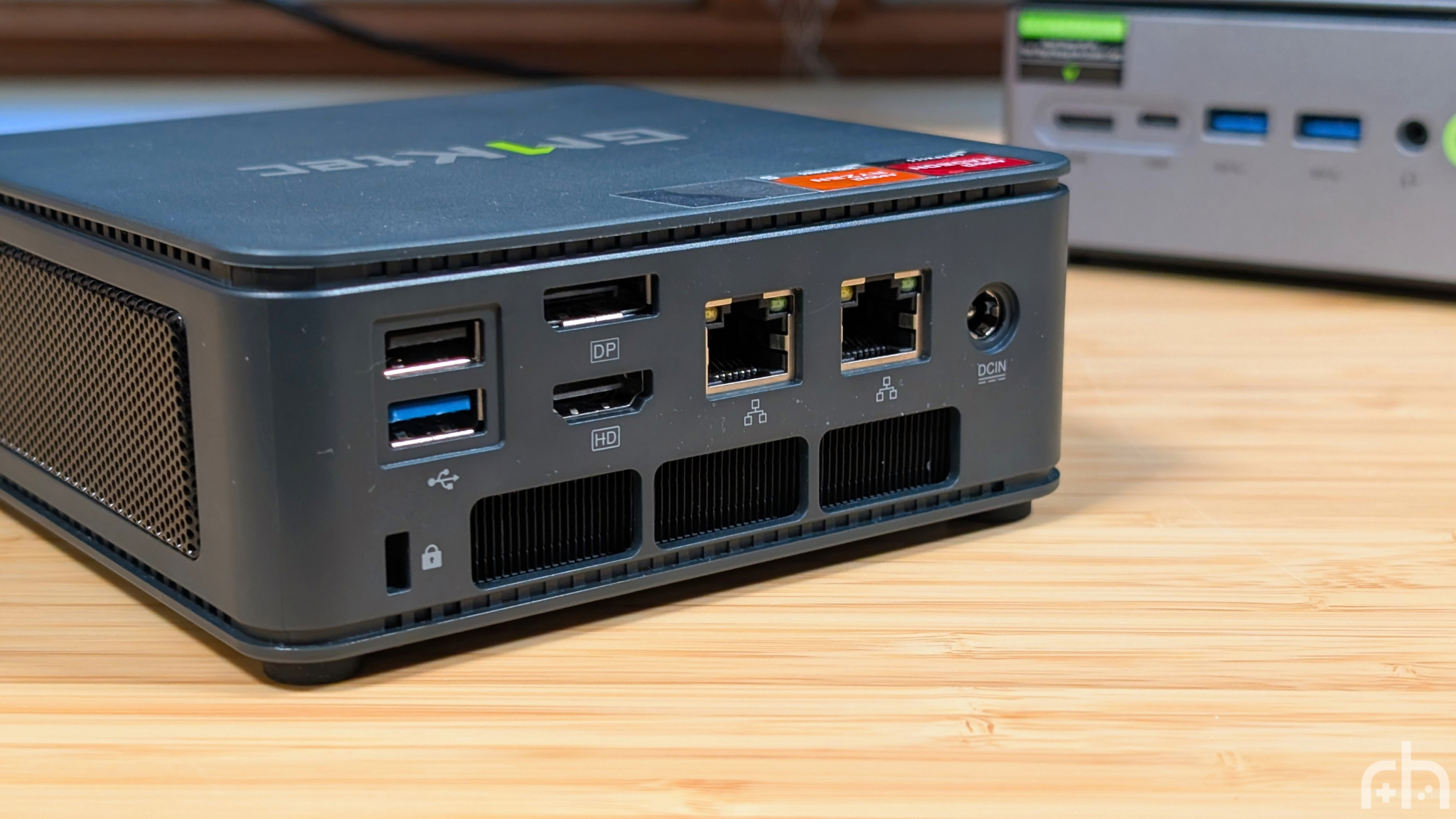
When it comes to the extra bits, they may not be as positive as I originally intended them to be. Over the course of my testing, while the fans may not be loud, the one positioned to cool down the ram and SSD had more of a whine to it than I originally thought.
The slightly higher pitch was something my ears could more easily pick up, and if I was just sitting there with no audio, it was something noticeable. The fan for the CPU itself though was basically silent during my use.
Alongside that, I did end up having to reset my Windows installation during the testing of this mini PC. I normally try stock for a bit, but following driver and system updates, I would run into a series of random stutters that would start to give me some pause.
Reinstalling Windows cleared things right up. But when running tests to check if anything was on the system, it came up blank, it really might have been a one-off.
Final Thoughts
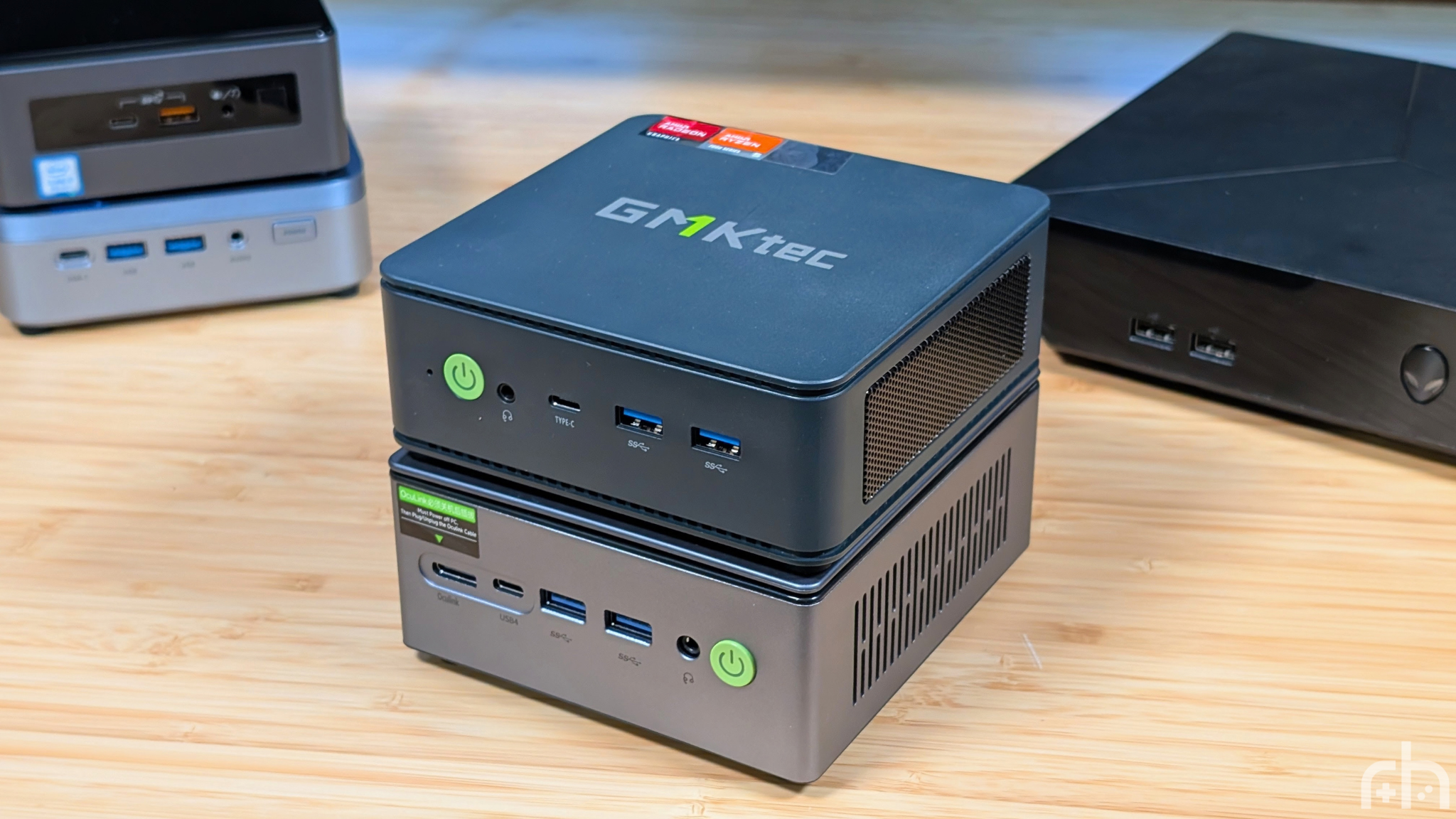
If you’re looking for a completely bogstandard Windows or Linux Mini PC, I think the 7640HS in the M6 Ultra is going to be an utterly competent device. Dual Ethernet ports, up to three displays out, and the general inclusion of USB-4 is going to make this a pretty potent and pretty flexible setup for PC now, and maybe a home server later. GMKTec also does this one well by allowing it to have dual fans to continue cooling your internal components, aiming to increase longevity of the device as a whole.
If your focus is on gaming with a Mini PC, or just grabbing the Ryzen 7 equivalent of whatever you can, this might not be your first bet. But as a piece of kit, knowing how well GMKTec has already been doing with the production of their mini PC’s, this is one I can still recommend to a more casual audience.
Though, some cheaper systems will still be great for day-to-day browsing…
