

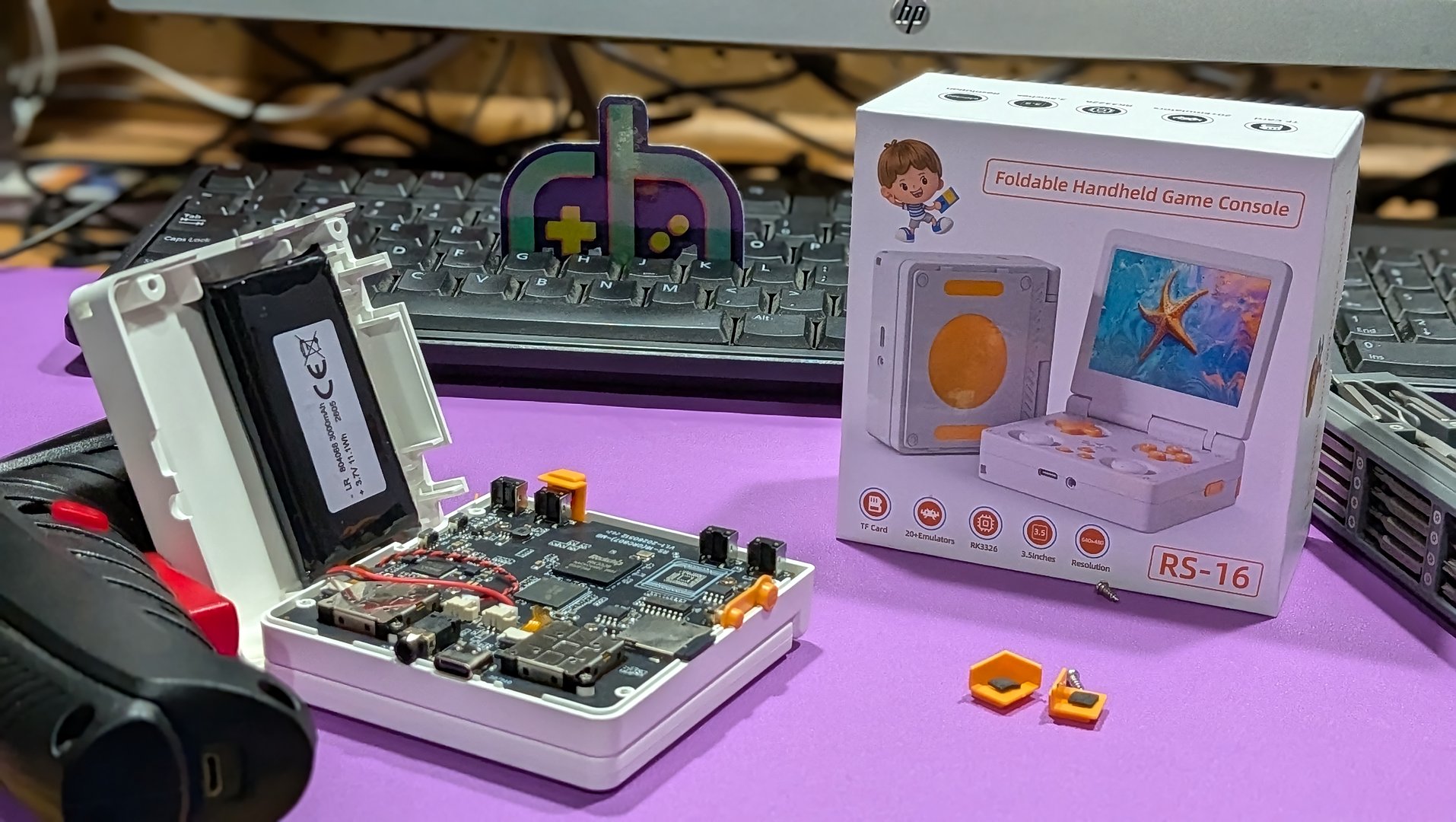
Who doesn’t love a good mystery? A whodunnit story is one of my favorite genres. Nowhere is this more true than with emulation handhelds. I’ve been fascinated by clones and white label handhelds since the hobby began picking up steam a few years ago. The RS-16 is the true embodiment of the genre. This thing arrived in my mailbox for review, and I have no idea where it comes from or who made it.
The device’s GBA SP lineage is undeniable, but in a flood of clamshell releases from just about every major player in the emulation space, this may be the first true mystery clone to hit the form factor. The biggest shock? Someone actually seemed to care when assembling this enigmatic ode to early 2000s nostalgia.
RS-16 Specs
As I can’t find any current sales listings for the RS-16, it’s difficult to confirm the specs beyond what’s listed on the box. I did pop the shell open to have a look under the hood, and everything looks to be as it should. I have no reason to suspect that any of the listed specs are incorrect, especially given that the device performs better than I might have expected when compared to some of its lesser-tuned RK3326 brethren.
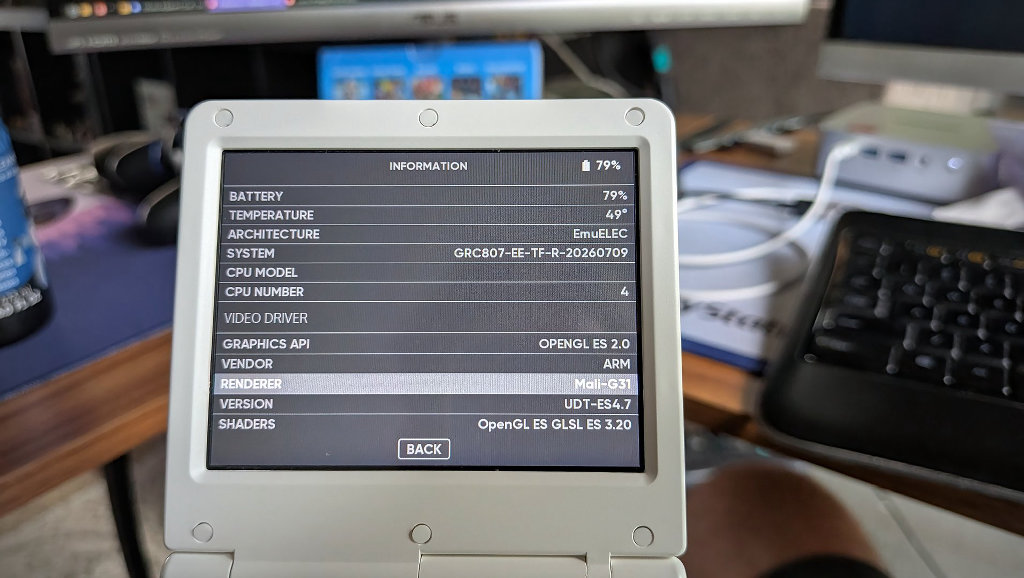
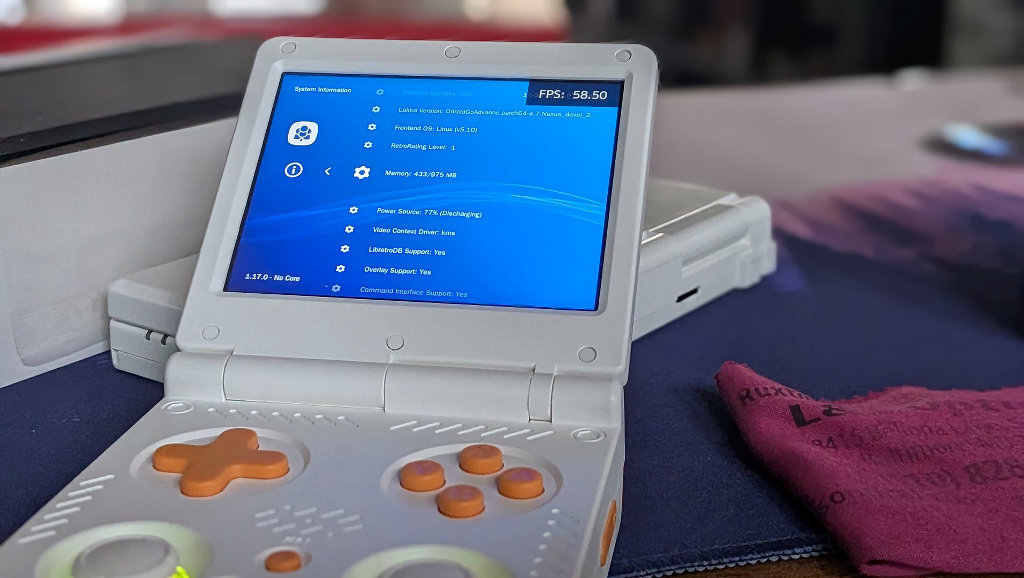
From what I was able to piece together in RetroArch, the RS-16 is running a custom version of ArkOS with EmuELEC running off of the old Lakka OdroidGoAdvance target from 2023. The creators likely took pieces of different bits and made them work together for this hardware design. This setup gives me hope that a better solution from the community shouldn’t be too far away.
| Hardware | |
| CPU | RockChip RK3326 |
|---|---|
| GPU | Mali-G31 MP2 |
| RAM | 1GB LPDDR3 |
| Display | |
| Screen Size | 3.5-inch |
| Resolution | 640 x 480 |
| Aspect Ratio | 4:3 |
| PPI | 228.57 |
| Storage | |
| Internal Storage | ❌ |
| External Storage | microSD |
| Battery | |
| Battery Capacity | 3000mAh |
| Est. Battery Life | 4-5 Hours |
| Connectivity | |
| Wi-Fi | ❌ |
| Bluetooth | ❌ |
| Ports | 3.5mm Audio Jack, microSD, USB-C |
| Controls | |
| Sticks | 2x |
| Shoulder Layout | Shelf |
| D-Pad | Top Left |
| Audio | |
| Speakers | Mono |
| Speaker Location | Front-facing |
| Headphone Jack | Yes |
Hardware & Design
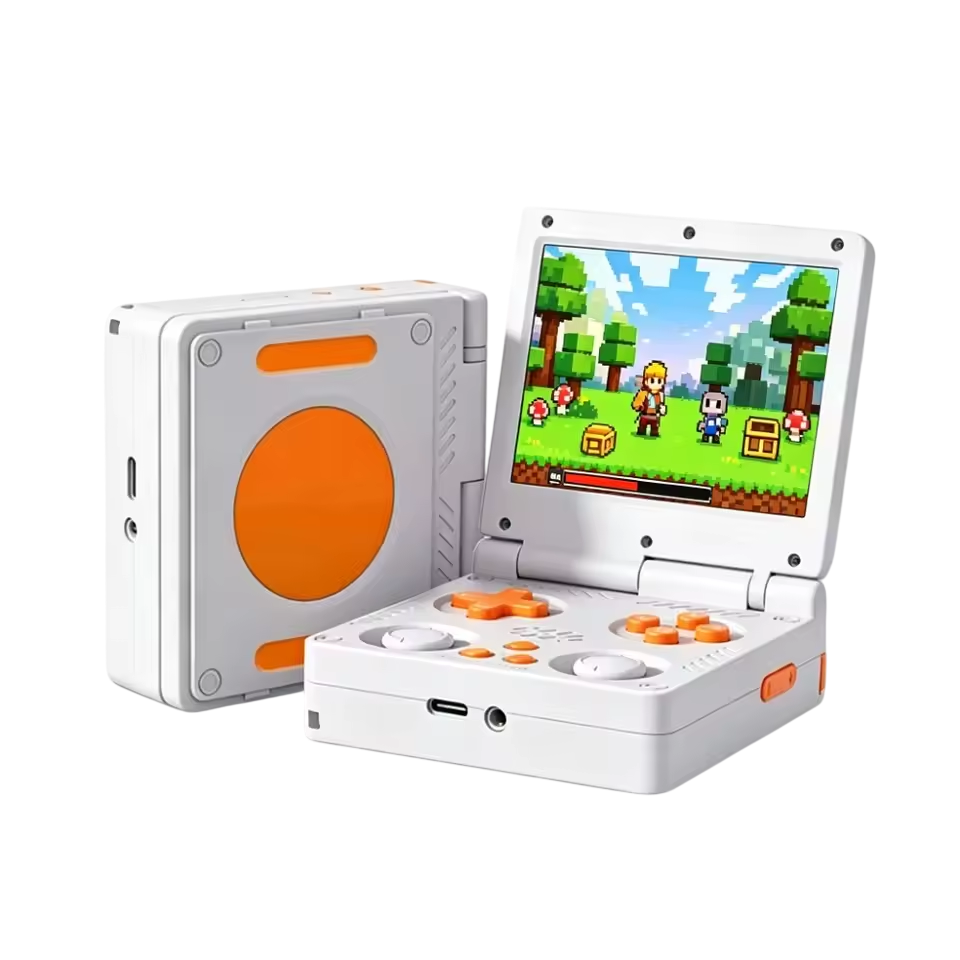
The RS-16 isn’t a particularly handsome device. It’s a bit of a chunky handheld when compared to its inspirations, and the shell design is pretty generic. My white/orange unit wins me over with Baltimore Orioles coloring, but that was only by the luck of the draw and my coincidental baseball fandom. Having said all of this, there’s still something that draws me into the RS-16 that I can’t quite put my finger on.
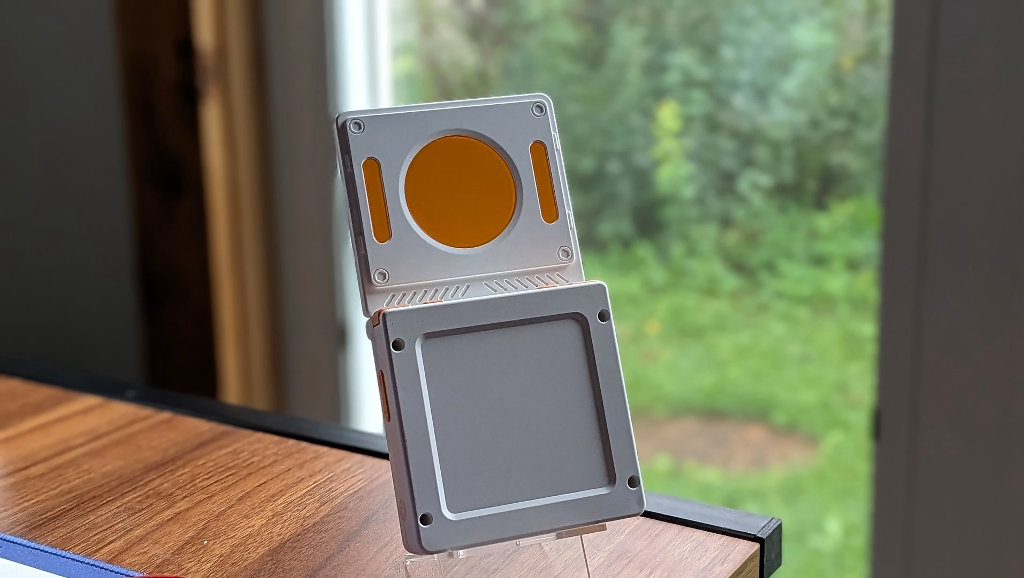
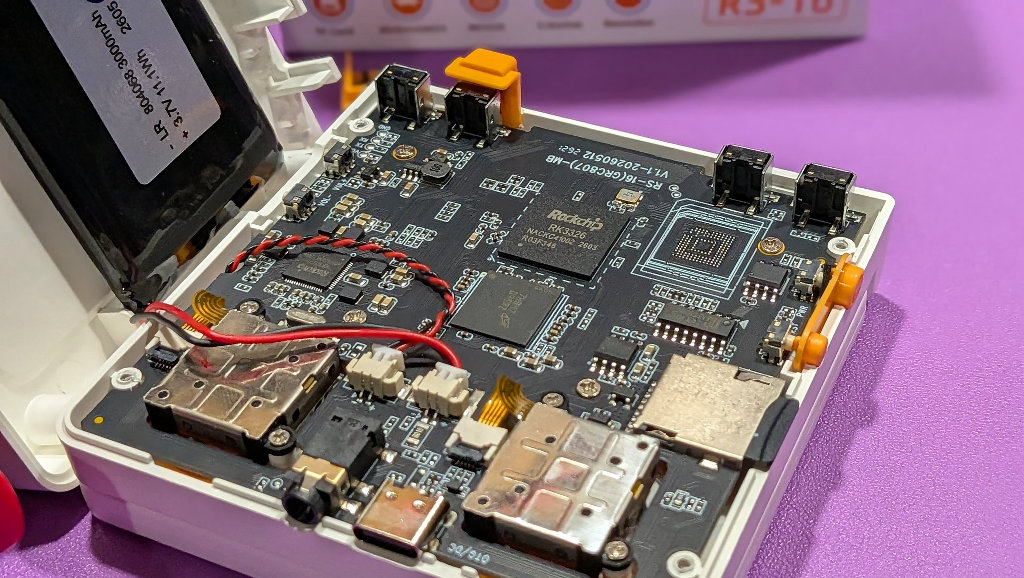
Opening the handheld up told a bigger story. Despite a generic exterior shell, the interior PCB demonstrates real intent in design. An indication that the internal design came first, was matched with whatever external parts were available, and that someone, in the end, still managed to churn out a pretty damn good product.
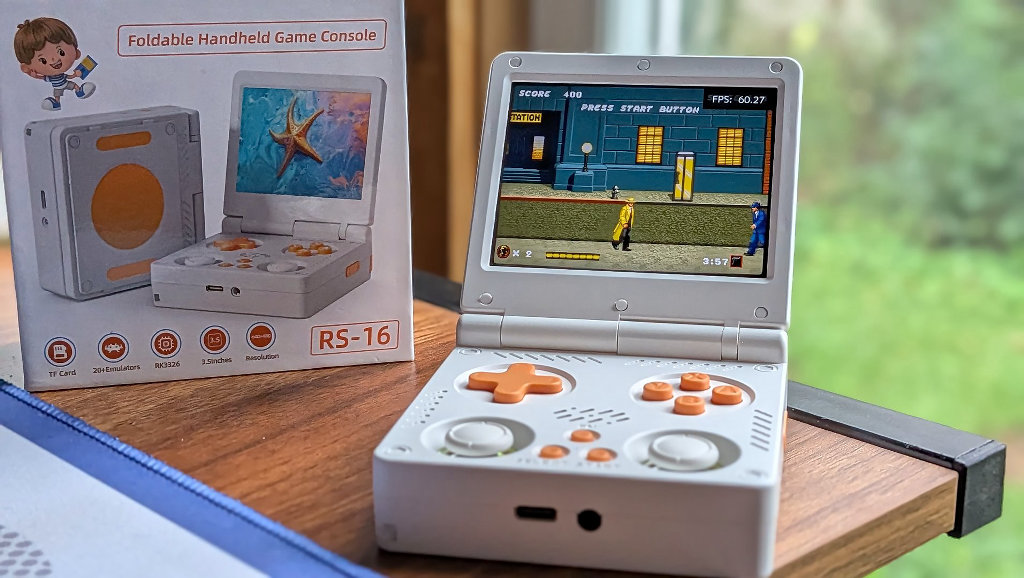
There weren’t budget options like the ubiquitous R36S in the clamshell form, and whoever is producing this clone clearly noticed. This isn’t an Anbernic copycat device that tries to build sideways to check off a features list. The RS-16 was built down to keep prices low. No brand, no WiFi, no BT, no factory OS, etc. Nothing but parts put together to work. It took what worked for clone designs that came before it, and slapped them on a new PCB that fits this hardware design. If it ain’t broke…..
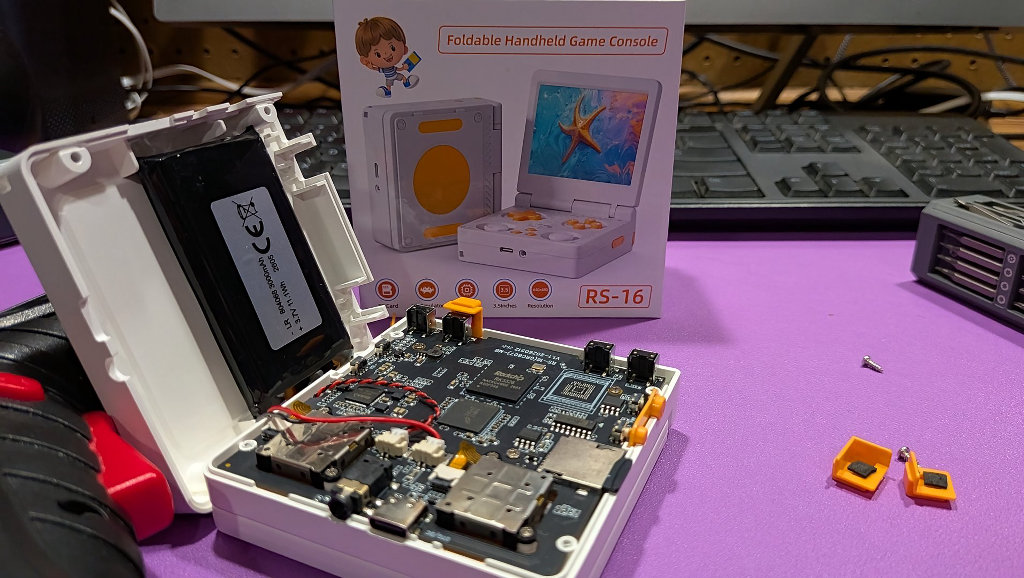
The board internals show that these systems aren’t some random hodgepodge of leftover parts made to work. The system board is fresh, with date codes that translate into production earlier in 2026. The exterior shell design might look a little sloppy, but the interior parts design appears anything but. This feels like a device that was made by someone, rather than just manufactured.
It’s a similar feeling to the experience I got from testing the CB-408 – another indie-produced handheld released a few years back that has since faded into unfortunate obscurity, but gave some much bigger names in the space reason to sweat.
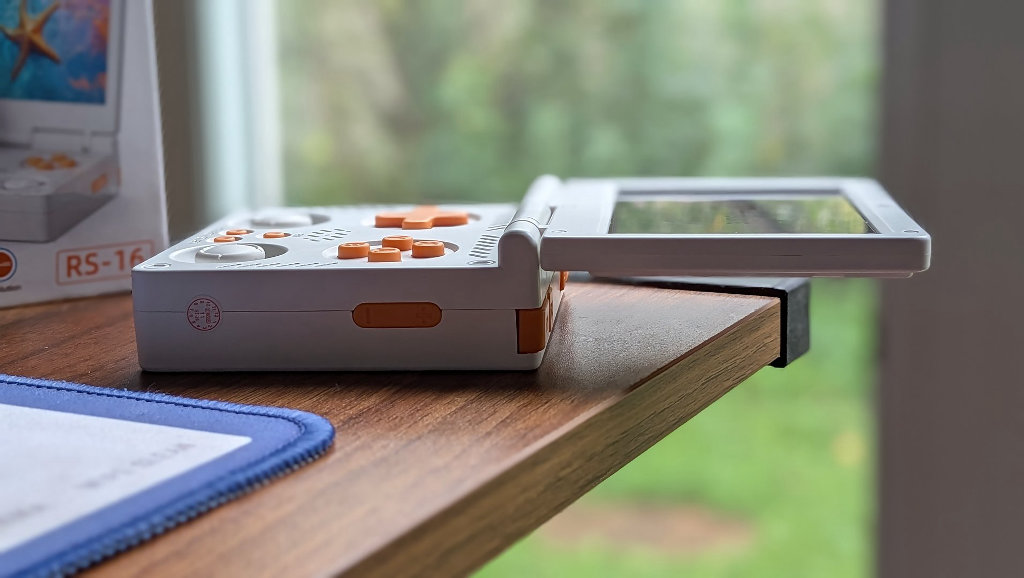
A lot of the success of a budget clone like the RS-16 hinges (pun fully intended) on its ability to last while being repeatedly opened and closed. This screen doesn’t snap into fixed positions like an RG35XX SP. You’re free to leave the RS-16 bent to whatever angle you prefer. Only time will tell if the hinge lasts, but I haven’t seen anything to indicate otherwise yet.
Controls
The control package on the RS-16 sits right in the meaty part of the curve of what I’d call “clone functional”. The D-pad and buttons are far from the most premium you’ve ever used, but they get the job done just fine. The D-pad might be a little low and tight for some folks, but I thought it leant itself to the system design quite well without going the “clacky” route of something like the Anbernic RG35XX SP.
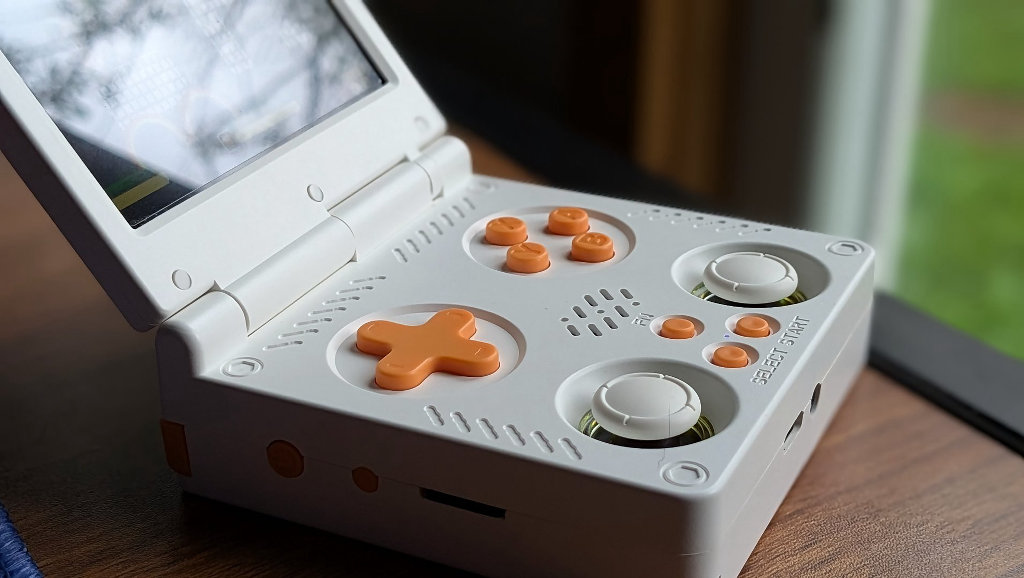
Analog sticks are fine, if unremarkable. The same standard Switch-style sticks we’ve seen included on dozens of devices that came before. I don’t use them a great deal on a system like the RS-16, so they end up being something of a bonus for me. If you want them, they’re here and work fine.
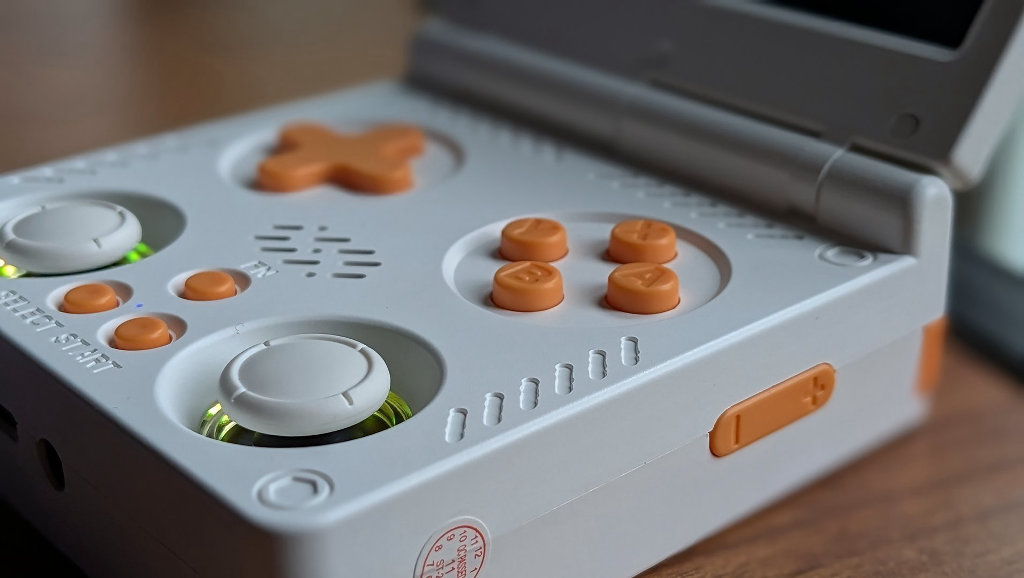
One part of the control package that I can’t claim is fully functional are the shoulders. I feel like I’ll still be writing about the lacking quality of clone shoulders until they put me away. I don’t know what it is, but getting a decent set in a clone console seems out of reach for the majority of these manufacturers. They’re often loud, and if that were the only problem with the shoulders on the RS-16, I’d be more likely to forgive, but these shoulders might be the worst I’ve ever tested.
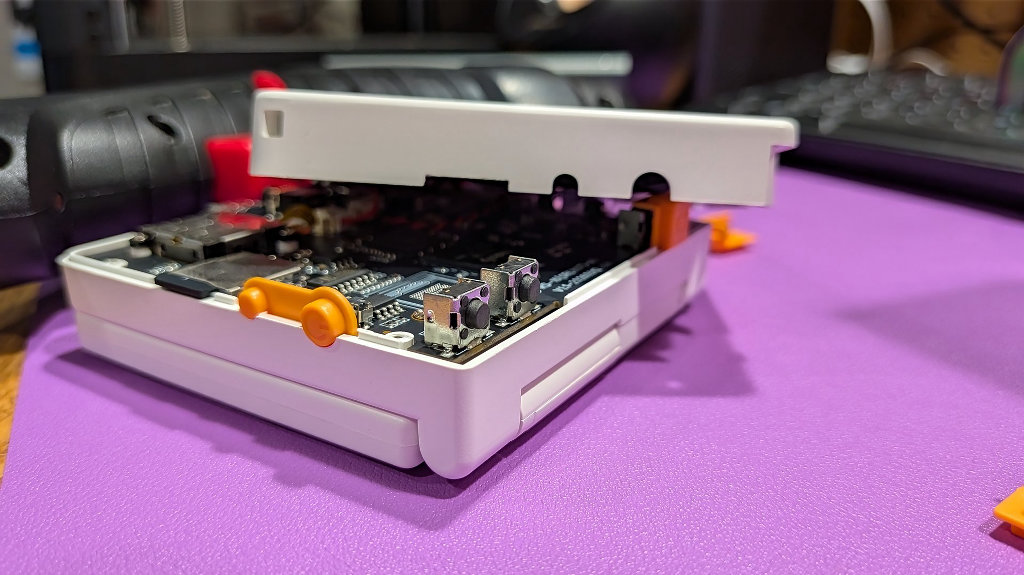
The L1/R1 buttons that sit on the edge corners of the unit require an almost comical amount of force to register a button press. I’m a big guy, and I had to make an effort. My 10-year-old tried it out and just handed it back to me and said “yeah, they don’t work”. Popping the handheld open and reseating the buttons seemed to make things a wee bit better, and I’m sure they will wear to be easier over time, but if this were my clone system, I wouldn’t have let it out the door wearing those shoulders.
Software & Performance
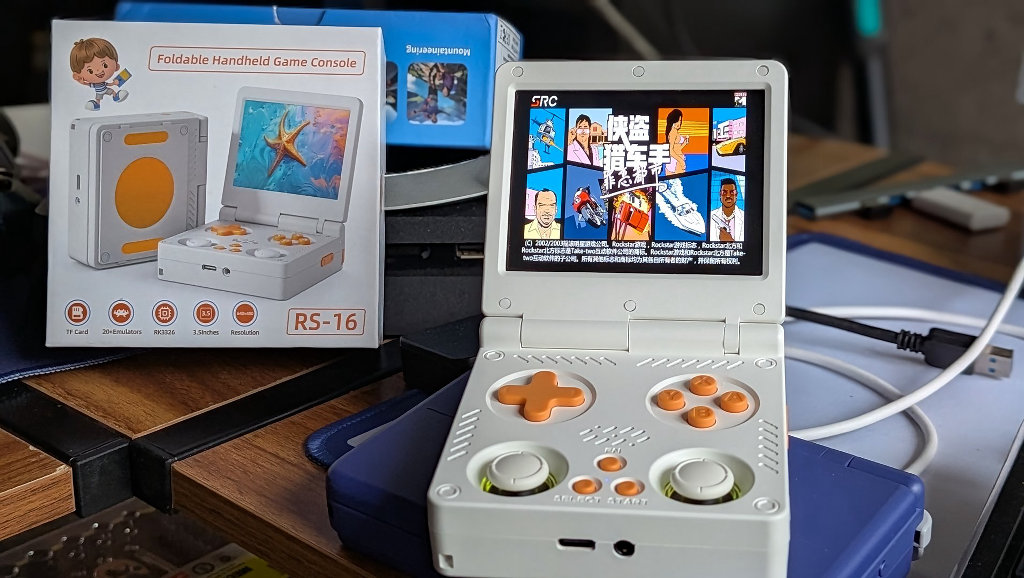
There aren’t many secrets left with the RK3326. This chipset is a well-worn road with the Retro Handhelds community at this point. Expect fully competent emulation through 8/16-bit generations and up to the PSX, with some bonus functionality at the margins; a selection of N64, Dreamcast, and PSP titles to be judged on a case-by-case basis.
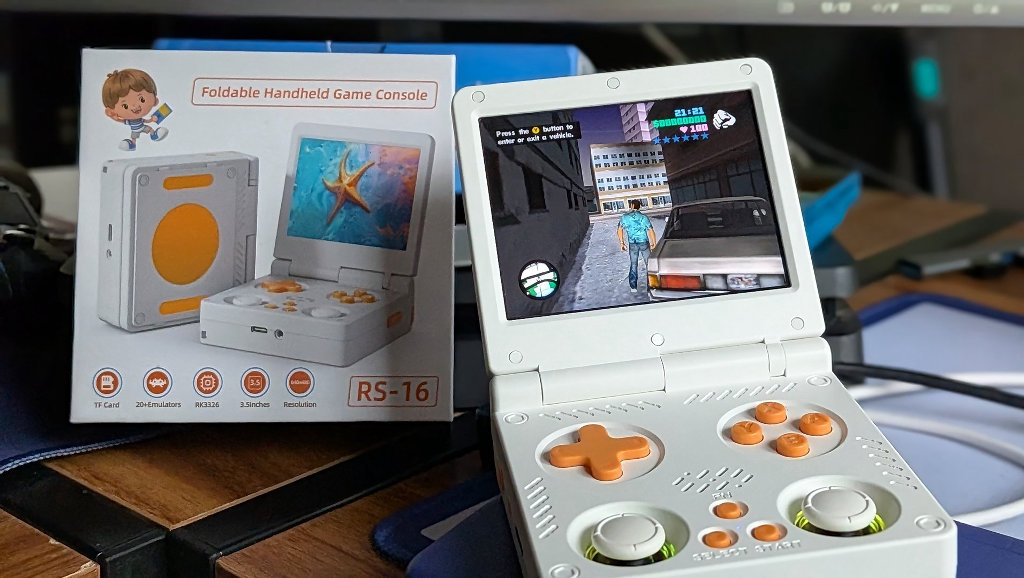
Where the RS-16 actually blew me away a little bit was in the included ports. The 1.5Ghz tuned RK3326 on the RS-16 really did a fantastic job handling the litany of PC ports the maker included on the packed SD card. They’re all in Mandarin, so I could only venture so far, but playing Vice City on this system at full speed felt pretty cool. It’s a testament to all the driver and software development that has been done over the last few years for this humble jack-of-all-chips.
Display
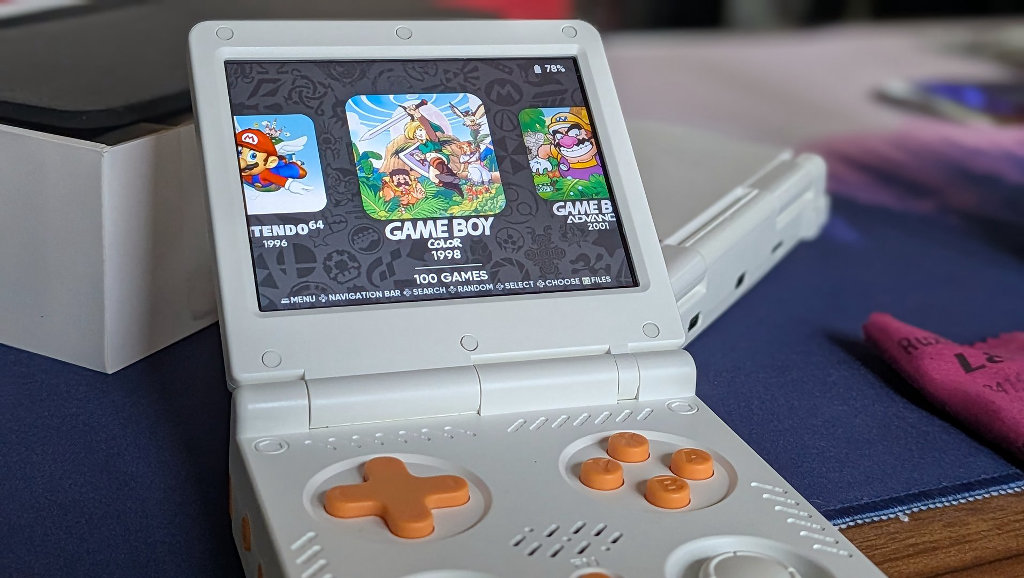
Despite its generic stats, the screen on the RS-16 might be one of its strongest assets. On paper, the 640×480 3.5″ screen seems like standard fare, and it is, but whatever this panel is – looks fantastic. The screen gets brighter than I imagine I’d ever have call to set it at, which is a good thing, and at roughly 230PPI, there’s a crispness to everything on the screen.
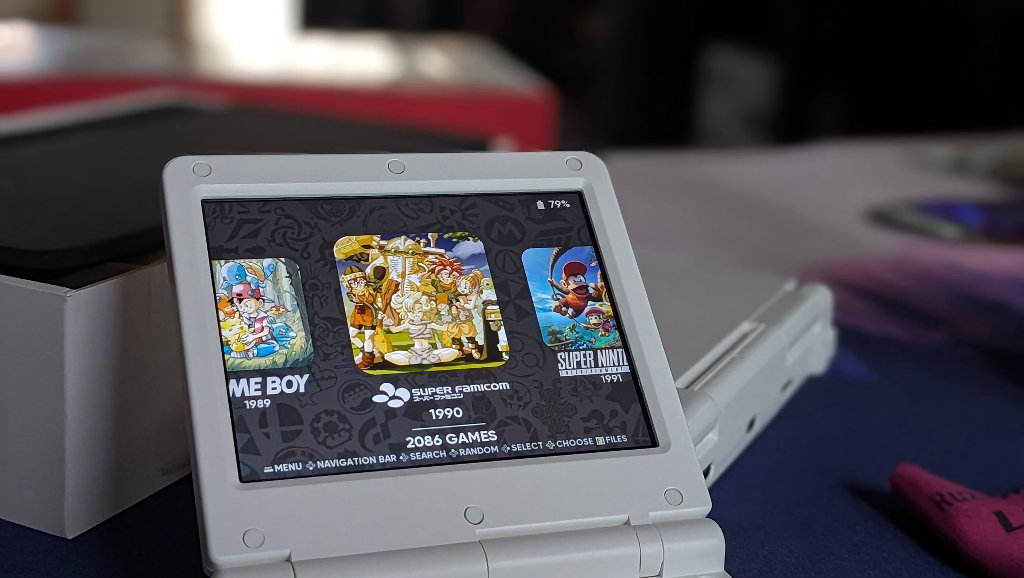
It’s entirely possible that there’s nothing particularly remarkable about this screen panel at all, it’s just that we’ve reached a point where this chipset and software have reached their performance apex, and developers know how to make the hardware sing its best song.
TL/DR
I catch a fair amount of deserved guff around the hallways of RH for my love of the RK3326. What started as a genuine love did morph into commitment to the bit for a while, but lately I feel like that fire has been reignited. We now have the software and drivers to pull every last bit of performance out of this old Rockchip, and it has only continued to impress me with what it can achieve.
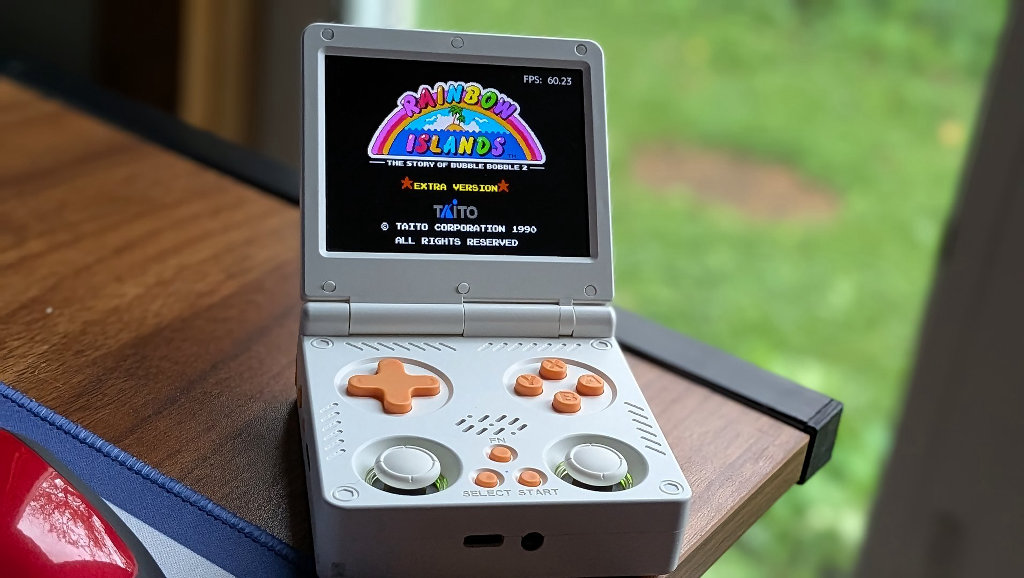
Should you go out and buy an RS-16? Well, that’s the tricky part. I’m not sure how you can. In researching this article I wasn’t able to find any current For Sale listings on AliExpress. Is it possible a larger player in the emulation space had the listings removed like we saw back with the R33S? It’s anyone’s guess at this point, but keep an eye out for the RS-16, if you can score a sale deal on one, you might unexpectedly fall for it just like I did.
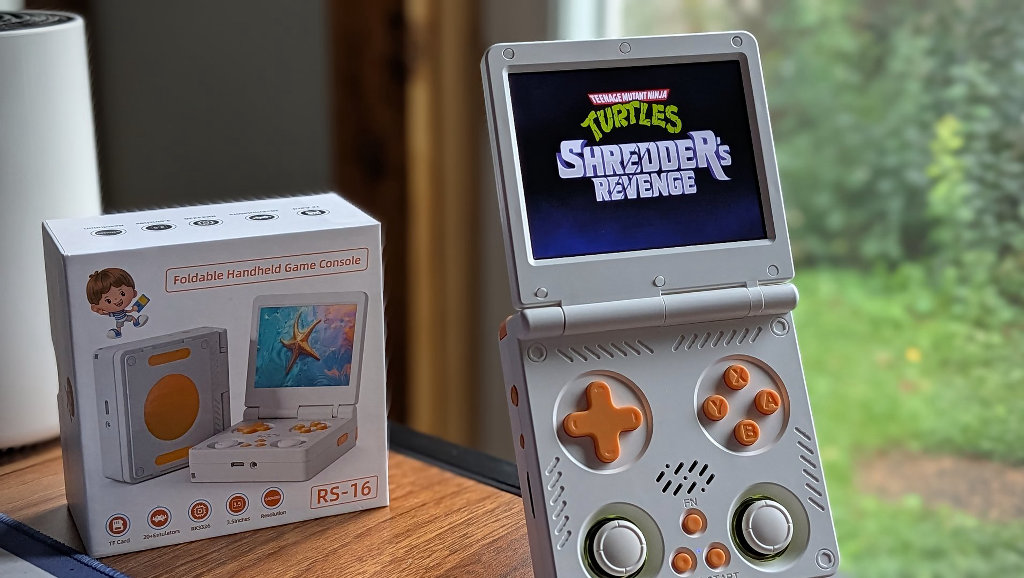
So, the whodunnit remains a mystery for now, but the RS-16 just goes to show that there are still new handhelds to come and fill a budget niche, and the RK3326 is still well equipped for the task.
