

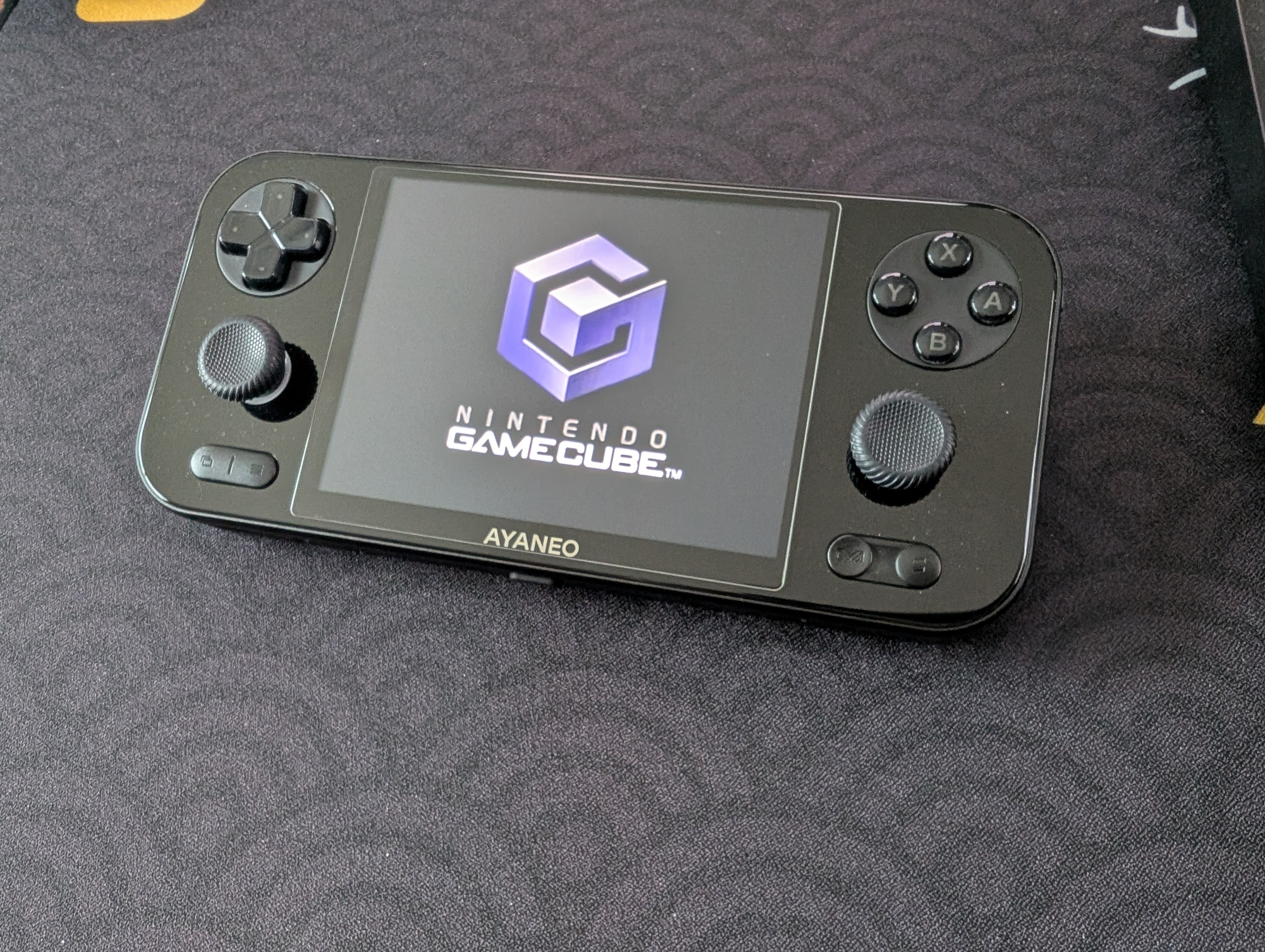
This is now the third article I’ve written concerning my experiences with video game store rentals in a small town, previously focusing on the “B-Listers” available for the Nintendo 64 and PlayStation. With our old pal Zu having just released a video talking about gaming rituals and experiences that are now all but lost to time, I felt nostalgic and decided to jump in and write another article, this time about the Nintendo GameCube. This was one of my favorite consoles growing up, released in the early 2000s, just a few years before digital storefronts like Xbox Marketplace and the PlayStation Store would start sounding the death knell for these rental institutions.
I can vividly remember getting a strategy guide and copy of Super Smash Bros. Melee for my birthday, followed by the actual GameCube console for Christmas (my birthday was in early December, so Part 1 of 2 gifts were common). It would be one of the only games that we actually purchased for the console, but that didn’t stop us from running down to the local video game store to find something new to play!
Billy Hatcher and the Giant Egg
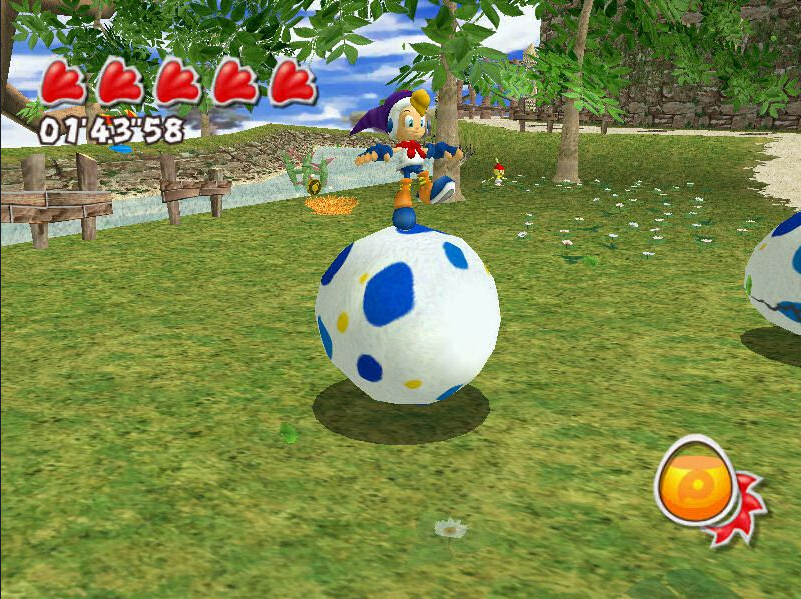
This is one of those games that you distinctly remember nobody else played, yet when you bring it up in conversation, you’re surprised by how many people seem to not only know it exists, but also enjoyed playing it as well! It’s quirky, it’s colorful, and it’s a blast.
You play as the titular Billy Hatcher, a young boy transported with his friends Rolly Roll, Chick Poacher, and Bantam Scrambled to the world of Morning Land after saving a chick from some crows. There, they are given the legendary Chicken Suits to help stop the evil Dark Raven from plunging the world into a never-ending darkness. If it sounds weird, that’s because it is!
Gameplay is mostly egg-related; Billy isn’t overly capable on his own, with some basic movement and jumping, but put him on top of a giant egg or put an egg in his hands, and all of a sudden, he’s egg dunking, shooting, and rolling all over the place! Billy collects these various eggs by rolling around or carrying them, while also collecting fruit so that they grow in size.
The larger the egg, the more varied the offensive and movement-related capabilities, until eventually the egg reaches a size in which it is ready to hatch. Certain eggs must be hatched to progress through the game, as they are needed to clear objectives or obstacles. Eggs can be damaged, though, and nothing hatches from an egg that is destroyed, so there’s a balance that must be considered.
NFL Street 2
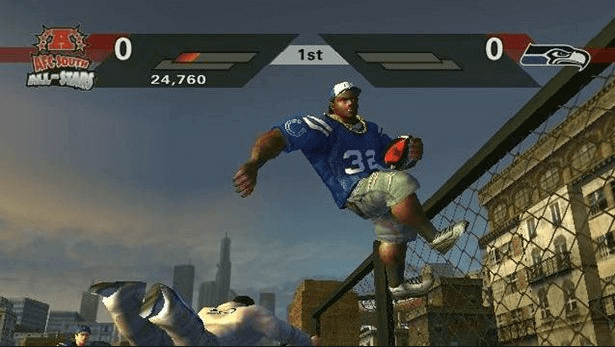
The NFL Street franchise as a whole is one of my favorites, and one that I’ve written about previously. While the NFL is far from an unheralded brand, these games were regularly available for rent at our local video game store. Which is wild, because I credit these games for giving me an interest in professional football at all. This was also one of the games that fell under the EA Sports BIG studio. You know, the one with the fun intro?
NFL Street 2 was, to put it succinctly, all about style. These games were less concerned about the actual rules of professional football and more about how cool you looked while playing it. We’ve got wall sprints, ankle-destroying jukes and dives, leaping touchdown passes, and back-flipping touchdown grabs.
If you weren’t trying to make your opponent look like an absolute fool, then you weren’t doing it correctly. This was another game my brother and I would convince our dad to join us in playing, before utterly destroying him at the earliest available opportunity (that poor man).
The later entries in the series would involve more intricate story and character modes, but the biggest draw of the game was simply having fun playing a stylish version of backyard football. There’s even a fan-made mod called NFL Street Reborn that you can play, including current and more recent NFL players.
Baten Kaitos: Eternal Wings and the Lost Ocean
Yes, this one was popular enough to get an HD Remaster, but nobody in my town knew about it. It had some pretty subdued box art that hinted at potential spiritual/angelic/demonic themes to it, which don’t always go over well in rural Texas towns. However, it did enough to catch my attention, and before I knew it, I was hooked!
You play as Kalas, an outcast seeking revenge for the murder of his family. You quickly run into Xelha, a young traveler looking to recover a set of powerful cards known as the End Magnus. Along with other companions who join you on your journey, Kalas and Xelha race against the corrupt Alfard Empire, also in search of the End Magnus.
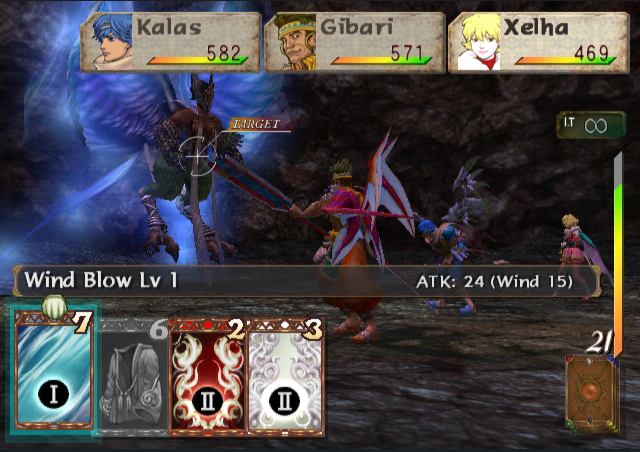
Baten Kaitos is a JRPG, so gameplay consists of world exploration and turn-based combat. Where Baten Kaitos differs is that everything relies heavily on magical cards known as “Magnus”; these can be used for inventory management, combat, skill extraction, healing, equipment, and various other things. Assembling a deck of cards for each party member is crucial, as this determines their actions taken during combat.
Baten Kaitos is a game that has a lot of complex systems and ideas, and it can take some time to get the Magnus system figured out, but they’re quite fun once you get the hang of everything. It is also a game that’s aged quite well, and looks even better in the HD Remake!
Yu-Gi-Oh! The Falsebound Kingdom
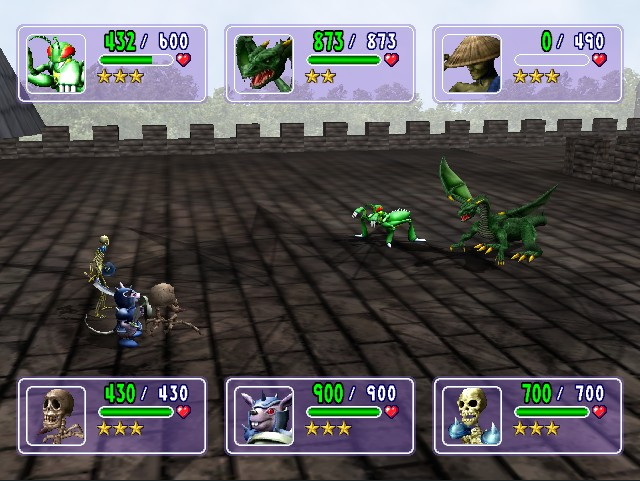
Alright, this one is for me. I will not be surprised if you’ve heard of Yu-Gi-Oh!, but I will be surprised if you’ve heard of The Falsebound Kingdom, as I feel like I’m one of the only people who is even aware of its existence. It was not received particularly well, so I’m not terribly surprised, but I absolutely adored this game!
Unlike most Yu-Gi-Oh! games, there are no cards to be found here. Instead, Falsebound Kingdom has players controlling the Duel Monsters directly in groups of three, blending elements of real-time strategy and typical role-playing games. Players command these various groups on a field, advancing towards the central enemy base while overtaking other bases and recruiting allies.
We’ve got three branching paths, hidden items, Duel Monsters recruitment, environmental buffs and debuffs, upgrade paths for both monsters and bases, and more! Sure, it can move at a bit of a glacial pace with some tedious combat and menus, but a lot of that can be combated with emulation conveniences today.
Falsebound Kingdom mechanically shares a lot of similarities with Ogre Battle 64, another blended real-time strategy game that is one of my favorites. If you like those types of games and want to experience the world of Yu-Gi-Oh! in a bit of a different light, give this one a try!
Fire Emblem: Path of Radiance
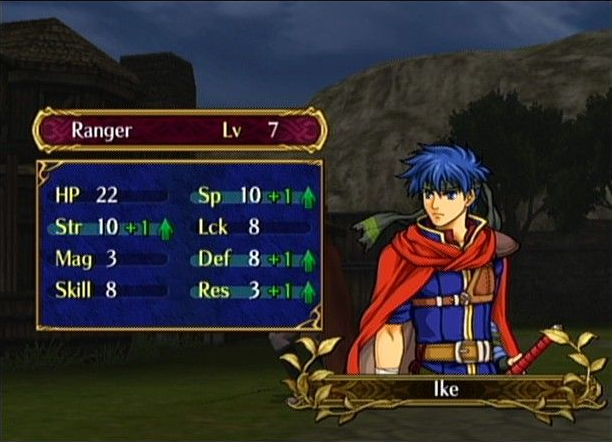
We’re going to end with Fire Emblem, one of my favorite franchises of all time, and one that was recently featured in a Nintendo Direct just this week for Fire Emblem: Fortune’s Weave. Remember, before Fire Emblem: Awakening, the series was on a steady decline into potential obscurity, and nobody. Still, my friend and I seemed to show any interest in Path of Radiance at our local video game store.
You play as Ike, a young mercenary from the Greil Mercenaries, who becomes involved in a war after the warring nation of Daein invades the fairly peaceful kingdom of Crimea. After saving the Crimean princess Elincia, Ike’s father Greil – the titular leader of the mercenaries – is slain by the imposing Black Knight. What follows is an epic journey across the continent of Tellius, where Ike and his companions must overcome political subterfuge and long-held racial tensions between the human Beorc and the shape-shifting Laguz.
Just like others in the franchise, Path of Radiance is a tactical role-playing game, with players controlling Ike and his companions on a grid-based battlefield. Combat consists of engaging enemy characters with weapons or abilities. The Laguz, the new animalistic class in this game, can transform into powerful creatures to engage in combat, but are helpless if engaged while in their human form. Franchise standards like permadeath, weapon triangles, class systems, and character skills can all be found here.
Those who have played Path of Radiance often regard it as one of the strongest entries in the series. By examining the relationships between the Beorc and Laguz, and all the ugliness that entails, Path of Radiance has a maturity to its story and depth to its world-building that set it apart from others. Path of Radiance was also the first in the series to introduce 3D graphics (plenty of which have aged poorly), and was notorious for its difficulty due to a mistranslation in the difficulty settings.
Conclusion
As mentioned at the top of the article, digital platforms like Xbox Marketplace and the PlayStation Store would find their way into homes in the mid-2000s, so the GameCube era was one of the last ones to experience heavy availability in video game rental stores. I have a fondness for this system and those institutions, and there’s plenty of great games outside of Mario, Zelda, and Smash Bros. to be found, so don’t be afraid to take a chance on something new!

3 Comments
I loved this rental series, I definitely have fond memories of renting for N64 and GameCube. Thanks for sharing! I loved Billy Hatchet but will definitely need to give the others here a try!
Glad to hear that you’ve liked the series! Rental stores were such a big part of my gaming experiences growing up, and I’ve enjoyed taking the trip down memory lane.
Yeah what was the point of this post? Besides wasting resources including water. This is ridiculous