

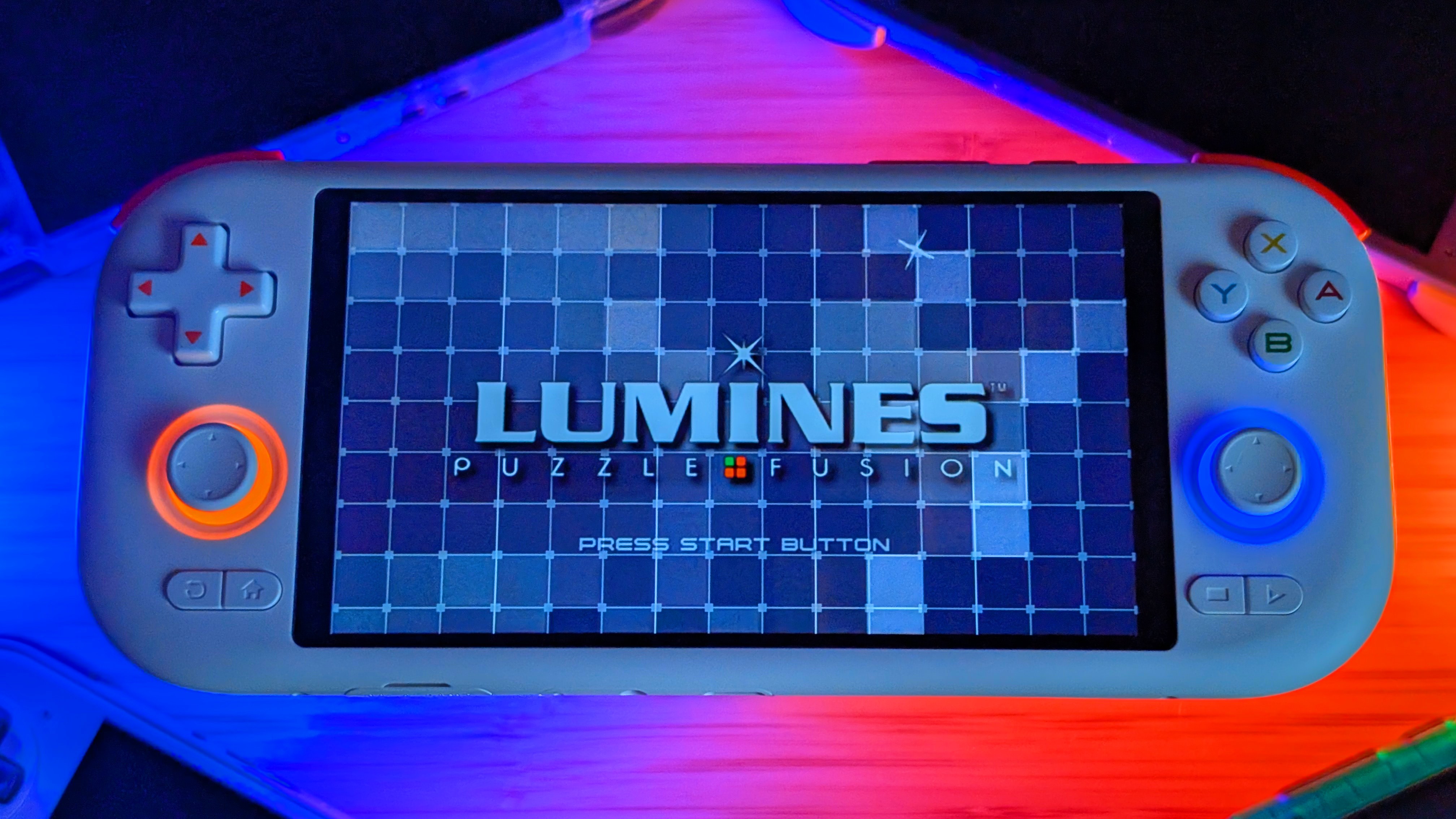
The $50-$100 market range has always been an alluring one. A segment that could offer solid value per dollar in a device that doesn’t feel broken out of the box, minus some. For a while, we stared at PS1 and Rockchip RK3326 handhelds. Those dropped in price, and then the RK3566 came around to eventually be replaced with Anbernic’s onslaught of H700s. But here in 2025, we’re seeing a collection of really good devices in that price range with a variety of SoCs.
TrimUI and their well-built A133P handhelds, Helegaly and their “released for one week” Action Pi with an A527, and even the Kinhank K56 or GameMT E5 Ultra and the Unisoc T620 are regularly found in that price range as well. But out of left field, Mangmi arrives with the Air X, an AYANEO-esque design language and a Snapdragon 662. It’s a weaker chip than some, but is it still worth your money? Well, I bought one to figure it out.
Mangmi Air X Specs
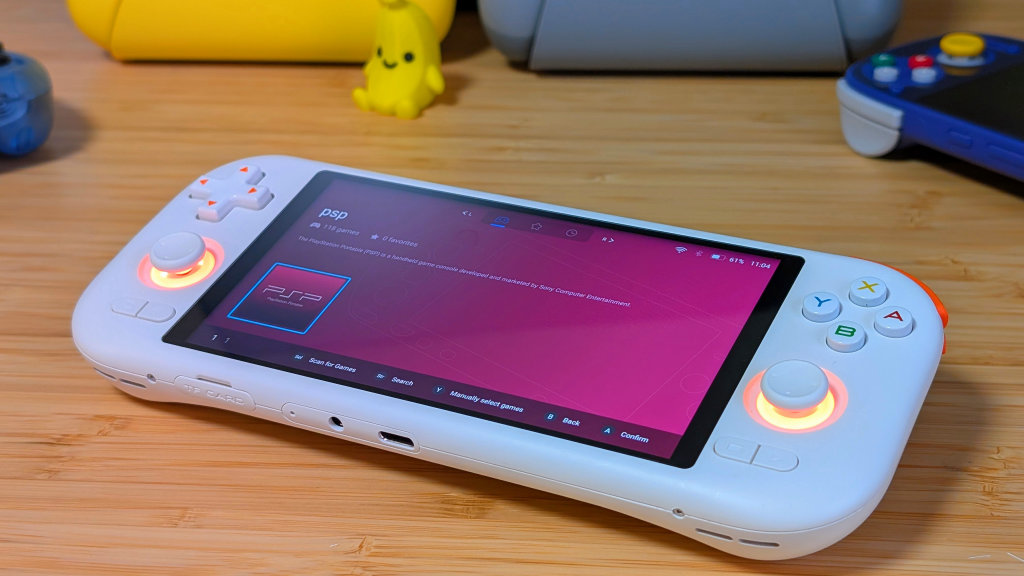
While originally, the Air X was a $79.99 handheld, the price has gone up since early bird units and now sits at a price tag of $89.99. While weaker than some of its competition, can it still prove its worth in an ever-crowded $50-$100 handheld market?
- Screen: 5.5-inch IPS 1920×1080
- CPU: Qualcomm Snapdragon 662
- GPU: Adreno 610
- RAM: 4GB LPDDR4X
- Storage: 64GB eMMC
- Connectivity: Wi-Fi 5/BT 5.0
- Battery: 5,000mAh (15W Charging)
- OS: Android 14
- Dimensions: 204 x 88 x 17mm
- Weight: 288g
[button link=”https://rh-go.link/MANGMI-Air-X” color=”red” newwindow=”yes”] MANGMI Air X[/button]
That Solid Hand Feel
Ergonomics
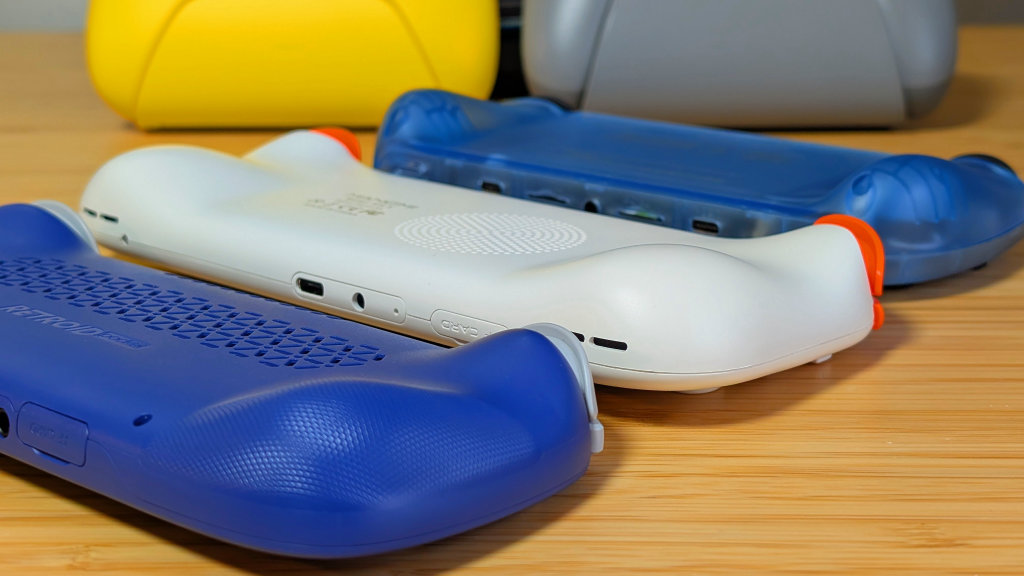
First and foremost, the Mangmi Air X is comfortable. While a flat slab on the front, the Air X features nice bump-out grips on the back reminiscent of the Retroid Pocket 5. For some, including myself, that might seem like a bad thing. The added thickness of the Mangmi Air X, particularly in the grips, makes this a much more comfortable handheld than the Pocket 5 in my opinion. My thumbs fall right into place on the dpad and face buttons, and my fingers land nicely on the triggers to boot.
Ergonomics is a heavy point of importance for me as I’m someone who prefers not buying grips or cases to improve the base ergonomics of a handheld. I prefer letting the body of the handheld do the talking itself, and the Air X joins the club of “good out of the box”. That alongside others like the Retroid Pocket 4, Flip 2, and Odin 2 Mini. At least that over others like the Pocket 5 and AYN Thor.
Controls
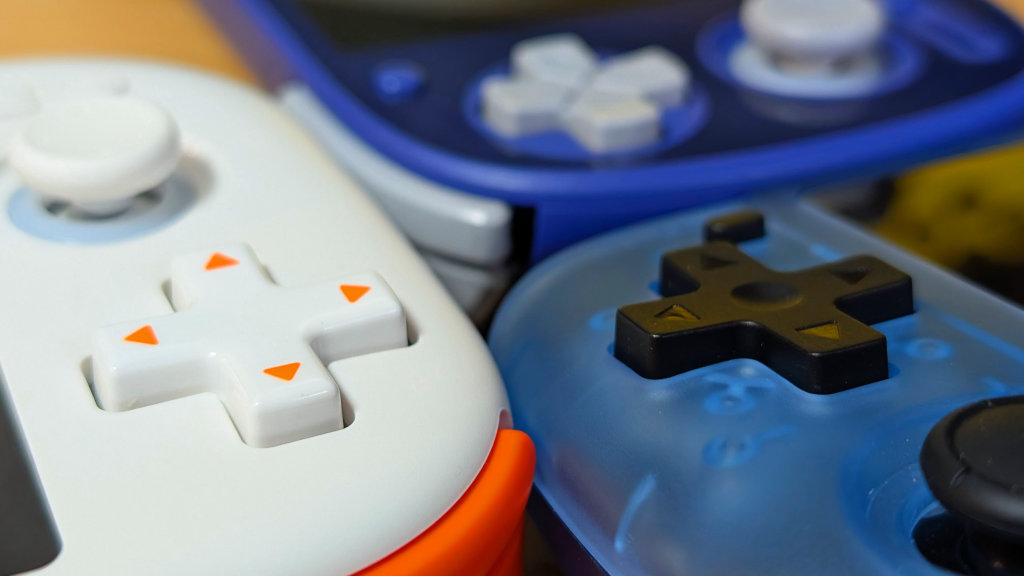
The sticks are great. They’re those Retroid/AYN styled ones that have the perfect amount of movement for a device of their size. The triggers are nice and smooth, while the shoulders have an audible but not overwhelming click to them. The control buttons are all placed on the face, minus volume and power, which are up top. Again, they’re clicky, but not overwhelmingly so.
The dpad and face buttons are a bit interesting. They’re both slick like Anbernic face buttons, but the D-pad is more so than the face buttons. This makes the grip feel a bit awkward at times, and this texture on a dpad makes me concerned about long-term “hand cheese” development, but the pivot is great with minimal accidental diagonals on my end. They’re fully passable.
Display
There’s not a lot to say with the screen on this one. It’s a solid 1080p panel in a sub $100 handheld. My big comment to make here is that it isn’t going to be bright enough for sitting out under the sun, but almost everywhere else, I see minimal issues stemming from using the Air X. Considering most handhelds in this price range max out at 720p, the additional bump in resolution is a nice feature to have, especially for scaling.
Software
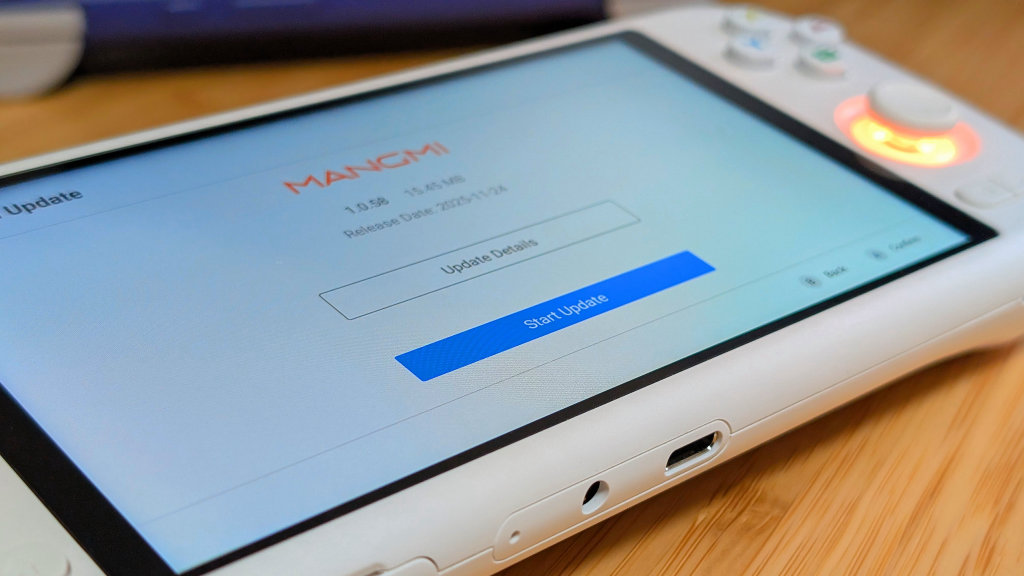
The Mangmi Air X is utilizing a pretty solid build of Android 14. It gives you all of the options you need for fan modes, performance, and even customization of the RGB sticks, though I usually turn mine off. They even include a sidebar that lets you see utilization and make adjustments to your controls.
As a whole, it’s been solid, and since starting there have been at least 3 updates to my unit thanks to their OTA updater. I hope they can continue their improvements into the future.
And while I don’t want to put my foot in my mouth or make false promises, Mangmi has sent out units to prominent custom firmware developers. While I can’t make claims on their part, I can at least put out my hopes to see some additional Linux support to really help forward this device’s appeal to even more people.
Or PortMaster fanatics like myself. But if Linux is specifically what you want, hold out on buying it for now. On the other hand, GammaOS is getting releases out for the Air X; however, proceed with caution, as changes in panels released may have an impact on your ability to use it (for now).
Performance
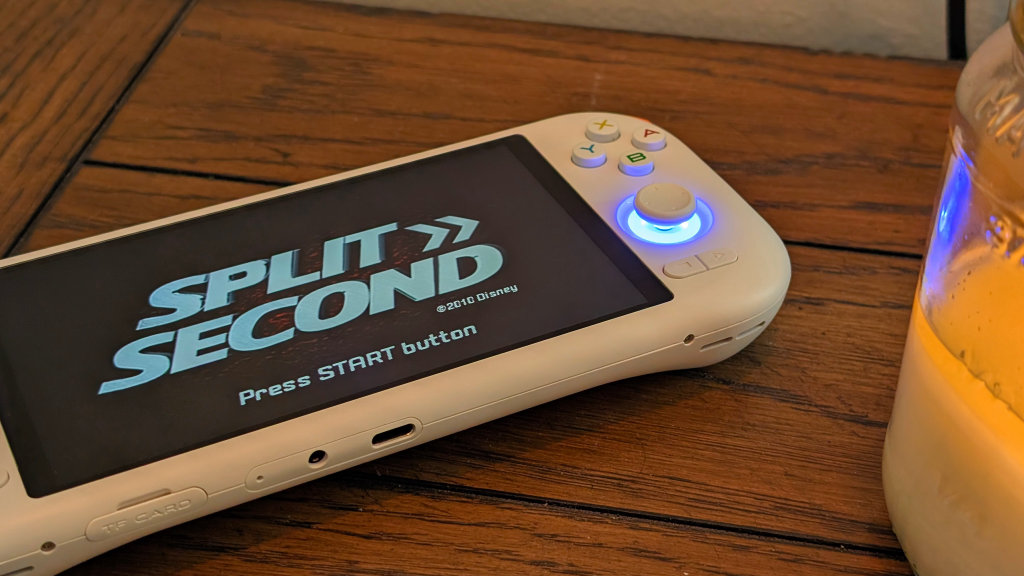
The Snapdragon 662 is not a powerful chip. Mentioned earlier, but a lot of its competition is more powerful. If you’re going purely off GeekBench numbers, please use more than that; the T620 is around 30% more performant, leaving the 662 closer to that of the Retroid Pocket 2S and the Unisoc T610. That being said, the Air X does its “good” systems really well.
PSP is where I’d comfortably max out the Air X, and if you haven’t been paying attention, most people will agree. If you’re looking for full-on videos, Rob over at Retro Tech Dad has an awesome video showing off the Air X’s performance in PSP, and after adjusting my settings, I think he’s nailed it. Pushing past PSP, Dreamcast, or N64, I would caution you to expect light, if any, GameCube, or PS2. It’s possible, and some games will go, but not enough to say it’s ready.
Final Words
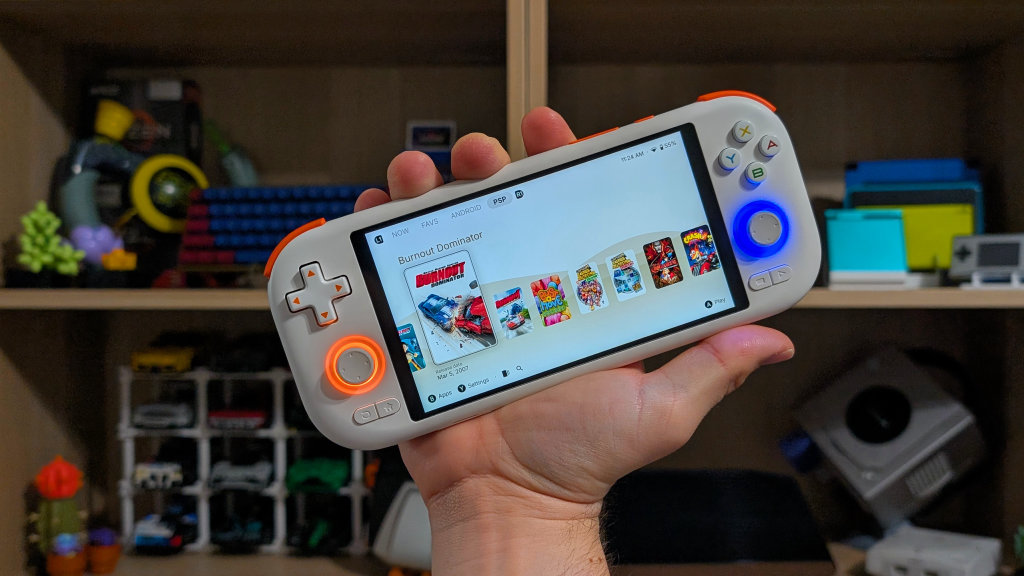
Performance means a lot, but it doesn’t mean everything. The Kinhank K56 and GameMT E5 Ultra are going to be better in terms of performance, even with their costs maxing out the $50-$100 price range. That being said, I don’t fully recommend either due to the concessions they make unless you’re a specific person. Compared to those, if you chase performance and want to give up general usability, go that route.
Now, compared to the rest of the $50-$100 market, the Air X lands above just about everything else. More performance than the RK3566, H700, A133P, and A527. Solid ergonomics, solid Android build, solid control layout, and just enough power for what you need. The Mangmi Air X is the PSP, and below handheld under $100, we’ve been actually waiting for. For a first go at it, Mangmi did a bang-up job, and I hope they keep working at it.
Depending on your needs, maybe you get something else, but if I’m going to recommend anything Android specific under $100, it’s going to be this one. It does everything just well enough to make it the best option. And if Linux ever comes to it as well, I’ll probably expand my recommendation to this over other options as well. It’s that good.
[button link=”https://rh-go.link/MANGMI-Air-X” color=”red” newwindow=”yes”] MANGMI Air X[/button]
What did you think of this article? Let us know in the comments below, and chat with us in our Discord!
This page may contain affiliate links, by purchasing something through a link, Retro Handhelds may earn a small commission on the sale at no additional cost to you.

1 Comment
They have a built in game?
Also have wifi built in?