

Tap-to-play cards, rescued controllers, Dreamcast on Wii U. This loaded Monday workbench trip brings together dozens of DIY hardware and software projects.
Zaparoo Core 2.23.0 gives its tap-to-play cards nine more experimental destinations, including Knulli, ROCKNIX, muOS, AmberELEC and ArkOS. It now also connects to RomM, Plex and Jellyfin, meaning a card can fetch and launch a game from your library or start a movie through the relevant TV app. Windows gains Playnite integration and automatic emulator detection.
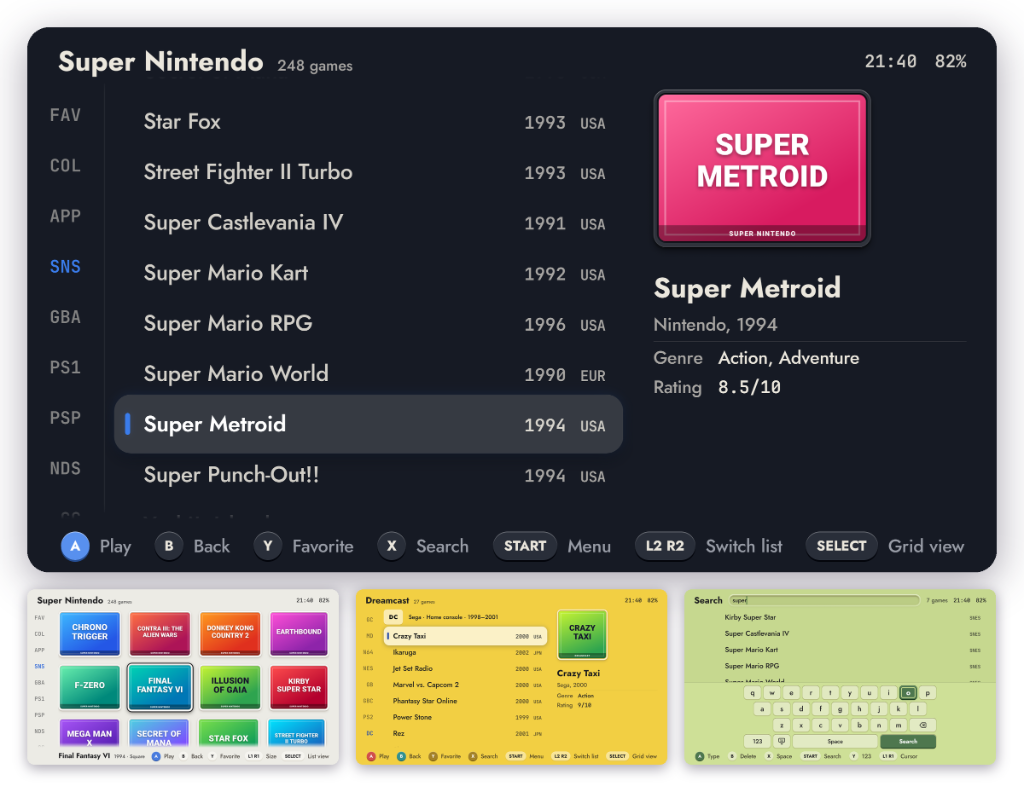
On Android, Plumemu 0.1.8 gives the selected Collections folder a card showing its covers, game and system counts, and opening titles. That card also reaches the second screen, replacing an empty play-time box. This weekend’s release tidies the interface, improves missing-file messages and offers another emulator when a game closes immediately.
Boxshelf arranges emulator libraries as a 3D shelf, complete with box art and a dual-screen layout for the AYN Thor. Its November Beta 14 adds themes, sounds and Xbox 360 and PS3 achievements. Windows, Android and Linux builds are offered, with the latter two still in the early stages of development.
For the files feeding the emulators, RomSieve 1.3.0 matches IPS, IPS32, UPS and BPS patches to a library and writes separate patched copies. Checksums help connect the right patch to the right game, while export layouts suit ES-DE, Batocera, RetroPie, Recalbox and MiSTer. The November 19 release also tracks those additions in its undoable sorting journal. Windows and Linux builds include a graphical interface and command-line tools.
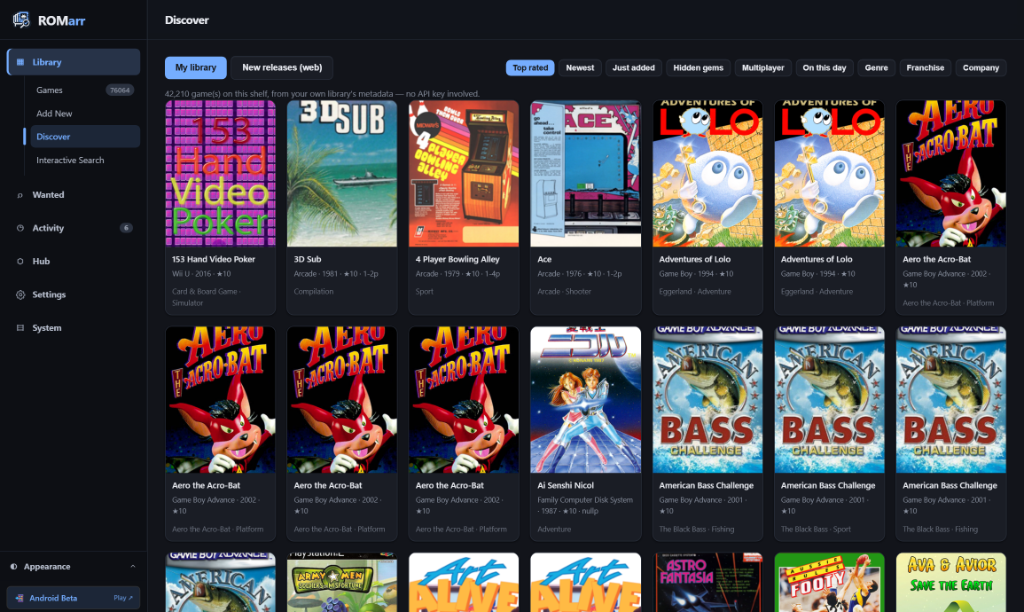
Similarly useful: ROMarr 1.11.6, distinguishes base games, updates, DLC and combined packs across its supported searches. RomM imports use the expected update and DLC subfolders, keeping additions beside the game they belong to. The release also bundles a Compressatorium integration for extraction work and fixes a sign-in problem that previously needed a page reload.
nullDC4WiiU gives Nintendo’s tablet-toting console a native Dreamcast emulator. The November 21 update adds an in-game HOME menu, four save-state slots, disc swapping, remappable controls and a GamePad VMU display. Light-gun games can use Wii Remote IR or the touchscreen. Windows CE games currently freeze the console, so keep those off the guest list.
Portfoliator 1.02 brings the Atari Portfolio to a browser tab, then lets you record its picture and sound. The November 20 update repairs clock behavior, Diary alarms and automatic power-off. An alarm can wake the emulated machine from OFF mode. That is a pleasing amount of attention for a computer many of us mostly remember from a certain movie.
Hades 1.2 gives its GBA emulation GameShark, CodeBreaker and PARv3 cheats, an xBRZ filter and new color-correction profiles. The new release also adds idle-loop elimination and fixes input problems in the Classic NES Series. A lavender interface theme rounds off the update, because even the settings window deserves a little attention.
Zaxnes 0.6.1 turns NES tiles into lit 3D dioramas on Windows, Linux, Android and PortMaster. The November 20 update improves archive and profile imports, Android frontend handoffs and camera framing. Detailed scenes use per-game profiles, including supported imports from 3dSen; its version 2 profile format remains unsupported. Without a tailored profile, there is still the option for ordinary 2D or a simpler uniform-depth 3D view.
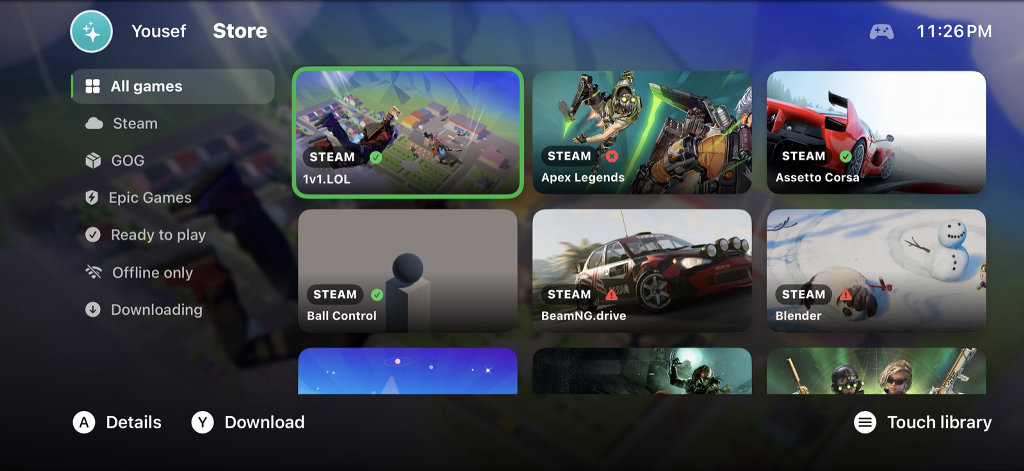
EmuPC 2.0 gives Windows games on iPhone and iPad a controller-first home screen, floating menus and a Liquid Glass makeover. The November 21 test release also makes expensive diagnostics opt-in and fixes cover art around the Dynamic Island. The Madeira-based project uses FEX-Emu and Wine under the hood, with sideloading and JIT required.
HippOS 0.7.0 adds an experimental RK3326 image for handhelds such as the R36S. First boot reads panel settings from the original card, and the menu includes battery and charging information. The November 22 release also serves PCs and Raspberry Pi, adds Riverhorse PlayStation emulation and speeds game launches. Intermittent freezes on some handhelds remain under investigation.
ISF OS wants a PSP 2000 or later to become a calmer everyday gadget. The alpha shell targets ARK-5 on firmware 6.61 and combines game launching with ebooks, RSS, podcasts, notes and other tools. L and R open a searchable command palette using the Danzeff keyboard. The creator’s announcement also includes adapted homebrew games, with credits to the older scene.
Crux2 1.0.23 lets a homebrew-enabled PS5 read PS2 games from M.2 expansion storage. The November 22 update also adds per-game anti-aliasing settings and fixes interface freezes tied to memory cards and texture packs.
Rob Simon’s Contra Pocket Player firmware work expands the tiny My Arcade handheld’s built-in game list. The November 17 write-up documents its NAND layout, repacking tools and a custom launcher using the existing FBAlpha core. This one is a lot of work, but a very cool way to open up a very specific handheld.
NicktasticToons has posted a work-in-progress Wii layout and channel banner editor on GBAtemp, aimed at building Wii layout files, channel icons and banners without the usual workarounds. No release is out yet, but the screenshot looks promising for anyone who has fought with Wii theming.
LCLDIY’s vertical Windows handheld starts with an old motherboard and a fondness for upright consoles. The October 26 project shares PCB and STL archives, with photographs showing the unusual layout. Details are brief, but the premise is easy to appreciate: a Windows gaming machine that follows the shape its builder actually wanted.
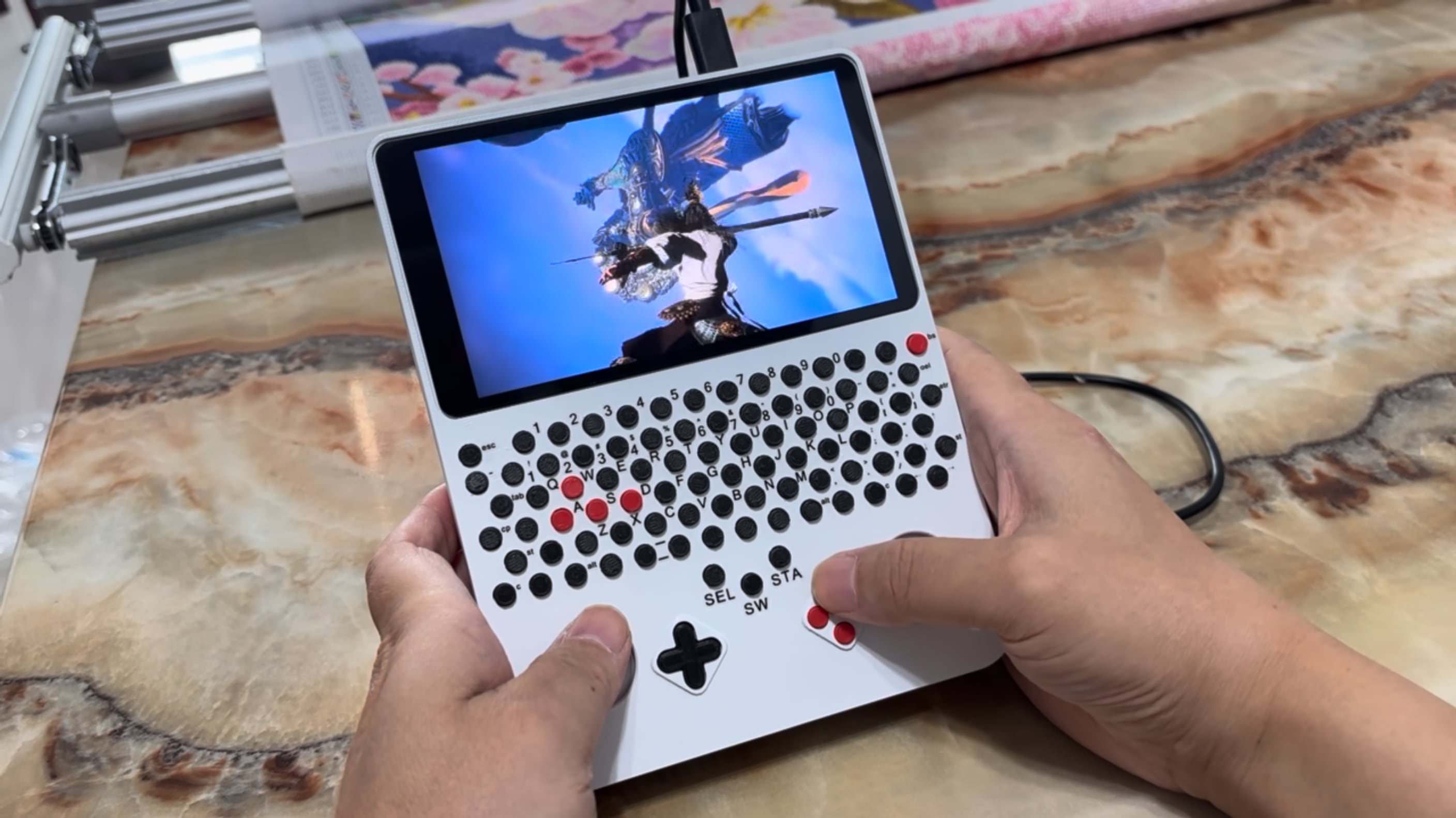
ilo musi 8 gives CHIP-8 a handheld with sixteen red hexadecimal buttons, an extra exit button and a tiny monochrome screen. Sadale’s October 26 release runs from two AA batteries or Micro-USB, with games on a TF card. It supports CHIP-8 and SuperCHIP, plus a limited monochrome XO-CHIP implementation. Electronics, enclosure work, firmware and assembly information are available for builders. (Bonus: the trailer is Quentin Tarantino-approved).
sd2snes+ Link uses an ESP32-S3 board to put an sd2snes or FXPAK PRO on Wi-Fi through its USB port. The preview covers cloud-save backups, softcore RetroAchievements on supported games, Satellaview broadcasts and menu radio, without a computer attached to the cartridge. It is being prepared alongside firmware 3.0, which remains in testing. A real SNES with online achievements is a lovely excuse to give the old console another evening.
As always, I’m eternally looking for cool new projects to tinker with and feature, so let me know if I missed any in the comments below!
