

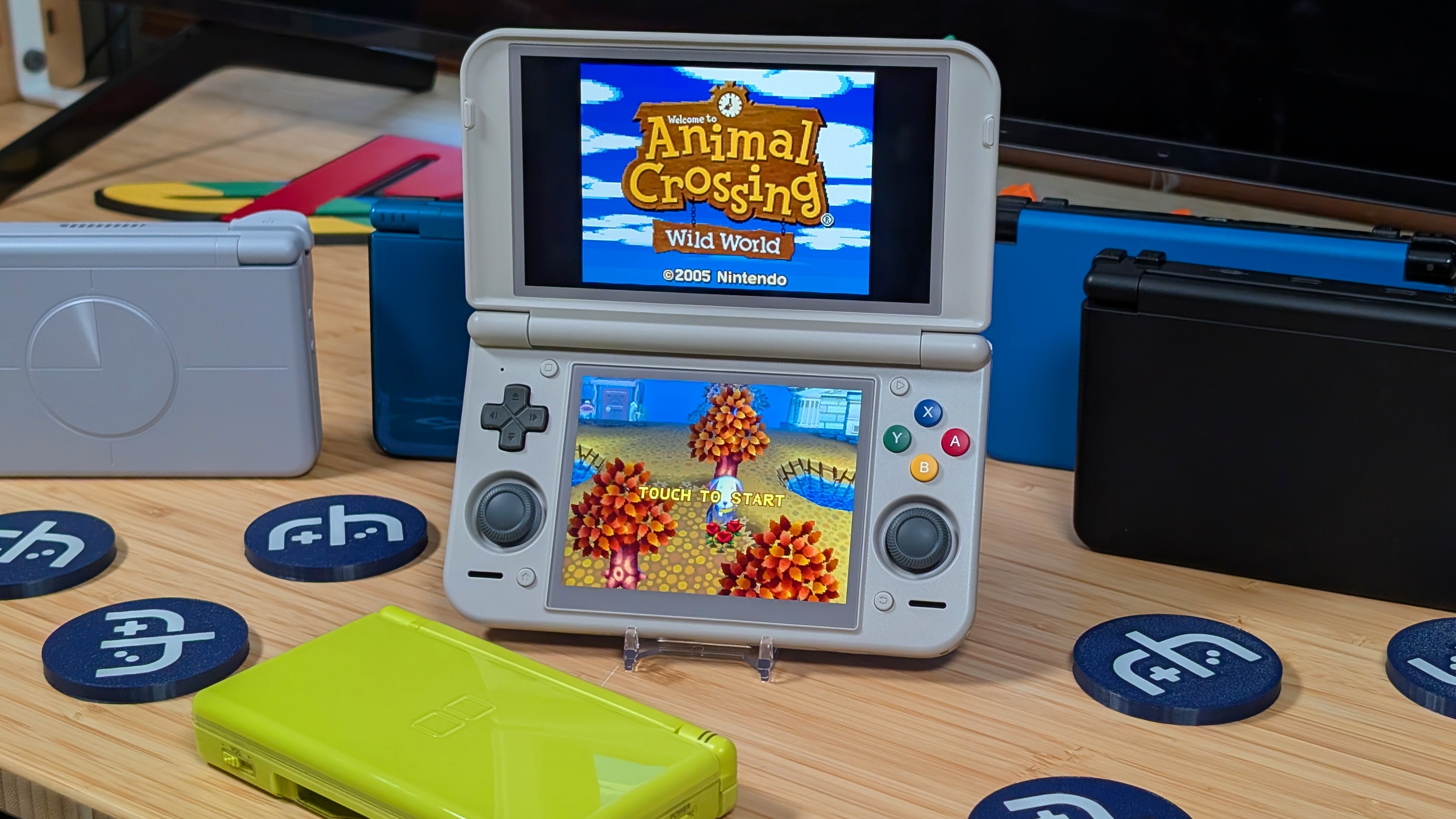
Widescreen clamshells in the emulation scene haven’t always been too easy to get behind for me. The original GPD XD and XD+ were great pioneers in this portion of the market, as they basically copied the original 3DS XL in terms of exterior design, and while they didn’t have the second screen, they were comfortable handhelds. Powkiddy’s X18 line was questionable; the Retroid Pocket Flip 1 was uncomfortable with awkward sliders, while the RP Flip 2 ended up being the only one I was fine with.
The dual-screen options though, were somehow even worse. The original RG DS felt cheap and awful, and the AYN Thor was great in terms of specs and components, but man it sucked to hold. Anbernic’s RG DS Plus was decently better, and the RG DDS is yet to be seen, but then there’s Retroid sitting over here their Duo line.
While most people are clamouring for the mainline Duo with its OLED display, analog triggers, and higher performance, the Duo Lite sits at the bottom. With middling specs for the price, is it still worth it? Well, with Rob from the Retro Tech Dad channel sending this one over for me to check out, I can finally figure that out.
Disclosure:
This product was purchased with our own money and was not sent to us by the company. Affiliate links might be present where applicable, and we may earn a commission on product purchases using those links at no extra cost to you.
Retroid Pocket Duo Lite Specs
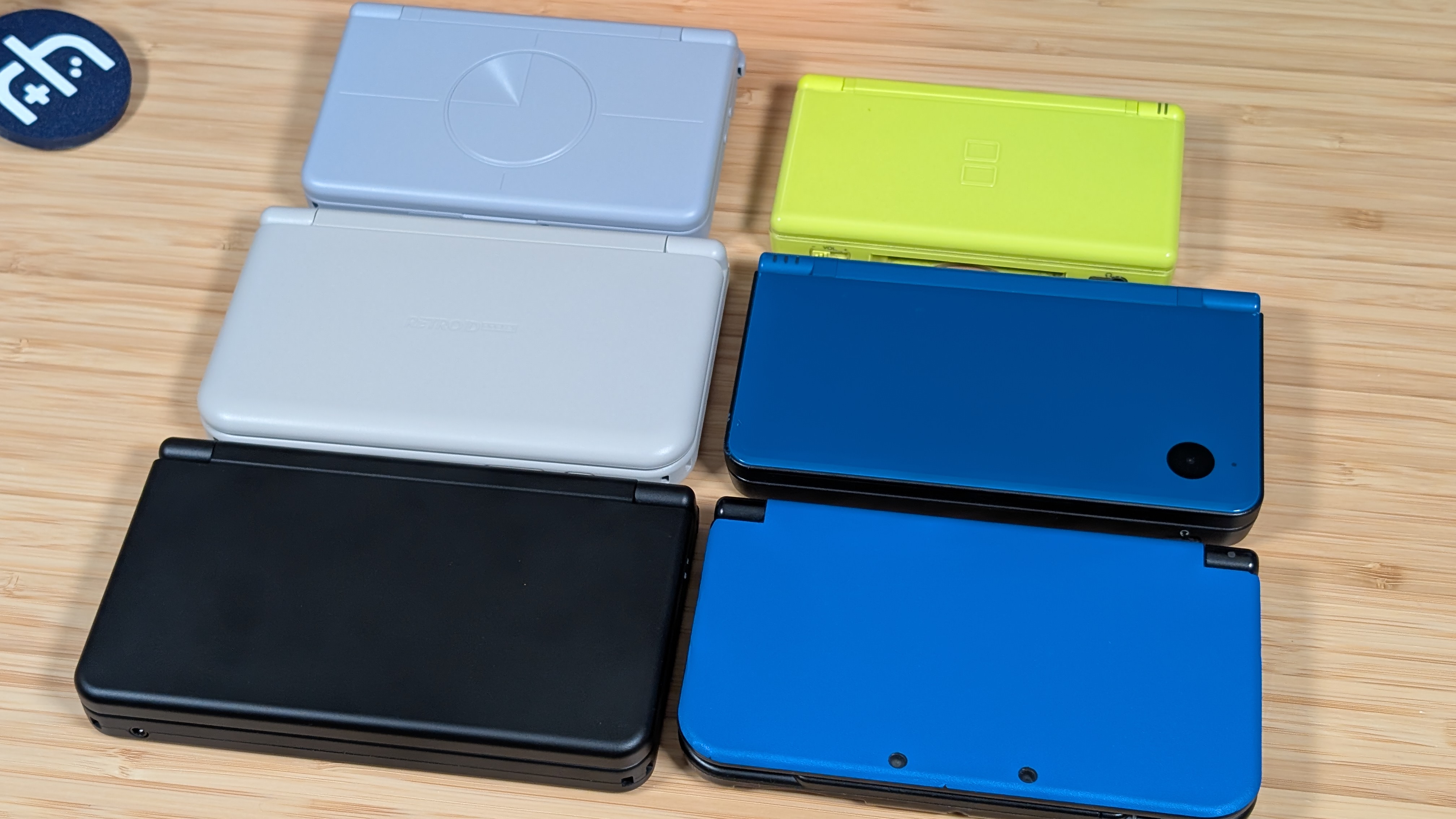
Part of the side effects of waiting this long to get a review out for the Duo Lite is that there’s no more discount code available for it. That being said; at the time of writing, the RP Duo Lite retails for $149 if you want the 4GB unit, and $169 for the 6GB model. If not for the extra RAM, I would spend the extra money to increase the amount of storage you get on the device, as 64GB is becoming middling in late 2026. Otherwise though, the specs are a full setup you can find here.
| Hardware | |
| CPU | Qualcomm Dragonwing QCS6125 |
|---|---|
| GPU | Qualcomm Adreno 610 |
| RAM | 4GB LPDDR4X, 6GB LPDDR4X |
| Cooling | ✅ |
| Display | |
| Primary | |
| Screen Size | 5.5-inch |
| Resolution | 1920 x 1080 |
| Aspect Ratio | 16:9 |
| Refresh Rate | 60Hz |
| PPI | 400.53 |
| Secondary | |
| Screen Size | 4.2-inch |
| Resolution | 1280 x 960 |
| Aspect Ratio | 4:3 |
| Refresh Rate | 60Hz |
| PPI | 380.95 |
| Storage | |
| Internal Storage | 64GB eMMC, 128GB eMMC |
| External Storage | microSD |
| Battery | |
| Battery Capacity | 6000mAh |
| Charging Speed | 18W |
| Connectivity | |
| Wi-Fi | Wi-Fi 5 |
| Bluetooth | Bluetooth 5.0 |
| Ports | 3.5mm Audio Jack, microSD, USB-C 3.1 |
| Controls | |
| Sticks | 2x, Hall Effect |
| Triggers | Digital |
| Shoulder Layout | In-line |
| D-Pad | Top Left |
| Audio | |
| Speakers | Stereo |
| Speaker Location | Front-facing |
| Headphone Jack | Yes |
| Physical | |
| Dimensions | 158 x 95 x 23.2mm |
| Weight | 372g |
| Form Factor | Clamshell |
| Software | |
| Operating System | Android 15 |

Build Quality
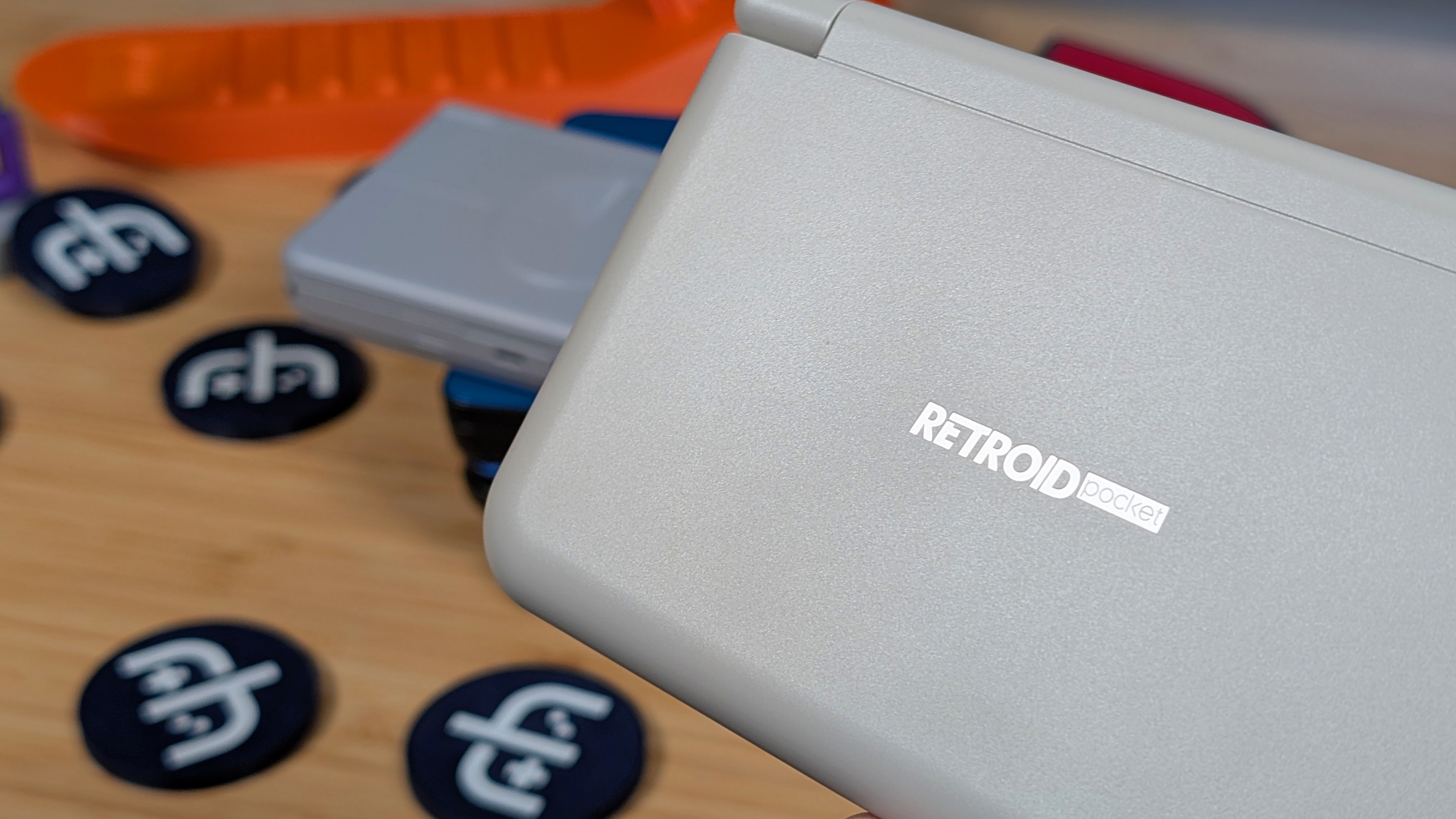
When it comes to build quality, you know exactly what you’re going to get with a Retroid product. Quality that’s pretty much good enough for almost everyone while not being uber premium. The plastic on my 16-bit model has a nice texture to it, and the handheld as a whole feels hefty without being overweight. Just like the Nova, there’s no glass on the controls to make it unnecessarily heavier, and honestly? That’s the right call. The one note for build quality is that the bottom of my unit has picked up a few microscratches pretty easily.
As for the hinge, it’s nice and stiff with only one click point at like 170 degrees. It’s tighter than the hinge on my New 3DS XL and RP Flip 2, but looser than my RG DS Plus. Overall, it feels good. I appreciate having the ability to leave it wherever I need to, but as with every Retroid handheld, we’ll have to see how it holds up longterm. Mine has been fine so far though.
Controls
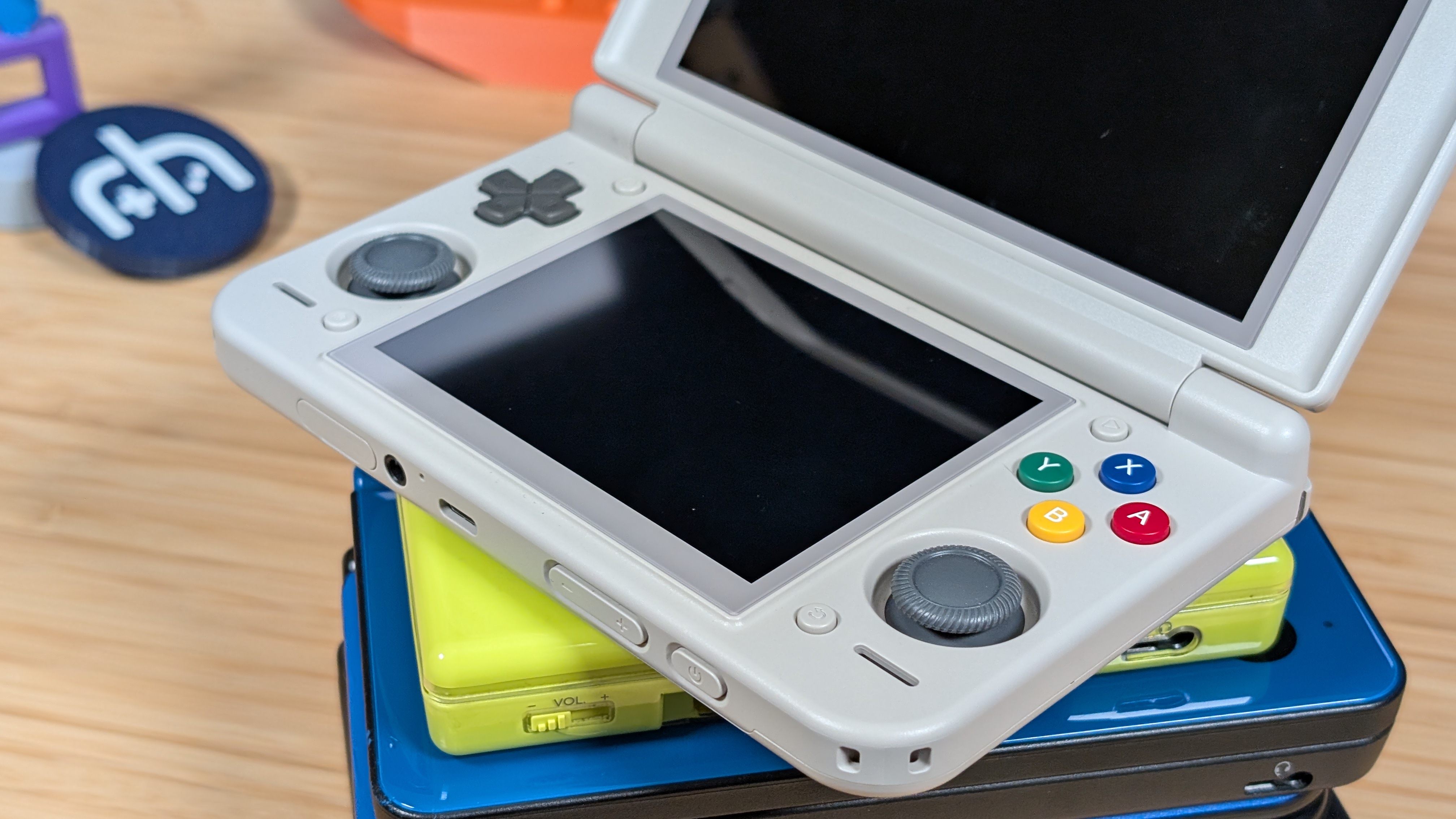
This is a mostly simple category. Shoulder buttons are arranged like a classic 3DS and I really appreciate that, it leaves the device flat and still gives me the controls I’ll need for 3DS and DS gameplay. The D-pad and face buttons are very Retroid, with that classic light click and pivot, but a surprisingly quiet press for the face buttons. Start, Select, Home, and Back buttons are placed well and within reach of me, and the power/volume buttons are down in the front where they’re close to reach but not in the way. Overall these are good.
What isn’t good are the new sticks. The caps are an awkwardly large rubber grip that kind of just flop to the sides like the older switch sticks. The movement and responsiveness of the sticks are fine, they just feel a bit pathetic in normal use. While the sticks they used in the RP2S eventually caught on for almost everything, I hope this is the only place we see these. Which may be the case considering they’re working on replacements to sell in their store. Which is good cause you can’t even replace the caps on these. Really. Not the best move.
Display(s)
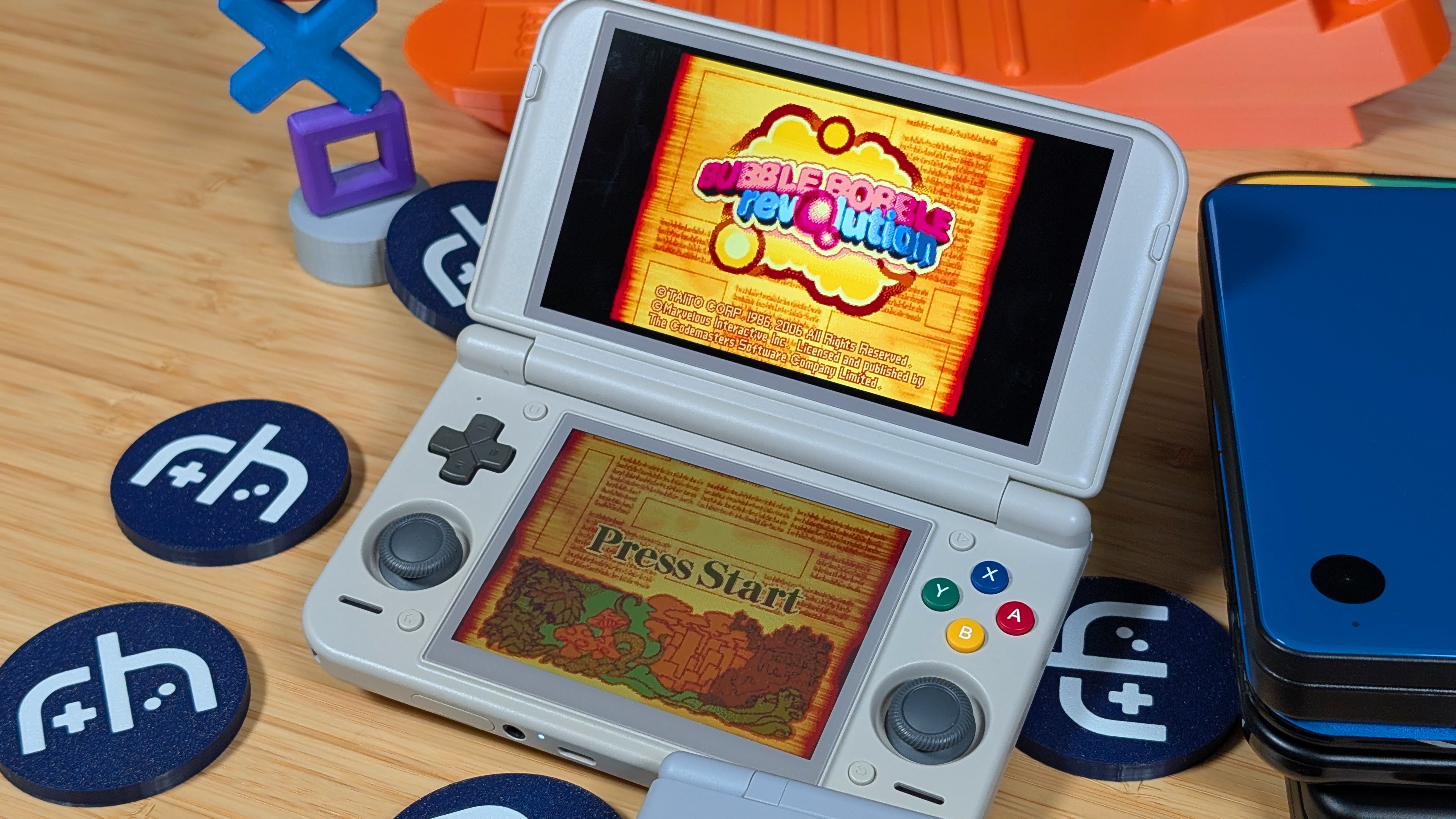
Next up is the display. Well, both of them. On the top you’ve got a 5.5” 1080p IPS panel, and on the bottom you’ve got a 960p, 4.2” IPS panel. Both of these 60Hz, both of these not incredible, but neither of them are bad. When it comes to these, both are reminiscent of screens from two Mangmi handhelds; the Air X and the Air Y.
That being said, despite the concerns on the bottom panel, I haven’t personally noticed any ghosting on that Air Y/Pocket Air Mini/Pocket S Mini panel. Everything looks good, 4:3 content scales pretty perfectly on the bottom panel, and things like PSP sit well on the top. If you were looking for one device to do a lot of your basic emulation, these displays are going to be great.
Ergonomics
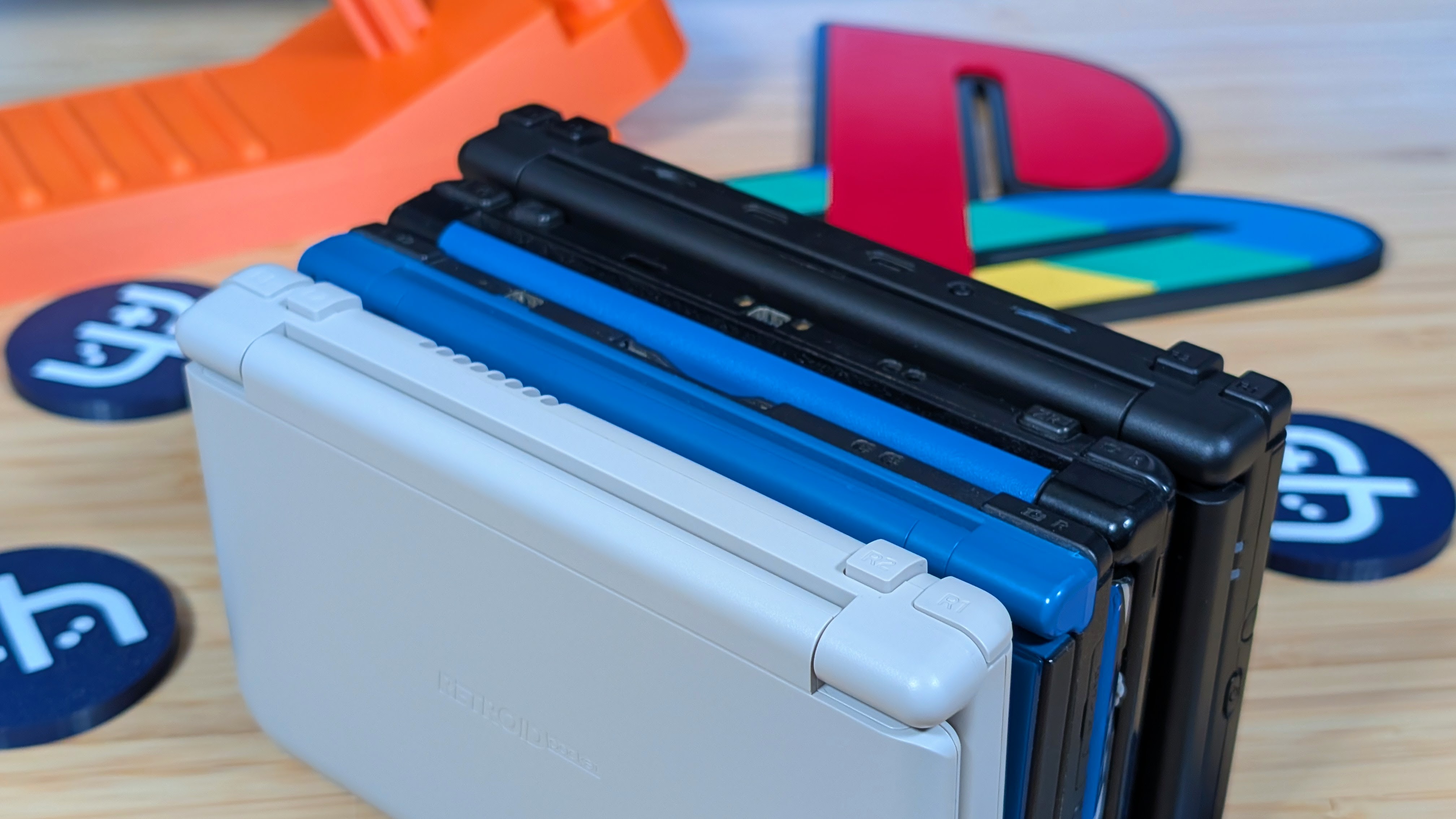
When it comes to ergonomics, let me just say; it’s not perfect. Particularly in the sticks department. If you want to play 3DS where the stick is usually placed on the top, you’re going to have to hold on because unless you have a way to swap their position in software, you’re gonna have to claw your hands all the way down. This was something I complained about for the right side pretty harshly on the AYN Thor, but while it’s bad here’ it’s not nearly as bad thanks to the slimmer-feeling body of the Duo Lite.
That being said, I do like the rest of it. Everything else lands in place; the flat, wide back makes it easy for my hands to grab on wherever I need, and honestly? For most retro gaming or just DS gameplay, the controls are perfectly suited for what we’ve got here.
I…like a dual screen clamshell’s ergonomics? Now that’s what I call heresy.
Software
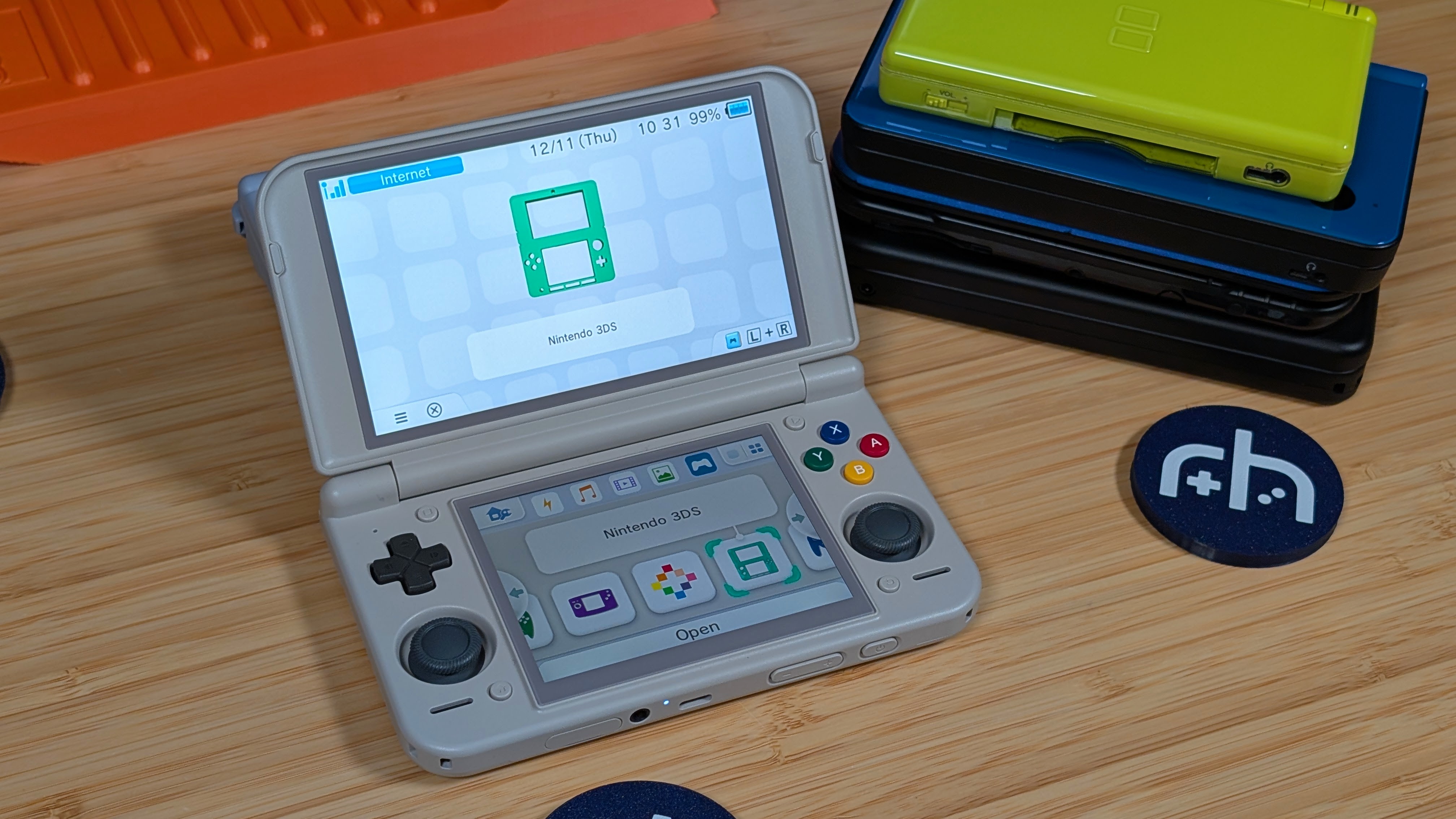
And here’s where the downturns start. And part of why this took so long, and a rewrite of my recommendation for this handheld. On the stock Retroid firmware, it’s pretty rough. The bottom screen software was okay, but the general stability of the Duo Lite struggled. I would recommend checking out Team Retrogue’s Duo Lite Optimization guide if you’d like to learn more. But even then, on full stock my Duo Lite would crash just trying to play Dadish. And once Google Play was turned off and I took Dadish out back, it still felt sluggish in general use.
In comes Gamma to save the day. GammaOS for the Duo Lite is a gamechanger. Giving the whole system a 3DS vibe, everything becomes way smoother in use, and way cleaner in design. Just like other versions of GammaOS it retains the XMB, DS, Minima, and ES-DE styled front ends, but on a device like this, I’d feel dumb using anything else (though you can). And if you want to access Android directly, that still remains an option. If you’re going to buy the Duo Lite, GammaOS is a necessity, so make sure to support him over on his Patreon.
Performance
Last up, is the performance. Despite Qualcomm declaring Retroid can’t name these chips after what they actually are. This is actually just a Snapdragon 665 without cellular support. That means you’re only barely better than a Mangmi Air X, which is about 2/3 the cost of the Duo Lite. With that in mind you’ve got a good idea of normal performance.
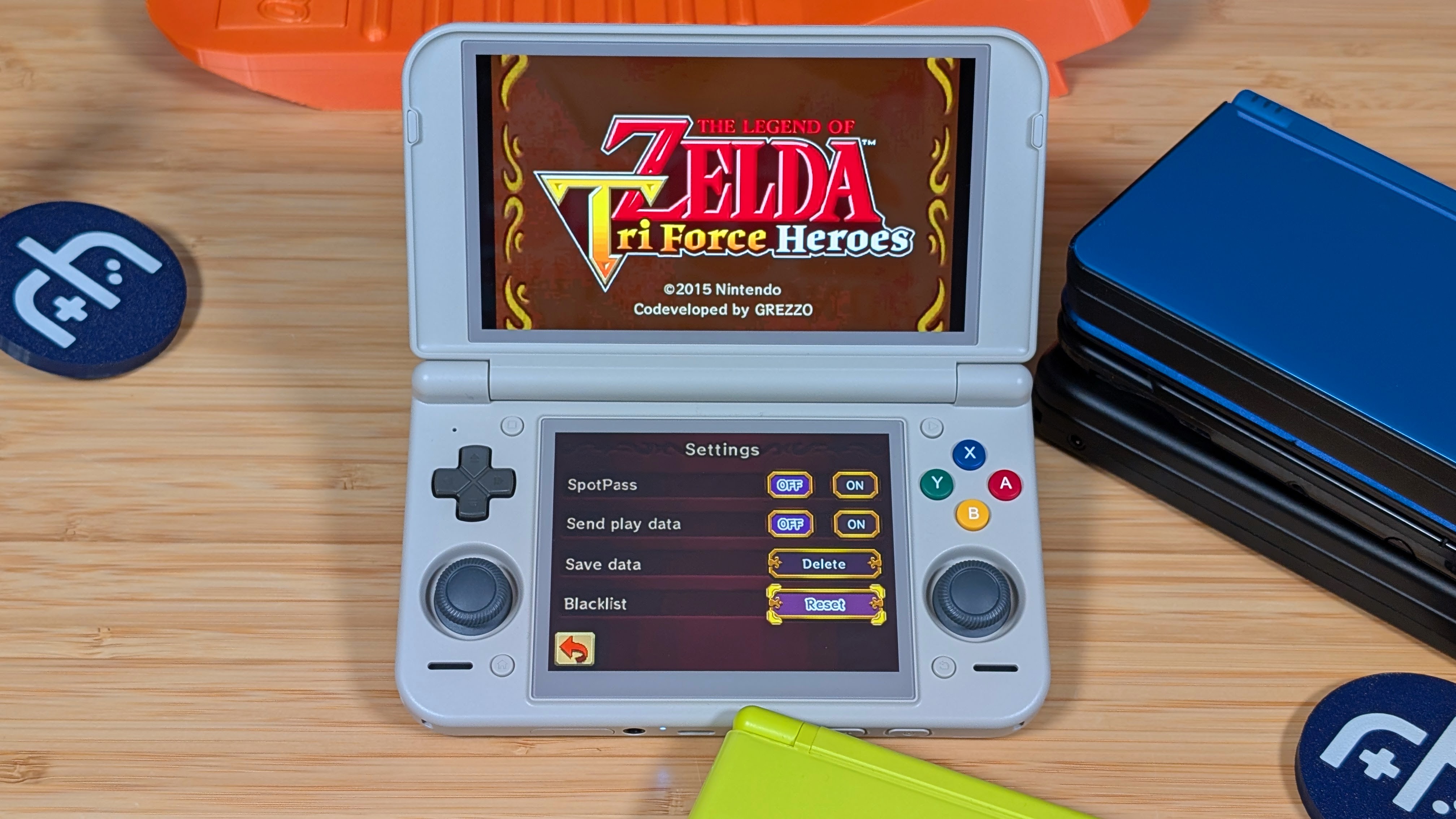
Up to N64, Dreamcast, and PSP. Some very light GameCube. On stock firmware though you’d be looking at DS emulation being fine, and 3DS being mediocre at best. Which doesn’t sit well considering the screen layout.
On GammaOS though? You’re looking at like 75 to 85% of the 3DS library being good to go. I’m going to recommend checking out a few of the more recent RH podcasts where we got a chance to talk about GammaOS and the performance on the Duo Lite, but Trihaeck was even there showing of XBOX emulation running on the Duo Lite thanks to HakuX.
Personally, I stuck to my 3DS games like the Professor Layton series, and New Super Mario Bros for 3DS. In testing the screen, in games like Animal Crossing New Leaf, the responsiveness of the bottom screen was great in game, and honestly just about felt native.
This is probably the best 3DS experience I’ve had on an emulation handheld, especially when it fills out the bottom screen so well.
Competition and Final Thoughts
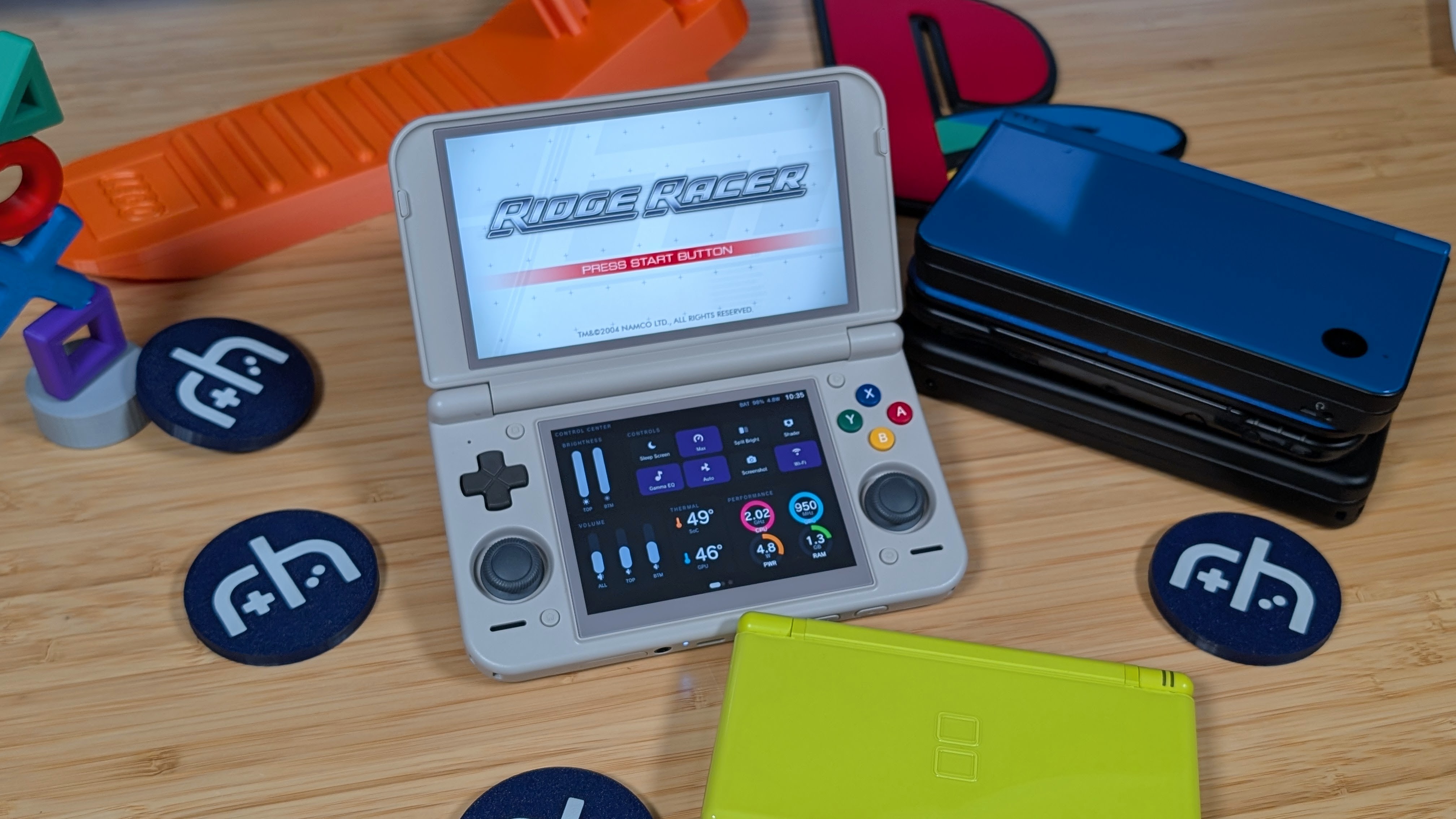
If you’re looking for a dual screen handheld right now, you don’t have a lot of options. The Anbernic RG DS and DS+, and Duo Lite on the low end. The Duo Lite Plus, and Duo on the midrange. The RG DDS, AYN Thor, and Ayaneo Pocket DS on the high end, and considering those are your only two options on the high end, I imagine those AYN Thor users are watching the DDS with anticipation.
Really though; when it comes to recommending it, if you’re going to leave everything stock, don’t get the Duo Lite. You’ll be better served with the higher-performance Duo Lite Plus at $200, or the DS focused RG DS+ on the low end. I can’t personally recommend the original RG DS, and the Duo Lite needs GammaOS to be worth your time.
If you are flashing your Duo Lite, I think it’s going to be perfectly cromulent at just $170 for the 6GB model. That being said; if you love the form factor, I’ll really implore you to try and set aside the extra for the Duo Lite Plus.
But if you can’t, I don’t think you’ll be upset with this one.
