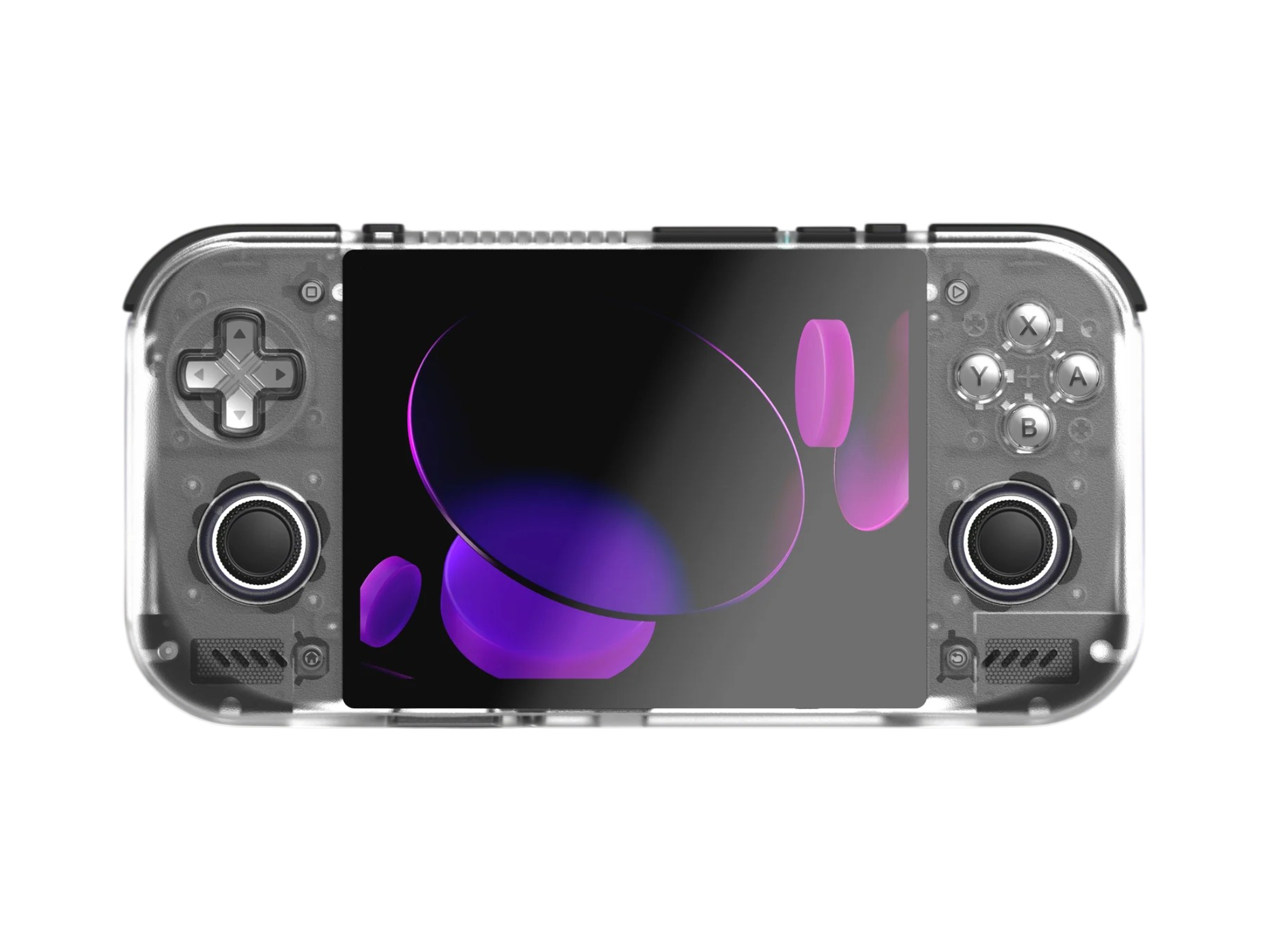

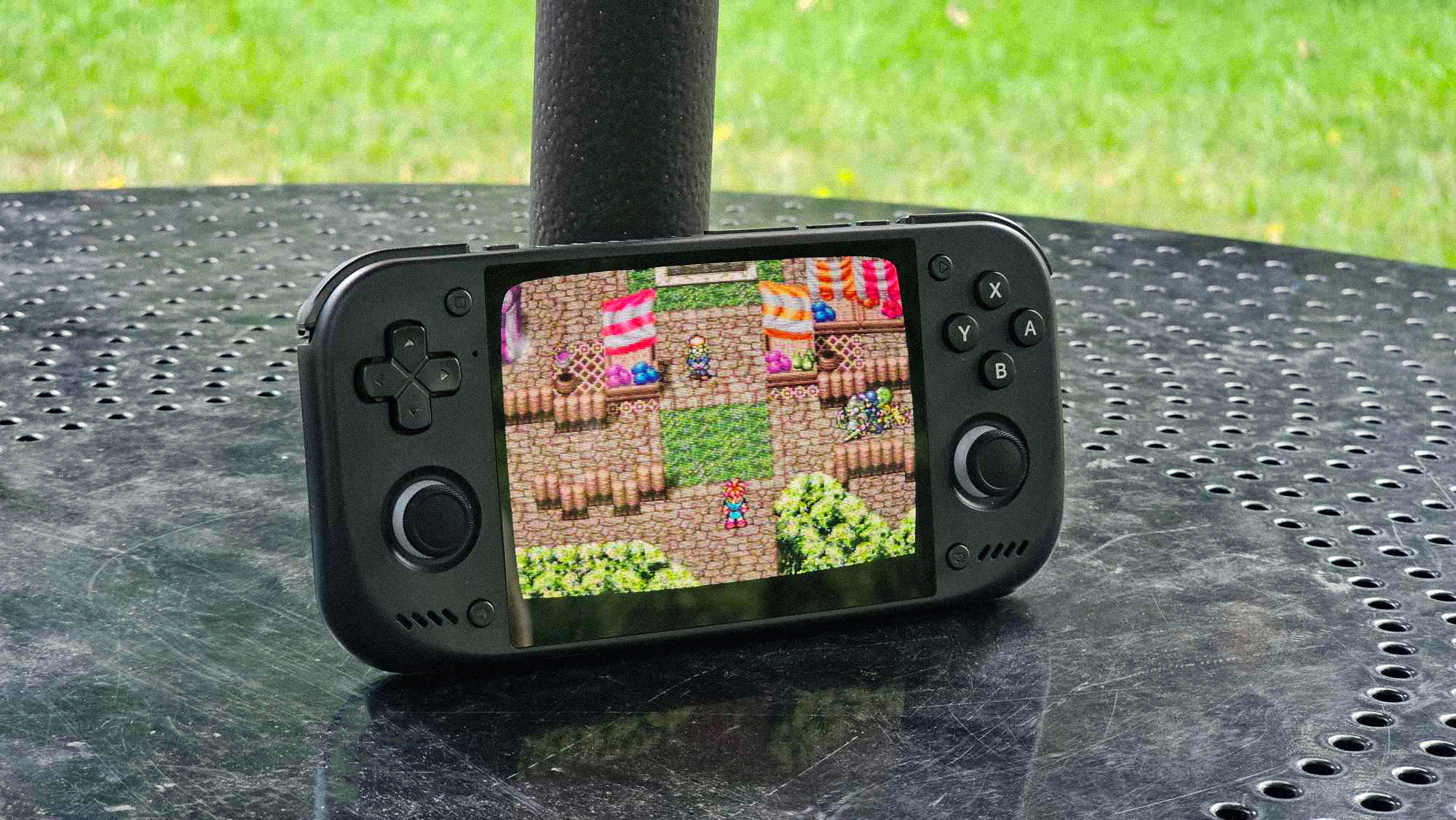
The Retroid Pocket Nova will begin shipping imminently, and its entire raison d’etre is sitting right there in the middle of the shell. A 4.5-inch, 1280×960, 120Hz AMOLED panel in a 4:3 shape. That stunning 4.5” screen isn’t just there for show either. The 1280×960 panel allows you pixel-perfect integer scaling on all your favorite 4:3 games, from 4x upscaling on older stuff, to running PlayStation 2 and GameCube games at up to 3x resolution.
It’s quite amazing to see in the hand, and as someone who has made the Anbernic RG477M into an everyday carry device for the last year, it’s worth it. There’s no fractional scaling, no shimmer when a background scrolls, no rows of pixels that are oddly one pixel taller than their neighbors. You can play these games on a wide-screen device, but something about that native aspect ratio is magical. So let’s capture the magic with five different games across a magical ten-year period where 4:3 was the king.
Chrono Trigger (SNES)
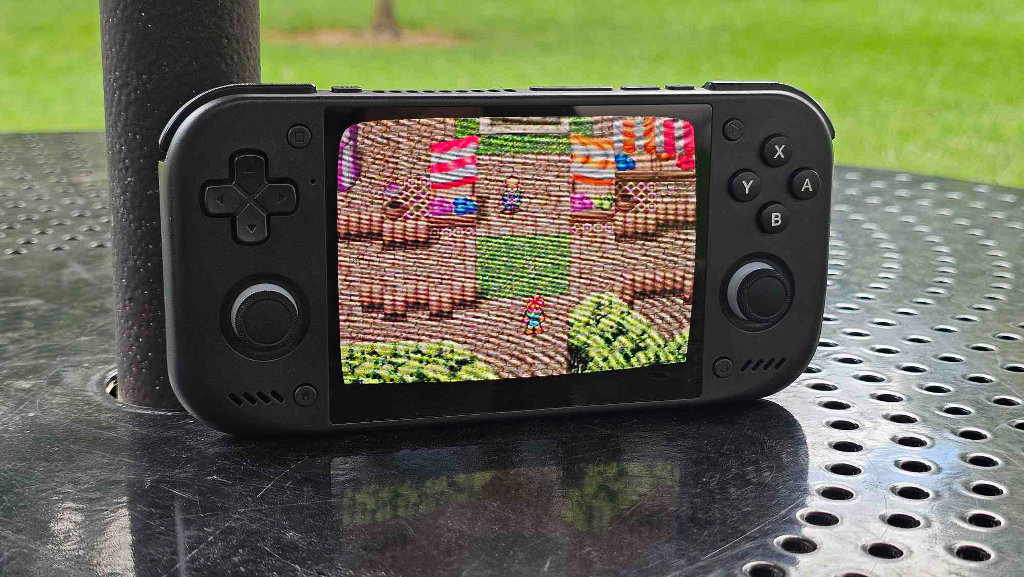
This runs rock solid even with some of the most complex shaders out there, and it just so happens to be one of the few JRPGs where a 25-hour playthrough doesn’t feel like a second job. It’s on everyone’s Best RPGs of All Time list for a reason, and I can’t recommend it enough. It might be my favorite game ever.
Shader-wise, this is the one to experiment on. Chrono Trigger’s backgrounds lean on dithering and layered transparencies that were drawn with a phosphor blur in mind, and the Zeal-era skies and the Ocean Palace are two of the more obvious cases of art that seems worse on a raw LCD. Load crt-consumer-1w-ntsc and those dither patterns melt back into the gradients they were always supposed to be.
Suikoden II (PS1)
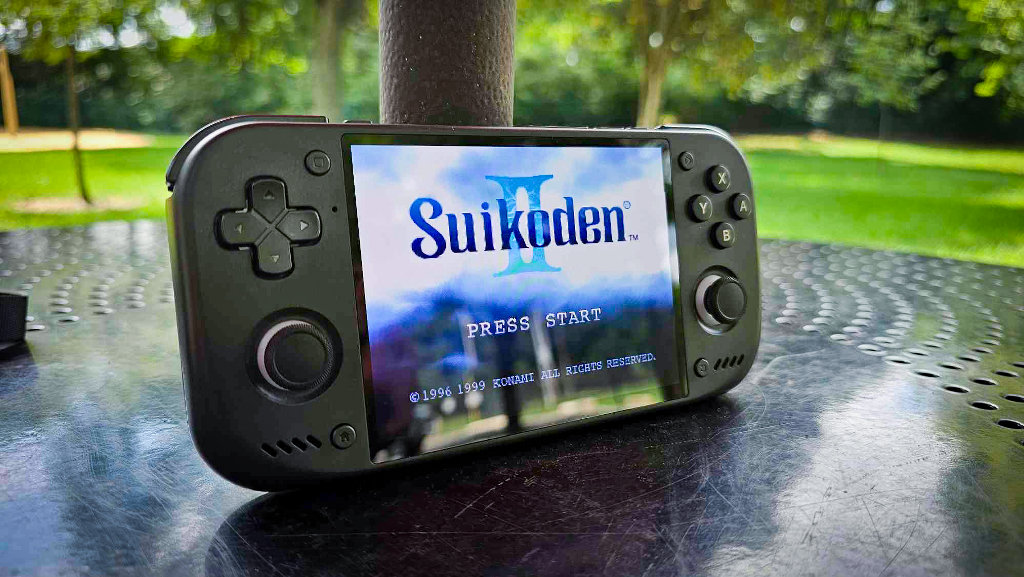
This classic game has a hundred and eight recruitable characters, a castle that fills in as you find them, and one of the better antagonists in the genre. It’s also built almost entirely out of hand-drawn 2D on a 3D-capable console, which means it can be upscaled to 4x resolution and look like a cartoon someone painted rather than a smear of texture filtering.
Suikoden II is portrait and text-heavy in a way that assumed you had a CRT TV four feet from your face, and squeezing that into a widescreen letterbox has always felt like reading a paperback through a mail slot. On the Nova… it just sits there at full size. This is the game I’d hand to somebody who claims they don’t like PS1-era JRPGs, and it’s the one that tends to change their mind.
Tony Hawk’s Pro Skater 3 (PS2)
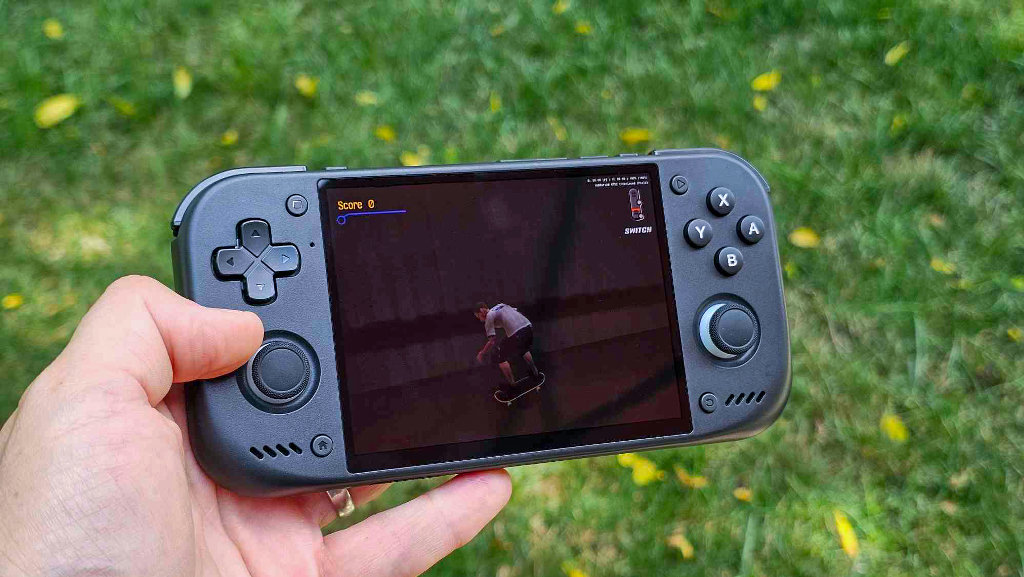
Two-minute runs. That’s the whole reason this belongs on a handheld and specifically on this one. THPS3 is built out of self-contained timed sessions with a hard stop, which makes it about the best possible fit for playing on the bus, on the train, in your car while you’re waiting for dance class to wind down. You are never in the middle of something. You are always exactly one run from putting it down.
I’m pointing at the PS2 version here. It’s the full sixth-generation build with the real level geometry, the interactive environments and the pedestrians wandering around getting in your way, and it sits in a 4:3 frame out of the box. This is where the Nova’s power really shines, because you can run this at 2.5x or 3x without breaking a sweat.
Metroid Prime (GameCube)
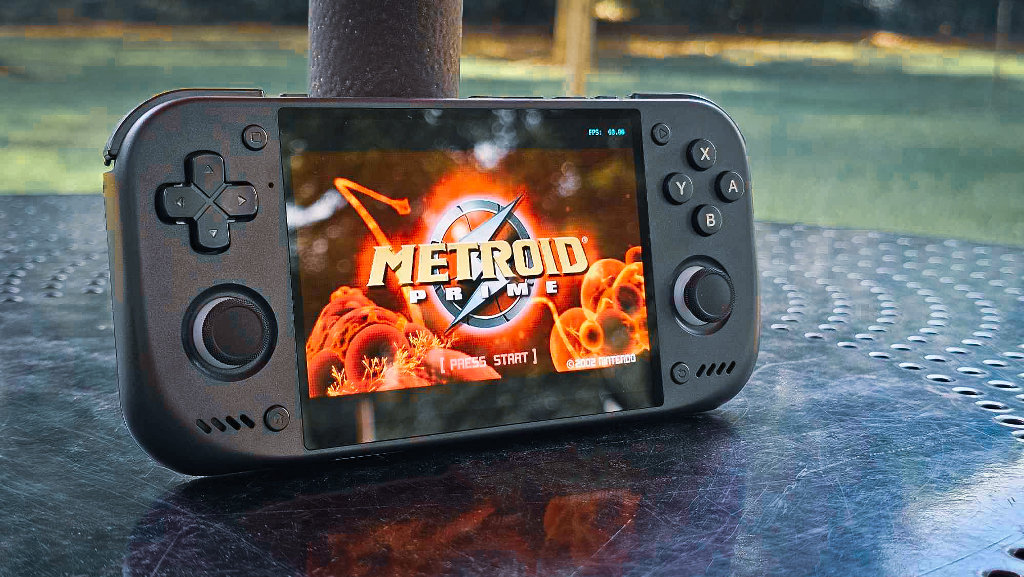
GameCube on an 8 Gen 2 class chip is mostly a solved problem at this point. Metroid Prime is one of the better-behaved titles in Dolphin, and the game was framed for a 4:3 television, so the visor takes up your entire screen the way Retro Studios drew it.
The scan visor is the tell. All those little text panels about Chozo history and Space Pirate lab notes were sized for someone sitting on a couch in front of a 27-inch tube, and at 2 or 3x resolution on a 960p 4:3 panel, they’re legible while you’re walking, which changes how much of the game’s writing you actually bother reading. The controls might not have aged well, but the core mechanic of the game more than makes up for it.
The Legend of Zelda: The Wind Waker (GameCube)
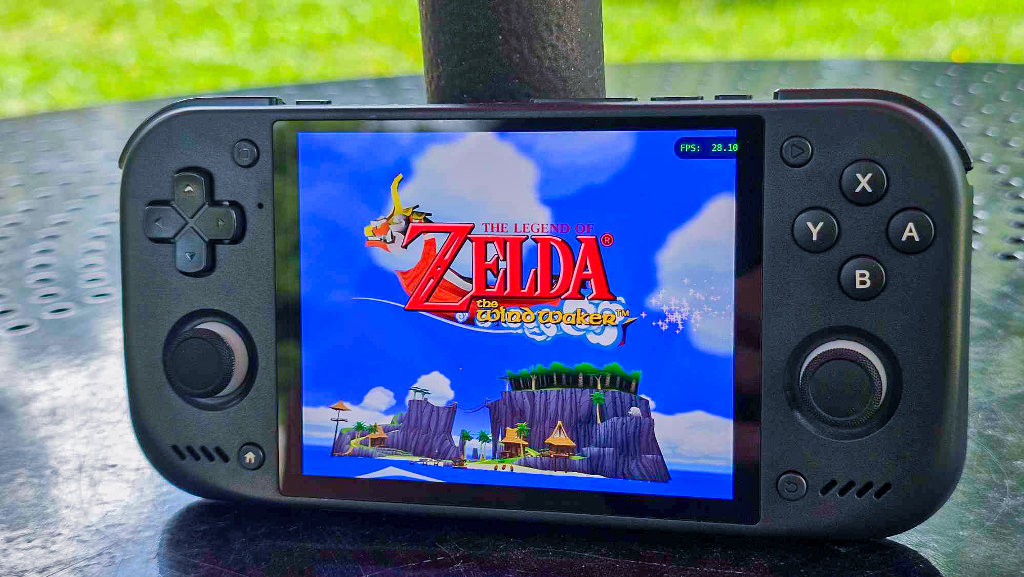
The best possible closing argument for a 4:3 handheld, because Wind Waker is the rare big-name GameCube game where 4:3 isn’t just the original presentation, it’s the only one that works. There’s no widescreen option in the game. There never was. There are AR codes and Widescreen hacks that will crop and stretch, but this game was meant for 4:3.
So with the Nova, you get that experience… with 3x upscaling… on an AMOLED screen. Cel shading looks AMAZING on this panel. The flat blocks of saturated color with hard black outlines don’t get muddied at all. And those vibrant images are sitting on a screen with real blacks, which means the ocean at night looks like ink instead of dark gray. Sail out of Windfall at sunset, and the thing genuinely looks better than it does from your memories. That’s the highest praise I can give.
Conclusion
Stay tuned to the website and YouTube channel, as we have plenty more Retroid Pocket Nova content on the way. In the meantime, sound off in the comments below and let us know some of your favorite 4:3 games, or at least the games you can’t wait to play on the Nova.