

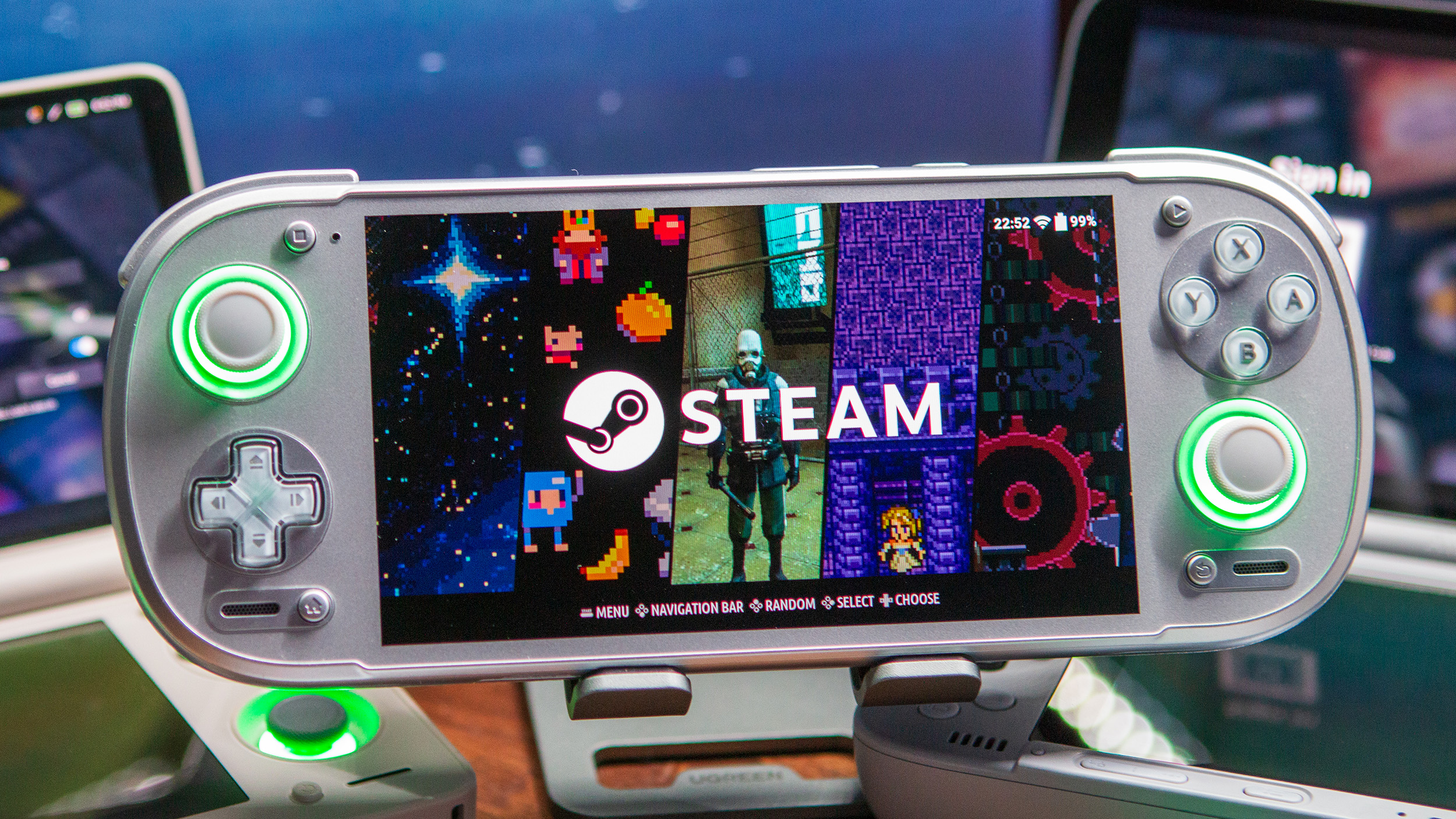
It’s an exciting time for the world of Android handhelds, especially those that are more powerful, like the AYN Thor, Retroid Pocket 6, KONKR Pocket Fit, and others. For at least a year, we’ve been able to mess around and even play some PC games on Android with the help of apps like Winlator, GameNative, and GameHub. Now, things are getting turned up a notch, as we can now install Steam on Android with ROCKNIX.
Table of Contents
While ROCKNIX on Android devices has been possible for quite some time, it wasn’t yet possible to play PC games from Steam. Instead, you would have to switch the Boot Mode and boot back into Android from ROCKNIX in order to do so. Thanks to the latest batch of ROCKNIX Nightly releases, we’re one step closer to really being able to turn our Android handhelds into mini Steam Decks.
Steam-Compatible Devices
AYN
- Odin 2 (SM8550)
- Odin 2 Mini (SM8550)
- Odin 2 Portal (SM8550)
- Thor (SM8550)
AYANEO
- Pocket ACE (SM8550)
- Pocket DMG (SM8550)
- Pocket DS (SM8550)
- Pocket EVO (SM8550)
- Pocket S 2K (SM8550)
- Pocket S2 (SM8650)
Retroid
- Pocket 5 (SM8250)
- Pocket 6 (SM8550)
- Pocket Flip 2 (SM8250)
KONKR
- KONKR Pocket Fit (SM8650 | G3 Gen 3)
Install ROCKNIX
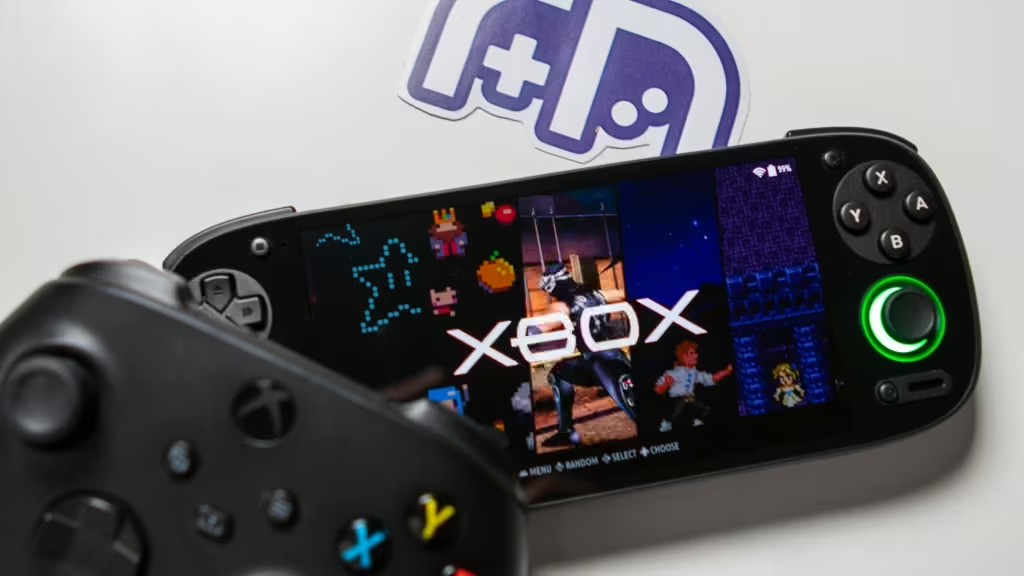
- Head over to the ROCKNIX Nightly landing page.
- Download the
.img.gzthat corresponds with your device’s chipset. - While that’s downloading, connect your microSD card to your PC.
- If it’s been used before, be sure to format it before proceeding.
- Open your preferred image burner app of choice, and flash the downloaded ROCKNIX build to the microSD card.
- Eject the card from your computer and insert it into your handheld.
- Follow the steps below to back up the device’s existing ABL and flash the ROCKNIX ABL.
- Once complete, you’ll be able to boot into ROCKNIX directly from the microSD card.
ROCKNIX ABL
This is one of those steps that’s required for the majority of devices, as you’ll need to tell the handheld to boot from the microSD card instead of the internal storage. Doing so requires access to the fastboot menu in order to change the boot mode.
Back Up Existing ABL
However, we first want to back up the stock ABL in the event that something goes awry.
- Open your Files app of choice on your handheld and navigate to the microSD card.
- Locate the
rocknix_ablfolder. - Copy and paste that folder into the root internal storage of the device.
- Close the File Manager app.
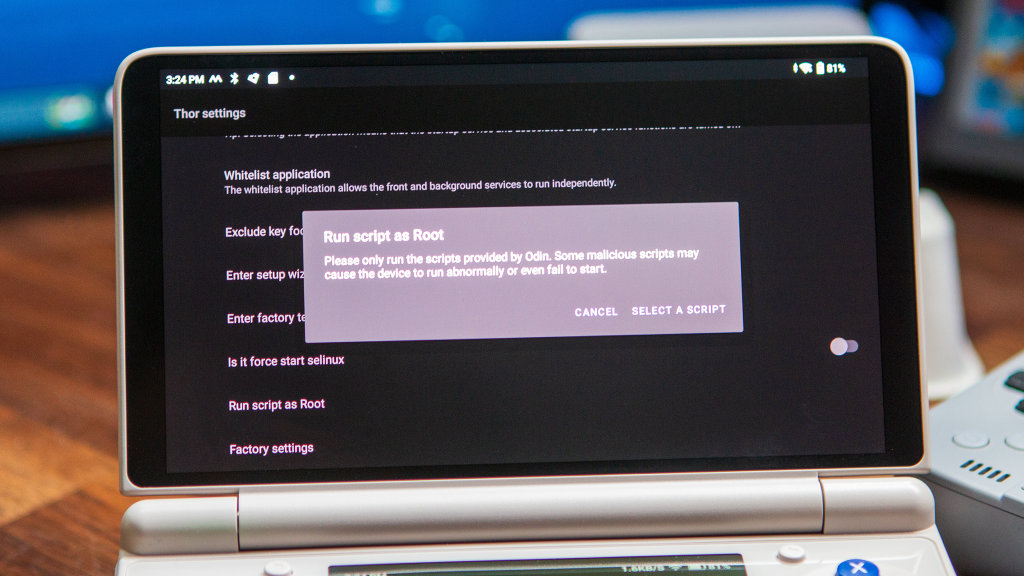
- If using an AYN/Retroid handheld:
- Open the Settings app.
- Scroll down and tap
Handheld Settings - Tap
Run Script as Root - Navigate to the
rocknix_ablfolder. - Select the
backup_abl.shscript.
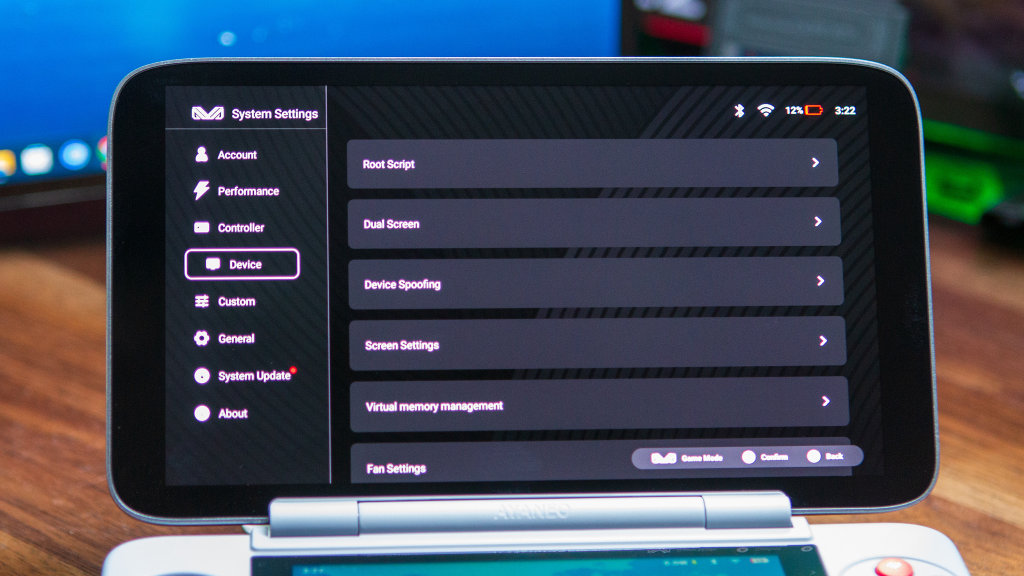
- If using an AYANEO/KONKR handheld:
- Press the AYA button to be taken into the AYANEO-specific settings.
- Scroll down and select Device.
- Tap
Run Script as Root - Navigate to the
rocknix_ablfolder. - Select the
backup_abl.shscript.
- Once the script is finished running, connect your handheld to your PC.
- Transfer the newly-created files to a folder on your PC, in order to keep them backed up.
Flash ROCKNIX ABL
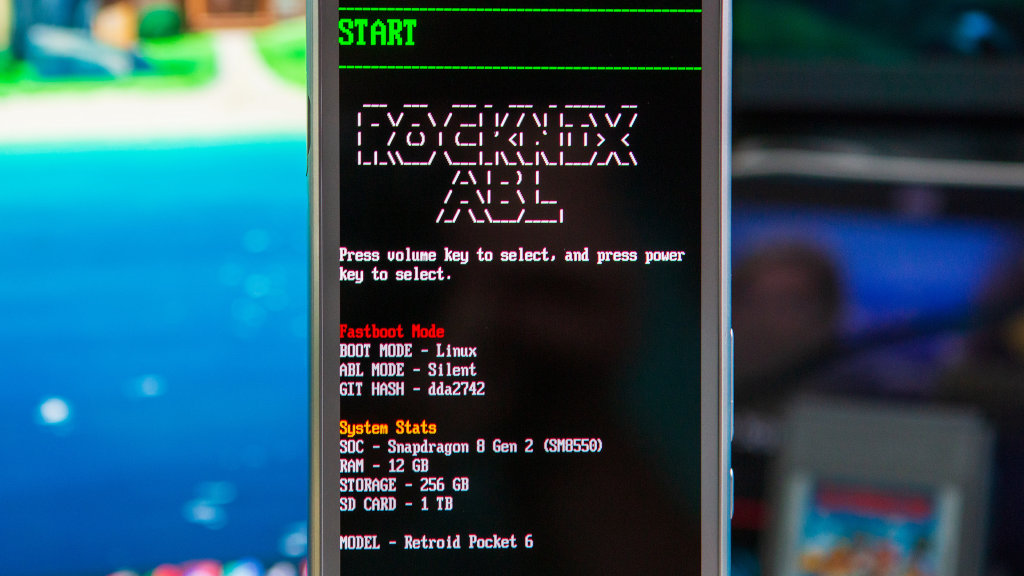
Here’s how you can flash the ROCKNIX ABL in order to proceed:
- Open your Files app of choice on your handheld and navigate to the microSD card.
- Locate the
rocknix_ablfolder. - Copy and paste that folder into the root internal storage of the device.
- Close the File Manager app.
- If using an AYN/Retroid handheld:
- Open the Settings app.
- Scroll down and tap
Handheld Settings - Tap
Run Script as Root - Navigate to the
rocknix_ablfolder - Select the
flash_abl.shscript.
Change Boot Mode
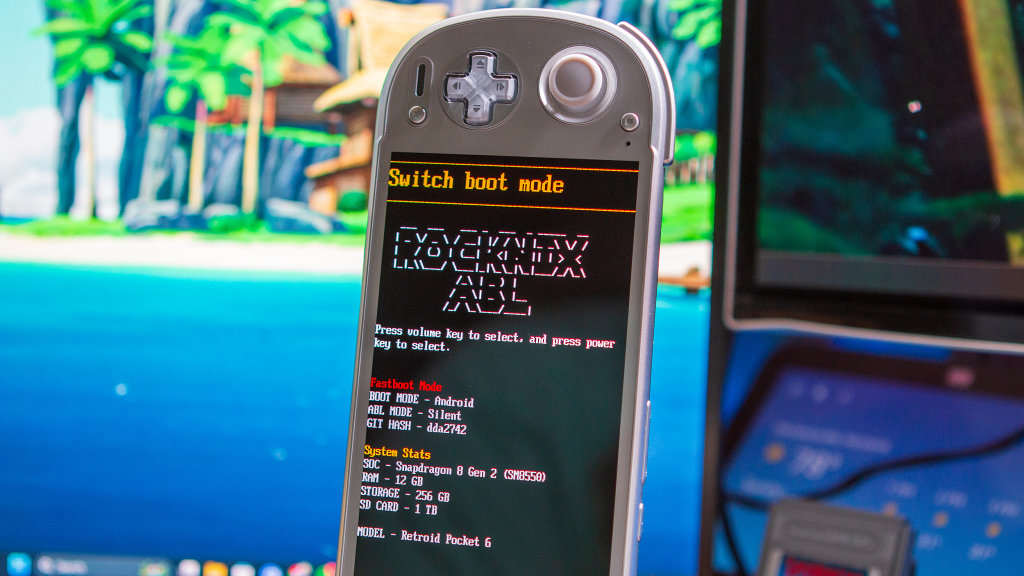
With the new ROCKNIX ABL flashed onto your handheld, it’s now possible to proceed with the ROCKNIX installation.
- Restart your handheld.
- Once the handheld restarts, press and hold the Volume Down button.
- Continue holding until you see the ROCKNIX ABL screen.
- Using the Volume Up and Down buttons, cycle through the menu until you see Set the Device.
- Press the Power button to select.
- Again, using the Volume buttons, highlight your device, pressing the Power button to confirm.
- Once selected, you’ll be taken back to the main ABL screen.
- From the main screen, verify that it says
Boot Mode - Linuxunder the “Fastboot Mode” section. - If not, use the Volume buttons to cycle through the menu until you see Switch boot mode.
- Press the Power button to confirm.
- Once Linux is selected, make sure you see Start at the top of the screen, then press the Power button to boot into ROCKNIX.
Install Steam
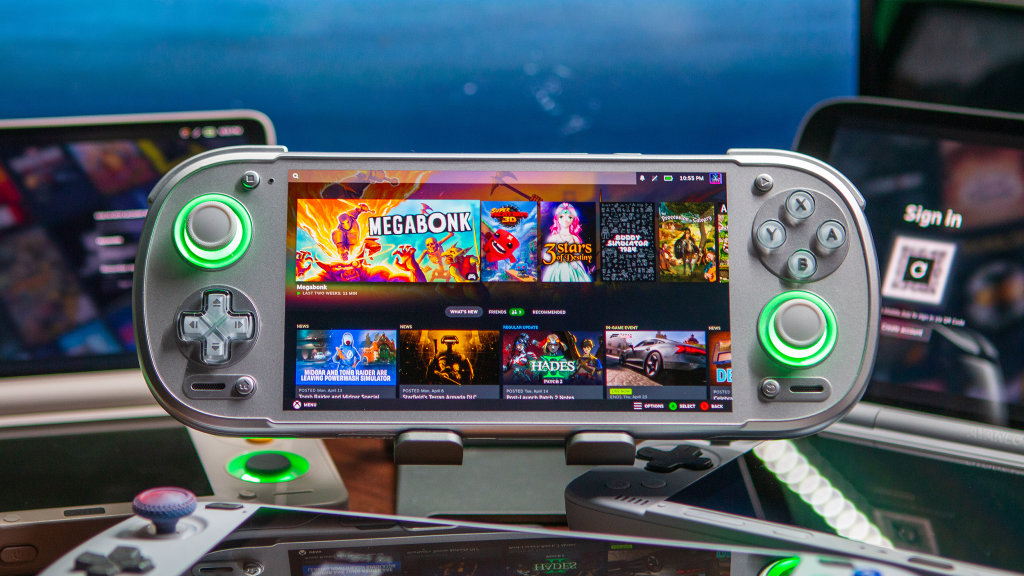
- Once your device has finished installing and booting into ROCKNIX, press the Start button.
- Locate and open the Network Settings.
- If necessary, enable and connect your device to Wi-Fi.
- Go back to the Main Screen and scroll through the options until you see Tools.
- From the Tools menu, scroll down and select Start Steam.
- In some instances, the download screen might appear and immediately force-close. Verify that you’re connected to Wi-Fi, and try again.
- Wait until Steam is finished installing.
After Steam is done being installed, you’ll be greeted with the Steam login screen in Big Picture Mode. Just log into your Steam account, wait for your library to populate, and then start downloading some games!
Enable Steam Input
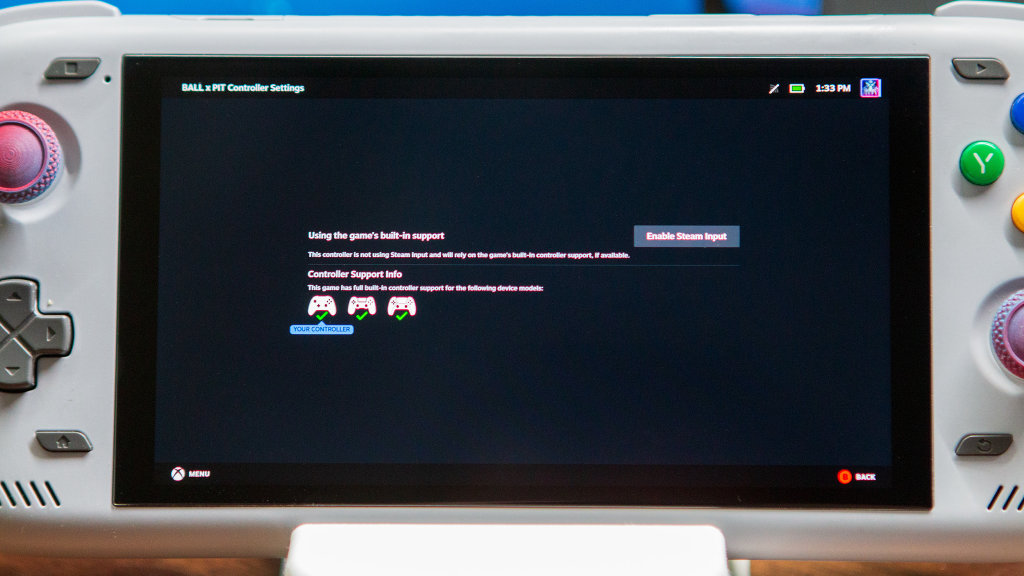
There’s a decent chance that some of the games that you install will work right out of the box. However, if you come across issues with being able to control games, you can try enabling Steam Input:
- From Steam, navigate to your Library and select the game, but don’t start the game.
- Highlight and select the Controller icon on the right side of the listing.
- Select Enable Steam Input.
- Make any changes to the controller layout that you want/need.
- Return to the game listing and try it out.
Change Game Configs
Although some games work just fine after installation, you can pretty much bet that this won’t be the case for every game in your library. If you run into issues with playing certain games, ROCKNIX recommends checking out ProtonDB and making the appropriate adjustments within the Steam app.
ROCKNIX Steam Settings
- Close Steam by opening the side menu > Power > Exit Steam.
- Navigate to and open the Steam section within ES-DE.
- Press the Select button.
- Highlight and select Advanced System Options.
- Make any necessary changes for the following:
- System Options
- Cores Used
- Default
- All
- Big
- Little
- CPU Scaling Governor
- Default
- ONDEMAND
- POWERSAVE
- PERFORMANCE
- SCHEDUTIL
- GPU Scaling Governor
- Default
- USERSPACE
- POWERSAVE
- PERFORMANCE
- SIMPLE_ONDEMAND
- MangoHUD Overlay
- Default
- Enabled
- Disabled
- Display Mode
- Cores Used
- ASound Host Library
- DRM Host Library
- Vulkan Host Library
- Wayland Client Host Library
- GL Host Library
- System Options
Known Issues
- Some Steam games open in a Windowed mode by default. Although you’re able to control the game, you might also be controlling the Steam menu at the same time in the “background.”
- Currently unable to easily exit a game and go back to Steam.
- If you’re having Wi-Fi connection issues:
- Open File Manager.
- Navigate to the System Folder within the Config folder.
- Open system.cfg.
- Scroll to the bottom.
- Delete your Wi-Fi SSID and Key.
- Save the changes.
- Exit the File Manager and try to add your Wi-Fi network again.
Pros and Cons (ROCKNIX vs. Android)
ROCKNIX
- Pros
- After Steam installation, games appear within ES-DE just like any other system.
- Proton ARM integration is likely to arrive sooner
- Steam client as opposed to relying on an external launcher
- Easier to make game-specific tweaks, especially compared to Winlator
- Cons
- Limited to only supported devices
- Game installation can be rather slow
- Manually moving games from PC to handheld isn’t seamless
- Various bugs due to being in early development (should improve with maturity)
Android
- Pros
- Multiple avenues to explore (GameNative, GameHub, Winlator etc.)
- Device compatibility is much better (Qualcomm, MediaTek, etc.)
- No need to flash anything or tinker with Fastboot.
- Faster installation speeds.
- Able to easily transfer and add games from PC/microSD if you don’t install from Steam directly.
- Cons
- Translation Layers have more overhead on Android vs. Linux
- Some games simply won’t run (or run poorly)
RECOMMENDATION: If you have a compatible device, I’d suggest at least taking ROCKNIX for a spin just to see whether it works for the games you play. At worst, you just have to switch the Boot Mode back to Android until Steam on ROCKNIX is more mature.
Pros and Cons (microSD vs. Internal)
Technically, it’s possible to install ROCKNIX directly onto your handheld’s internal storage. Doing so would definitely help solve the pains associated with relying on the microSD card installation method. This is simply because of the faster read/write speeds of the internal storage compared to what you’ll find on even the best microSD cards. Not to mention that you’re also limited by the microSD card module itself, which might not be able to reach the microSD card’s advertised speeds.
However, opting for this route is a bit more “dangerous” compared to installing and booting ROCKNIX from the microSD card. First, you’ll have to SSH into the handheld and run a specific command, which isn’t all that daunting. But from there, you’ll need to split up and allocate the internal storage to both the ROCKNIX and Android partitions.
If you make one wrong move, then you can end up removing the Android partition entirely, which might not be what you intended to do. At which point you would have to try and re-flash Android, and that’s not exactly the easiest process, even with some of these older handhelds.
RECOMMENDATION: Install ROCKNIX to a microSD card, as Steam is only currently available via the Nightly releases, and there are too many bugs and issues to warrant replacing Android completely.

4 Comments
I got up to restarting after flashing my Retroid Flip 2 and it simply never turned on again.
With the new ROCKNIX ABL flashed onto your handheld, it’s now possible to proceed with the ROCKNIX installation.
Restart your handheld.
Nope. No recovery options work eg. power and volume down for lengths of time. Both volume buttons and power… holding power for a minute. Had 100% battery at time of death. Took apart and disconnected internal battery, waited a minute and reconnected. Still won’t power on.
Very sad day.
Any options I have missed?
I also am the same. This article completely bricked my Flip 2. Followed all instructions completely. Took it apart, disconnected battery, no dice. My device is completely dead.
They aren’t android devices they’re ARM devices. Rocknix has nothing to do with Android and replaced it.
I also am the same. This article completely bricked my Flip 2. Followed all instructions completely. Took it apart, disconnected battery, no dice. My device is completely dead.