

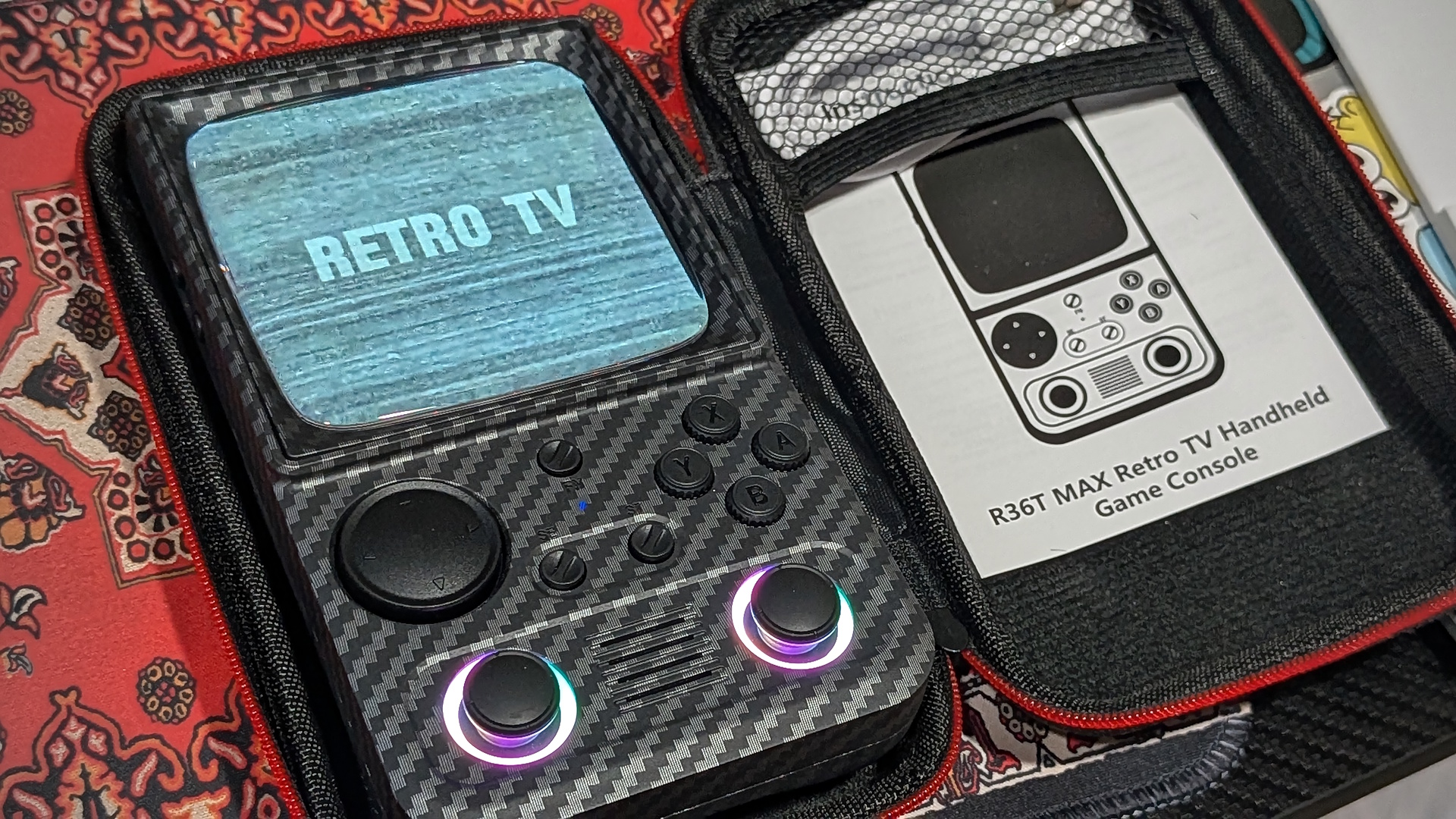
I’m not sure where the current record stands for words written on the company (or more likely companies) that is/are AISLPC, but I have to at least be in the conversation at this point. Fresh off the somewhat surprising hit of the R36T – the makers are back with a 1:1 screened version of the little faux-CRT that could.
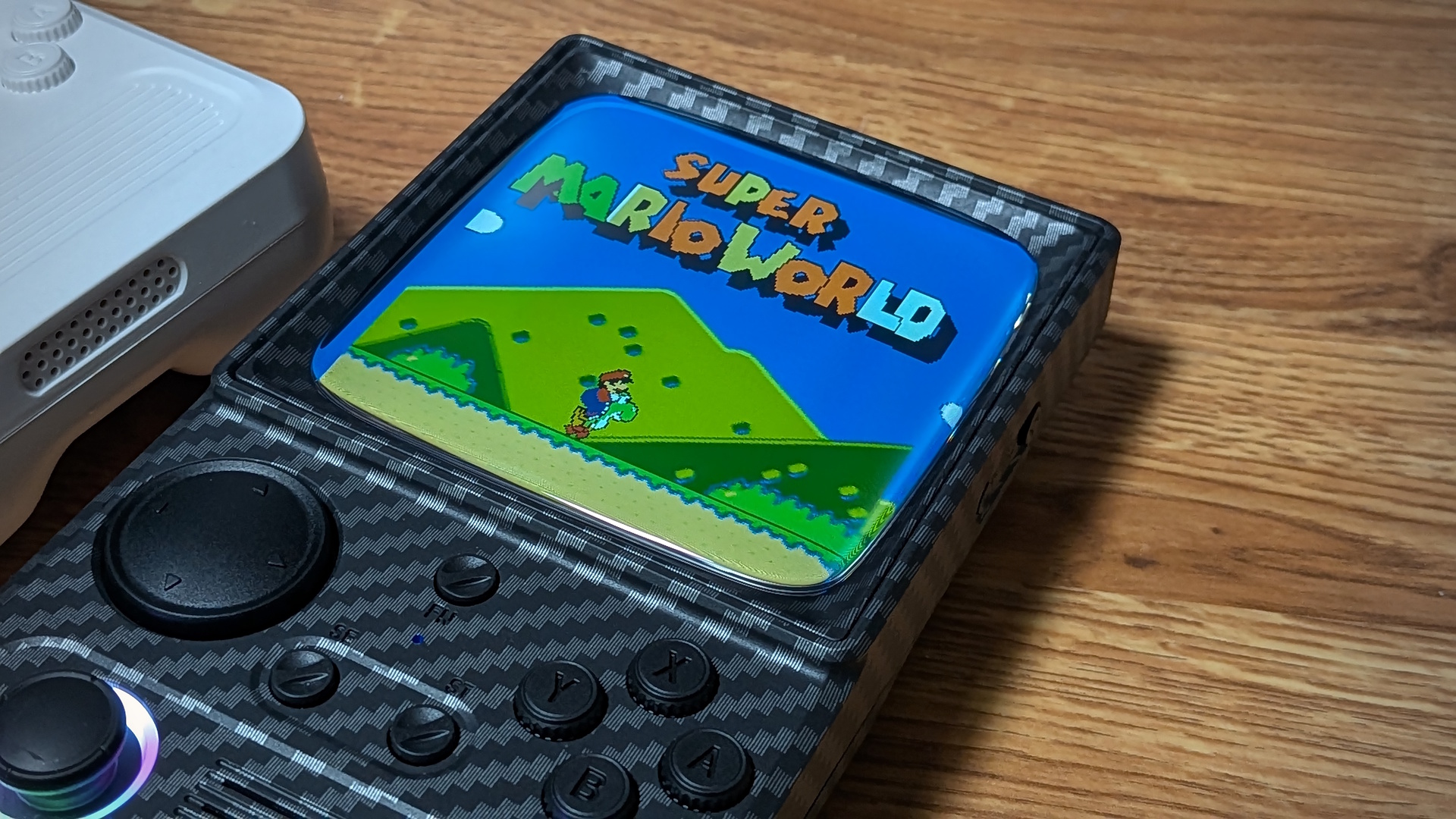
AISLPC is the maker behind this latest nod to the displays of old. I think the company even took some of my initial review suggestions to heart (wood grain!). So have the minor annoyances of the original R36T been smoothed over for its larger-screened debut? Let’s find out.
R36T MAX Specs
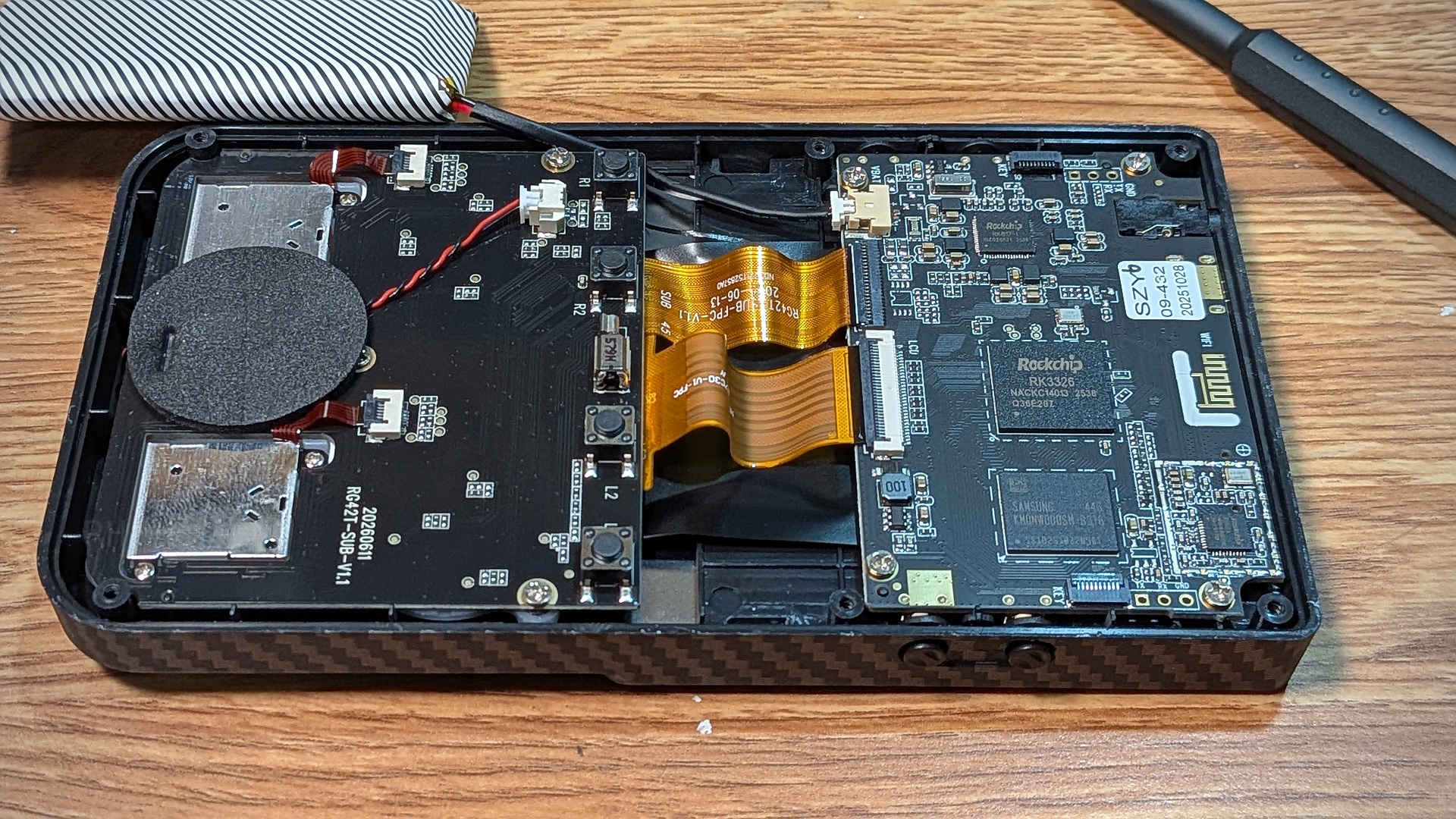
The first thing that struck me when opening up the 36T MAX was that the battery just kinda rests on top of the speaker and analog sticks. There is no cradle built into the shell to house the battery. It just is.
This is especially not great when compounded by the fact that one of the lower screws for the shell had already made a visible imprint on the loose battery. If you screwed this device back together without paying attention, you could have a really bad afternoon.
- CPU: Rockchip RK3326
- GPU: Mali-G57 MC1-2EE
- RAM: 1GB
- Screen: 4″ 720×720 IPS Display with CRT bubble cover
- Sound: Single front-firing speaker
- Battery: 4000mAh (per listing)
- Connectivity: USB-C (single), 3.5mm AUX Jack, Micro-SD (single), Wi-Fi
- Operating System: Custom EmuElec Linux OS
- Weight: 221 grams (according to my kitchen scale)
- Colors: Wood Grain, Carbon Fiber, Gray, White, Black, Red, and Blue
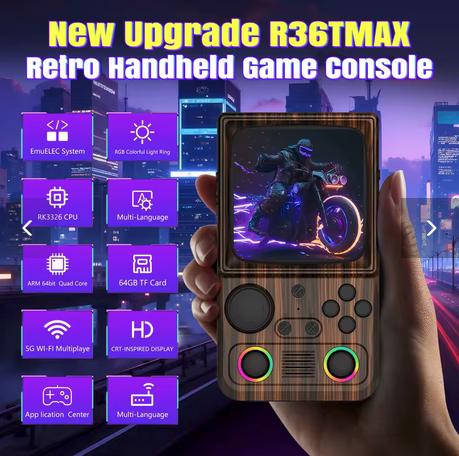
I appreciate that AISLPC acknowledges that this is not a mini-CRT display. This is a “CRT-Inspired Display”. Which, of course, is exactly what it is: Bubbled plastic over a traditional LCD display. But they were the ones bold enough to try the idea, and I think the reception they’ve received back from the community has been largely positive.
[button link=”https://rh-go.link/R36T-Max_Amzn” color=”red” newwindow=”yes”] R36T Max at Amazon[/button][button link=”https://rh-go.link/R36T-Max_AE” color=”red” newwindow=”yes”] R36T Max at AliExpress[/button]
Ergonomics & Shell
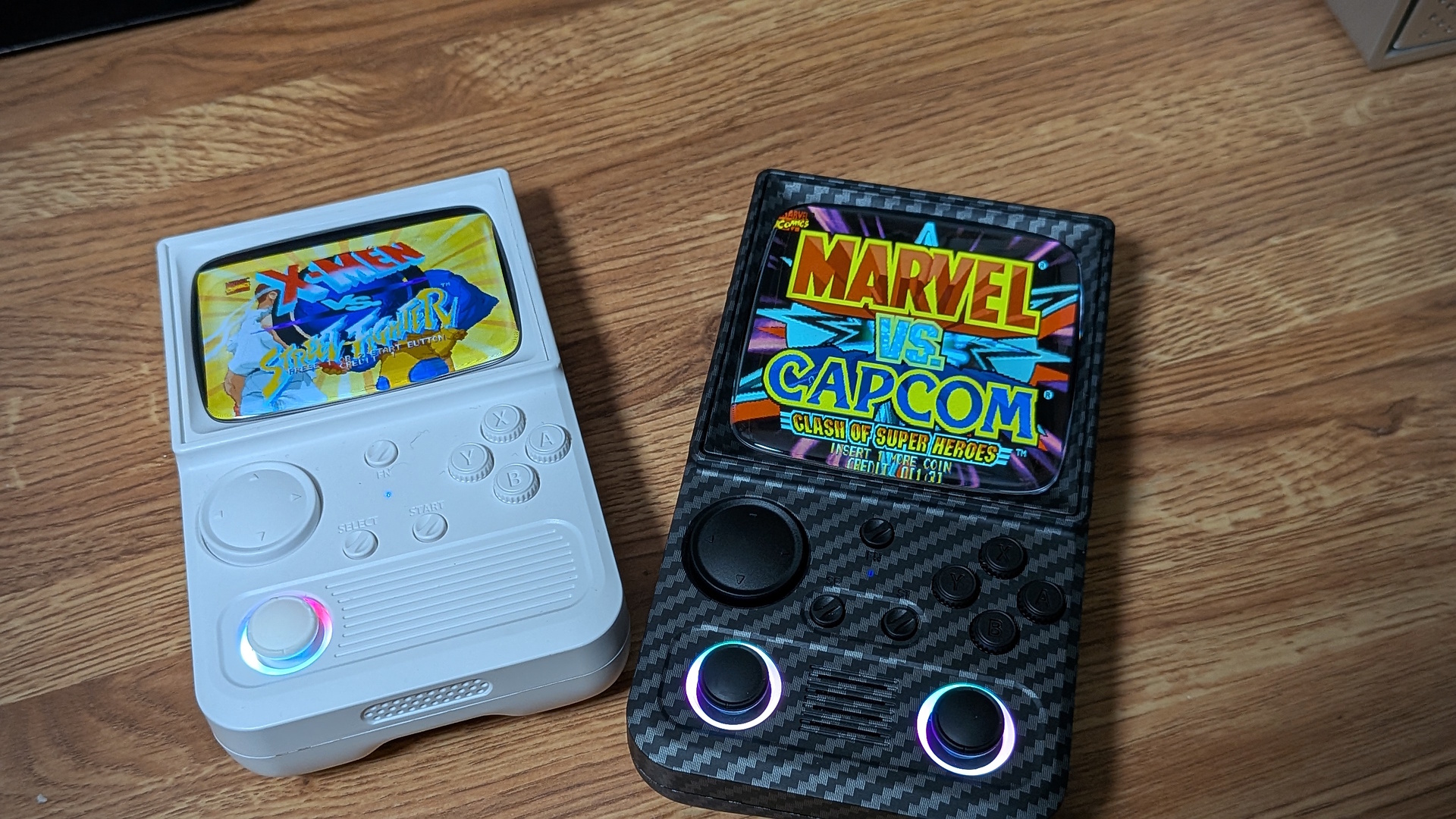
I had no gripes with the quality of plastics used on the original R36T for a budget device, but the shell on the MAX does have a slightly more premium feel to it. The texturing on the carbon fiber design that I received gives a decent in-hand feel.
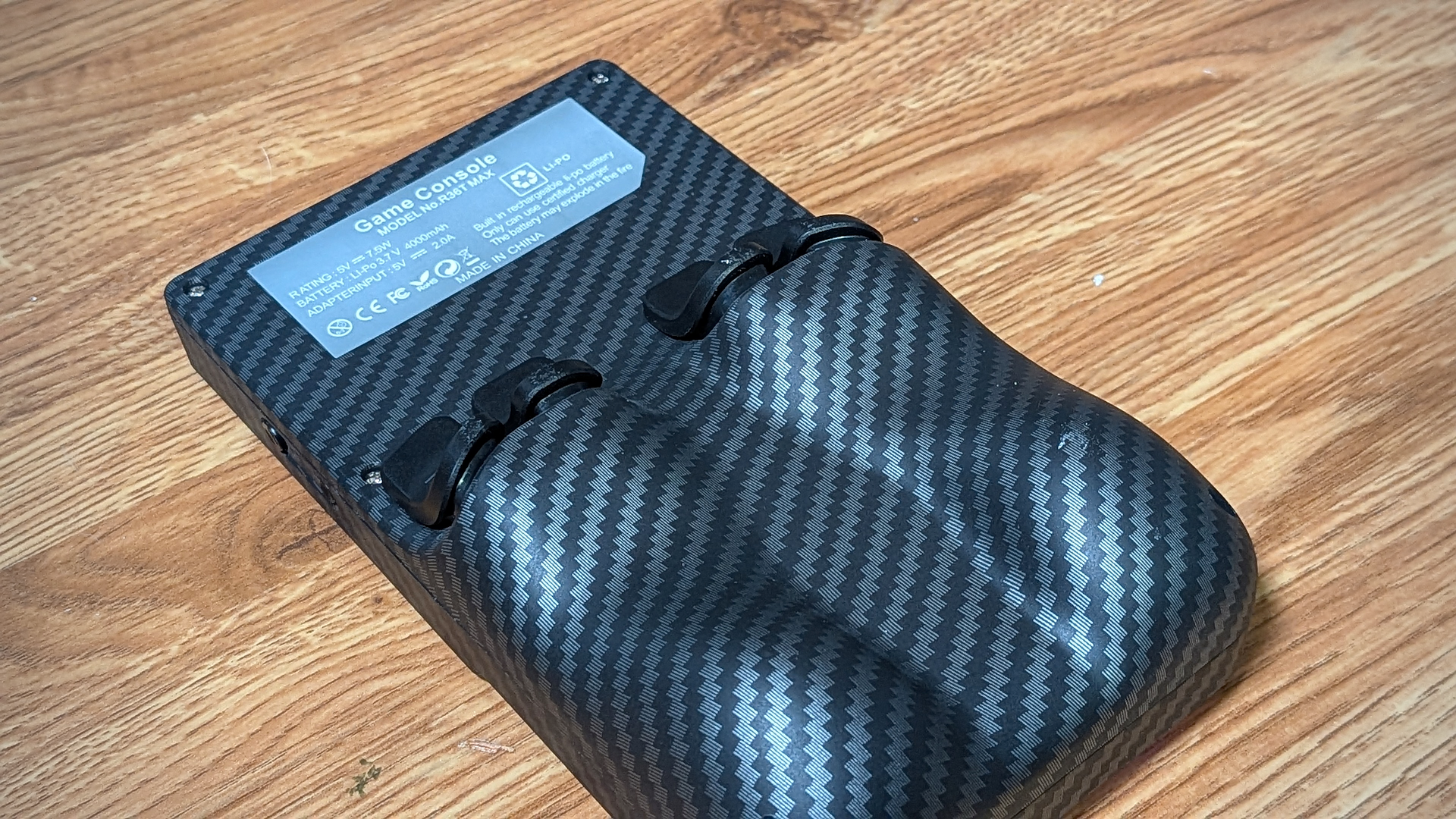
My hands are a little larger, and the bump-out design of the K36 style handhelds has never been my favorite, but it’s certainly not bad. I just find that my fingers can have a tendency to hit each other when gripping the back of the handheld. Subtly is not really the thing here. You might have noticed.
Sound
The mono front-facing speaker on offer here is OK. There were a few times where pops and crackles entered the equation, and I can’t be sure if it was software-related or something else (like battery contact or interference). There’s sound, it’s nothing to write home about, and that’s really all I have to say about that.
The Screen
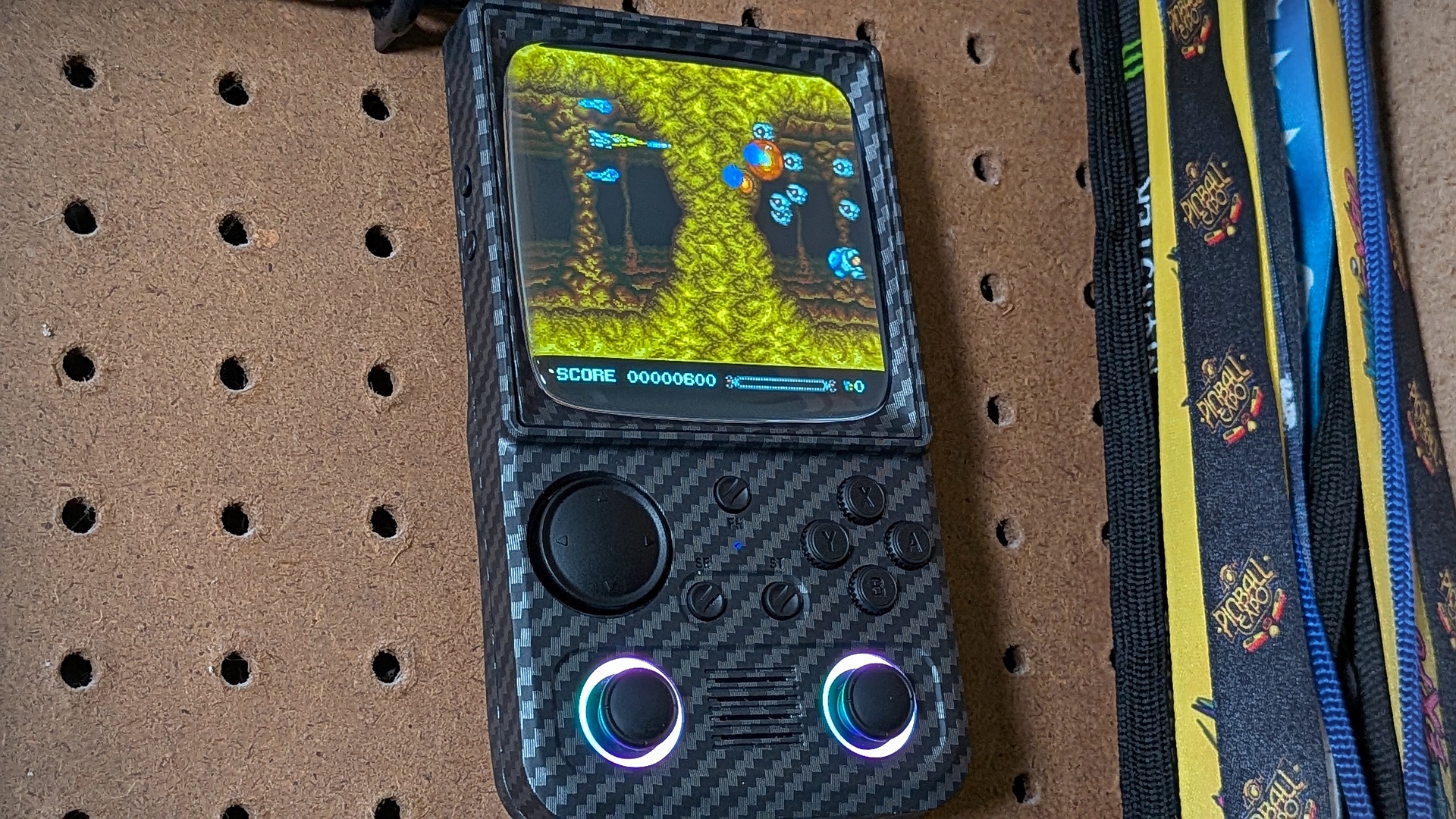
Before we go any further, yes, there is still some bezel on the screen edges leftover from the R36T. The nature of having the curved bubble over the screen to simulate the CRT effect makes it difficult to eliminate. Otherwise, though, I think that the 4″ 720×720 1:1 screen serves the intended effect better than it did on its baby brother device.

I mentioned including shaders in my write-up for the R36T, and I think this device is better served by turning on some CRT or scanline filters as well. These are, of course, options that are very much available in the included RetroArch setup, but it would have been kinda cool to round out the presentation package to see them on by default. It’s a minor gripe that’s easily rectified.
Controls
With the exception of the second analog stick, these are the same controls that appeared on the original R36T. The first comment I’ve generally heard back when anyone first sees these devices is that the circular knob-style D-Pad looks like a bit of a painful experience. I had the same impression prior to trying them.
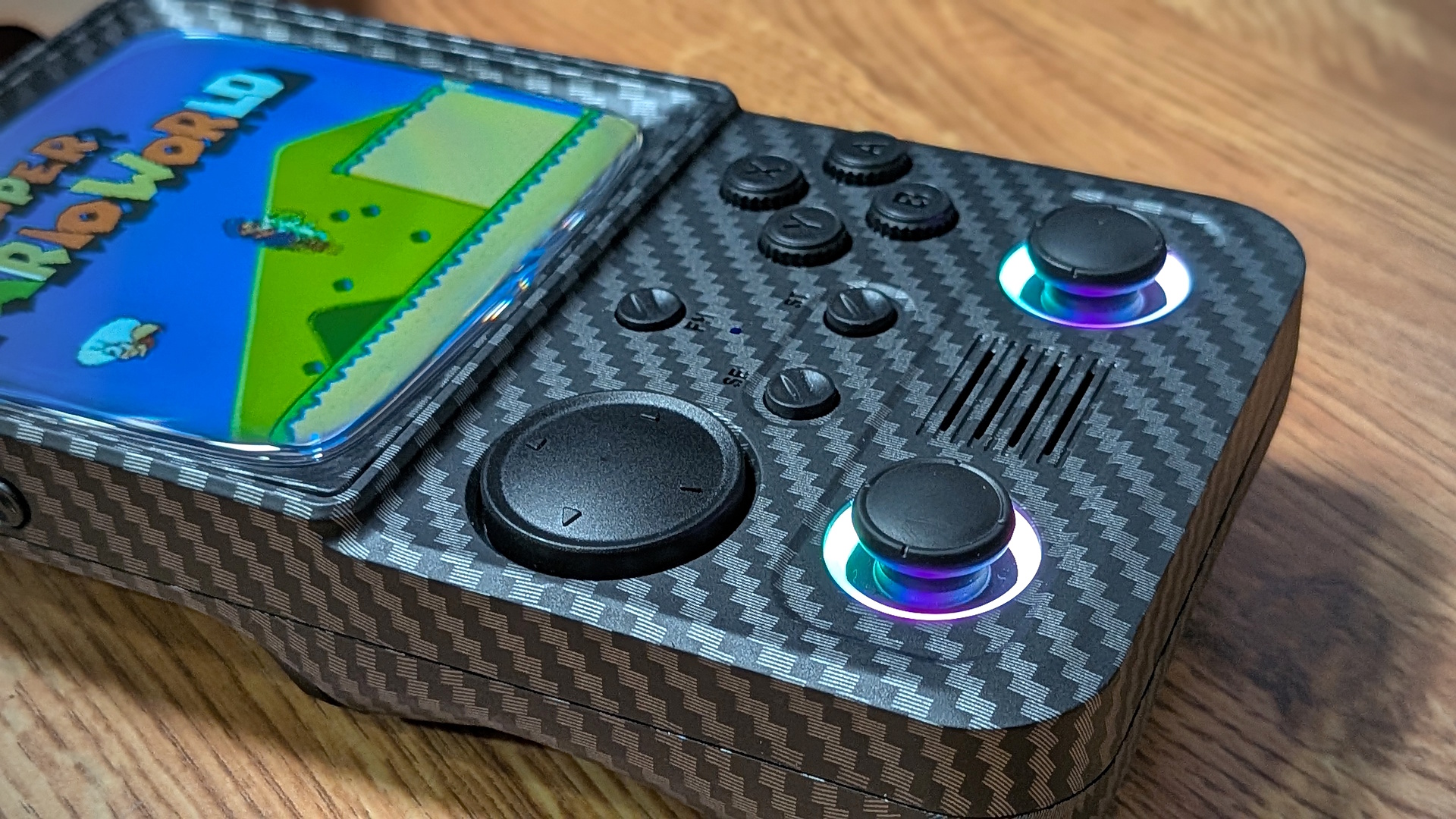
The D-Pad on The R36T MAX is not my ideal control, but I see where they were going with the theming, and if you’re on board with that, you can probably forgive something a little different. What I can say is that the D-Pad performs in the real world much better than initial impressions would tell you.
I’d describe it as surprisingly serviceable. Again, it’s not my favorite design, but fireballs weren’t an issue.
Rear triggers are fine, if a bit noisy. The same goes for Start/Select and Function. No big deal, but it does produce something of that plastic echo sound. Thankfully, the face buttons are much quieter.
Software & Presentation
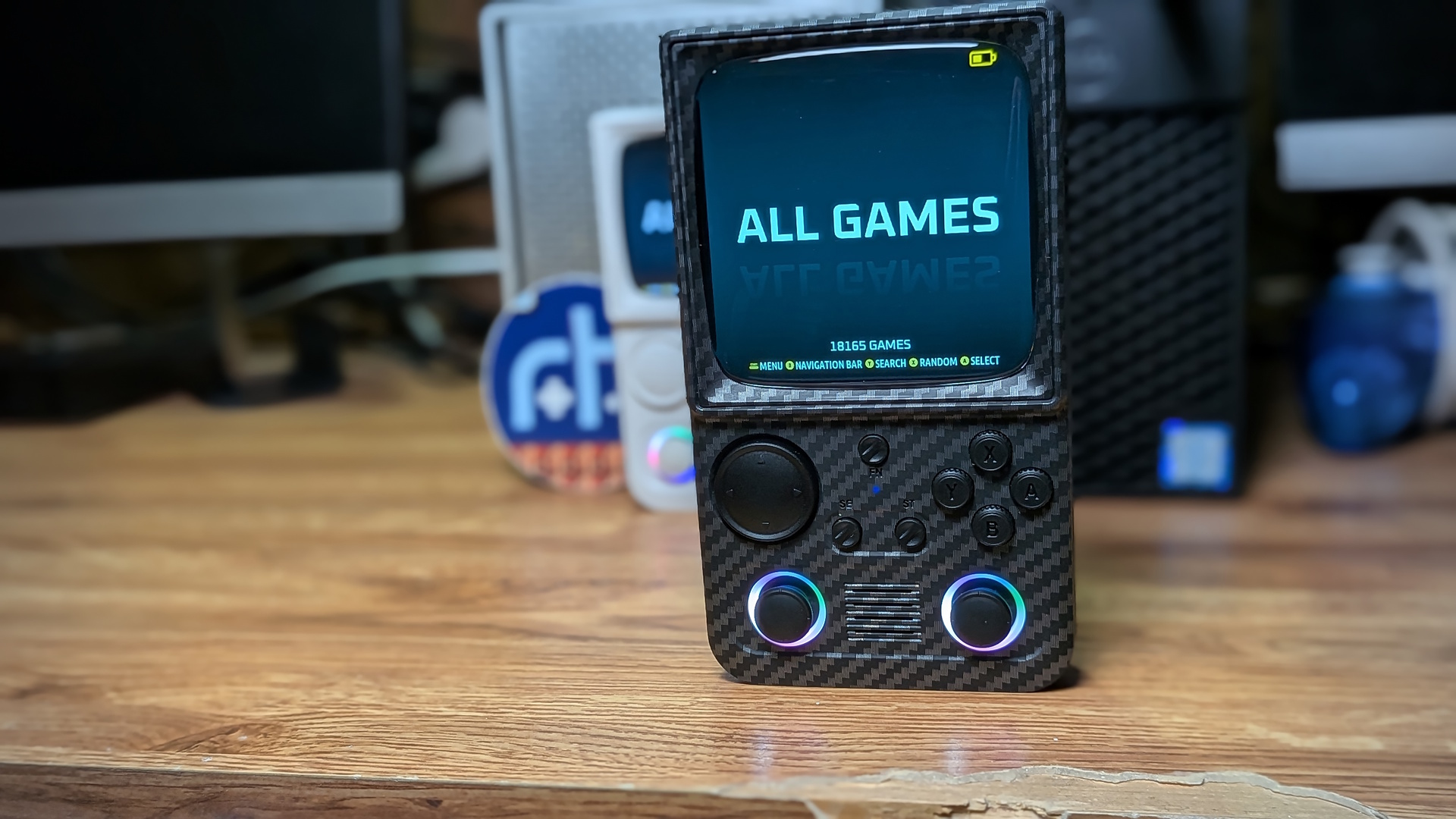
The 36T MAX is running the same EmuElec OS as the original R36T, but I’m happy to report that some of the sloppier ROM collections seen before have been nicely tidied up here. Games packed in with the device were alphabetized and organized nicely.
Gone are the multi-system ROM dumps with 002342 file headers. As someone who likes to browse around through the various systems, it makes the experience much more enjoyable than trying to use the on-screen keyboard for search.
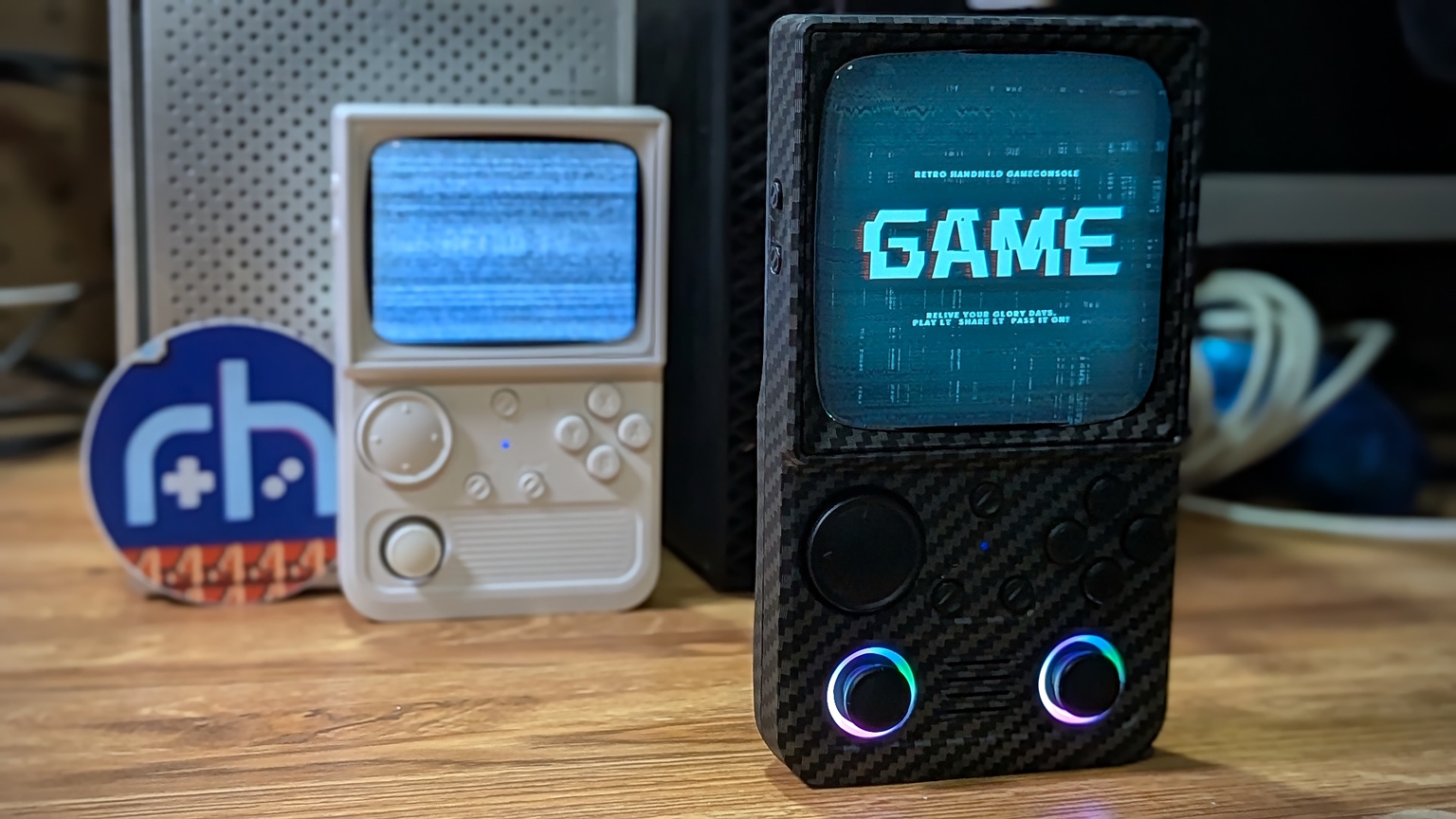
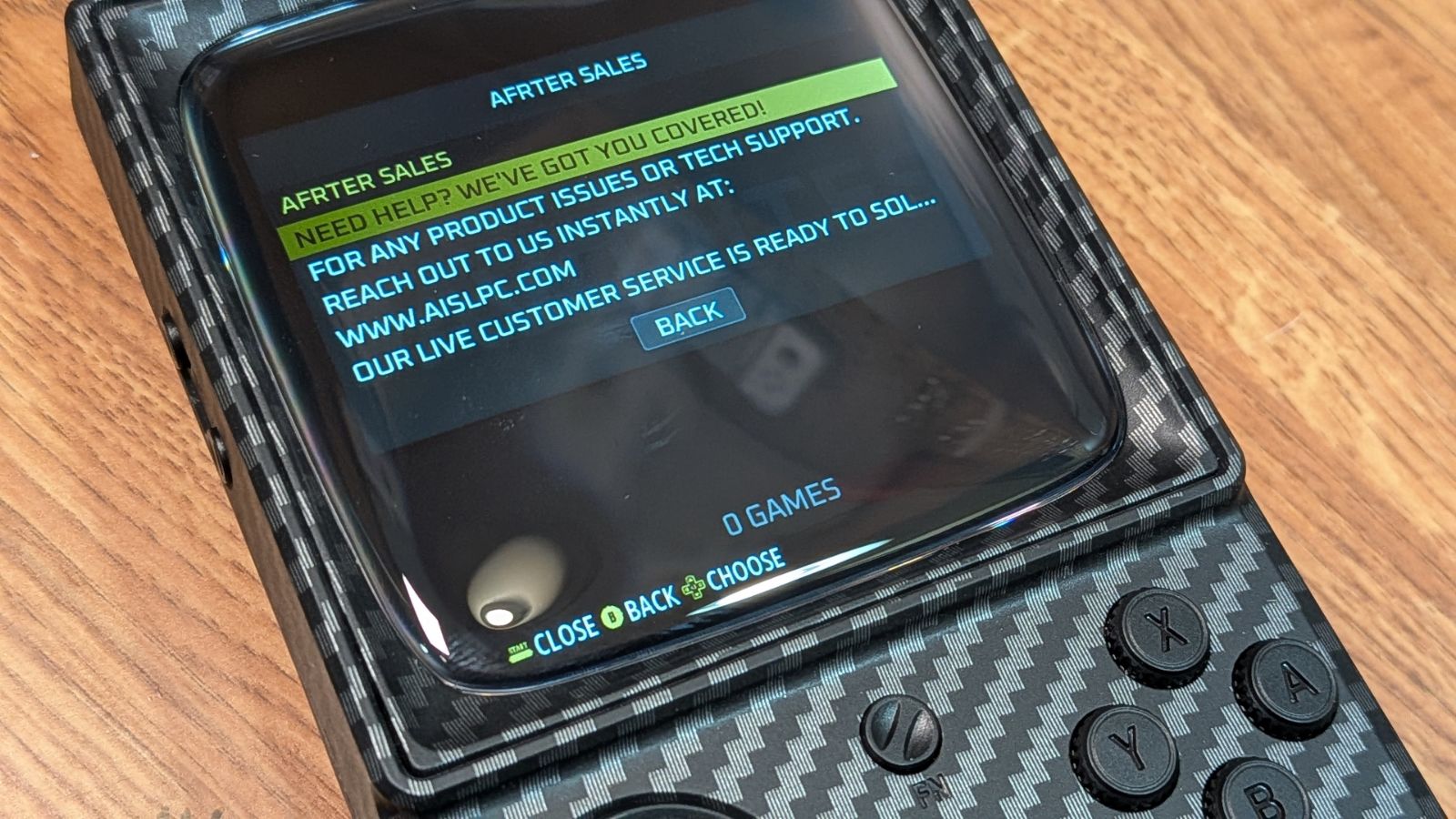
The package includes some slick presentation nods to the retro-TV-inspired design. Menu screens and loading videos include things like static snow to mimic old broadcast signals. And just like the R36T before it, the R36T MAX includes a direct link from the main menu to company customer support should you be having any issues with the device. This is above and beyond for a clone manufacturer, and it’s nice to see them stand behind their products and provide a lifeline to new users who might be having troubles.
There is a fair bit of boot delay across the board on systems. These EmuElec builds for the R36 clone family always tended to run a bit slower than their community-made counterparts. I don’t believe there’s device-specific support for CFW like ArkOS quite yet, but if there’s enough community interest in the devices in the future, maybe you’ll see a guide from yours truly about flashing something new.
The team has made the choice to include a ROM downloader app in the stock OS. Do with this information what you will, but it’s worth mentioning that it’s included and if used, should be done so at your own risk.
TLDR
As is always the case with these clone consoles, whether the 36T MAX is right for you will come down to your own wants and needs, and of course, price. I think there’s value to be had here if you can get the package at somewhere around the ~$40 price point. There are some listings as high as $100 on AliExpress, and I cannot recommend anything in the RK3326 lineup at that price. There’s simply too much competition out there.
I’m very much still the old guy who is still regularly impressed by what these modest machines can do, but as I’ve written with recent devices like the R40XX, there’s going to start to need to be a little more on offer in the budget segment of the hobby. Manufacturers are getting to the point where they’ve played their available RK3326 hands.
Every conceivable form factor of this chipset has pretty much been offered at this point. Nowhere is that more evident than with devices like the R36T and R36T MAX. These are bold designs that are trying something different to separate themselves from the pack, and I salute that route to take, but at the end of the day, the RK3326 designs are about as maxed out as they can be at this point. If you think it’s cool and different and something you’d like to check out, wait for a deal to come along.
I commend AISLPC for their attention to detail and customer-first oriented approach. You could certainly do worse for a starter handheld, and I think it could find a place for the perfect type of stocking stuffer for the casual gamer with a yuletide yearning for nostalgic gaming.
[button link=”https://rh-go.link/R36T-Max_Amzn” color=”red” newwindow=”yes”] R36T Max at Amazon[/button][button link=”https://rh-go.link/R36T-Max_AE” color=”red” newwindow=”yes”] R36T Max at AliExpress[/button]
What did you think of this article? Let us know in the comments below, and chat with us in our Discord!
This page may contain affiliate links, by purchasing something through a link, Retro Handhelds may earn a small commission on the sale at no additional cost to you.

4 Comments
The rk3326 doesn’t have a Mali g57 gpu, it’s the Mali g31
How much
“The team has made the choice to include a ROM downloader app in the stock OS. Do with this information what you will, but it’s worth mentioning that it’s included and if used, should be done so at your own risk.“
Regarding this feature of the console and your remark about it, what exactly would the risks be? I’d appreciate some knowledgable insight on this front. And I appreciate your thorough review!
About battery placement, do you think it is safe enough? Like if it starts to bloat, does it get damaged by screws before it gets noticeable? Brought this device and now thinking if it even save to use/keep