

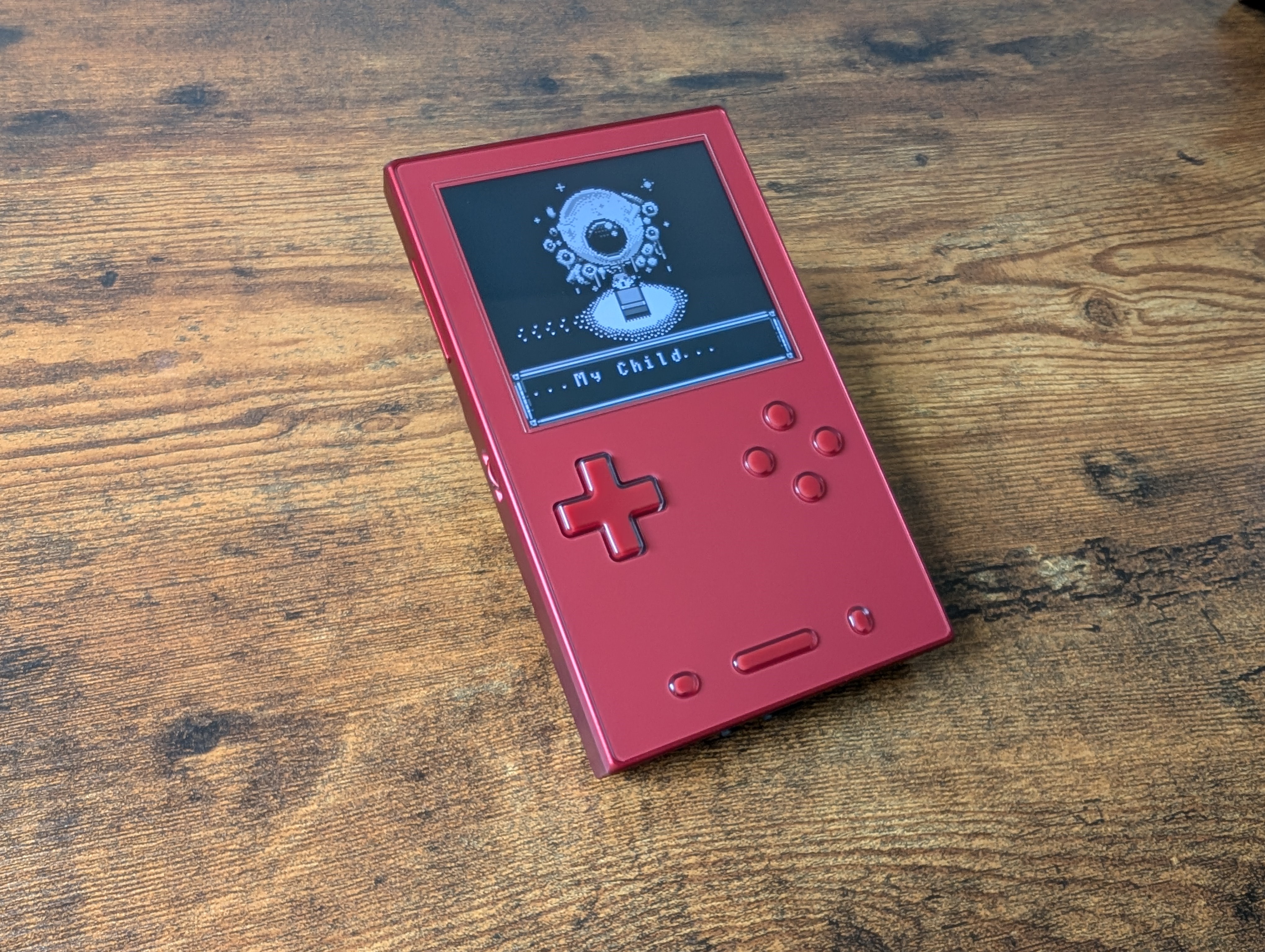
My love for Ayaneo devices is probably pretty well known (or at least easily assumed) at this point. I love the design and build quality of their devices, even if some of their business practices are suspect at best. I own several of their handhelds, and I’m always keeping my ears open for any devices they might put out that interest me. In doing so, I was made aware of the AYANEO Pocket Vert, a vertical handheld from AYANEO that was released at the end of 2025.
I’ve been a massive fan of the AYANEO Pocket DMG ever since I got my hands on one in early 2025. I’ve touted it as the best vertical handheld I’ve ever owned, and it has so far vanquished any other vertical handheld I’ve brought against it in comparison. However, I’ve seen several people in the Retro Handhelds Discord gushing about the Pocket Vert, with a couple even admitting to selling their Pocket DMGs in exchange. Not one to pass on a potentially better experience, I had to find out for myself.
I’ve had a chance to play with the device for a bit and, despite the extra-premium feel, I’m not sure if the Pocket DMG is ready to be dethroned just yet.
Disclosure:
The device reviewed was not provided as a review sample from AYANEO. I have never received payment nor review samples from AYANEO, and every device that I own from them was purchased with my own money. AYANEO did not have the opportunity to make edits or changes to the review before publishing.
Affiliate links might be present where applicable, and we may earn a commission on product purchases using those links at no extra cost to you.
Ayaneo Pocket Vert Specs
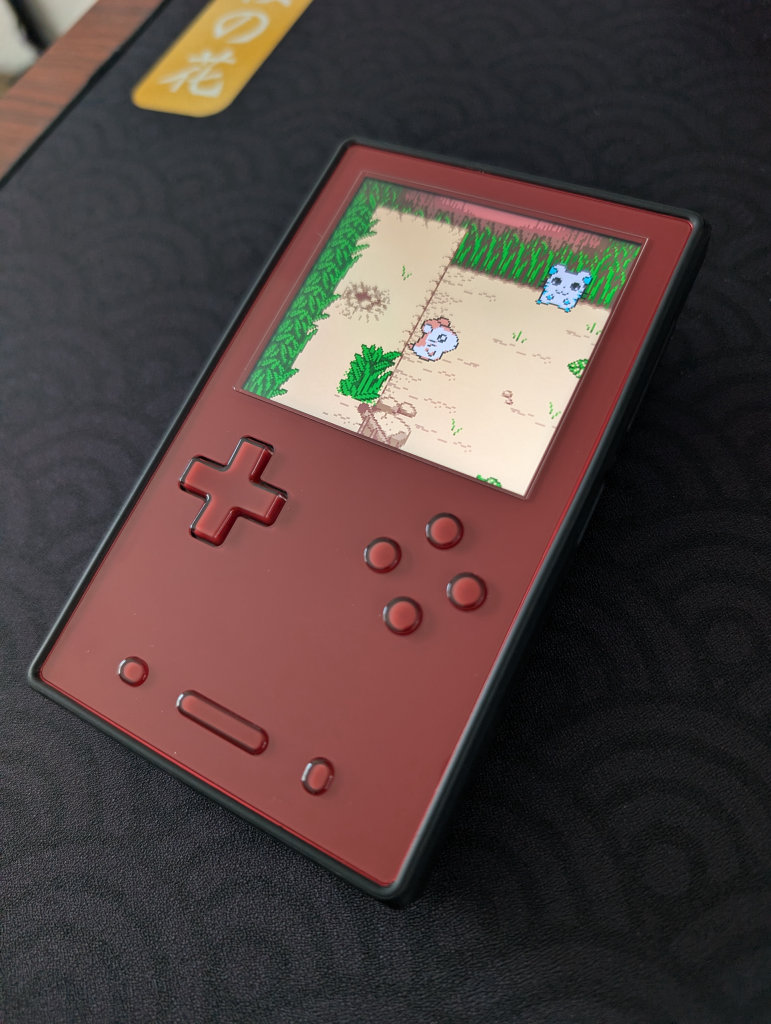
The Pocket Vert comes in three distinct colors (Midnight Black, Moon White, and Lava Red) and two different RAM and storage configurations (8GB/128GB, 12GB/256GB). As per usual AYANEO fashion, the awesome Lava Red model is also locked behind the most expensive configuration.
The Pocket Vert is sporting a Snapdragon 8+ Gen 1, which is powering a 60Hz, 3.5-inch 1600x1440p LCD screen. While smaller than both the AYANEO Pocket DMG and Retroid Pocket Classic, that resolution allows the Pocket Vert to display at a 615ppi pixel density, making games look ultra crisp and bright. As more and more devices come out featuring 6-inch, 7-inch, or even 8-inch screens, the Pocket Vert’s 3.5-inch screen feels tiny by comparison, and is quite frankly what will keep most people from being interested in this device (aside from the price).
| Specifications | |
|---|---|
| Hardware | |
| CPU | Qualcomm Snapdragon 8+ Gen 1 |
| GPU | Qualcomm Adreno 730 |
| RAM | 8GB LPDDR5, 12GB LPDDR5 |
| Cooling | Active Air Cooling System |
| Display | |
| Screen Size | 3.5-inch |
| Resolution | 1600 x 1440 |
| Aspect Ratio | 10:9 |
| Refresh Rate | 60Hz |
| PPI | 615.02 |
| Storage | |
| Internal Storage | 128GB UFS 3.1, 256GB UFS 3.1 |
| External Storage | microSD |
| Battery | |
| Battery Capacity | 6000mAh |
| Connectivity | |
| Wi-Fi | Wi-Fi 6E |
| Bluetooth | Bluetooth 5.2 |
| Ports | 3.5mm Audio Jack, microSD, USB-C |
| Video Out | Yes |
| Controls | |
| Sticks | ❌ |
| Triggers | Digital |
| Shoulder Layout | Shelf |
| D-Pad | Top Left |
| Additional Details | Dual-Mode Touchpad |
| Audio | |
| Speakers | Stereo |
| Headphone Jack | Yes |
| Audio Notes | SoundTAPMagic Audio Vibration |
| Physical | |
| Dimensions | 143 x 86.4 x 20.5mm |
| Weight | 318g |
| Form Factor | Vertical |
| Software | |
| Operating System | Android 14 |

Build Quality
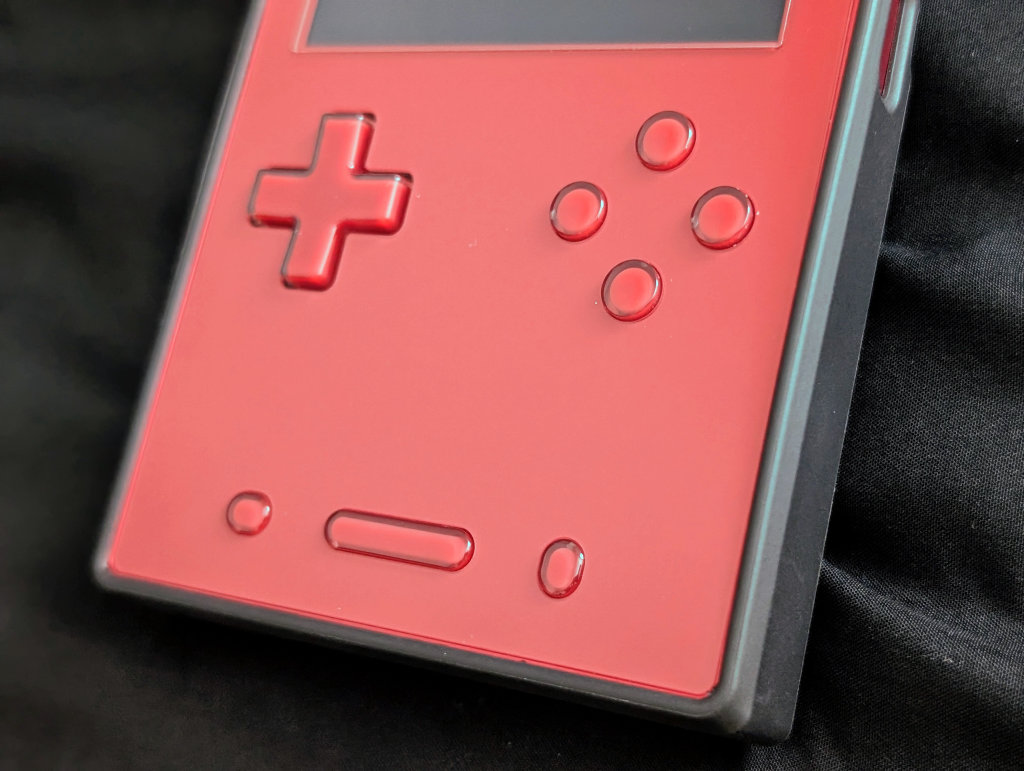
If you peruse AYANEO’s webpage for the Pocket Vert, you will see words like “premium” and “aesthetics”; This device is made with high-end materials, and AYANEO has marketed it as such. We’ve got a full CNC-milled metal body with an all-glass front, unmarked crystal buttons, diamond-like shoulder buttons, and the device is completely devoid of analogue sticks. It gives it a polished look that is simply stunning.
The buttons and triggers have a nice actuation to them, with just the slightest clackiness, and use micro-dome membrane switches. My wife is a great benchmark against which to measure how loud a device’s buttons are, as she does not enjoy clacky buttons when I play devices in bed, and I did not receive any comments while playing The Legend of Zelda: Oracle of Seasons on the Pocket Vert.
The AYANEO Pocket Vert also feels more premium than other vertical devices like the AYANEO Pocket DMG and Retroid Pocket Classic. Weighing in at 325 grams (354 grams with the case), it certainly has more heft than the Pocket DMG and Pocket Classic, which come in at 285 grams and 230 grams, respectively. However, this weight is distributed well and balanced appropriately.
Ergonomics and Controls
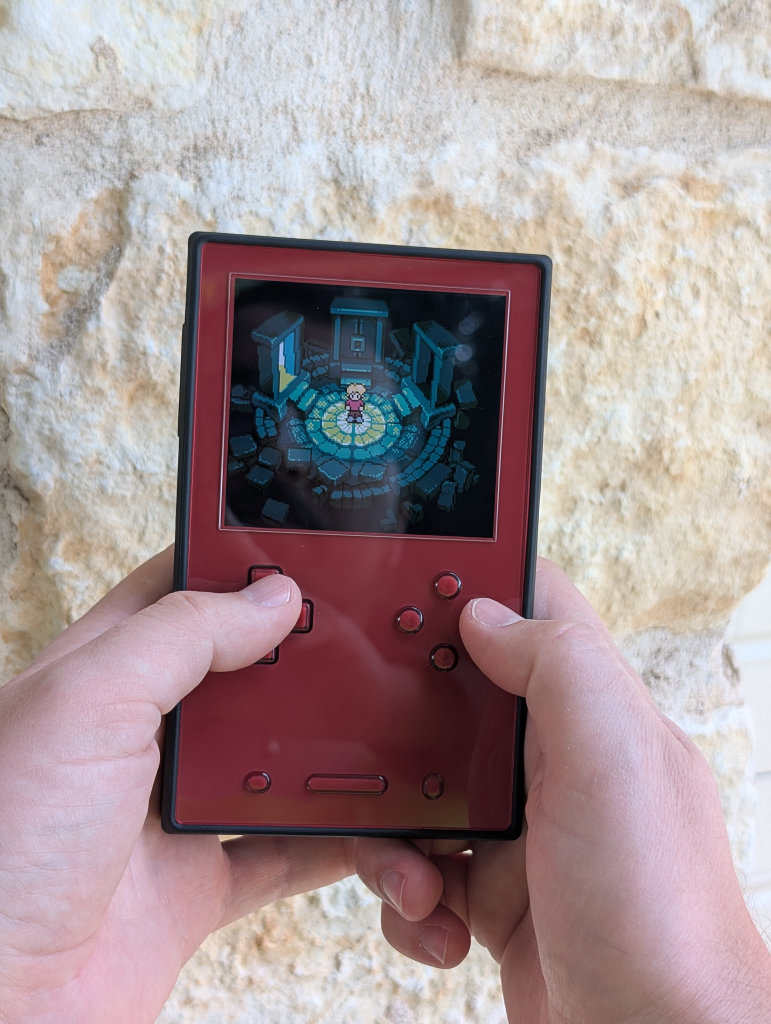
As previously mentioned, the AYANEO Pocket Vert is a hefty handheld, but the weight is evenly distributed, and it feels great in the hands. I tend to curl my fingers underneath my devices and phones when using them, and the Pocket Vert doesn’t feel overly heavy at all against my fingers.
While the device alone has a good feel and grip to it, the Pocket Vert Protective Case takes it to another level. It’s a flexible, TPU-like material that has a textured back where your fingers naturally rest, and it feels great. Unfortunately, it only comes in black, and since the textured portion is prone to collecting fibers and dust, you might be spending a lot of time brushing it off.
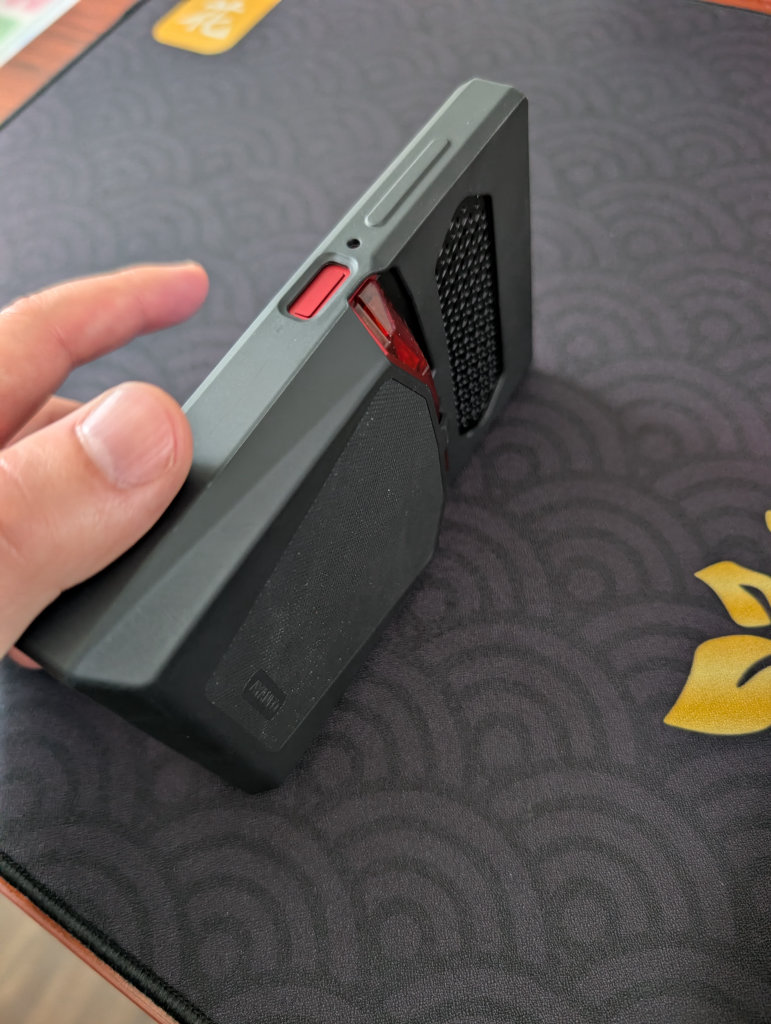
The controls are where the Pocket Vert starts to lose me a bit. AYANEO chose to do some things differently with this device, and some of it is really neat, but the MagicTouch sensors don’t quite feel right and leave a bit of functionality to be desired. I’ll list some more of the “unique” things AYANEO did with this device below:
- Beneath the D-Pad and ABXY buttons is a sensor pad, known as “MagicTouch” smart touchpads, which mimic the left and right stick functions, as well as mouse input
- The function, Start/Select, and AYA buttons are located along the bottom, are small, and are unmarked
- The volume +/- is controlled by a scroll wheel on the left side as a default, but the scroll wheel can also be short-pressed for Mute, and long-pressed as an additional function button if mapped
- There are four additional function buttons located on the upper-left and upper-right side of the device, in thin strips that basically work as rockers
- Down-firing speakers, which are crazy good and quite loud
In my time with the device, what I’ve found is I absolutely steer clear of anything related to the MagicTouch sensors, as they are crazy sensitive and not nearly as precise as I’d need them to be to actually be functional. The other choices help to make the Pocket Vert look like a sleek, stylish vertical handheld, akin to the Analogue Pocket, but these sensors simply don’t cut it.
Performance and Comparison
As far as I can tell, the AYANEO Pocket Vert is one of the only handhelds utilizing the Snapdragon 8+ Gen 1. It’s a weird choice, as the device is certainly powerful enough to take advantage of up to PlayStation 2 and some Switch games, but the lack of analogue sticks makes trying to play them a frustration. AYANEO could’ve easily cut down the price of this device by putting something like the Snapdragon 865 in here.
The Pocket Vert easily blows through anything PSP and below. It can struggle a bit with some higher-end PS2, and is better off playing less-demanding games for Switch, but the 10:9 aspect ratio, small screen, and no analogue sticks make playing anything 16:9 feel small and uncomfortable.
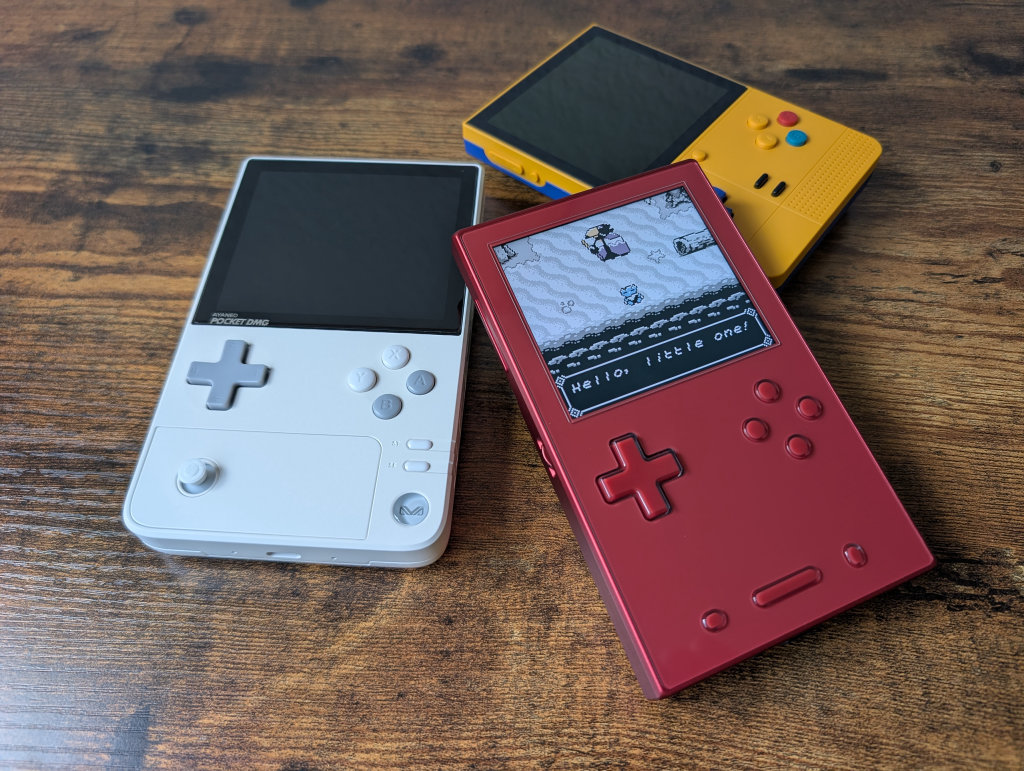
At the top of this article I mentioned the AYANEO Pocket DMG, so it wouldn’t feel right to not compare the two. In fact, I threw the Retroid Pocket Classic in there as well, just to round things out. I compared these three devices in the following configurations:
AYANEO Pocket Vert:
- Snapdragon 8+ Gen 1,
- Qualcomm Adreno 730,
- 12GB RAM / 256 GB Storage,
- 6,000mAh battery,
- 3.5-inch LCD screen,
- 615 PPI,
- 86.4 x 143 x 20.5 mm,
- 325 grams,
- ~$269
- AYANEO Pocket DMG: Snapdragon G3x Gen 2, Qualcomm Adreno A32, 16GB RAM / 512GB Storage, 6,000mAh battery, 3.92-inch OLED screen, 419 PPI 91.5 x 151 x 20 mm, 285 grams, ~$440
- Retroid Pocket Classic: Snapdragon G1 Gen 2, Qualcomm Adreno A12, 6GB RAM / 128GB Storage, 5,000mAh battery, 3.92-inch OLED screen, 419 PPI, 89.9 x 138 x 26 mm, 230 grams, ~$120
As far as the tangibles go –
- The Pocket Vert is the heaviest, while also being the narrowest in width, and has the most “premium” look and feel with the metal body and unmarked buttons. This one also has the highest pixel density, but it is not OLED.
- The Pocket DMG is the largest in length and width, with the best weight and feel balance, although the lone joystick and Start/Select buttons are placed rather poorly. This one also has arguably the best all-around screen.
- The Retroid Pocket Classic feels hollow, like a toy, but it’s very light and has arguably the best button layout. It’s also cheaper than either of the AYANEO devices, while still having an OLED screen.
Software
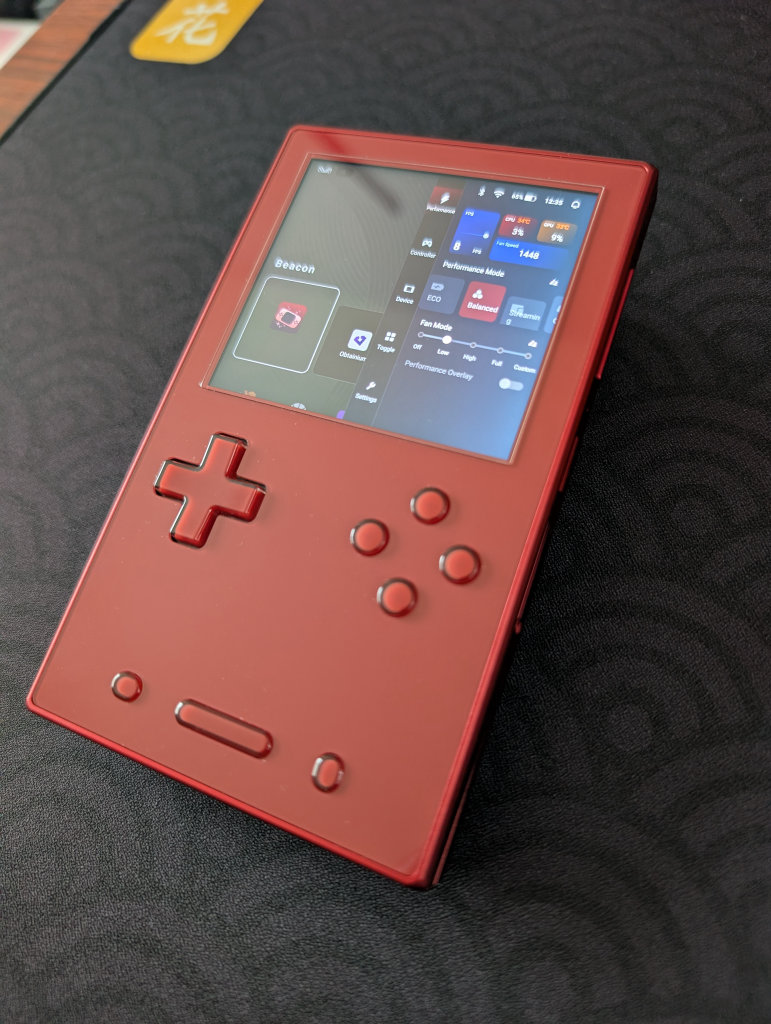
For anyone who’s dealt with AYANEO’s software before, it can seem a bit unnecessarily overwhelming at first, but it’s a tinkerer’s paradise. ClusterTune is a wonderous CPU-management app making the rounds in the emulation handheld community, and AYANEO was doing this long before. You’ve got CPU and GPU management tools, fan control, performance-based presets, and more! If you want a more in-depth explanation of all the software options, check out our Pocket Vert Setup Guide.
Their AYASpace launcher is honestly garbage, and I’d steer clear of that in favor of something like Daijisho or Beacon Game Launcher.
Gaming Experience
Now that all the hardware and software aspects have been taken care of, let’s get to the fun part – the games!
Emulation
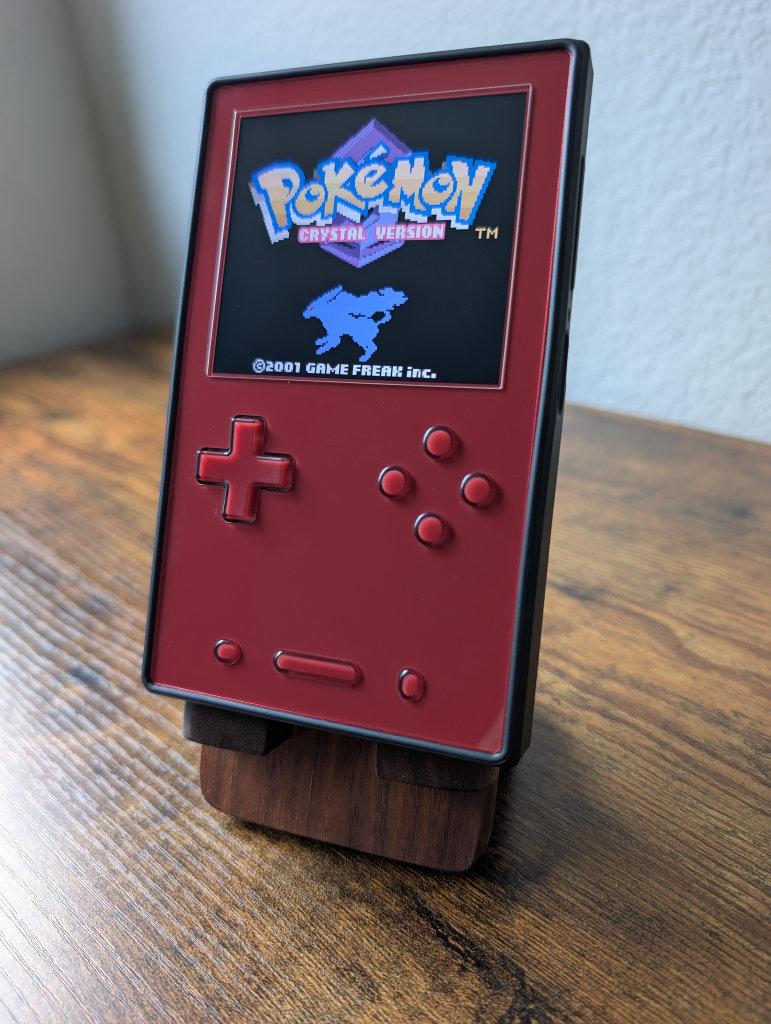
Let’s go ahead and talk about the greatest strength of the AYANEO Pocket Vert; given the 10:9 aspect ratio, GameBoy and GameBoy Color games look absolutely stunning on this device. While other devices like the AYANEO Pocket DMG and Retroid Pocket Classic also play these systems well, I’ve yet to come across a device that makes them look as good as the Pocket Vert. That insanely high 615ppi makes these games pop.
Systems that emulate at a 4:3 aspect ratio play well enough on the Pocket Vert. You’ll get some small black bars on the top and bottom, but that high pixel density helps to alleviate the lost screen real estate. Rocket Knight Adventures for the Sega Genesis looked excellent on this screen.
However, systems with a 16:9 aspect ratio (like PlayStation Portable) and 3:2 aspect ratio (like GameBoy Advance) simply crop too much off the screen. You can still play these systems, but you might struggle with reading text or discerning enemies vs. environments. Again, the pixel density still makes these games pop, especially when playing GameBoy Advance games like Fire Emblem: The Sacred Stones, but losing roughly half of that limited 3.5-inch screen real estate is less than ideal.
As mentioned previously, the Snapdragon 8+ Gen 1 does a good job emulating all the way up to PS2 and some light Switch games. Some of the higher-end games on those consoles will struggle, but the Pocket Vert is more than capable of emulating most systems. The lack of analogue sticks and small screen will become a hindrance long before emulation capability will.
Streaming and PC Gaming
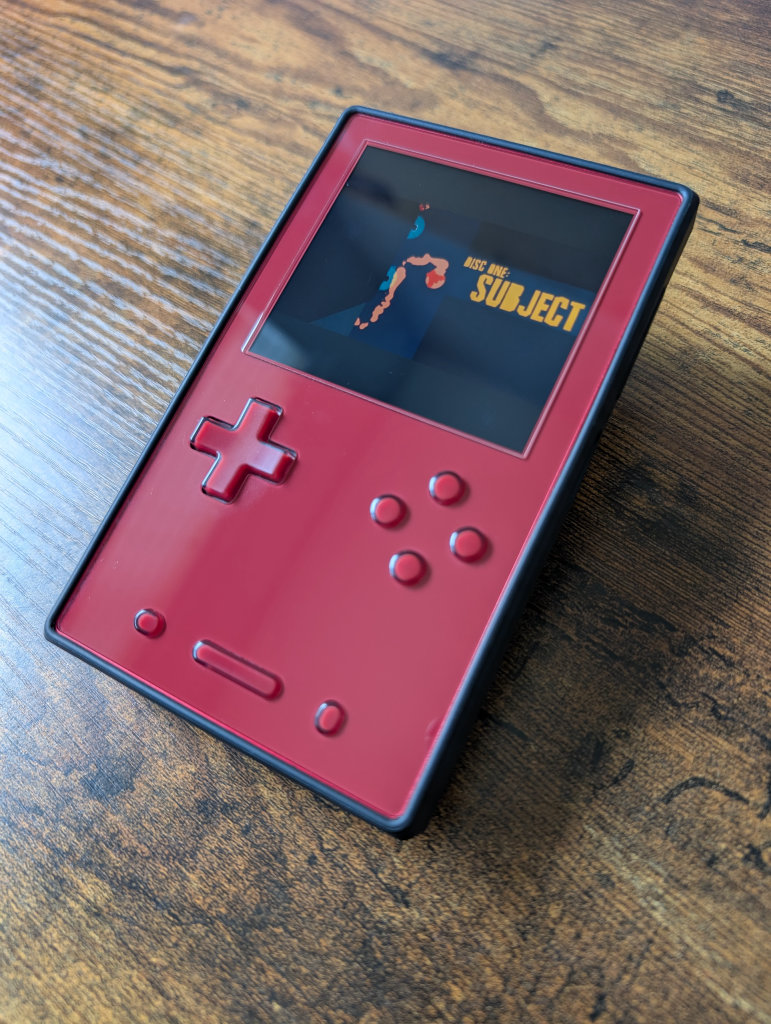
The 3.5-inch screen on the AYANEO Pocket Vert really shows it’s limitations when it comes to PC gaming. The Snapdragon 8+ Gen 1 is more than capable of handling streaming and light PC gaming via an app like GameNative, but playing widescreen PC games takes away some of the already finite screen real estate. Text is small, details are hard to see, and prompts or button indicators are easy to miss. Games that rely on analogue stick movement are also cumbersome on the Pocket Vert.
To be fair, certain games play quite well on the Pocket Vert. Ape Out was great, since a lot of the text is stylishly large, and the color contrast made it easy to discern enemies from environment. Just know that games with a busy screen, dark environments, or text-heavy interaction might create some problems. The Snapdragon 8+ Gen 1 also has some limitations in what it can play, so don’t expect anything too heavy to work well on this device.
Android Gaming
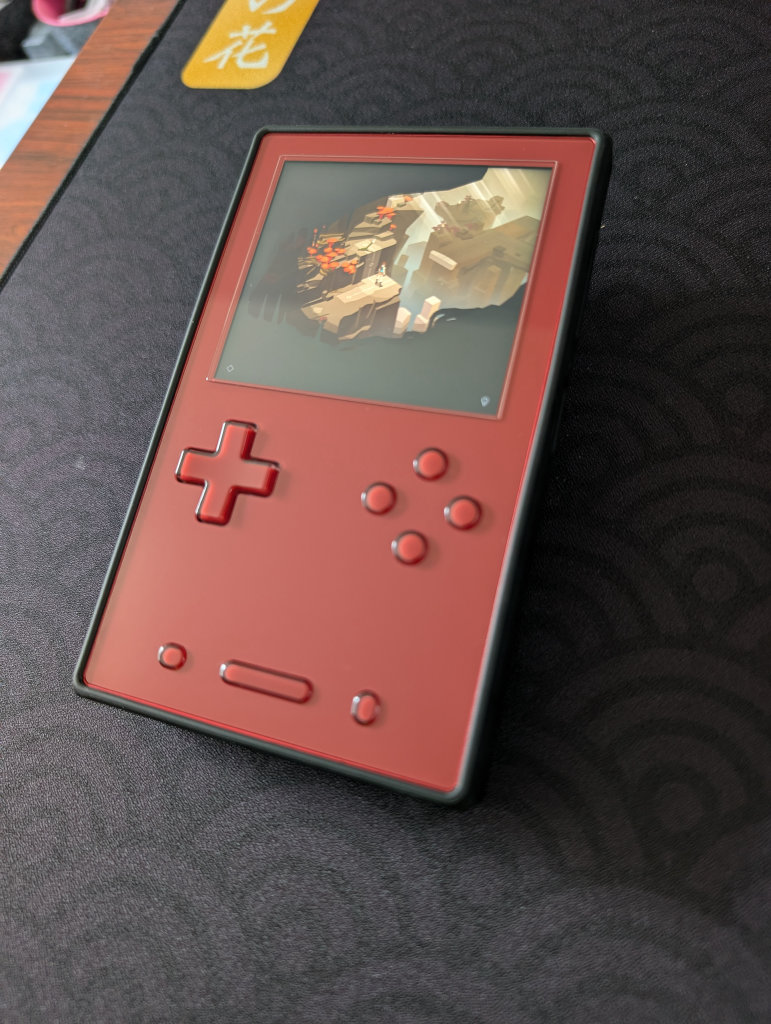
Android gaming admittedly isn’t my strong suit when it comes to retro handhelds, but I still wanted to take a look at some games on the AYANEO Pocket Vert to be more comprehensive with this review. I found the device to be completely competent at playing several Android games that I tested. Lara Croft Go, Dungeon Clawler, and Rusty Lake Hotel played without issue and in full screen. However, the text is incredibly small on this screen. Especially when selecting perk upgrades in Dungeon Clawler, I found myself placing the device right up in front of my face to read the text.
Furthermore, the lack of dedicated analogue sticks rears its ugly head yet again with games like Wreckfest or Horizon Chase, where having dedicated sticks greatly enhances the overall experience. It’s doable, and the MagicTouch sensors aren’t useless, but it’s far from ideal.
Food for Thought
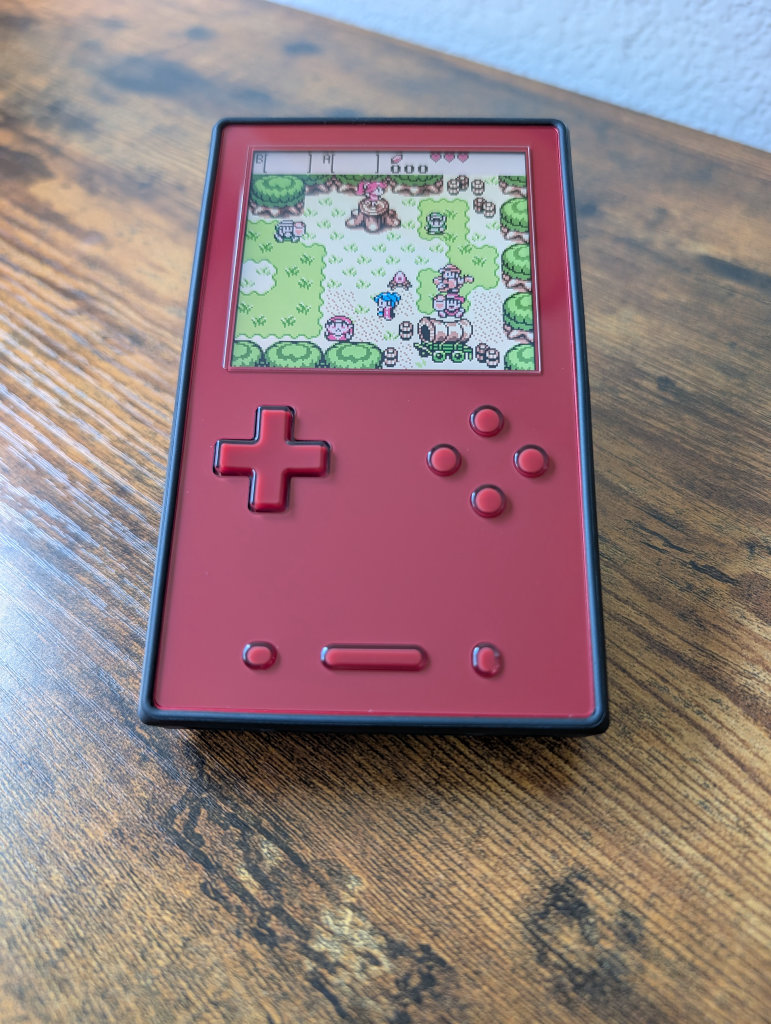
The AYANEO Pocket Vert might very well be the best experience I’ve ever had playing GameBoy and GameBoy Color games, bar none. That screen is absolutely gorgeous for those games. If I decide that I want to keep this device, that may likely be it’s entire job. I have an AYANEO Pocket Ace that does nothing but play GameBoy Advance games, so it’s certainly not out of the realm of possibility!
However, when the AYANEO Pocket DMG also does an excellent job of playing these games, while also playing other systems better and with an OLED screen? That it makes it hard to justify having both, especially considering this would be a very expensive GameBoy and GameBoy Color machine.
The Pocket Vert certainly has the premium build quality touted by AYANEO, and the pixel density on that screen is incredible, but I don’t think the Pocket DMG is getting replaced this time around.
