

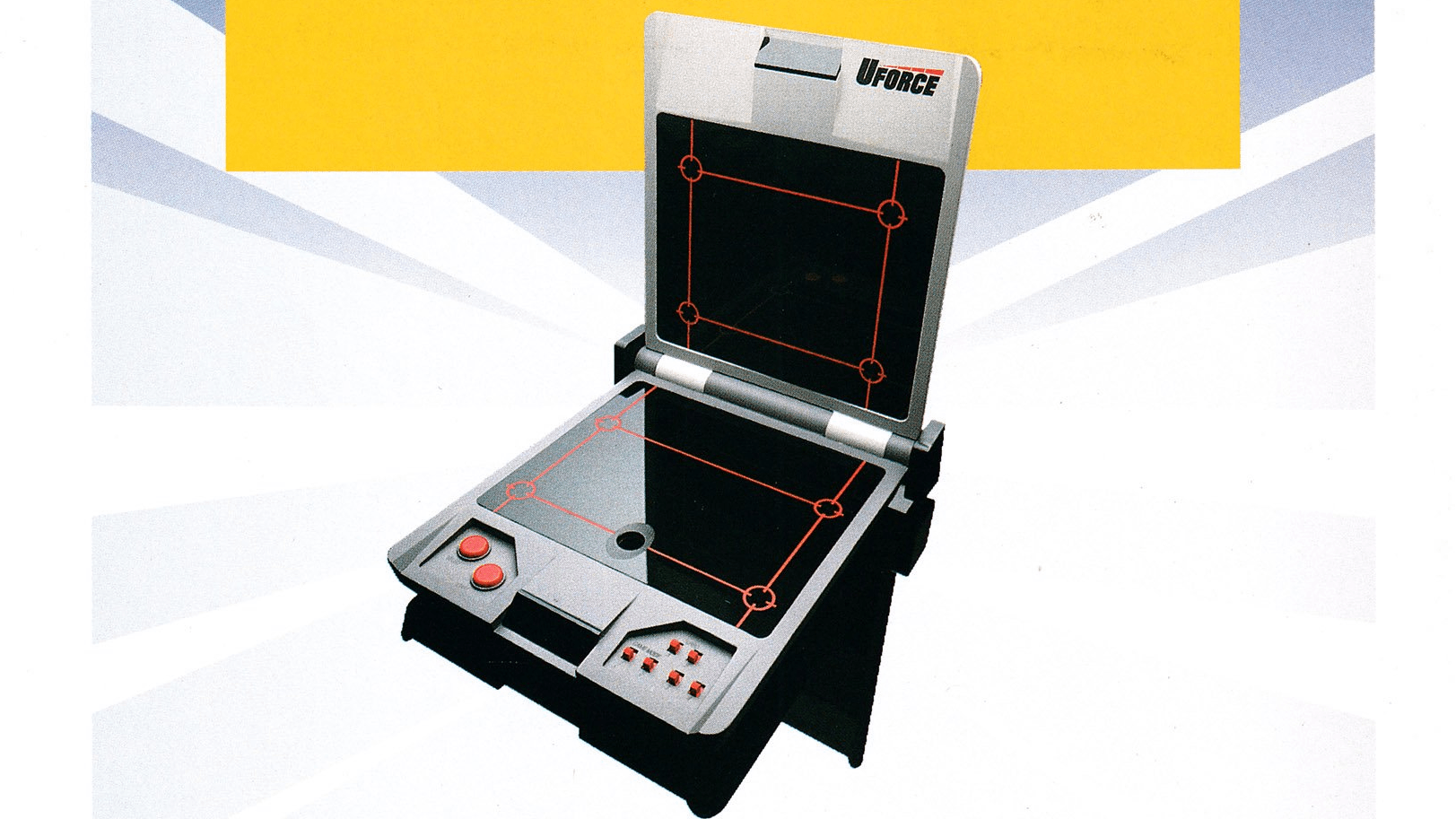
Broderbund (of Carmen Sandiego fame) unveiled the U-Force at the January 1989 Consumer Electronics Show in Las Vegas, and the gaming press immediately hailed it as the most anticipated controller for the NES. The device promised hands-free motion control decades before the Wii would make the technology mainstream, using infrared sensors to detect hand movements over a controller panel that opened like a laptop. Inventor Avi Axelrod had created a working prototype that impressed Broderbund executives Richard Bernstein and Stuart Weiss, who saw potential despite the company having zero experience in manufacturing hardware.
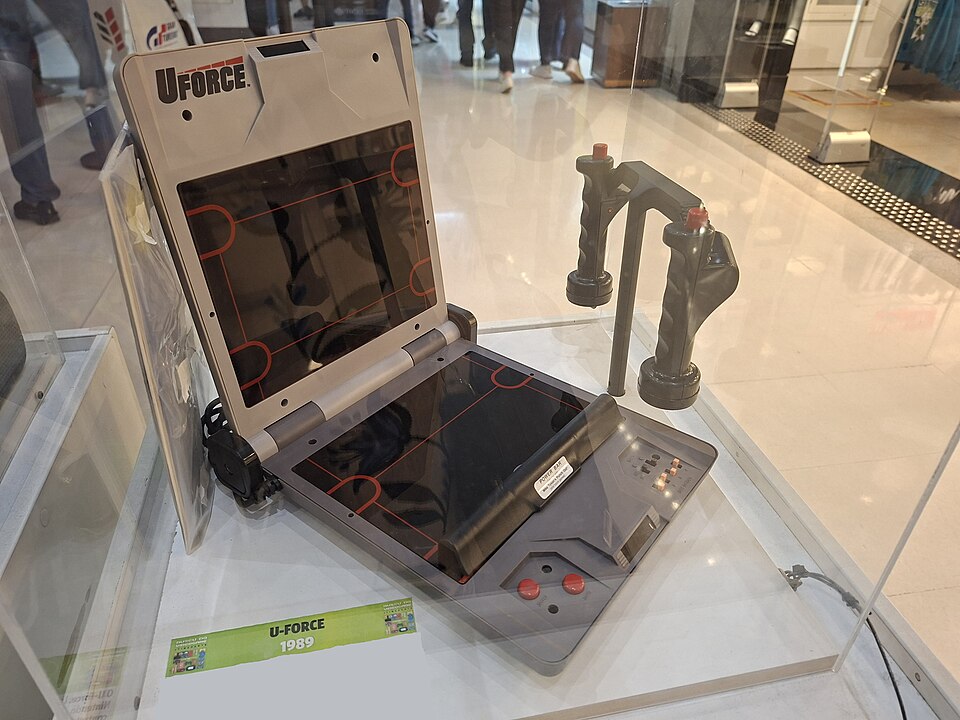
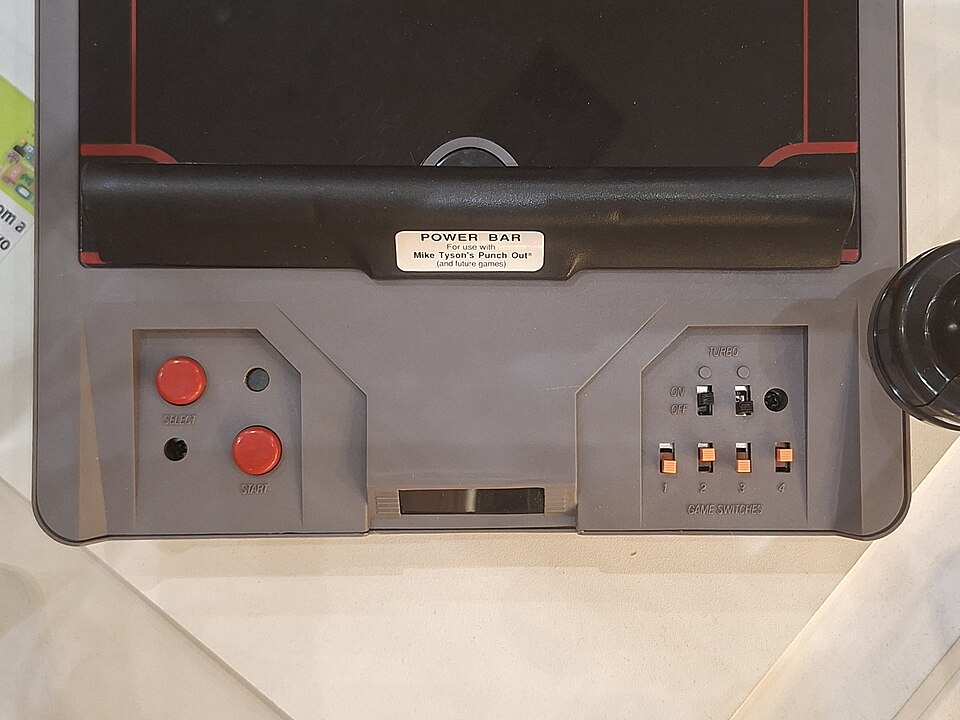
The U-Force used perpendicular infrared sensor panels arranged in a clamshell design that players positioned in front of them. One panel emitted infrared light while the other received it, creating a three-dimensional detection field. When players moved their hands through this field, the sensors measured the intensity of the infrared signal to determine hand position and translate movements into controller inputs. At its simplest level, waving a hand over an emitter worked like pressing a button on a standard controller, but the U-Force was also capable of analog control that allowed various degrees of movement (more on this later).
Generations Too Soon
The fundamental problem was that consumer-grade infrared tracking in 1989 wasn’t nearly sophisticated enough to work in normal household conditions. Ambient lighting, reflective surfaces, and even slight calibration drift would cause the sensors to misread hand positions or fail to register movements entirely. The device required multiple pairs of infrared LEDs to be perfectly calibrated to work with different games at different sensitivity levels, a task that proved nearly impossible to maintain across varied home environments.
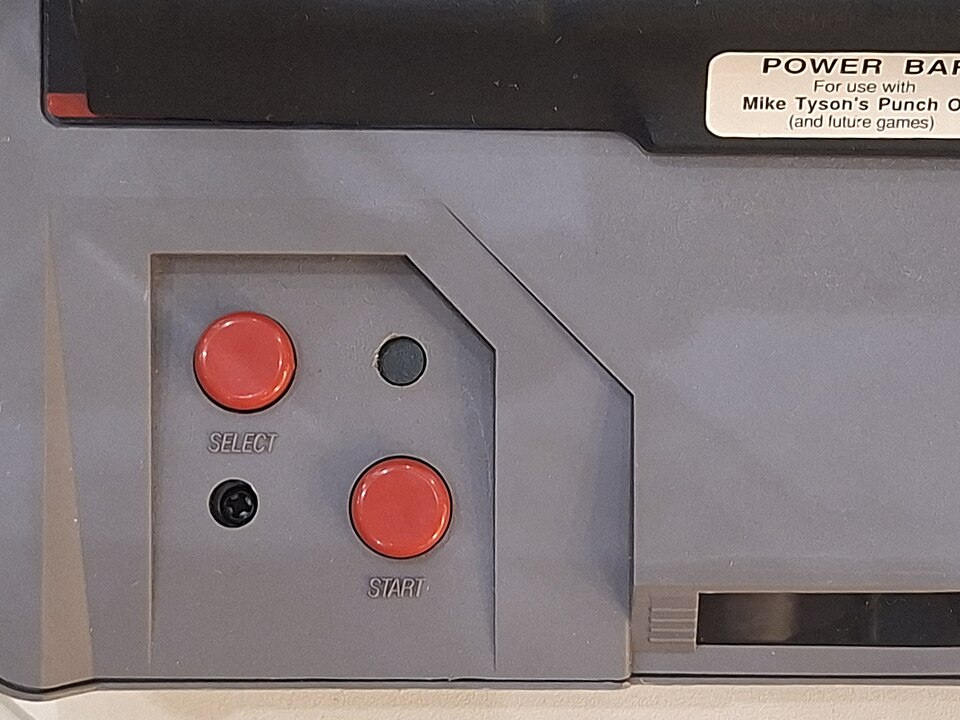
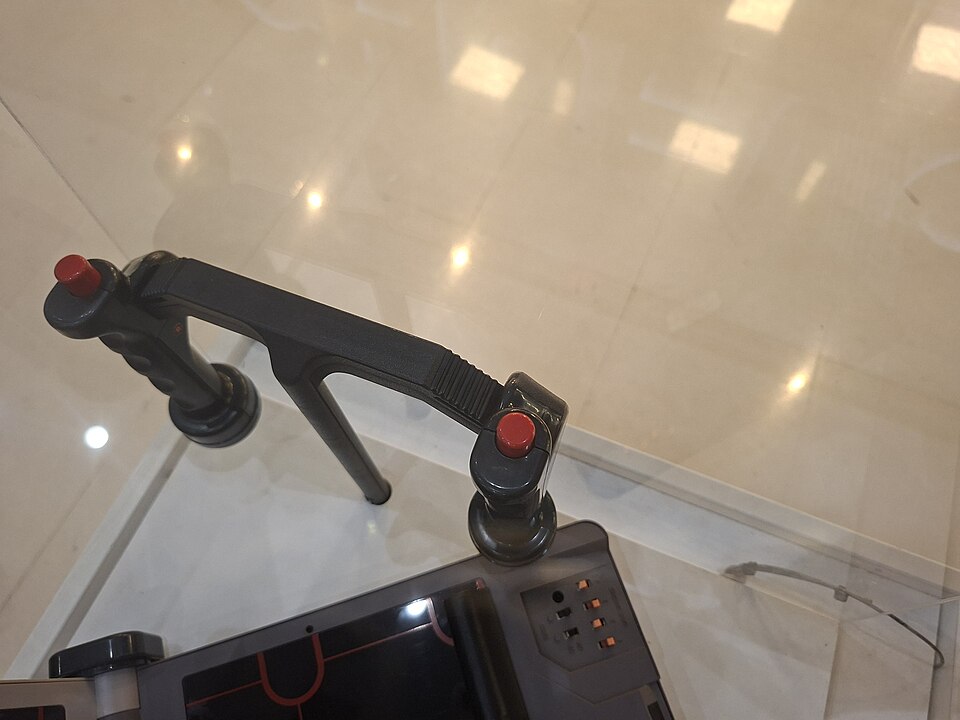
Broderbund developed a set of dip switches that modified how the U-Force interpreted infrared signals, allowing users to adjust sensitivity for specific games. The company claimed compatibility with 90% of existing NES titles and created accessories that attached to the device to make certain games more interactive, including a flight yoke for Top Gun, but no amount of configuration options could overcome the core limitation: the technology simply didn’t work consistently enough for precise gaming.
Analog Control Nobody Could Use
The U-Force’s most advanced feature was its analog control capability, which could detect various degrees of movement rather than simple on-off button presses. This was genuinely ahead of its time, predating the analog sticks that would become standard with the Nintendo 64 controller in 1996. The problem was that no NES games supported analog input in 1989. Broderbund hoped that once developers saw the U-Force, they would start making games designed to take advantage of the controller’s capabilities, but that never happened.
The device worked well with some games and poorly with others, depending on how much precision was required and how tolerant the game was of input errors. Racing games like Rad Racer, which Axelrod had used for early demonstrations, could function with the U-Force’s approximate steering controls. But platformers requiring pixel-perfect jumps or shooters demanding quick reactions exposed the cracks in the infrared tracking system. Players trying to use the U-Force for action-heavy titles would find themselves repeatedly dying because the controller registered phantom inputs or failed to detect their actual movements.
Failure on Its Own Terms
By fall 1989, the U-Force development team had resolved the manufacturing issues, and the product was ready to ship. It launched with considerable hype, positioning itself as a revolution that would change how people played video games. The reality was that consumer infrared tracking in a well-lit living room was spotty at best, and the U-Force’s implementation was nowhere near accurate enough for reliable gaming.
The U-Force failed not because of a lack of software support or consumer interest in motion controls, but because the core technology simply didn’t work as advertised. Players who bought one discovered that traditional controllers were vastly superior for actually playing games, and the novelty of waving hands through infrared beams wore off quickly when it meant constantly struggling with unreliable inputs. The device became a cautionary tale about shipping ambitious concepts before the underlying technology was mature enough to deliver on the promises.
Broderbund had created a motion controller that was genuinely innovative and technically interesting, predating the Wii by 17 years. But innovation doesn’t matter if the product doesn’t function reliably, and the U-Force’s infrared sensor implementation was at least a decade too early for consumer hardware. Sometimes the idea is right, but the execution is wrong, and sometimes the execution is wrong because the technology just doesn’t exist yet at an affordable price point.

4 Comments
This is an interesting article about a piece of hardware I never knew about. I’d like to quibble with, “This was genuinely ahead of its time, predating the analog sticks that would become standard with the Nintendo 64 controller in 1996. ”
Affordable, consumer level motion control was indeed ahead of its time in 1986. Analog joysticks for home devices were not new in 1986 (or 1996). The Apple II had analog joysticks in 1979, the IBM PC in 1981, and the Atari 5200 in 1982.
I have one of these sitting in storage. It looked so cool in the commercials at the time, but was truly unplayable in reality.
I knew about this from the AVGN, but never knew how it worked. Thanks for the excellent and informative article! I wonder if homebrewers could maybe make use of the analogue functions though…
Knew about this from AVGN, but I didn’t know it was this advanced. Almost makes me wanna pick one up now. I wonder if homebrew developers could use the analogue functions though… seems like it has potential!
Thanks for the very informative article, and I hope to see more of these soon 🙂