

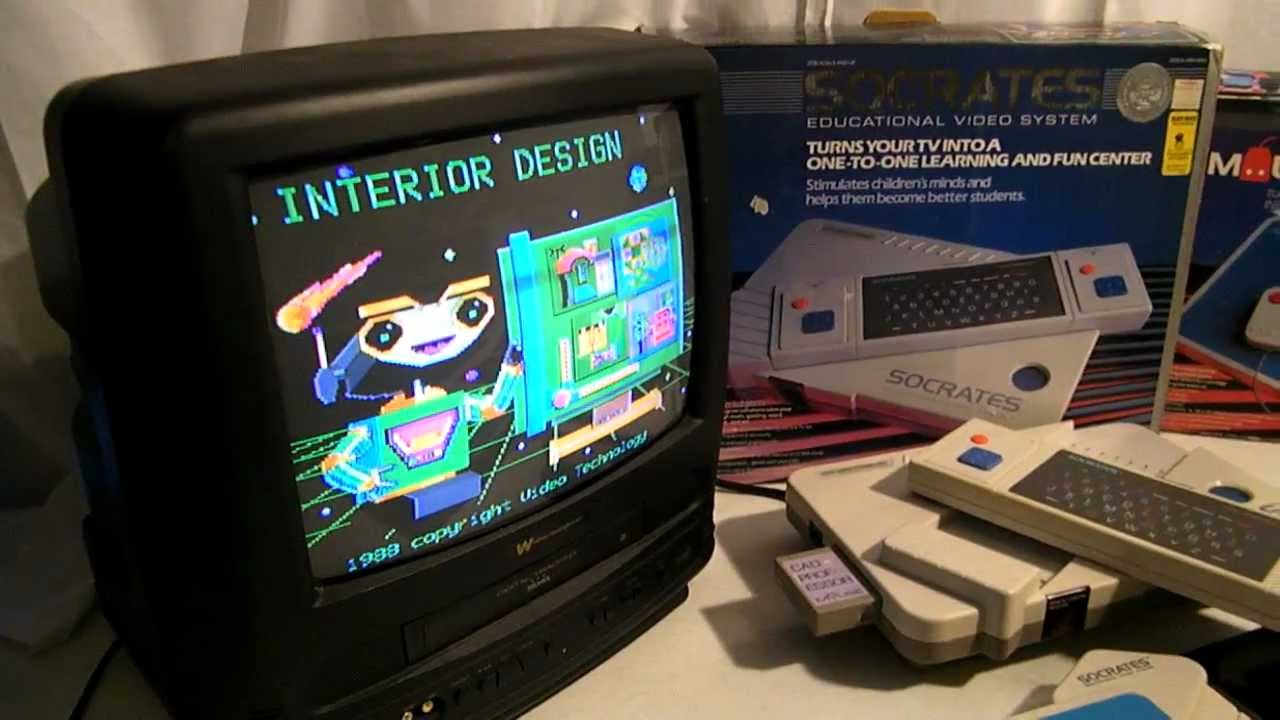
VTech’s name today evokes children’s laptops that chirp out the alphabet, not high-stakes video game experiments, but back in the 1980s, the Hong Kong company twice tried to crash the console market and tripped over the same ideas both times. The CreatiVision in 1982 and Socrates in 1988 were separated by half a decade, but united by one fatal flaw: each tried to be a console, a computer, and an educational device all at once, pleasing nobody and confusing everyone.
A New Challenger Has Appeared
VTech entered the early‑’80s gaming wave with genuine ambition. The CreatiVision positioned itself as a hybrid machine that could morph from a game console into a functional computer, if you bought the right add‑ons. Two joystick‑keypad controllers could slot into a top compartment to form a makeshift keyboard, though they were so awkward they made typing feel like performing surgery with chopsticks. Parents expecting a useful home computer found it flimsy; gamers found its small, uninspired library no match for the Atari 2600 or Intellivision.
The CreatiVision resurfaced in other territories as the Funvision, the Dick Smith Wizzard, and eventually as part of the company’s Laser 2001 home computer line. Despite those fresh names, the fundamental confusion remained: it wasn’t clear whether you were buying a learning tool or a leisure device. Consumers chose simpler options that they actually knew what they were.
RIP Dick Wizzard
By the time VTech returned to the living room in 1988, it seemed the company had taken away all the wrong lessons. The Socrates, a plastic gray “Computerized Video Educational System” with a smiling robot mascot, was essentially CreatiVision’s spiritual sequel: a product trying too hard to blend fun and learning through underpowered hardware and gimmicky design. It promised “interactive education” for kids but ran on a sluggish Z80 CPU and shipped with a crappy infrared keyboard and accessories. Light had to hit the receiver just so for inputs to register, making the “wireless” pitch collapse into slapstick frustration.
Worse, the cartridge lineup barely existed. A reported eight games eventually hit store shelves, most packed with simplistic math and spelling activities that felt dated even in the late ’80s. Peripheral fragmentation only deepened buyer regret, and VTech slashed prices in desperation. The console faded quietly into clearance bins by the early ’90s.
What Did V LearnV
VTech was chasing a result without grasping why earlier attempts had failed. Each time, they tried to split the difference between play and productivity, hoping the educational angle would justify compromised gameplay. Instead, both devices fell into the same chasm between markets. The CreatiVision was a console pretending to be a computer; the Socrates was an educational toy pretending to be a console. Neither was believable.
In hindsight, these misses did at least steer VTech toward its eventual comfort zone: durable, self-contained learning toys for children that didn’t pretend to rival real computers. But in the annals of early gaming history, their twin failures remain a cautionary footnote, proof that packaging ambition as a “hybrid” doesn’t mean you’ve solved two problems. More often, it means you’ve built one crappy machine twice.

1 Comment
Dam to this look like something fun to youse
I won’t mind to try this in a tornemint
I like it tho