

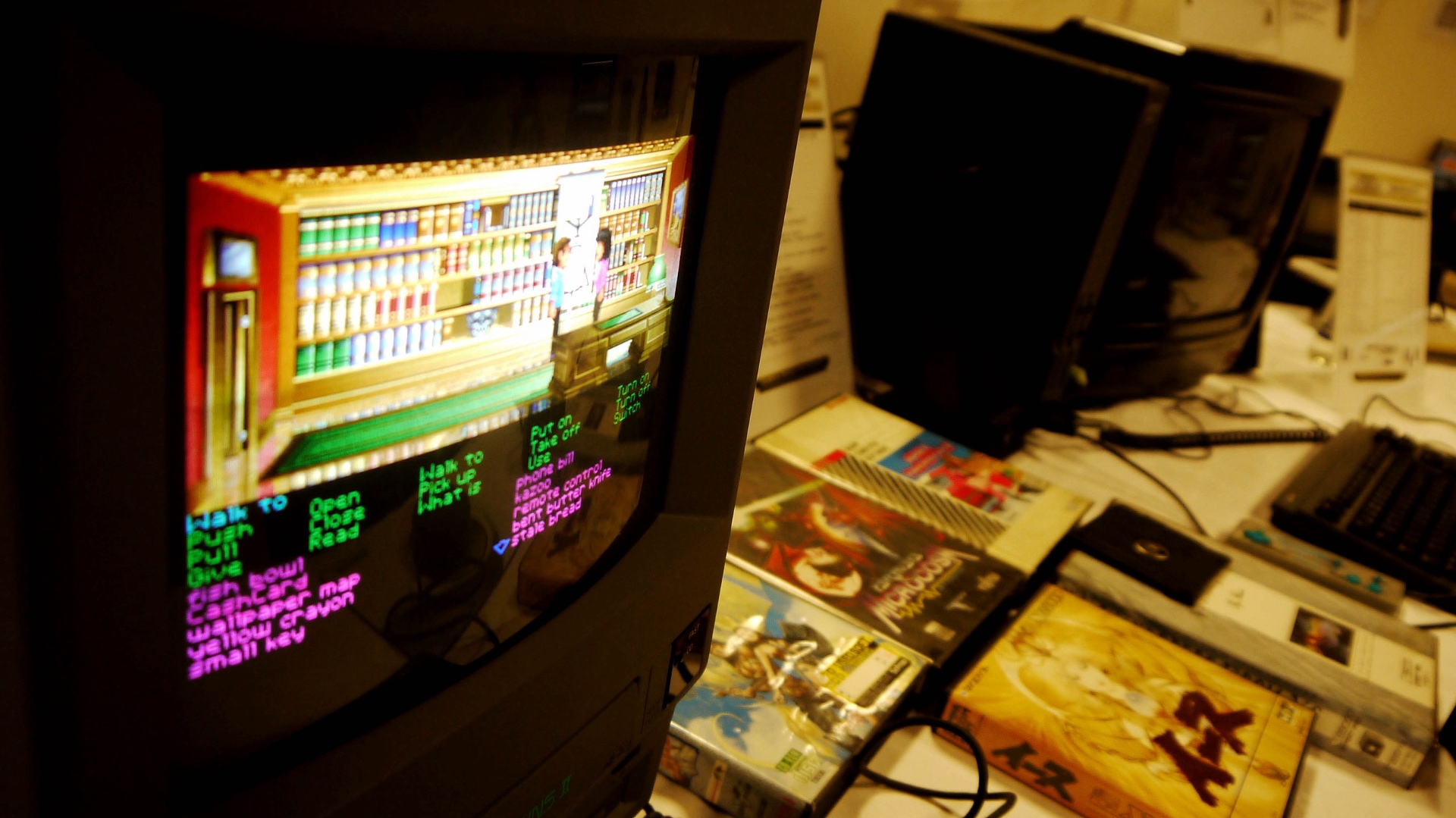
In 1993, Fujitsu quietly released a machine that should have been a milestone in gaming history. Years before the PlayStation, Saturn, or even the 3DO hit store shelves, the FM Towns Marty became the world’s first commercially available 32-bit home console.
It had CD-ROM as standard, impressive audio, crisp scaling and rotation effects, and a library inherited from the powerful FM Towns computer line. It should have been a headline event. Instead, it became one of gaming’s most polite disappearances.
The Marty was essentially a streamlined FM Towns computer repackaged as a console. This meant it could run a large catalog of software right out of the box. Fujitsu had shooter ports, point and click adventures, flashy arcade-style titles with full screen video, and clean PCM audio at a time when most consoles were still choking on grainy FMV.
Games like Tatsujin Oh, Splatterhouse, Raiden, After Burner, Sherlock Holmes, Zellia, Viewpoint, and countless anime-style visual novels made the system look like a legitimate contender. For a brief moment, it had one of the strongest launch libraries ever assembled. So why did it fail almost instantly?
The first issue was price. At around $700 (in 1994 money!) Marty cost more than competing consoles and only slightly less than a full FM Towns computer. Many players simply bought a real FM Towns for a little extra money, since it ran the same games and did far more.
The second issue was region and timing. The Marty never left Japan in any meaningful way, and even there, it launched at the exact moment domestic developers were migrating toward the emerging next-generation platforms. The PC Engine was still strong, the Super Famicom was in its golden years, and the 3DO and Saturn were looming. The Marty felt like a transitional device stuck between eras.
The third issue was software compatibility. Although heavily marketed as compatible with the entire FM Towns library, this was only partly true. Some games needed patches, while others failed to boot entirely. Consumers expecting perfect computer-to-console harmony were met with asterisks and technical quirks.
Fujitsu tried again with the Marty 2, a slightly cheaper and sleeker black model aimed partly at business users. It made no difference; the brand never gained traction, and by the mid 90s, the FM Towns line was dying off with the rise of Windows PCs.
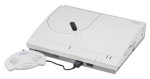
Today the FM Towns Marty is a collector’s darling, not because it succeeded, but because it holds a strange historical title. It was the first 32-bit home console, yet arguably the least remembered. It arrived early, quietly, and with absolutely no ability to survive the coming wave of global competition.
The FM Towns Marty was the right machine at the wrong time, overshadowed by giants and forgotten despite earning a place in the record books. Truly, a pioneer with no parade.
What did you think of this article? Let us know in the comments below, and chat with us in our Discord!
This page may contain affiliate links, by purchasing something through a link, Retro Handhelds may earn a small commission on the sale at no additional cost to you.
