

The hardest working developer in emulation, the team at Dolphin Emu dropped a hot package just before Christmas: Official Dolphin Release 2512 (Year 2025, month 12). This release comprises multiple significant updates to the emulator, bringing more options to reduce input latency, enable better frame pacing, and the inclusion of Retro Achievements on Android (which we already covered here), amongst others.
While not every update will be usable on your new Android device, like the AYN Odin 3 or the Retroid Pocket G2, it gives a clear signal of what’s to come for our favorite portables. See here for the full release report by Dolphin.
Dolphin: Improved Input Latency and Frame Handling
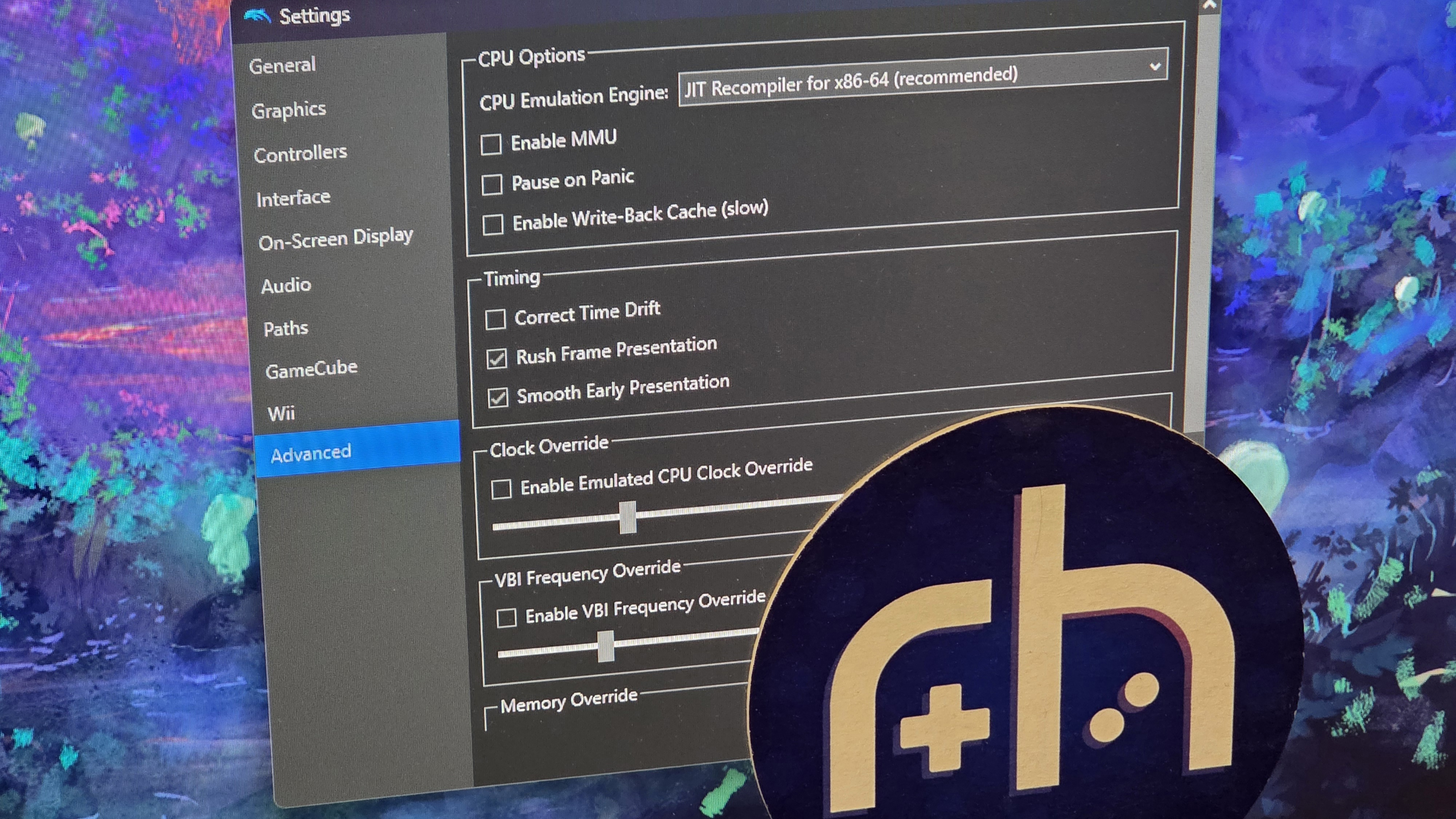
Dolphin, before this release, already had a great reputation for notably low input latency and frame-by-frame action across all operating systems, and continues to do so with this new release. With the onset of developer build 2509-493, we see the addition of Rush Frame Insertion and Smooth Frame Presentation. Neither of these features is currently in the Android build (nor secretly stored in the .ini file), but this is a good taste of things to come. Special thanks to Dolphin developer Billiard for these awesome hacks! RFI and SFP are both located in Settings > Config > Advanced > Timing.
Star Wars Rogue Leader with IPXFB Turned On. Provided by Dolphin
Rush Frame Insertion: Designed as an alternative or an accompaniment to Immediately Present XFB (Located under Graphics > Hacks. Designed to bypass the external frame buffer and provide data frames sooner at the cost of stability and potential rendering issues.) In short, the native GC/Wii hardware outputs a double buffer V-sync and holds back two frames out of the gate, as well as any lag from the monitor. So you can see lag as low as 60ms on a CRT and up to 100ms on a modern television with game mode. That’s too much! Immediately Present XFB bypasses those frames, but causes image instability issues for games that rely on the XFB for rendering (Rogue Leader, Tak and the Power of Juju, etc.).
Rush Frame Insertion follows an entirely different method to retain rendering stability by exploiting Dolphin’s internal throttle (which accounts for -+device overhead power to bring emulation to its desired speed so it doesn’t run too fast). RFI basically calls for the throttle to display frames more quickly following an input. This exercise will net you an average savings of 10ms of latency, which, paired with IPXFB, can get you as low as half the native input lag of real hardware.
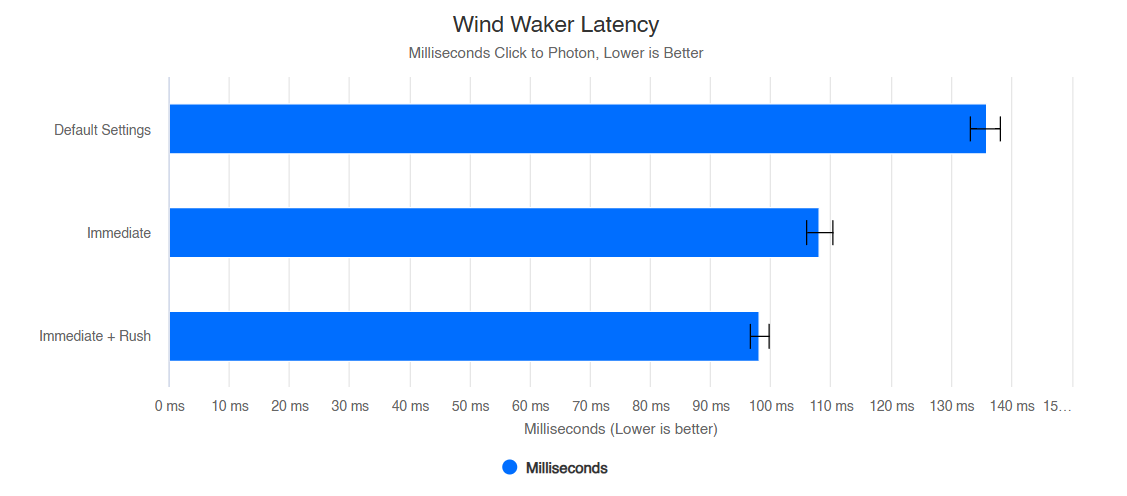
On a high refresh rate monitor and Windows, you shouldn’t have any perceivable input latency. Android, being more notable for having baked-in V-sync and overhead input latency, can take all the help it can get, and I think this would be an awesome addition.
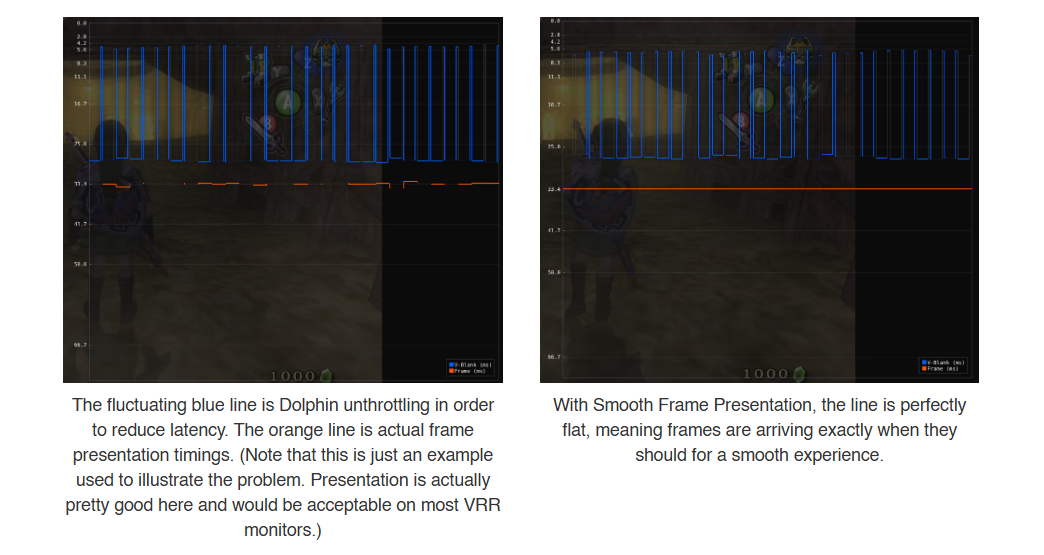
Smooth Frame Presentation: As inferred, this function smooths out frame pacing and works in a similar manner to V-sync, but it only costs 1-2ms of input delay. Some games, like Legend of Zelda: Twilight Princess, have very notable frame pacing issues with latency reducers turned on, so this is an awesome safety net to make your games look better in motion with a trivial loss of your frame savings. If you have a console with pretty good overhead power (SD865 and up), this should be safe to turn on globally.
Dolphin: Miscellaneous Improvements
Along with frame handling and Retro Achievements, we also have a myriad of backend and quality of life improvements since the last September release. Here is a list of some of them, and see the full release for specifics:
- 2509-74 – GameCube – Add SDL Stock Profile by Samb – Adds a default GameCube Profile for modern controllers
- 2509-237 and 2509-339 – Add Option to Reset Settings Back to Default by JoshuaVandaele and Simonx22
- 2509-217 – GamePatch: Modify Certain Games to Behave Better in Dolphin by SuperSamus with additional contributors
- 2509-242 – BBA: IPC for BBA Between Multiple Instances of Dolphin on the Same Machine by cristian64
What did you think of this article? Let us know in the comments below, and chat with us in our Discord!
This page may contain affiliate links, by purchasing something through a link, Retro Handhelds may earn a small commission on the sale at no additional cost to you.
