

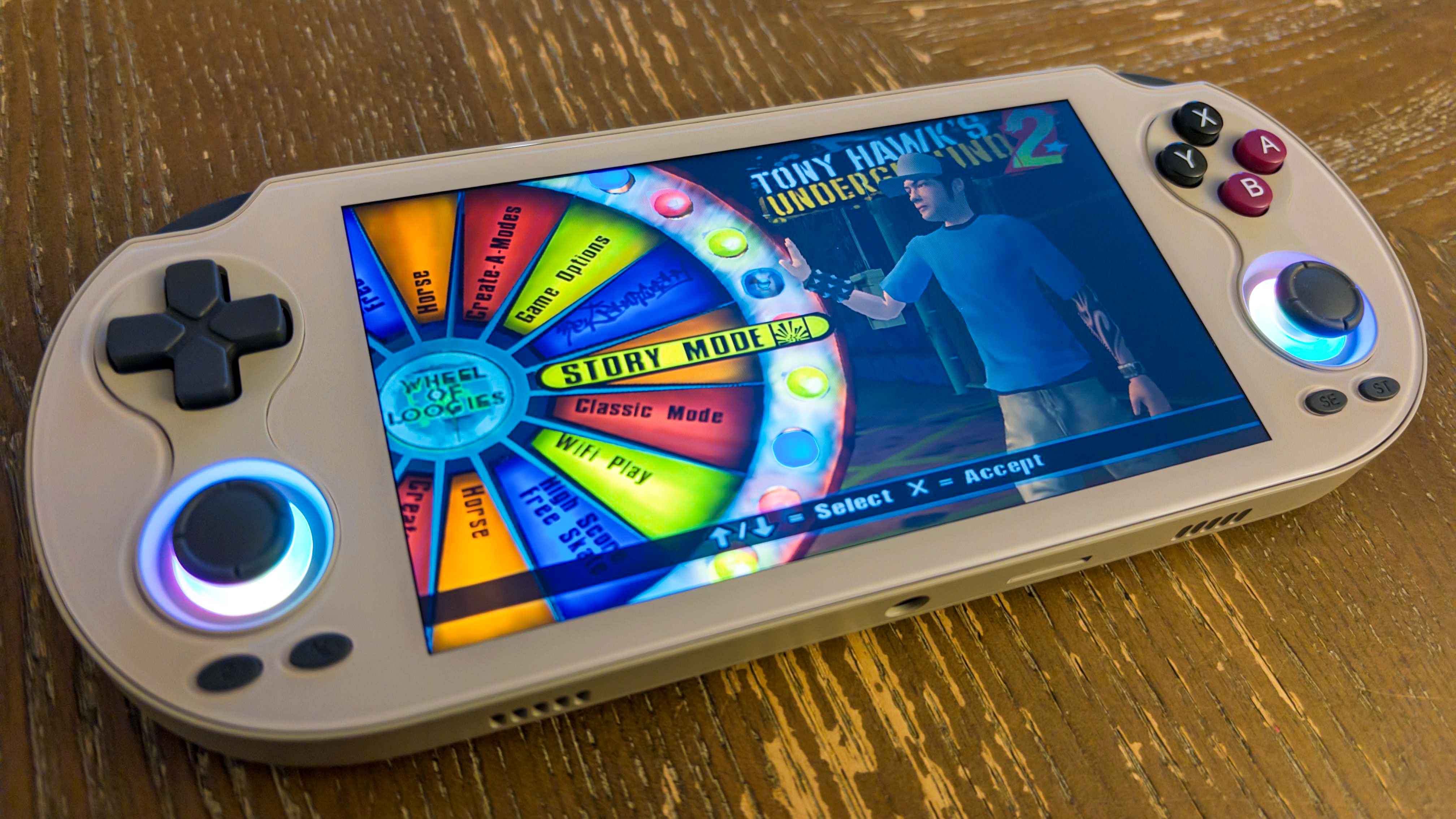
The RG Vita is here, and I have spent enough time with it to get a good feel for its strengths and frustrations. What I do not have is a price, and that hangs over everything. Without knowing where this lands on the ladder, all I can really do is tell you what it feels like, what works, what doesn’t, and which devices it seems ready to stand next to. Whether it is worth buying will live or die on whatever number Anbernic eventually slaps on the store page.
Screen
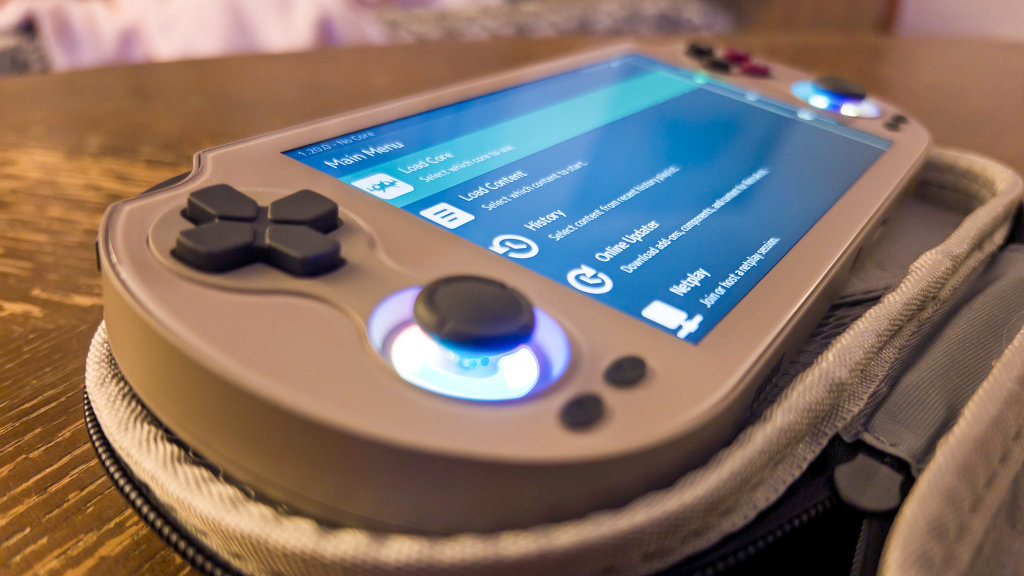
The screen is decent enough, with colors that are vibrant, viewing angles are fine, and the brightness range is good enough to cover indoor and light outdoor use. It looks nice in person, and first impressions are positive. Then the sharpening hits you.
This is the same heavy-handed oversharpening we have seen on other Anbernic T618 machines. Edges have that haloed, fuzzy look, especially on pixel art and 3D content with thin lines. It is not unusable, but it is distracting once you notice it. At this point, saying “Gamma will fix it” feels like a reflex, and we probably will get a community-driven solution, but the fact that this has persisted across this many devices is embarrassing.
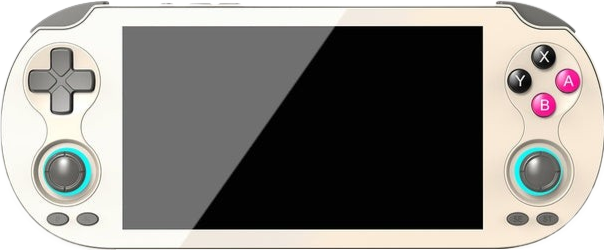
The chassis is also chunkier than the display size suggests. A little taller and wider than the real deal, with bezels and plastic adding more visual mass than you might expect from photos. It is not huge, but it does not have the sleek, razor-thin silhouette that “Vita” brings to mind.
Controls
Controls are very typical of Anbernic. The D‑pad and face buttons are fine. On my unit, though, the buttons have a slightly grinding feel, and the membranes are quite stiff. Nothing feels outright bad, but it is not as immediately pleasant as their best efforts.
The sticks are serviceable and fall under the thumbs naturally enough, helped by the wider body. As usual, the real missed opportunity is the triggers. Anbernic has finally moved away from perfectly in‑line shoulder buttons, but these are still digital switches. There is no analog trigger travel, which matters if you were hoping to lean on this thing for racing games or anything that benefits from variable input.
Performance
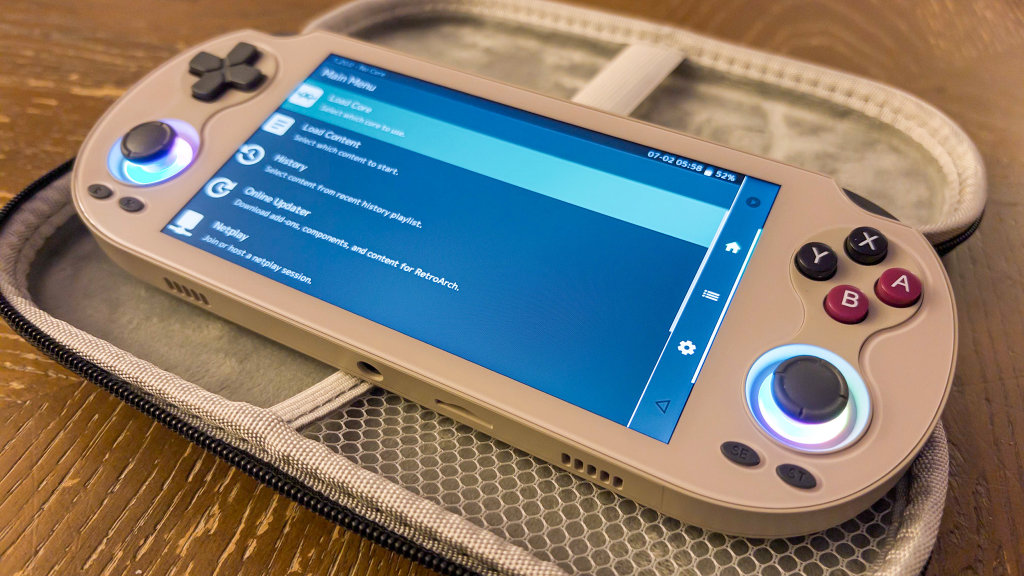
Inside, the RG Vita is running a Unisoc T618, again.
At this point, that chip has been around the block: Anbernic has used it in devices like the RG505, RG405M, and RG405V, and it also powers handhelds from other brands, such as the PowKiddy X28 and a pile of budget Android tablets. That means performance is very predictable.
In broad strokes, you are looking at:
- 8/16‑bit and PS1: perfect.
- Saturn, N64, Dreamcast: generally good with the same settings, with the usual edge cases remaining problematic.
- PSP: strong, but not flawless, especially with upscaling.
- GameCube and PS2: possible in some lighter titles with effort, but this is not a reliable GC/PS2 machine.
- Vita: some lightweight titles work, but very hit or miss (vita3k is early in development as well)
On the RG Vita specifically, each pre‑installed emulator I tried seemed to have its own quirks. Some had odd default mappings, others had questionable settings out of the box. That is normal for Anbernic, but still a reminder that you will probably want to rip things out and install your own stack.
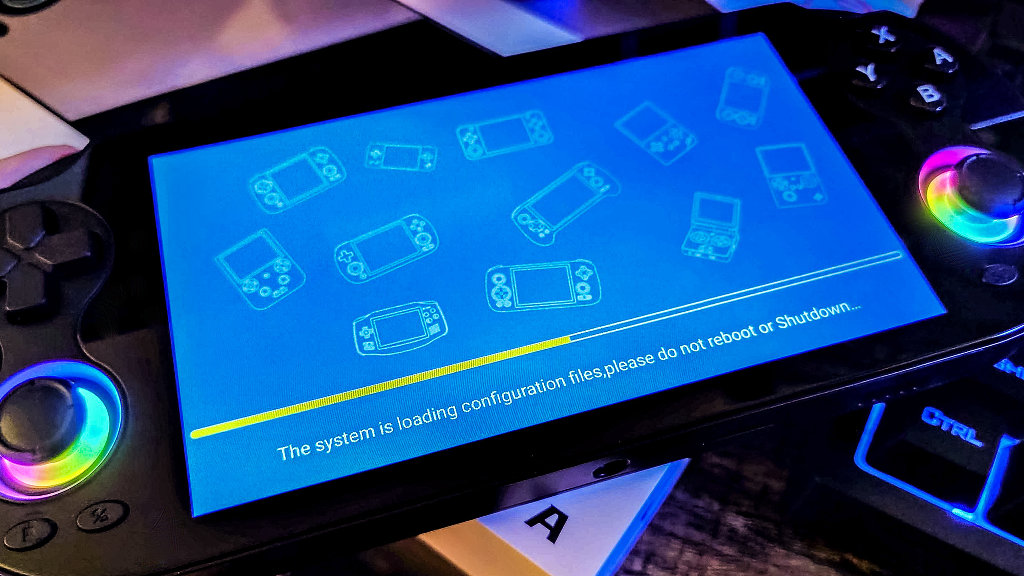
Thermals were also noticeable. The device gets pretty warm just booting up higher-end systems and poking around. Nothing caught fire, but for a T618 device, it runs hotter than I expected, and that feeds into concerns about long‑term comfort and battery life.
Build Quality and Ergonomics
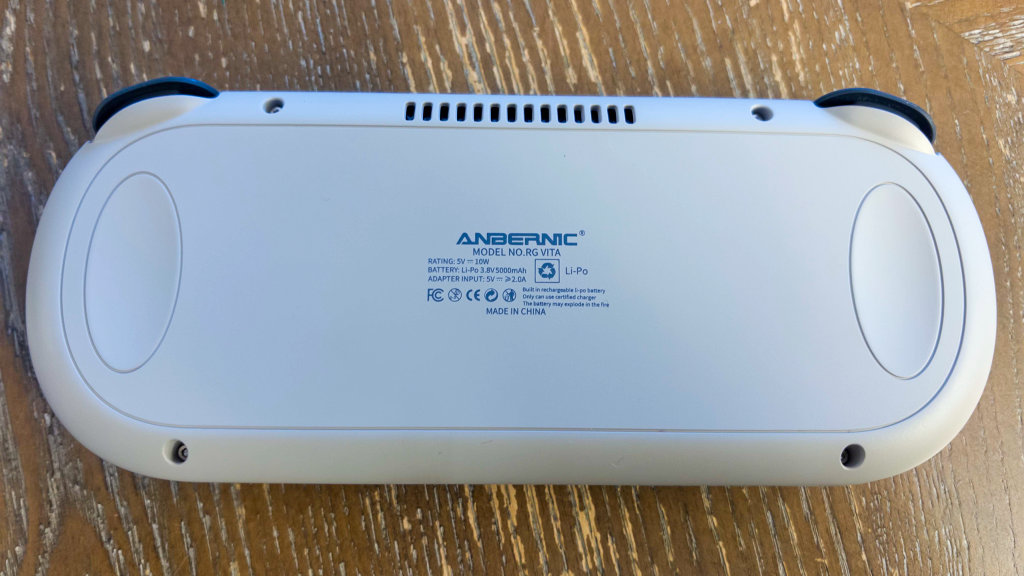
In the hand, the RG Vita feels about as comfortable as a Vita 1000, for better and worse. The overall contouring is similar, which is good, but the edges are a bit sharper than I would like. After a fairly normal session, I found myself shifting my grip to avoid pressure points.
The plastic back is nicely textured, which helps with grip, but the whole shell feels a bit light and hollow. It does not feel fragile, just less dense than something like a Retroid or AYANEO. The glass front looks fine, resists smudges reasonably well, and the button cutouts and surround all look tidy enough.
Size‑wise, the RG Vita is larger than a real Vita. It is closer to something like a Retroid Pocket 6 in footprint than Sony’s original handheld. If you were dreaming of slipping this into the same case you used in 2012, that is not happening.
Sound
The speakers are exactly okay. They get loud enough for lap distance play, and they do not have any weird tonal spikes, but at high volume, they start to distort just enough to notice. For most people, they will be fine, and if you care deeply about audio, you were going to plug in headphones or a Bluetooth set anyway.
Network Performance
On the network front, local streaming was pleasantly responsive. Using Apollo and Artemis felt better than I expected once everything was configured. On the cloud side, however, GeForce Now was not happy. The app crashed when launching a game more than once. That could easily be down to app quirks or user error, but it is worth noting if you were planning to lean on cloud streaming as a core use case.
Comparison to Other Devices
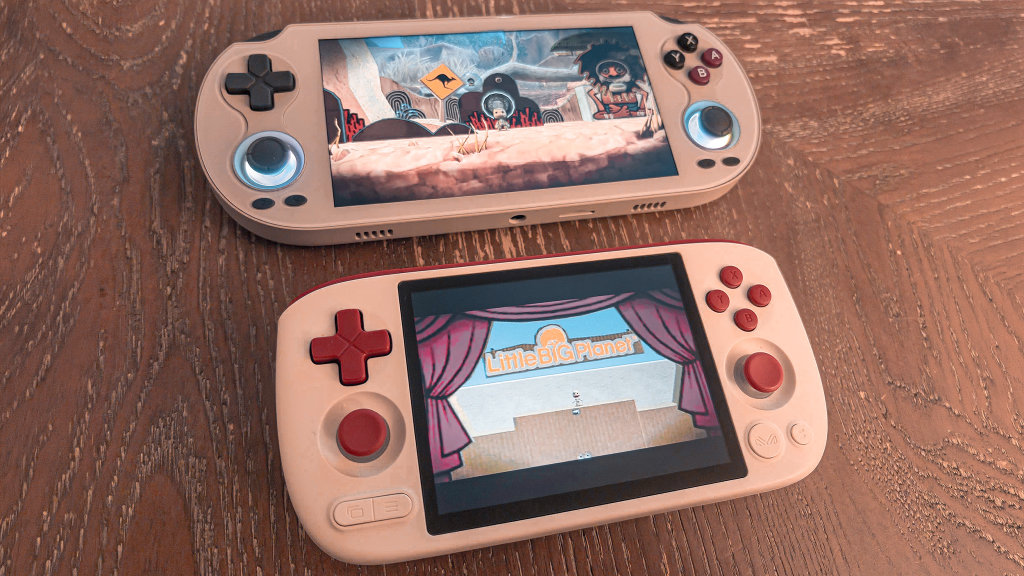
This is where the missing price tag hurts the most.
Purely as another T618 handheld, the RG Vita mostly stacks up. Performance is in line with other devices on the same chip, and if Anbernic prices it similarly to its own 400‑series and to other T618 competitors, it could be a solid mid‑range option.
The problem is the rest of the market. The Pocket Air Mini exists. Mangmi keeps shipping interesting mid‑tier hardware. MagicX is clearly gearing up to flood the budget and midrange with new designs. If the RG Vita ends up too close to more powerful devices, it will have a hard time justifying itself on anything other than “it kind of looks like a Vita.”
If, on the other hand, Anbernic comes in aggressively and treats this more like a stylish T618 sidegrade to their other hardware, it could make sense as a comfort and aesthetic pick.
Right now, with no price announced, all I can say is that it feels competitive against other T618 units on raw performance, and it can hold its own ergonomically against devices like the RG405M and Retroid Pocket 4/4 Pro. Whether that is enough will depend entirely on where it lands.
Verdict (For Now)
Without a price, the RG Vita is a question mark in a Vita costume.
The screen looks good until the oversharpening catches your eye. The controls are typical Anbernic with a few rough edges and the usual trigger compromises. The T618 does what the T618 always does, for better and worse, and the shell feels like a slightly enlarged Vita that leaned into sharp edges more than I would have liked.
If Anbernic prices this sensibly against other T618 handhelds, it could be a nice option for people who like the Vita shape and want a mid‑range Android machine in that mold. If it drifts too far upward, it is going to be very hard to recommend against stronger competition.
For now, all I can really do is tell you how it feels: a competent, slightly warm, Vita‑inspired T618 handheld that lives or dies on a price we still do not know.

1 Comment
Vita emulation is still in its experimental stage. There are a lot of games listed as playable, but even on my laptop, some of those games just don’t work or do work but have horrid graphical issues. In other words, it is a work in progress. No one is really playing vita games regularly, that’s still a ways off.
That said, I have an RG505 that I’ve put GammaOS on, and it plays Vita games. Not every game that’s listed on the website as compatible is, but many more than I thought it would.
That GammaOS is what is probably doing the heavy lifting, tho.
I had to search the internet for a version of Vita3k that works well with Mali gpus, and I found one. From 2024. From Macdu, who I believe is no longer on the Vita3k project.
With this build, I can run Borderlands 2, Freedom Wars, World of Final Fantasy, Persona 4, and a bunch of 2D games like Iconoclasts, Chasm, Shiren the Wanderer, Dragon’s Crown, and Muramasa.
They run (after compiling shader and building pipelines) about as well as they did on an actual Vita. If not a bit better.
But other games listed as playable either suffer from crashes (Like Oddworld Stranger’s Wrath), vertex explosions (Catherine Full Body, both Digimon Cyber Sleuths, and Soul Sacrifice Delta), or just have graphics that don’t render at all (Unit 13).
Additionally, the RG505 has more ram and lower resolution screen (the Vita OLED screen to be exact, 544p) which probably helps out.
I was hopeful for this device to be good when it was first announced. I’m a huge Vita fan. But then I heard what was under the hood. Perhaps the pro version will fare better?
I guess it will all depend on pricing