

A controller that keeps its cord but loses its console tether. A handheld you can print and solder yourself. A fresh set of game shelves for everything else. This trip around the workbench collects over a dozen hardware and software projects, including a few older finds I just couldn’t resist including.
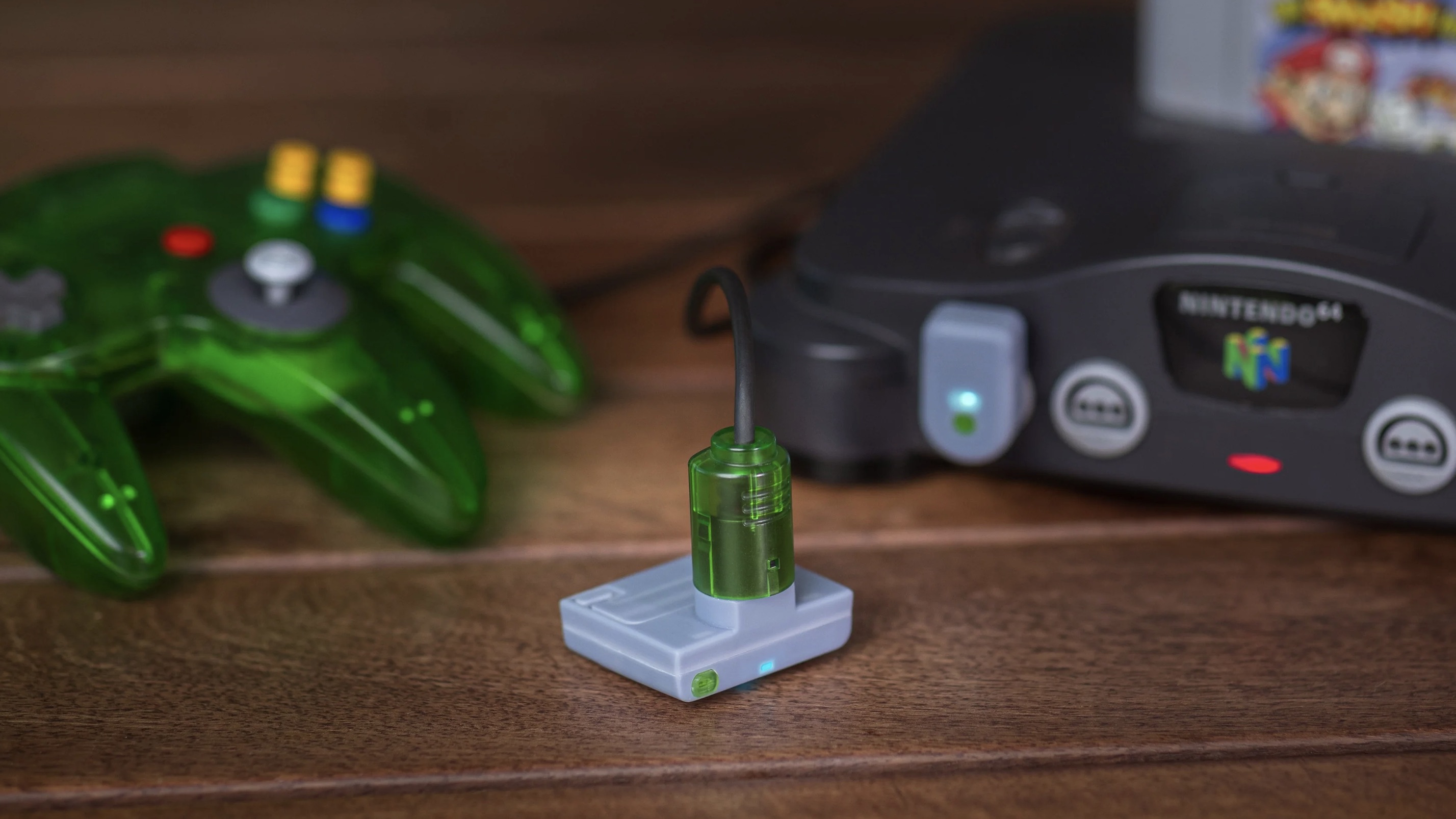
Frivolbit’s Bridge plugs between an existing wired N64 controller and the console, using a pair of 2.4GHz modules. The controller-side piece can sit in the accessory slot while the cable stays wrapped nearby. The maker claims less than 3ms of added latency and roughly ten hours from one AAA, with Rumble Pak support and Controller Pak emulation and copying.
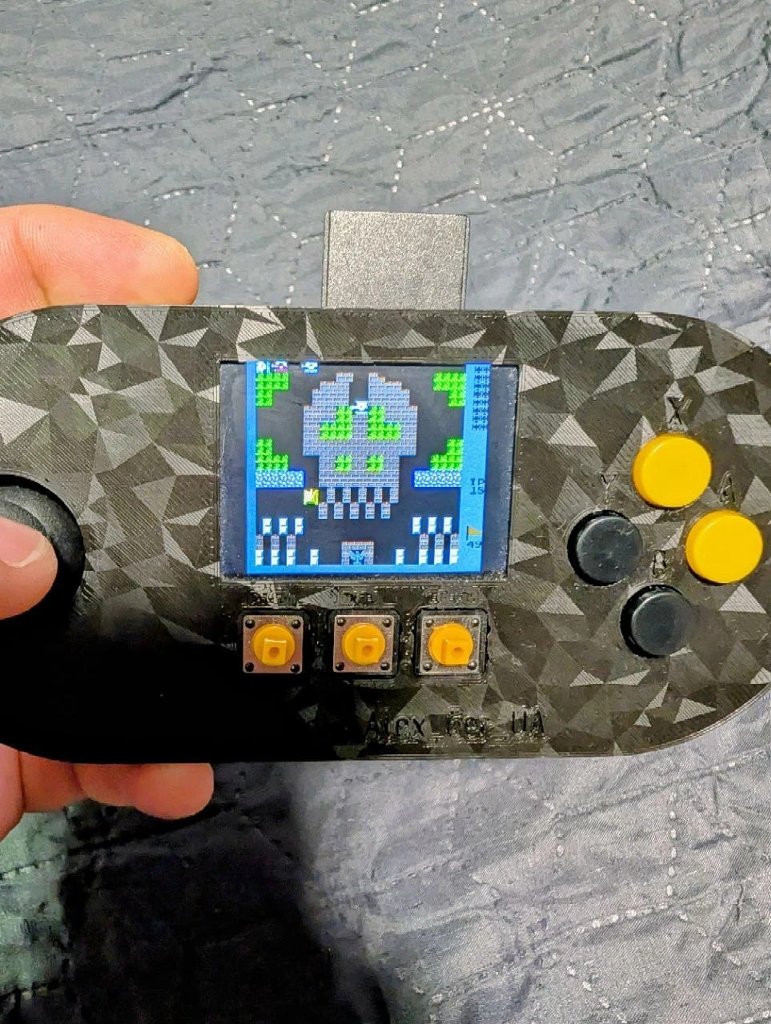
For a more hands-on project, AlexGerUA’s ESP32-S3 handheld combines a printed case, a 320-by-240 display, full-size SD storage and an 18650 battery. Its parts list comes to about 810 Ukrainian hryvnia before the battery, printing and small extras. Retro-Go supplies the emulation, with NES, Game Boy, Master System and several other systems booting. Some SNES games are too slow; Doom and Mega Drive support have yet to be built for this board. The creator estimates around eight hours of battery life.
iBox 0.1.108 brings its 3D game shelf to Steam Deck and 64-bit Linux as a preview. The November 19 release supports Game Mode, Steam, Heroic-installed games and Lutris, plus emulator installation and discovery. The Deck can join a Windows host’s Remote Play session, although hosting and the in-game overlay remain Windows features. The Windows update also removes the yellow clip-recording border where supported and adds manual Epic folder selection.
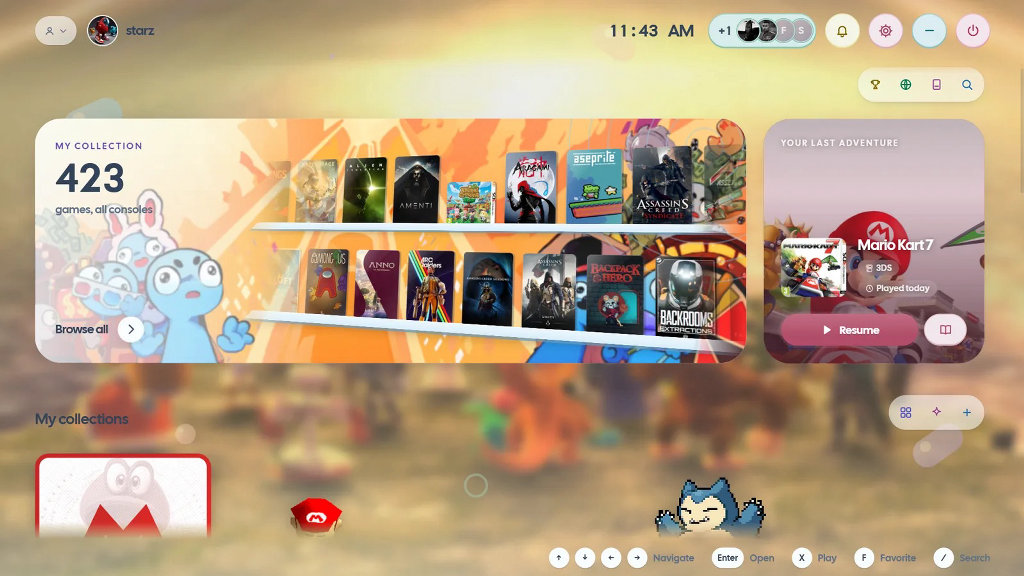
Another shelf comes from OpenEmux 1.24, released November 15. The RetroArch frontend adds a desktop Big Picture layout styled to match its Android app, with controller navigation and shared game icons. It is a separate project from macOS’s OpenEmu, built around making a library easier to browse from a couch or handheld.
The Debian Gaming Hardware Team has started testing Debian on handhelds, emulation devices and consoles, documenting what works. A tailored Debian Pure Blend is an idea for later discussion. The immediate job is compatibility testing, and volunteers can bring their own hardware.
For a different kind of machine collection, ZEsarUX 13.1 Beta 1 arrived November 17. Scorpion, ATM Turbo and Didaktik Gama machines join its extensive retro-computer coverage, alongside a separate emulated-display window and more Mac joystick support. Several systems, including Master System and MSX, gain 60Hz support.
Two older discoveries tackle wandering saves. OpenSave pairs devices for peer-to-peer save syncing without an account, using snapshots and conflict history to keep progress organized. Its current documentation also describes optional cloud hand-off and Steam Deck integration. Meanwhile, RetroSaveManager takes the homelab route: one Docker container, a web interface, a helper-app API and one save root to back up. It is aimed at setups involving systems such as MiSTer and RetroArch.
Leave a comment below if you have a maker project that you think should be featured here! That’s all for this one, happy tinkering!
