

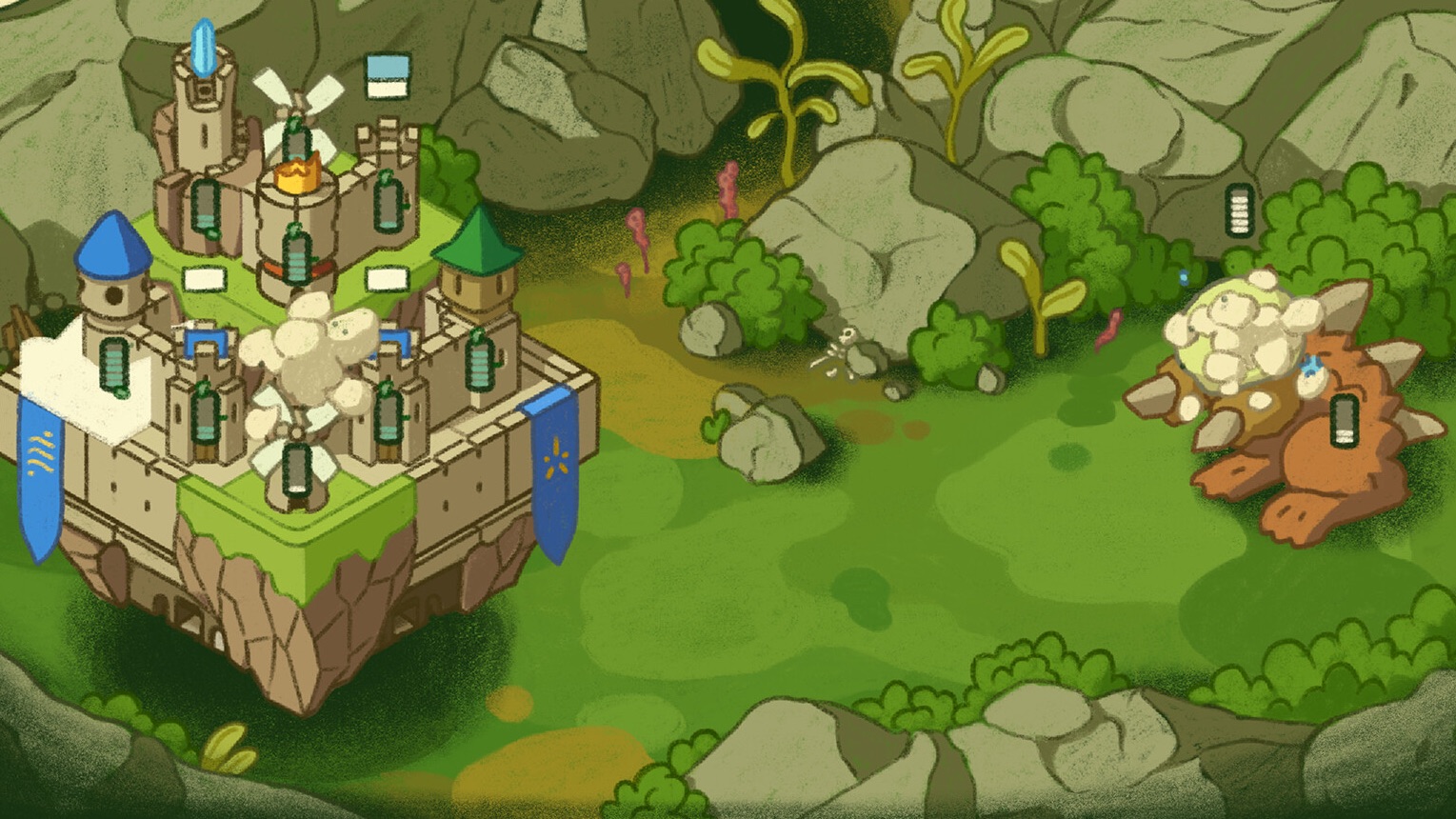
Roguelites thrive on the unpredictable, but what happens when players inevitably crack the code? Balancing randomized chaos with the player’s hunt for the “perfect meta” is one of modern game design’s trickiest tightropes.
Ahead of its launch later this year, we sat down with the development team behind Castle Away to discuss design philosophy, procedural generation, and how they handle the elusive concept of the “perfect run.”
Jim: Castle Away blends roguelites, autobattlers, and castle builders into one. Was there a specific moment or game that made you think these three genres could work together?
Sim: We actually wanted to give the player an experience of a classic RPG (exploring a world, collecting gear), but with the speed and tools of a modern game. The mechanisms of a roguelite (run-based, experimentation with builds) lend itself for indie development (a small team can’t make 60 hours of content), and we chose for combat to be automatic because a turn-based system can very quickly start feeling like a chore. Building your own flying castle just seemed like an enticing fantasy, and could be well executed in this form.
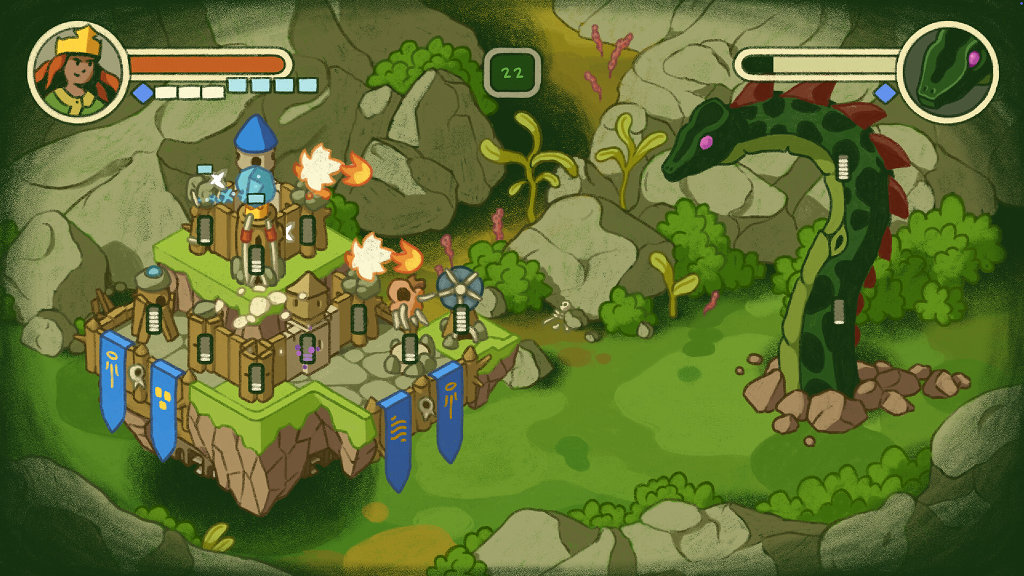
J: The premise, a demon-cursed realm, a mysterious crown, a keep that literally rises from the ground, has a strong fairy tale quality to it. Where did that central image come from, and how much did it shape the direction of the game?
S: The central image of finding the crown and ascending on your keep, I think, stems from wanting to create this Excalibur moment. Everything just originated from a process of finding ways to bring together art and game design through story and world-building. It’s an iterative process.
J: René, you previously designed Gladiator Manager, and Sim and Matthijs both worked on Rift Riff together. How much did those earlier projects directly influence Castle Away’s design philosophy, and what did you consciously leave behind?
René: Gladiator Manager is a very different game, but some aspects like the autobattles and high difficulty made their way into Castle Away as well. A big thing we wanted to do differently from the outset was to move away from the historic setting, to give ourselves more creative freedom in worldbuilding.
J: The grid-based castle building has echoes of games like Dorfromantik or even Tetris in the way structure placement creates emergent outcomes. Were there any non-obvious inspirations- board games, tabletop RPGs, anything outside of video games- that fed into the mechanic?
R: I haven’t really considered it a lot, but I am a big fan of puzzles like sudoku or board games like Catan, which both have spatial elements. So I am probably subconsciously trying to make something that scratches that itch.
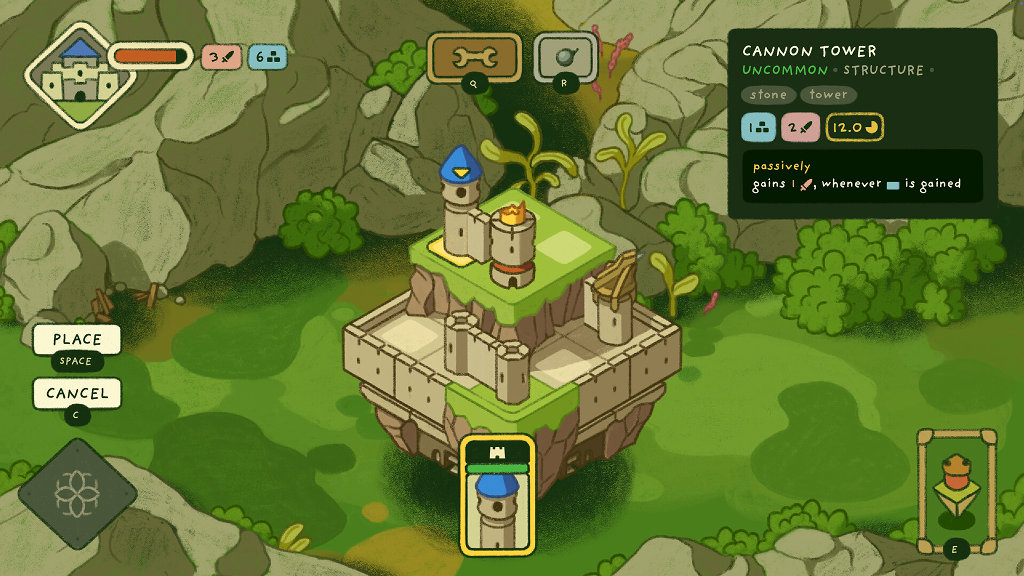
J: The autobattle element removes direct combat control from the player. Was that a deliberate design statement, or more of a practical decision that turned out to suit the game?
S: We thought of ways to involve the player in combat, but we just didn’t feel that’s what we wanted the game to be about. It’s about strategically building your floating castle, and combat is a way to see if you made the right decisions.
J: Building a roguelite around a spatial grid is a significant technical and design challenge; the interactions between 50 structures across three upgrade tiers could spiral into an enormous number of edge cases. How did you manage balancing that complexity during development?
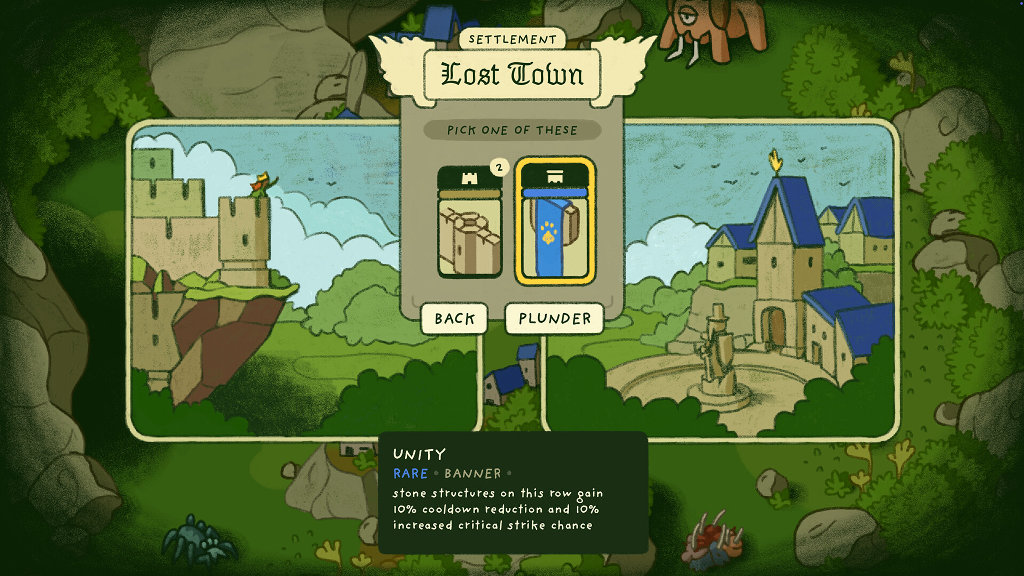
R: And don’t forget about the banners that also interact with the structures on their row! To manage it all, I have programmed a nice little system to handle all of the different adjacency mechanics. I try to avoid edge cases as much as possible since they are hard to maintain. But sometimes we come up with a design that doesn’t fit in the system, and I have to make a judgement about whether to expand the system for it, or just make an exception.
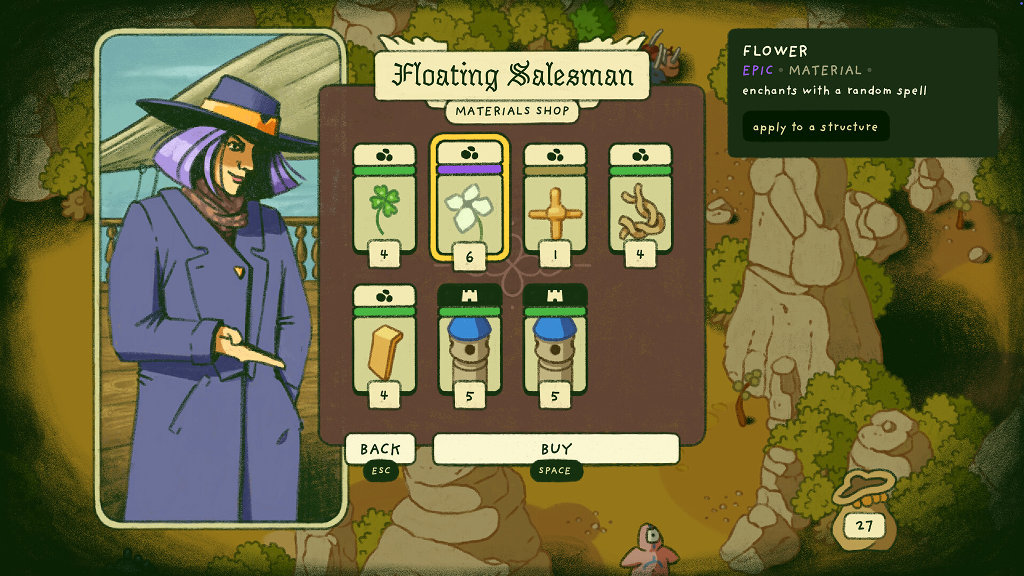
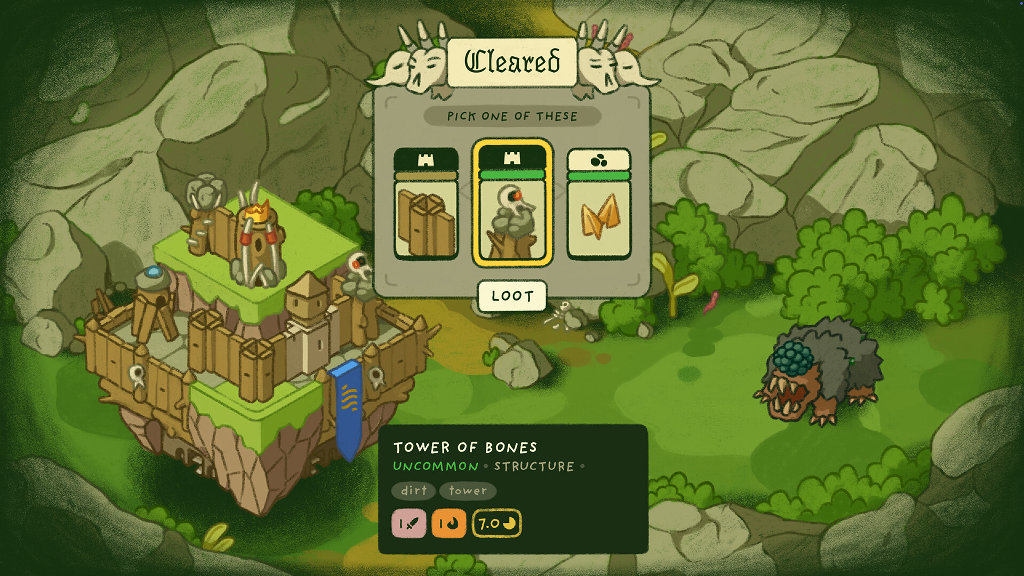
J: Working as a three-person team with clearly divided roles, design/programming, art/experience design, audio- how did you handle the moments where those disciplines bled into each other’s territory?
S: We talk and brainstorm a lot about the general direction of the game. It’s important for us that everyone feels they can do fulfilling creative work. There are many ways to make an idea work, so discussion and sometimes compromise are inherent parts of the development.
J: Roguelites live and die by their pacing. How did you approach playtesting the tension between scavenging runs, monster encounters, and the encroaching demon boss, and how much did that loop change from your earliest prototype?
S: We started out with something that plays a lot like the current pacing, because that felt intuitively right. Then, in playtesting, people would burn through the content. And we worried the quick inflation of upgrades would render decisions meaningless. We then implemented a workshop system and demoted all loot to just the materials of structures. It worked. We slowed down the pacing, but it wasn’t fun, so we reverted back to our original pacing: slaughter a monster, get a structure. [Then] we balanced everything accordingly, so that players would always have something to work with, without feeling too strong.
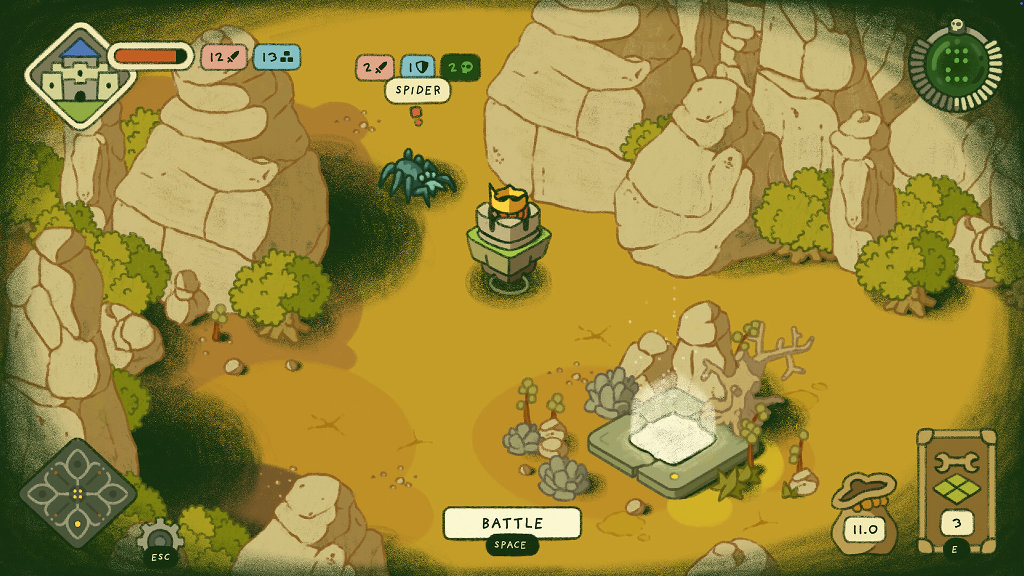
J: The game features multiple endings. At what point in development did those branch in? Were they always part of the plan, or did the story grow more complex as the systems took shape?
S: We’re actually still in the middle of experimenting with this. The current version only has one ending, but with different ‘states’. We had to come up with something that works for the demo as well as versions further in development, since players of the demo are not able to play all regions and find all artifacts needed for the actual ending.
J: With 5 distinct realms, 20 monsters, 5 bosses, 30 banner types, and 30 boons, the content scope is substantial for an indie team. Were there structures, enemies, or mechanics that got cut, and is there anything you miss?
S: We’re still only at the start of production, so about 60% has not been made yet. It is substantial, but that was a conscious decision. We knew from the start that this game could only thrive with many items to experiment with. So we made other decisions to make sure we’re able to make this scope work.
J: Sim, you’re credited with creating art and designing “a coherent experience”, a deliberately broad mandate. What does coherence mean for a game where the player’s castle looks radically different every run?
S: It’s a way to describe where I feel my responsibilities lie. It’s not just about how each castle looks (however important that is!), but most of all about the overall art style, game vibe and feel, the sense of exploration, the overall learning curve, and the legibility of the interfaces. I deliberately credited abstract roles, since there is overlap between our responsibilities, of course.
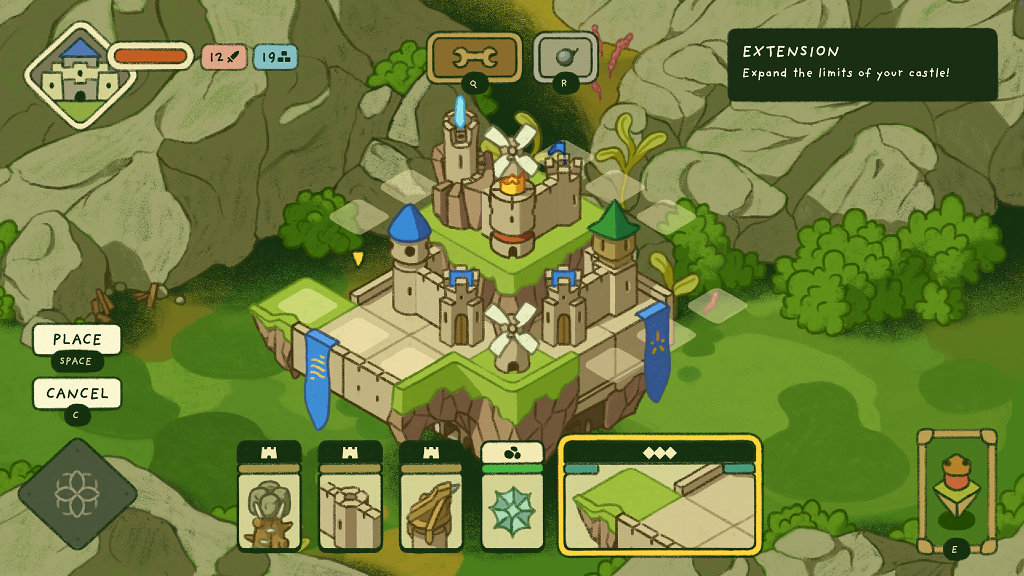
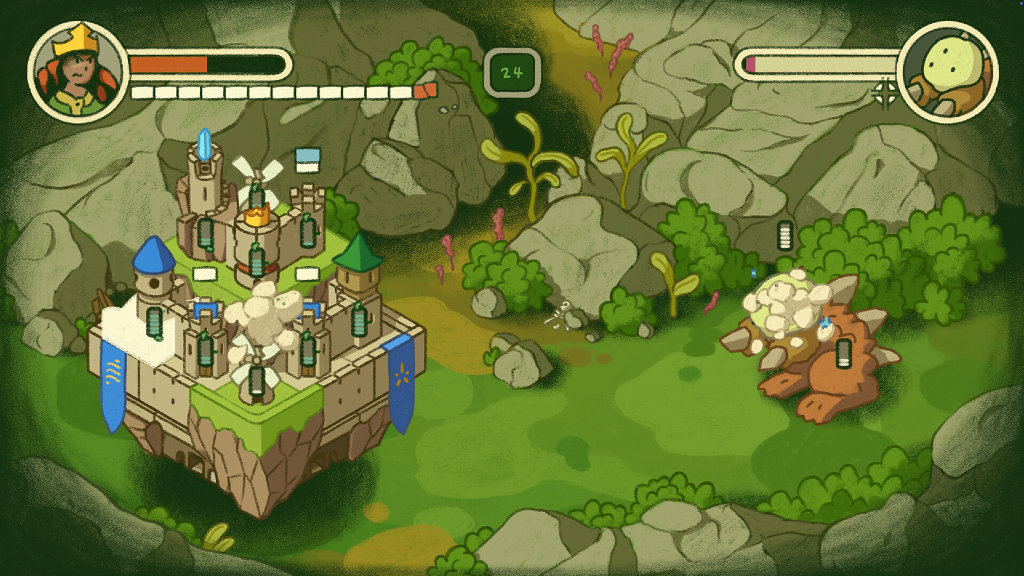
J: Castle Away has to make 50 structures visually readable at a glance, each with three upgrade tiers. What was the visual design language you established to make that legible without the grid becoming visual noise?
S: That’s actually a challenge we’re facing right now. And I think every ‘faction’ will get a stronger identity as we’re getting deeper in production. My thinking on this now is that all factions will have their own favorite build materials and architectural style. From that, coherence will emerge.
J: Across five distinct realms, how did you balance maintaining a consistent art identity while still making each world feel genuinely different?
S: I think when you combine inspiration from nature with your own imagination, it still has a root in reality. This root in reality (our own world) will help keep everything together.
J: Matthijs, on the audio side, how do you score an autobattle? The player isn’t in direct control of the action, so how does the music and sound design reflect or amplify tension when combat is essentially happening to you?
Matthijs: The music is grounded in abstract sounds drawn from the game’s own materials, so it always feels native to the world. The energy gives the player a clear emotional direction for what the moment calls for. Because fights are short and self-contained, the musical arc is compressed to match. And as the castle scales up and battles get heavier, the music grows with it, in density and weight.
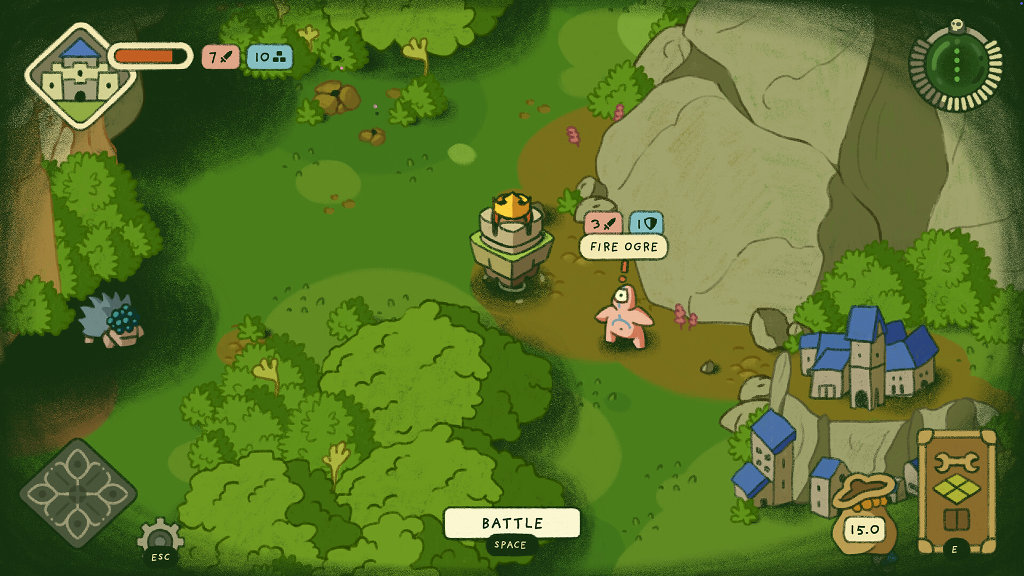
J: The synergy system- Monuments boosting Archery, Walls multiplying defense when chained, Banners affecting cooldowns by row- creates a huge possibility space. How do you design enemies and bosses to stay threatening against builds you couldn’t fully anticipate?
R: Good question, I think that’s one of the hardest things to balance. Our approach right now is to make bosses that each have interesting mechanics that the player needs to have an answer for. What that answer might be can take many forms. To counter a poisonous enemy, you can collect barriers, healing, or just kill him very fast. But if you really pigeonhole your build to only do one specific thing, it could make you vulnerable to the next boss.
J: The game nudges players toward build diversity through the loot it offers, but a player can still try to force a preferred strategy. How much does the procedural loot system push back against that, and was that tension intentional?
R: Yes, it’s something we think about a lot. I think a trap many roguelikes fall into is offering players a set of options, but with rerolls, skips, and more ways for a player to force a similar build each time. It’s why we offer a relatively low amount of choices in some cases, like with the banners, and no rerolls for loot. But on the other hand, choosing the type of enemy you fight already impacts the possible loot you can get.
J: The different builds feel like they were designed as a classic risk-reward spectrum. Are there builds or synergy combinations that emerged from playtesting that genuinely surprised you, ones you didn’t see coming?
R: A few, yes. The freeze and fire mechanics are something I was keeping a close eye on from the start as they are inherently very powerful. But in playtesting we discovered pretty fast that some structures like the wind catcher, which has multiple projectiles, can get pretty crazy when enchanted.
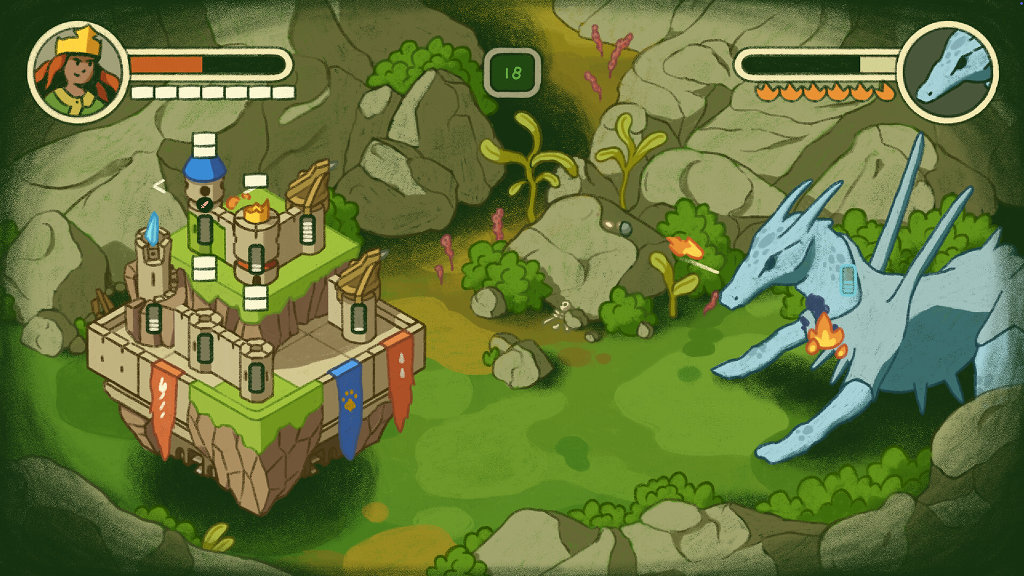
J: Choosing which monsters to fight matters because each kill draws the demon boss closer. That’s a really elegant pressure mechanic. Did it come early in the design, or was it a solution to a specific problem you were having with pacing?
S: We knew we wanted some kind of pressure device when exploring the world, because we weren’t designing ‘just’ a sandbox. This piece of game design went through some rounds of iteration before we landed on the use of crystal charges for actions in the world (representing the fuel of your floating keep). The most challenging part was communicating the system. So we had to design the mechanism around what we could easily teach the player.
J: Monster and boss AI in an autobattle game has to work harder than in a traditional action game, since the player can’t react moment-to-moment. How did you approach designing enemy behavior to feel fair and readable when the player’s only real lever is their castle layout?
R: This is something we try to take into account even as we create the sprites on the world map, to give a hint of the type of creature you’ll be facing. And more directly, when deciding whether to fight them, the UI gives you a summary of their stats.
J: Henchmen, Shamans, Towns, Cities, the encounter variety suggests a world with factions and texture beyond just combat. How much of that worldbuilding exists just beneath the surface of the gameplay, and was there ever a version with more explicit narrative?
S: Just to guide our own process, there is more lore than we show in the game. The goal is to give players the feeling the world is coherent and real, without overloading them with text. So we try to flavor things where we can, to give you hints about the lore, without being super explicit. I guess that’s what world-building is. And it’s not perfect, and we’ll leave questions unanswered, but as long as it keeps the main fantasy alive (flying around in your little keep), it’s enough.
J: With roguelite replayability as a core pillar, how do you think about the “optimal” run? Is there one, and if so, does its existence concern you, or is the fun in the journey toward it?
R: There probably always will be, and part of the fun for players is to figure out what it is, but also how to react if the pieces for the optimal run don’t always show up; how can you still win with a different castle layout?
Conclusion
Thanks to Sim, Rene, and Matthijs for taking the time to do this interview! Castle Away is coming out at the end of this year, and I for one can’t wait to dive into the full version on release. Wishlist the game on Steam now, and let us know how excited you are in the comments.
