

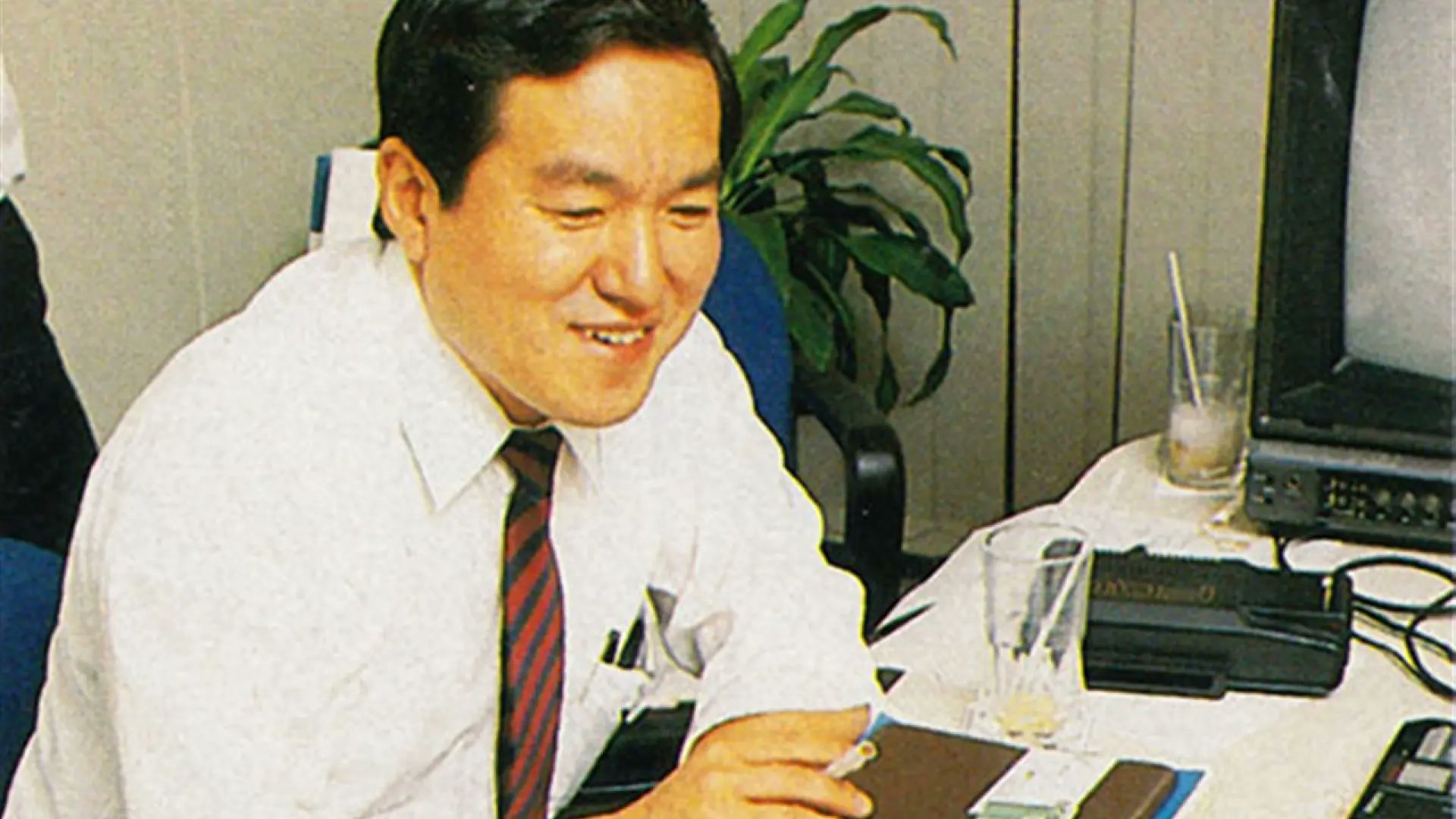
The news that Hideki Sato has passed away at the age of 75 is a profound loss for the games industry and for everyone who has ever picked up a Sega controller. Widely known as the “Father of Sega Hardware,” Sato spent 33 years at Sega, helping shape nearly every major home system the company released and, in the process, entire generations of players. Our thoughts and condolences go out to his family, friends, colleagues, and the countless fans whose lives his work touched.
Joining Sega as an engineer in 1971, Sato entered the company just before its early arcade era, when experiments like the discrete logic–driven Pong-Tron were laying the groundwork for what video games could be. From there, he would become a driving force behind Sega’s first home console, the SG‑1000, which launched in 1983 on the very same day as Nintendo’s Famicom, igniting one of gaming’s most storied rivalries. The SG‑1000 and its revisions paved the way for the Sega Master System and set Sega on a path from arcades into living rooms around the world.
Sato’s influence is perhaps most famously felt in the Genesis (Mega Drive), the 16‑bit console that fired the opening shots of the 16‑bit wars in 1988/89. Under his hardware leadership, the Genesis gave Sega the power and personality it needed to stand toe‑to‑toe with Nintendo, long before the SNES arrived. Around this time, his team also delivered the Game Gear in 1990, Sega’s first handheld, and pushed the Genesis even further with a series of add‑ons that extended its lifespan and ambition.
As the industry moved into the 32‑bit era, Sato remained central to Sega’s hardware story through the Saturn and, later, the Dreamcast, the company’s beloved swansong console. By the time of the Dreamcast, his role had shifted more toward executive oversight, but his technical vision and understanding of what made Sega hardware special still resonated through the design. Even as Sega transitioned away from console manufacturing, Sato continued to guide the company, serving as acting president from 2002 to 2003 and holding senior advisory roles until his departure in 2008.
Beyond Sega, Sato dedicated himself to teaching, serving as a professor at Tokyo University of Science and lecturing on engineering and gaming hardware history. In this way, he not only built the machines that defined an era but also helped educate the next generation of engineers who will design whatever comes next. His passing comes only weeks after the death of Sega co‑founder David Rosen, underscoring the end of a foundational chapter in Sega’s story and in video game history itself.
To those of us who grew up with the SG‑1000, Master System, Genesis, Saturn, Dreamcast, or Game Gear, Hideki Sato’s work is woven into our memories of late‑night sessions, shared cartridges, and formative gaming moments. Whether or not we knew his name, we felt his impact every time we powered on a Sega system. Today, we mourn his loss, celebrate his legacy, and extend our heartfelt condolences to everyone who knew and loved him.
