

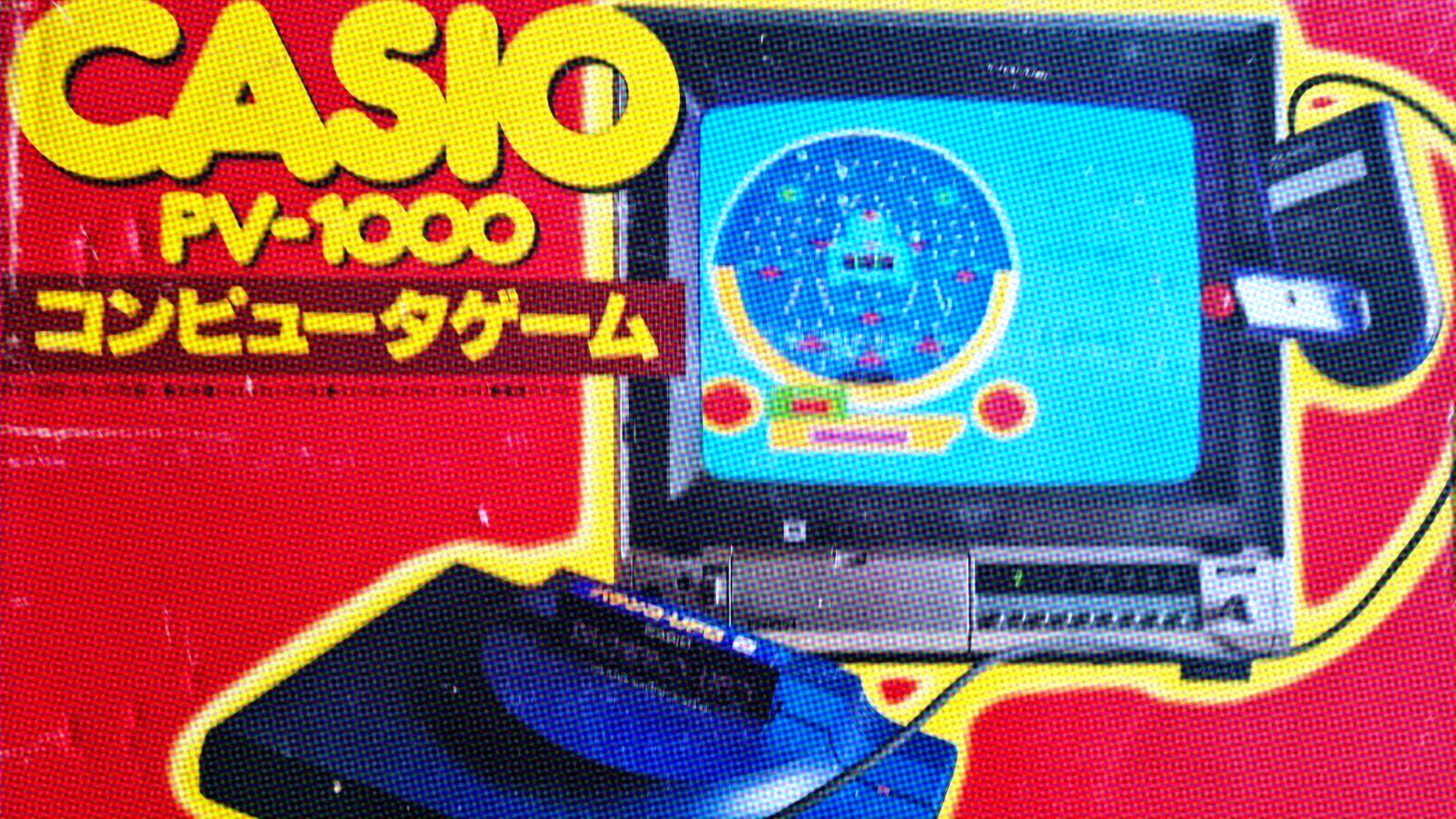
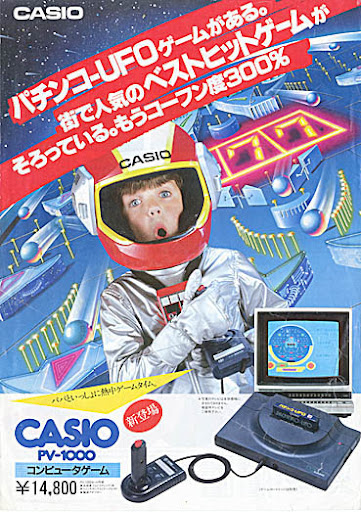
In 1983, right as the Japanese home console market was exploding with new hardware and new ideas, Casio decided it wanted a piece of the action. The Famicom had just launched, Sega was preparing the SG-1000, and NEC and Sharp were pushing home computers. The industry was heating up fast, and Casio’s response was the PV-1000, a machine that looked like a toy, played like a prototype, and survived on shelves for a length of time best measured in weeks.
Hardware-wise, the PV-1000 wasn’t outright hopeless so much as weirdly under-ambitious. Built around a Z80 clocked in the Famicom-adjacent range, it paired modest RAM and video memory with a graphics setup that could push bright tiles and a handful of sprites without ever threatening to impress anyone.
On paper it could throw a decent number of colors on screen, but between resolution limits and sprite constraints the end result looked like an anemic SG-1000. Sound fared no better, a basic beeper-style implementation that did its job and absolutely nothing more, lending every game the audio personality of a calculator.
The controllers were hardwired with stiff, uncomfortable sticks that seemed designed by someone who had only read about joysticks in a manual. The whole unit had the aesthetic of an educational device that accidentally wandered into the gaming aisle.
The launch story is equally bare-bones. Casio rolled the PV-1000 out in Japan with a tiny nine-game lineup and a price that didn’t undercut the competition enough to make up for everything it lacked. Those nine carts covered the usual early-’80s suspects: maze chases, single-screen action, lightly reworked arcade hits, but there was no killer app (unless you love Turpin), no showcase title, nothing you couldn’t get elsewhere in a better form.
When the smoke cleared, the PV-1000’s commercial performance barely registered as a blip. It never left Japan in any meaningful way, never built an install base large enough to court serious third-party support, and never got the kind of marketing push that might have helped it claw out even a niche.
Casio’s attempt to pivot with the PV-2000 (positioned more as a computer than a console and not backward compatible) only muddied the waters further, fragmenting a user base that barely existed. Within what felt like moments, Casio had quietly stepped back from the living room and retreated to the safer, more predictable world of calculators and watches.
The system bombed almost instantly. Rumors from former retail distributors suggest that Casio stopped production almost immediately after launch once it became clear that demand was nonexistent. Unsold units lingered briefly in bargain sections and then vanished. Casio did produce a companion computer, the PV-2000, but it was not backward compatible and did nothing to salvage the platform’s identity.
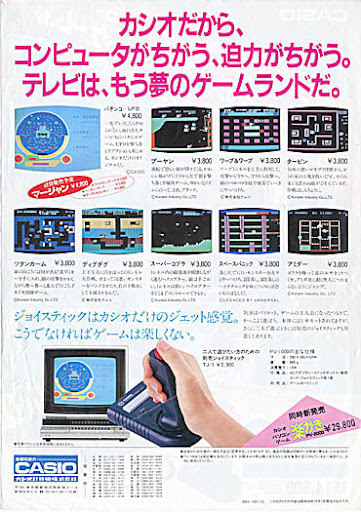
For collectors, though, failure is a feature. The PV-1000’s short life and microscopic print runs have turned it into exactly the kind of hardware obsessives love to chase. Individual carts can be tougher to track down than the console itself, and the system’s rarity has made it a small but persistent target for preservation efforts and emulation projects.
Working units are scarce, and complete boxed sets are prized by collectors who enjoy cataloging commercial oddities from overambitious watchmakers.
What did you think of this article? Let us know in the comments below, and chat with us in our Discord!
This page may contain affiliate links, by purchasing something through a link, Retro Handhelds may earn a small commission on the sale at no additional cost to you.

2 Comments
I’m confused about the “ clocked in the Famicom-adjacent range” phrasing. Like most Z-80 systems, it was clocked over 2X the 6502 derivative in the famicom. In any case, the Z-80 often required more cycles per instruction, so comparing clock speed across CPU architectures can be misleading.
Hey Ron, thanks for chiming in! Admittedly, I’ve been guilty of talking about vintage hardware in relation to what I know about modern stuff. TIL!