

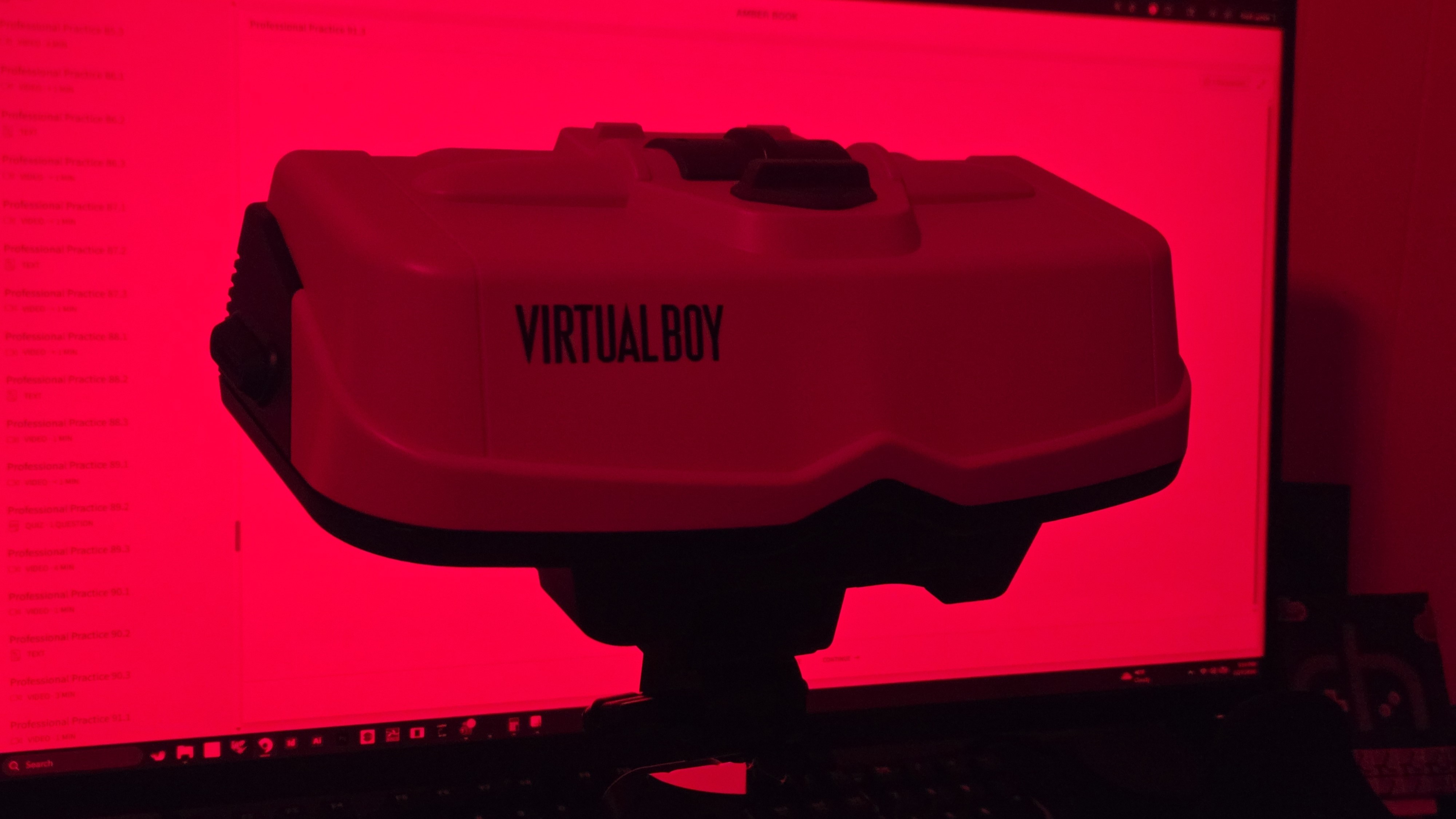
1995 was a prolific year in our culture. It’s the year Toy Story was released in theatres, when multiplatinum record-selling Post-Grunge band Creed was formed, when the Sony PlayStation obliterated whatever Nintendo released that year, and… and nothing else. Please, don’t look up any other notable events that took place in 1995. Oh wait… that’s also when Nintendo released the Virtual Boy!
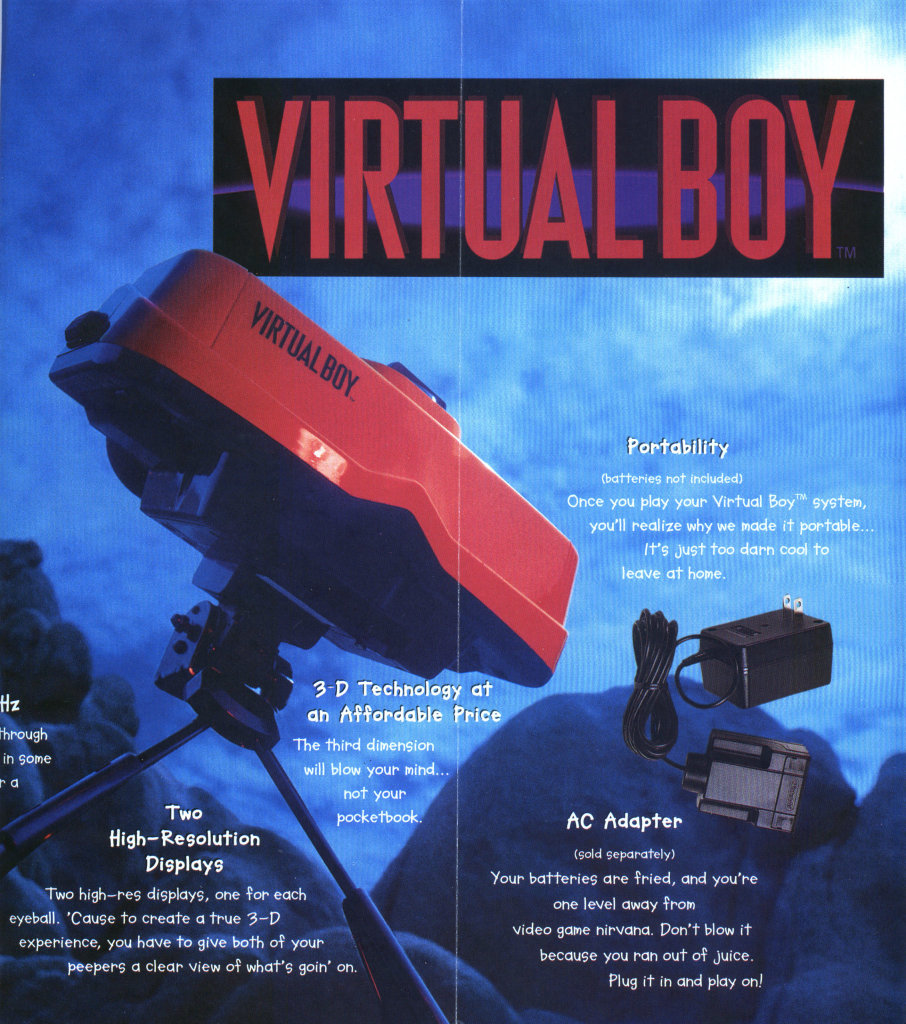
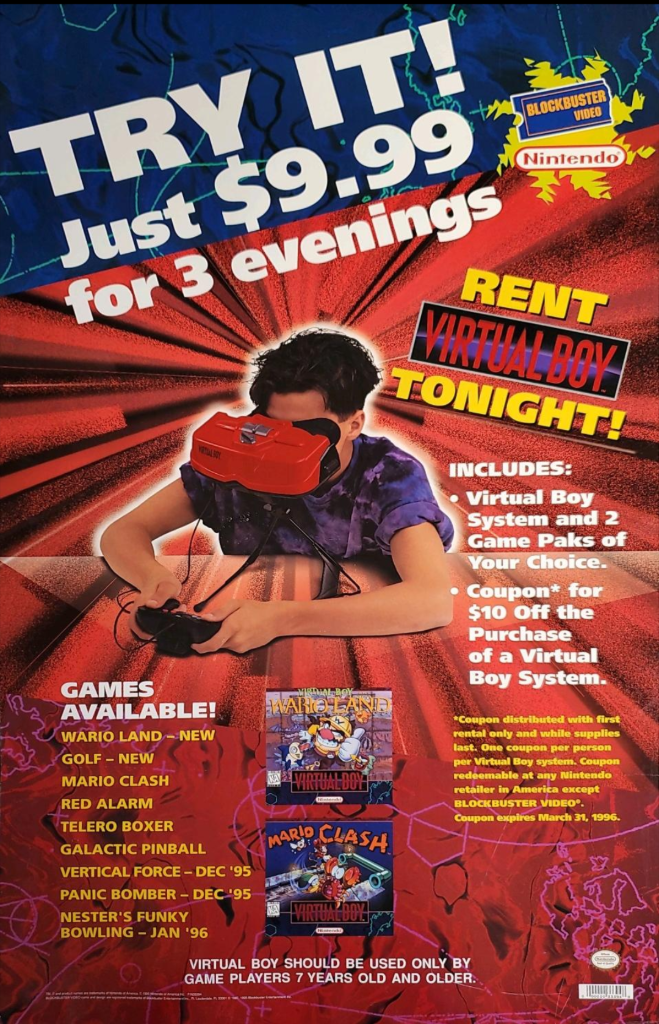
Nintendo’s first foray into the stereoscopic 3D realm was not with the 3DS, in-fact it wasn’t even the second. The first goes to the infamous Famicom 3D System released in 1987, but what we really want to focus on today is the second: The red LED, dual D-pad, tabletop devil known as the Virtual Boy. Cited as “One of the consoles of all time”, it was the manifestation of a Nintendo R&D pet project that was released in an unfinished state to extremely poor reviews, given its clunkiness and half-baked single color 3D implementation.
What was once a forgotten, unpolished turd of the past is now a $100 re-release for Nintendo Switch Online for the Switch 1 & 2. So… how is it? Whether you are sincerely considering this or just morbidly curious, read on!
2026 Meets 1995
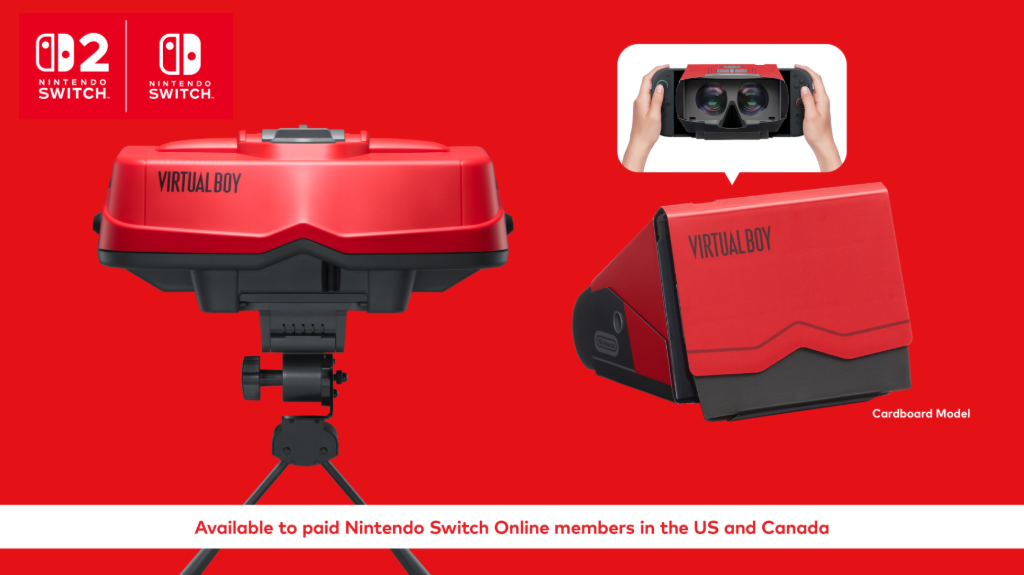
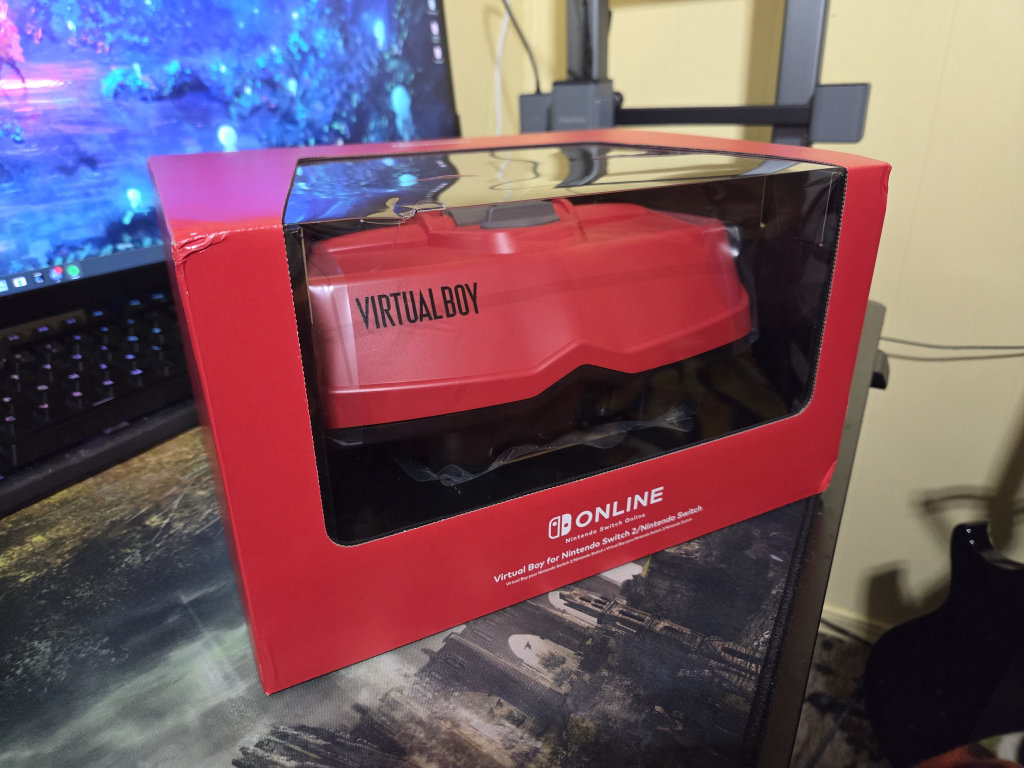
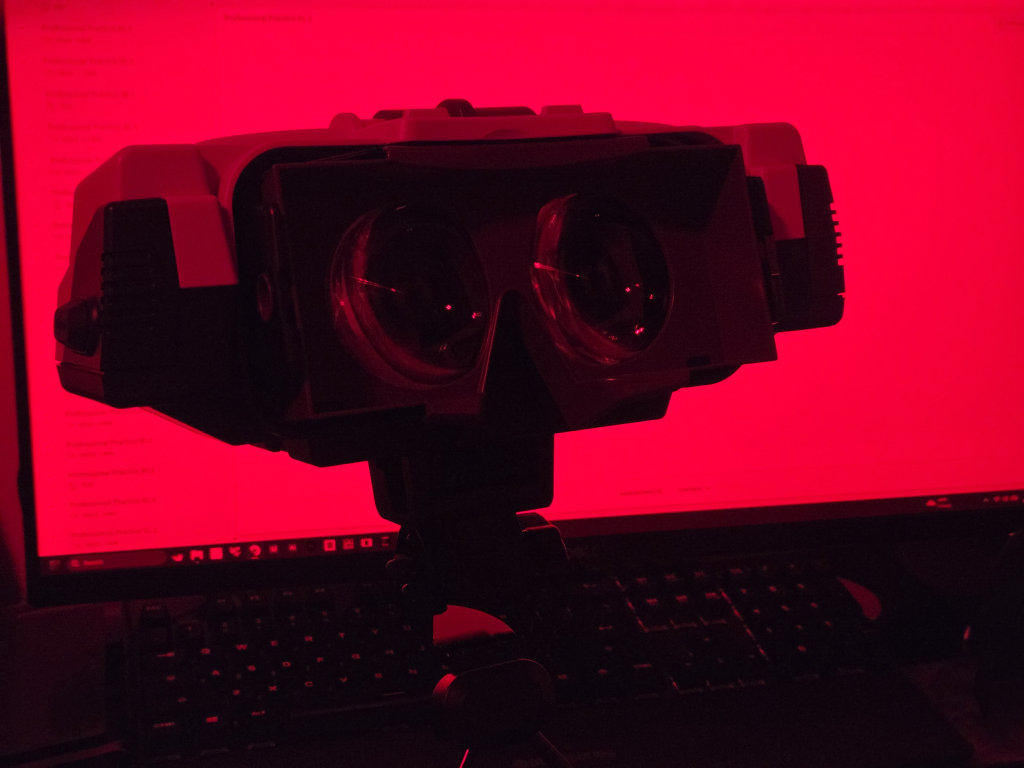
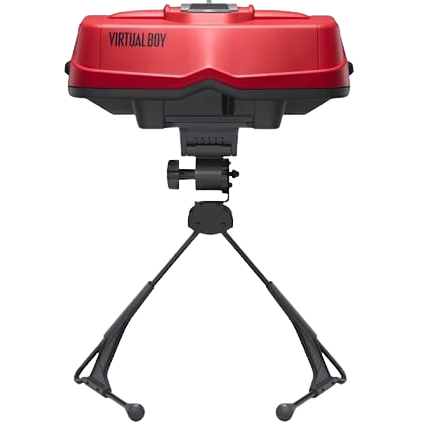
The Virtual Boy comes in two flavors of red: a realistically re-created plastic boy, and a cardboard Labo-esque boy. I bought the more expensive, realistic plastic boy (for science), and it came in neat red packaging typical of NSO products. Similar to the recently released GameCube controller, the headset is a near 1:1 replica of the original Virtual Boy, just minus the use of any usable hardware or IO other than goggles.
While I don’t have an original VB to compare with, I’m sure the plastic feels slightly different since this isn’t exactly a flagship device anymore, and changes in manufacturing over time. The portion of the headset where your face goes has a felt padding that may or may not irritate your skin… I was fine, but keep that in mind.
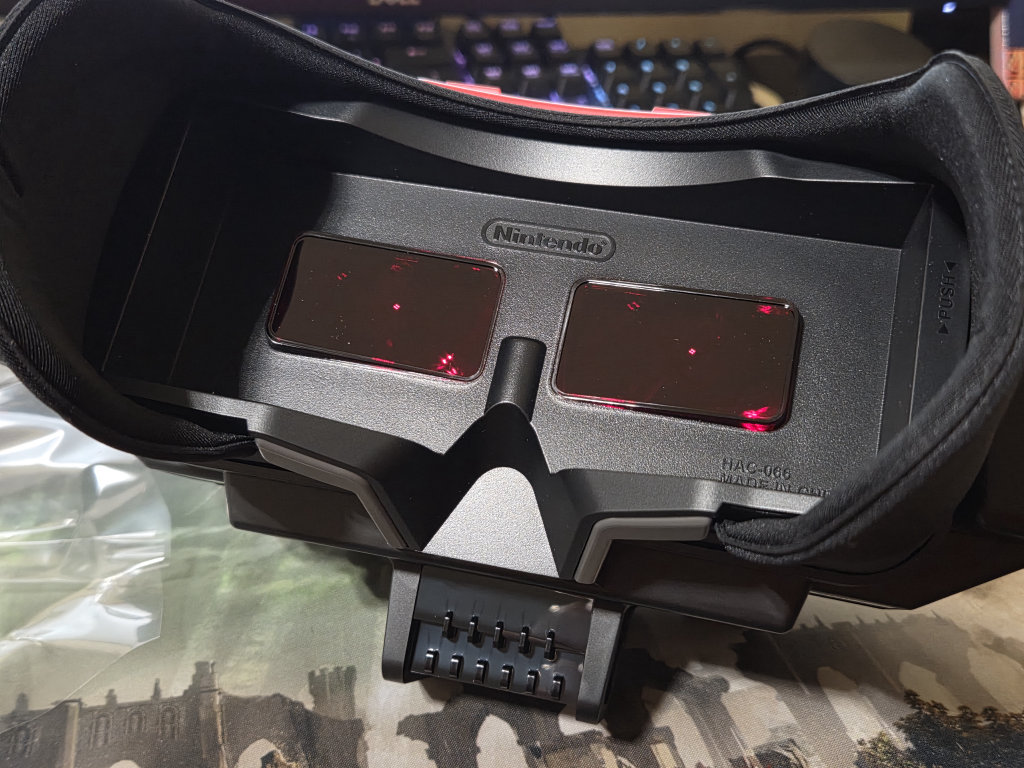
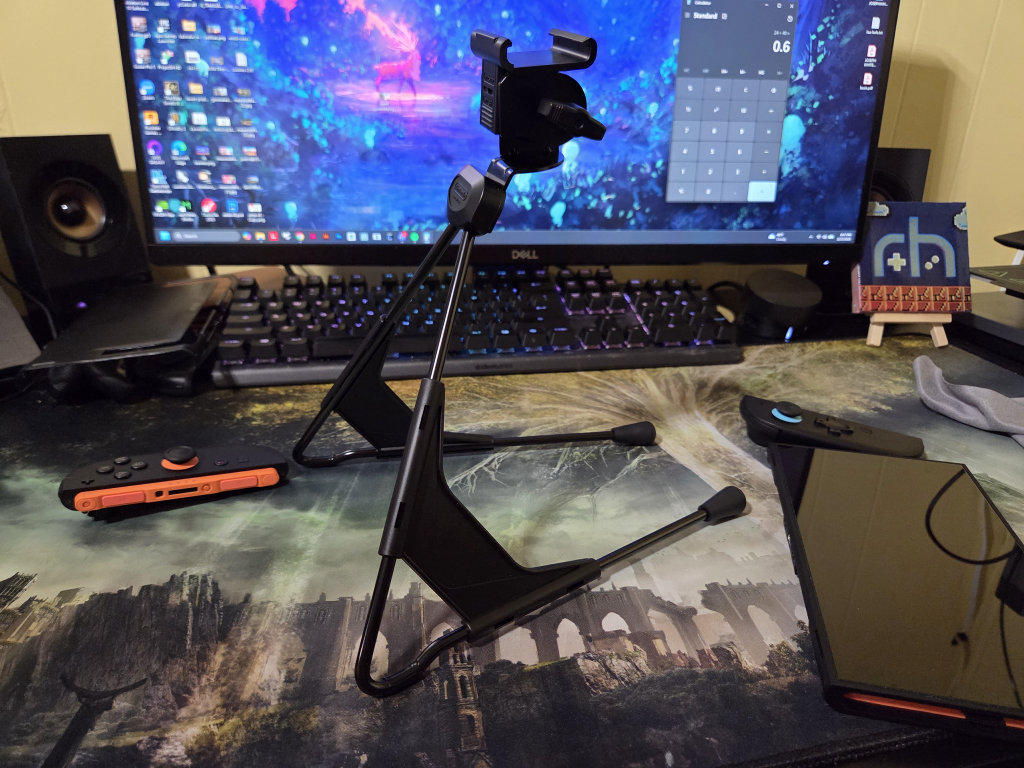
The headset is easy to assemble, and you can have it set up on your desk within 3 minutes. The fake IO is a nice touch, but it would be nice if SOME of them functioned like the focus adjuster on the goggles. There is no power or actual connections to the headset other than seating your Switch.
Strapping In With Virtual Boy!
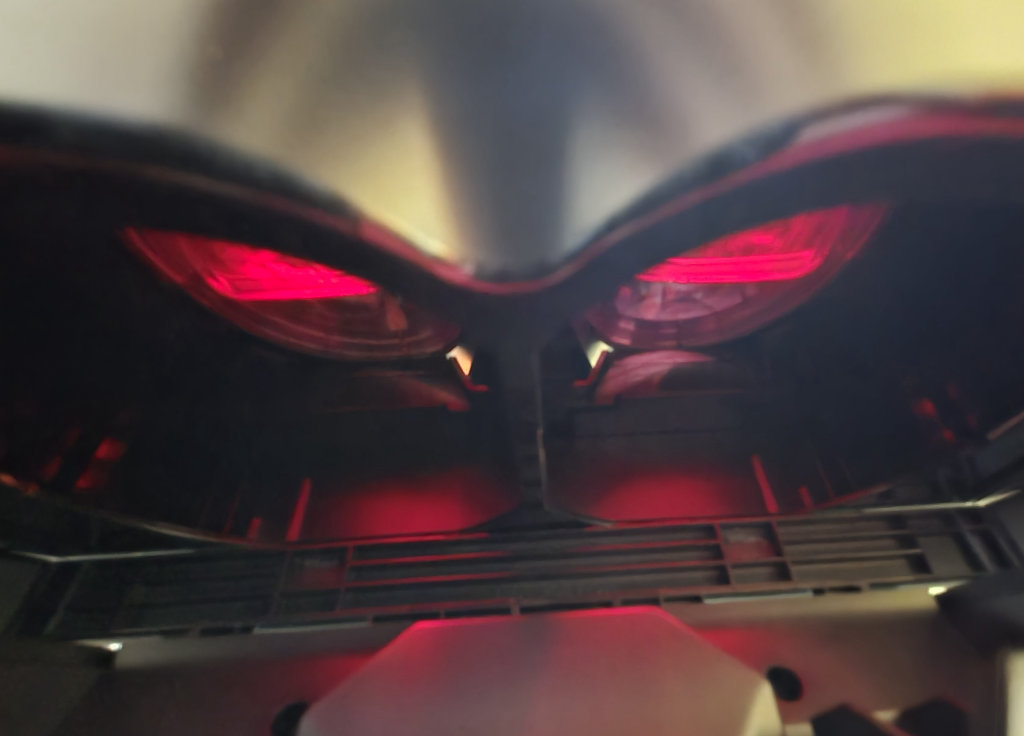
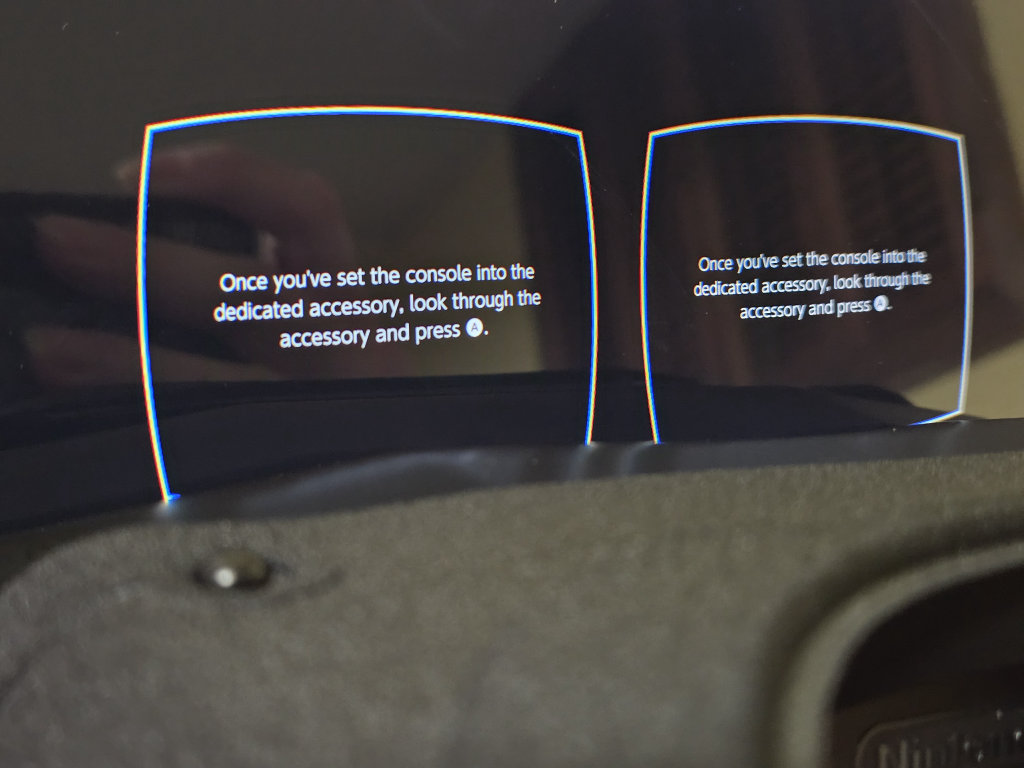
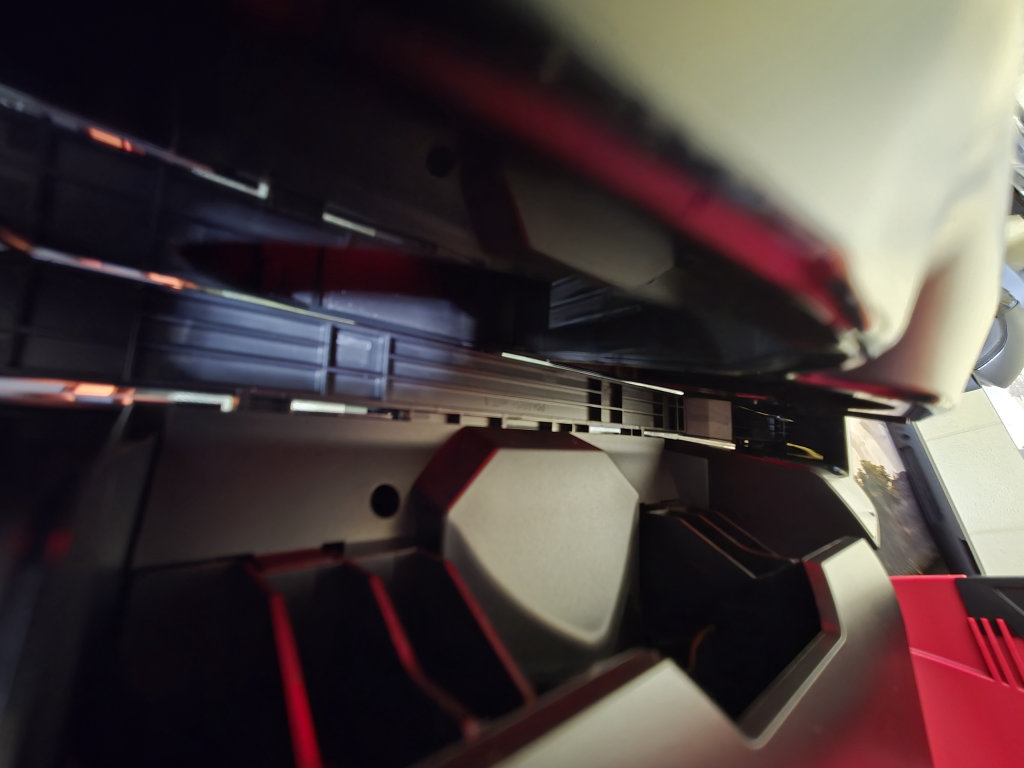
After taking 3 exhilarating minutes to set up the not-console, console, let’s actually use this thing. The headset is preconfigured for use with the Switch 2, but the kit also includes an attachment for the Switch 1 that requires a screwdriver. We are all adults, right? You DO own a screwdriver… right? Anyways, on your Switch, you will navigate to the Virtual Boy NSO app and boot into it.
At this point, you’ll be prompted to seat your Switch 1 or 2 by lifting the headpiece up and slotting in your console. The inside is made out of the same clear plastic as the dock, so be wary of that. Keep your glasses on! And with Joy-Con in hand, you are ready to roll. You’ll be met with a familiar NSO menu and some games to try out!
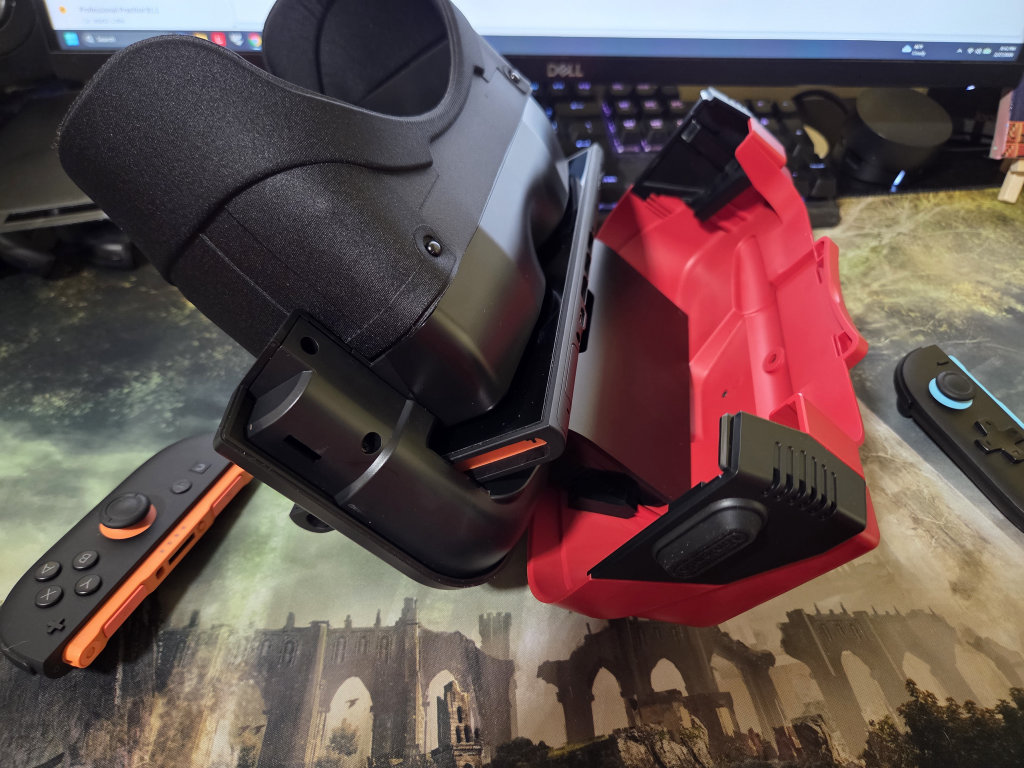
And yes, I paid the Nintendo piper for the NSO Expansion Pack for access to Japan’s greatest gift to gaming since the Sega Saturn: Virtual Boy games. I hope you like monochrome red, because all the games are red. Coupled with the Switch OLED’s 130% RGB panel and the Switch 2’s generally oversaturated screen, these games are VERY red. In fact, the headpiece has a removable red filter that overlays the screen and makes it even redder. Virtual games are already red, so the use of a red filter is very weird.
Gaming On The Virtual Boy!
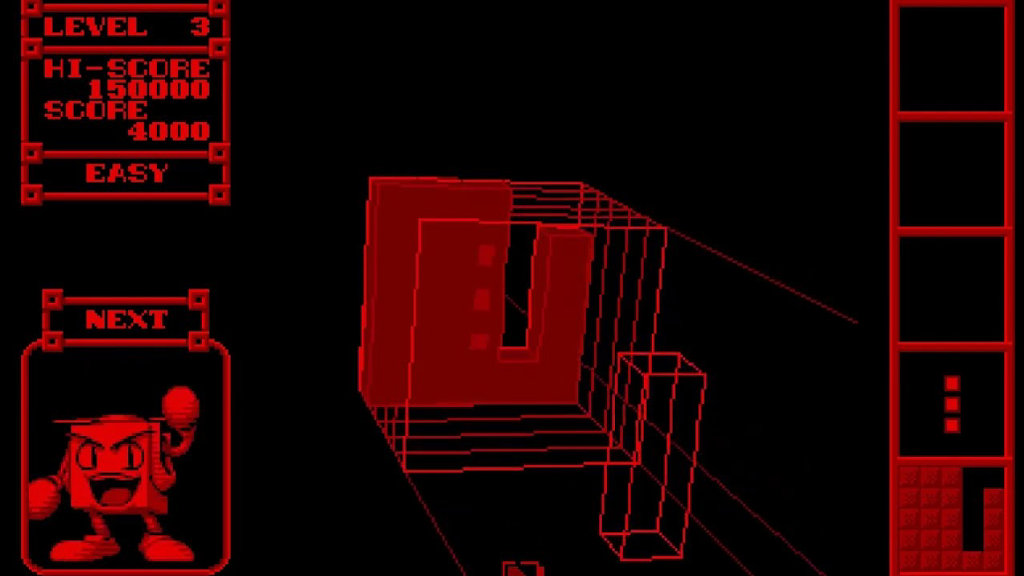
Virtual Boy games work by rendering the game twice, but at slightly different angles for each eye to give the impression of 3D depth. The 3DS works in a similar way, but uses a true parallax barrier to blast a second set of vertical rows of pixels to each eye (Hence needing goggles for the Virtual Boy). If you want an article explaining how that works, let us know!
The games are designed to be smaller in scope and follow a similar design ideology between the NES and the Game Boy DMG for short bursts of play at minimal visual fidelity to save the console’s energy as well as yours. Simple stuff. Fun fact: if you cross your eyes together at the right angle, you can actually see the 3D effect in action without the VB headset, but it’s difficult and requires Tylenol.
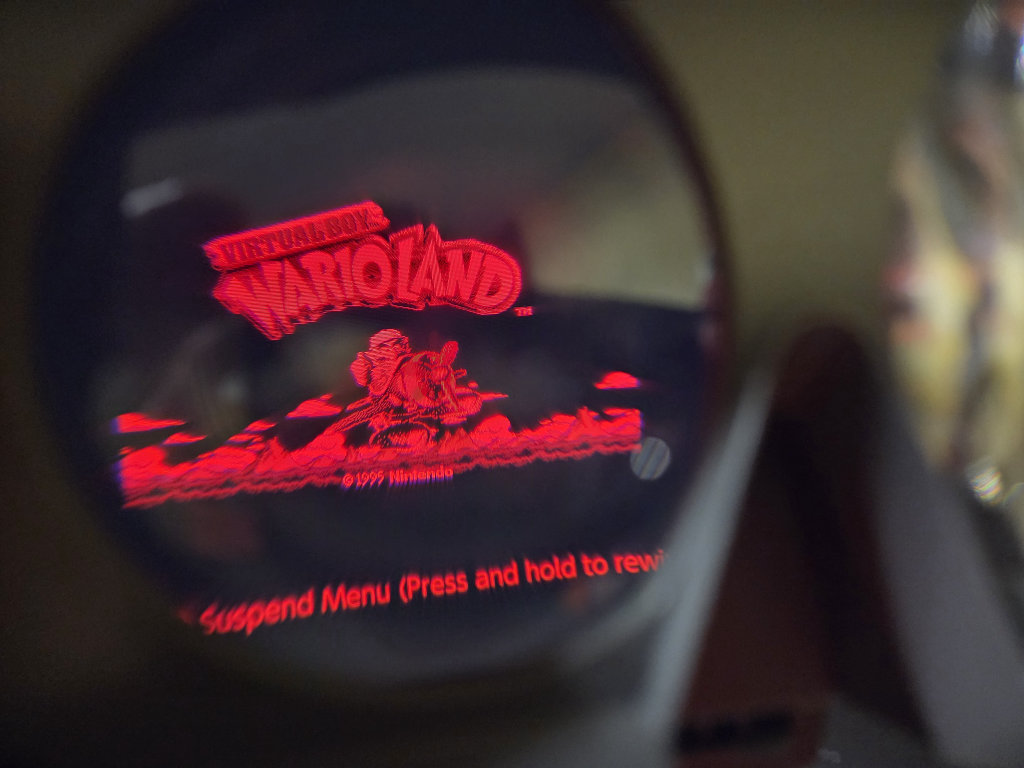
The games themselves are simple in scope and admittedly not that fun when you have to navigate the pains of having a headset on and actively fighting with the clarity of the visuals. The best currently released game for NSO is definitely Wario Land, which is a platformer with all the Super Mario flair, while the worst has to be 3D Tetris, which, to me, was nearly unplayable given how blurry and jarring the presentation is.
In the app, there are options to adjust view range and eye placement, but overall focus is kept at one value (which makes sense because there aren’t any adjustable lenses). Playing games like this on the desk is a fun experience, maybe once or twice, but I can’t see myself putting real time into Galactic Pinball. I knew this going into it, and paid $100 anyways. In fact, I called Nintendo support and spent 40 minutes on the phone because the site wouldn’t let me complete the order.
Virtual Boy games aside, here’s the actual best use case for the Virtual Boy:
You Can Play Breath of the Wild In It’s Entirety
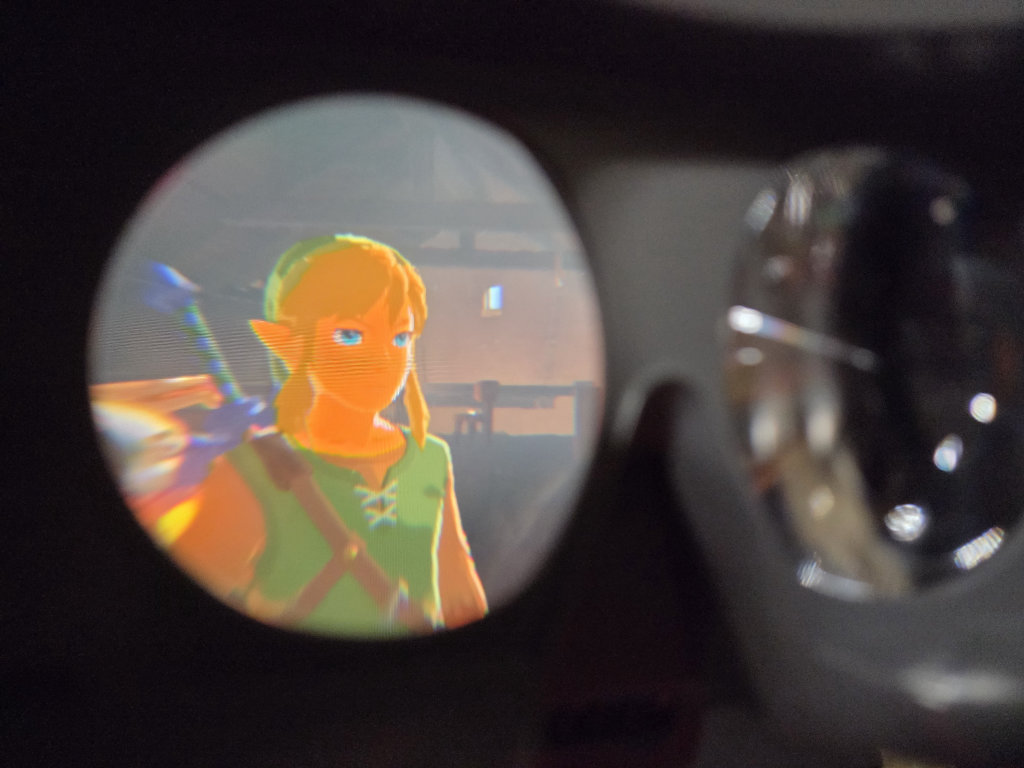
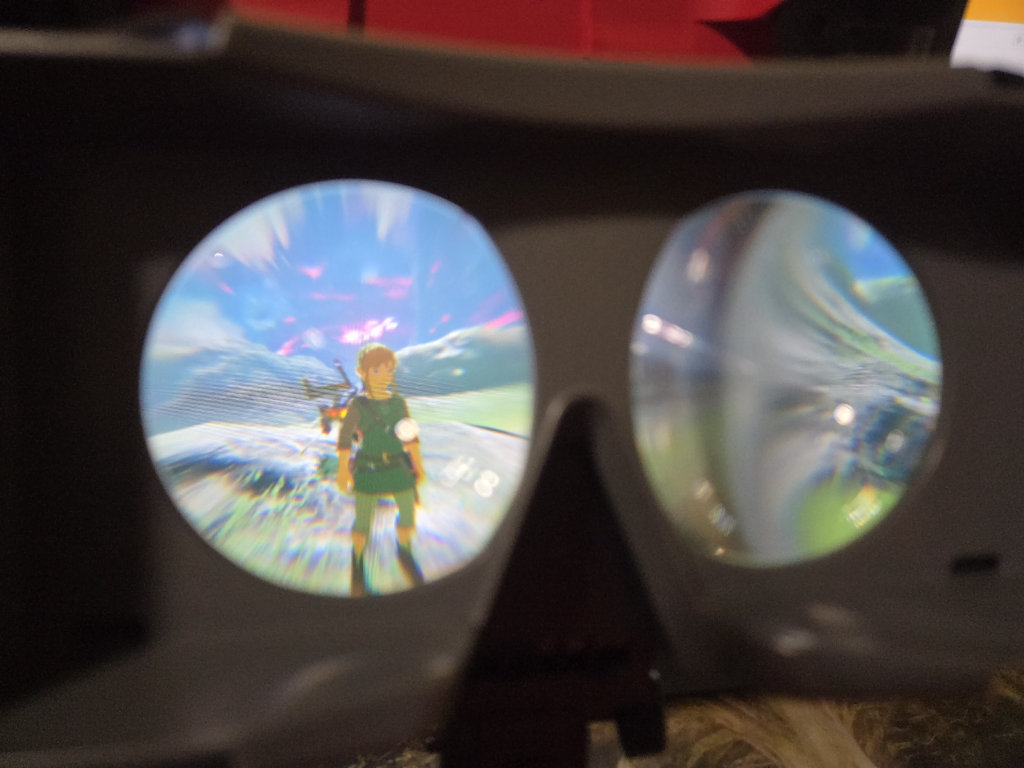
Yep. The forgotten Labo VR integration for The Legend of Zelda: Breath of the Wild works completely as intended through the Virtual Boy headset. And yes, VR mode on Switch 2 has an improved resolution and 60fps. So this mode is literally the entire game, but in VR. Menus are buggy and clipped, but readable. The resolution, though, even on the Switch 2, is still very low, and if you have an eagle eye, you can literally see the RGB pixel grid. It truly feels like you are staring 1″ away from a screen, eye bleed and all.
If you found Virtual Boy games to be fun for 5 minutes at a time, Breath of the Wild should take that to a whopping 10 minutes, maybe even 15 minutes if you go for a Ganon fight. The whole package here is cool and fun, but more of a Nintendo-branded novelty. Super Mario Odyssey is in a similar boat, except the VR mode amounts to just minigames
NSO Virtual Boy: The Final Verdict
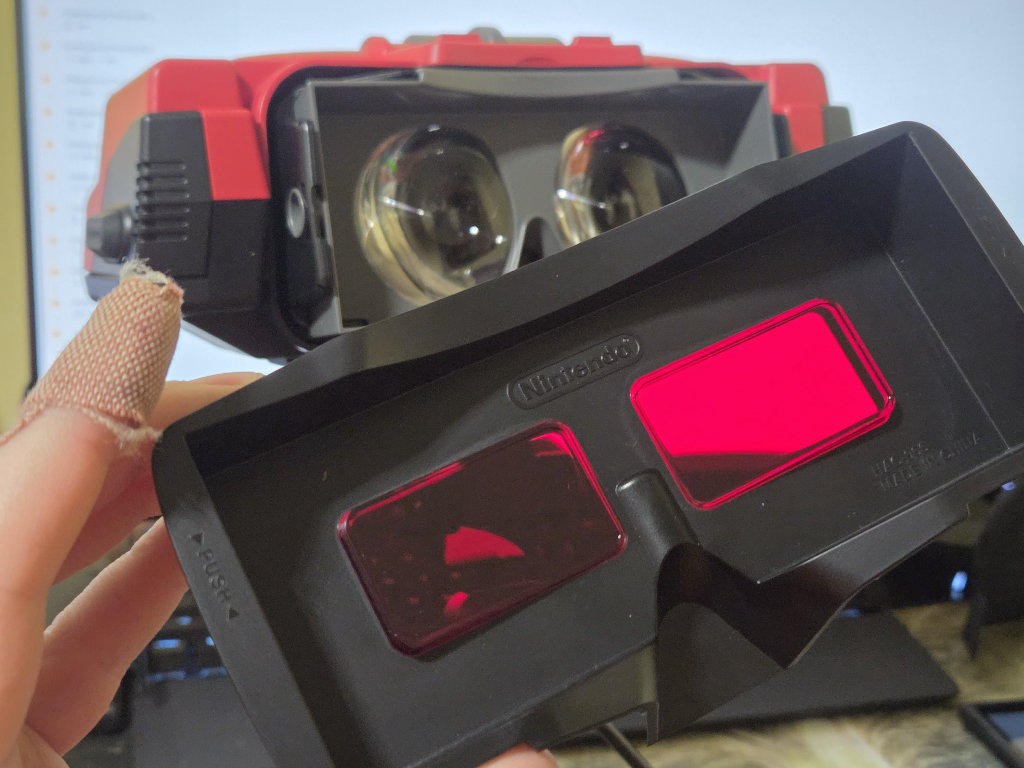
The NSO Virtual Boy comes in two flavors: a well $100 re-created headset that houses your Switch 1/2 tablet or $25 of cardboard. Now, why should you buy the $100 headset over the $25 cardboard one? A better question is: Why are you spending money on this to begin with? What’s even worse is if the Virtual Boy was the last straw to make you take the plunge on a Switch 2, and you wanted the ultimate Virtual Boy experience.
In that case, you are looking at $450 for the console and $100 for the headset. Oh, but wait, you need Nintendo Switch Online to have access to Virtual Boy games, so add $50 for 1 year. So that is 450 + 100 + 35(average sales tax) + 50 = $630 to play Virtual Boy on a modern console for 1 year. I have to say, Nintendo, that value proposition is nearly irresistible. Thanks, Shiggy.
If you are a sane person, there are multiple alternatives to achieve the same effect if you are morbidly curious about the VR experience on the Switch, like third-party headsets or just pinching for the $25 cardboard version. Alternatively, if you want a pretty decent Virtual Boy experience in 3D, the 3DS has homebrew support that takes advantage of the glasses-free 3D. If you want to feel the effects of VR motion sickness for free, take your fist and slowly bring it towards your face (almost to your nose) and then away from it with your eyes fixed on it. You’re welcome.
Jokes and roasts aside, this is a nice piece of hardware that successfully emulates the Virtual Boy experience while using hardware you most likely already own. The cost is definitely more appealing to collectors or enthusiasts, so you’ve most likely already decided if you were picking one up. But if you ARE on the fence: figure it out. I’ll probably end up selling mine, so maybe look at the Discord if you might want one for slightly cheaper.

2 Comments
Why the heck do you need to buy an external device to wear over your head to play Virtual Boy games?
Don’t get me wrong, I’m glad that you can experience Virtual Boy games as they were originally meant to be experienced. But it should be an option! Why can’t you just display one Virtual Boy screen on your Switch, like every single VB emulator in existence?
Either Nintendo has no idea how to code, or completely overvalued the novelty of their biggest console failure (again), or just wanted to make a quick buck from overzealous Nintendo fans. Whatever the case, there’s no reasonable excuse for that to not be an option.
I mean come on! Surely we should be allowed to play Virtual Boy games officially without getting a splitting headache!
Thanks for the review. I bought it and yes it’s under whelming for 100 bucks. I didn’t know about the Zelda and Mario Odyssey options or even that the red filter comes out! Thanks again!