

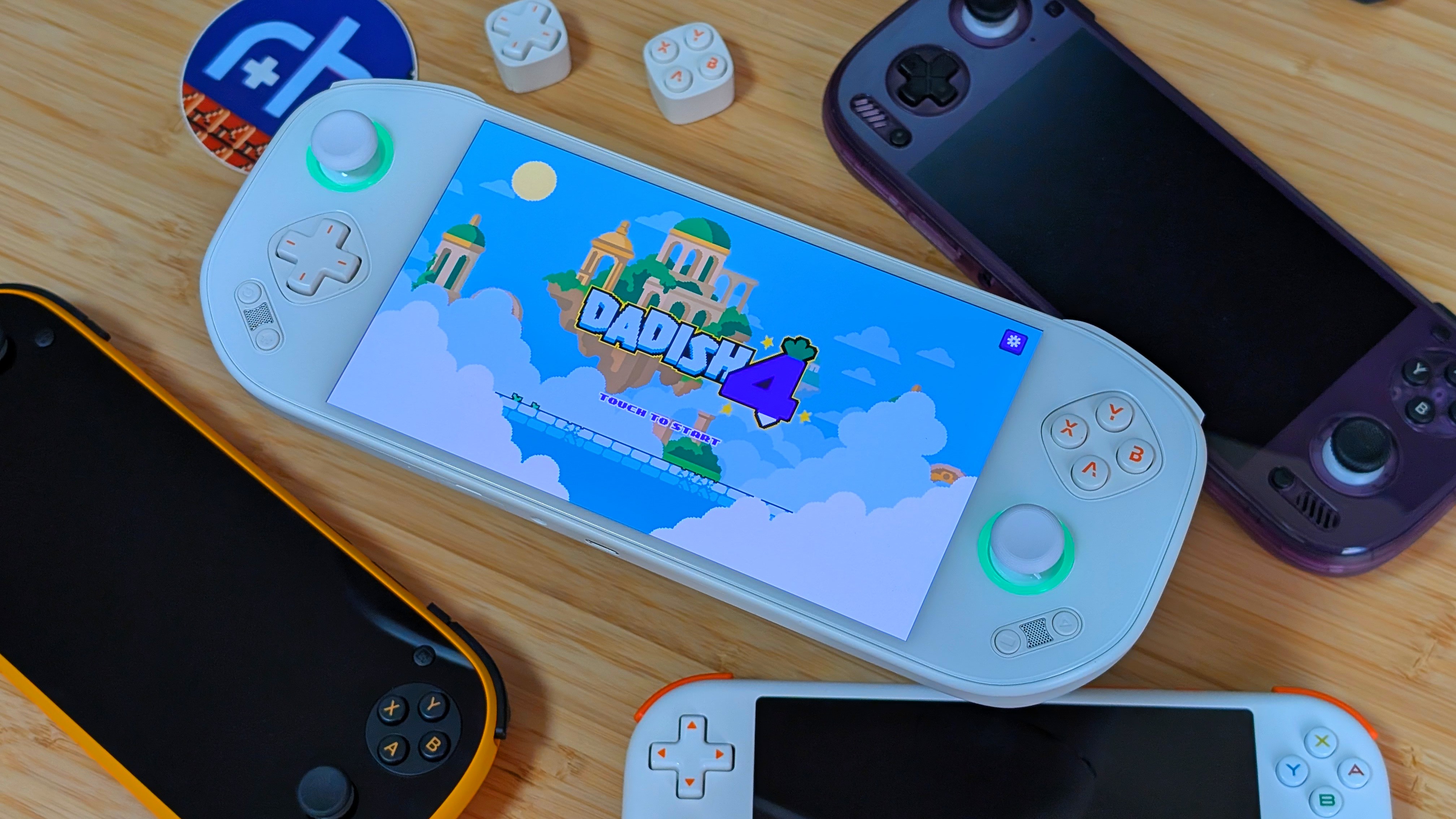
The Ayn Portal doesn’t make this one easy. The Mangmi Pocket Max is following up on the release of Mangmi’s very first handheld, the Pocket Air. However, rather than focus on low-end Android in “smaller” and cheaper devices, they’ve gone big.
With a large 7” display and enough ergonomics in the back to make Rob the Retro Tech Dad blush, the Pocket Max offers a lot for its (current) $220 price point. But with a Snapdragon 865 at its heart, and the AYN Odin 2 Portal knocking on the door from $30 up, should you even consider it?
Mangmi Pocket Max Specs
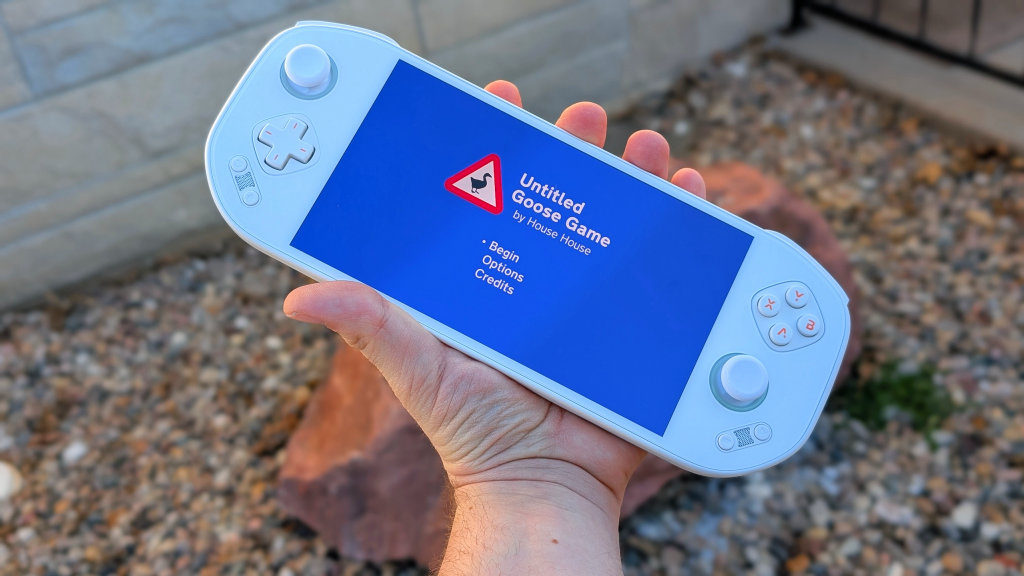
For the $220 price point, you’re getting a decent amount in the box and on hand, but with a potential $240 maximum price, it’s important to ask. “How much is too much?”
| Display | |
| Screen Size | 7-inch |
|---|---|
| Resolution | 1920 x 1080 |
| Refresh Rate | 144Hz |
| Aspect Ratio | 16:9 |
| PPI | 314.70 |
| Hardware | |
| CPU | Qualcomm Snapdragon 865 |
| GPU | Adreno 650 |
| RAM | 8GB LPDDR4X |
| Storage | |
| Internal | 128GB UFS 3.1 |
| External | microSD |
| Battery | |
| Size | 8000mAH |
| Charging Rate | 27W |
| Connectivity | |
| Wi-Fi | Wi-Fi 6 |
| Bluetooth | Bluetooth 5.1 |
| Ports | USB 3.1 Type-C | microSD | 3.5mm Audio Jack |
| Controls | |
| Sticks | 2x TMR |
| Triggers | Hall Effect |
| Shoulder Button Layout | Stacked |
| D-pad Location | Bottom Left |
| Physical | |
| Dimensions | 255 x 101 x 18mm |
| Weight | 448g |
| Colors | White | Black | Retro GB |
| Software | |
| Operating System | Android 13 |
| Extra Features | |
| Extras | 6-axis G-SENSOR | Magnetic Module |
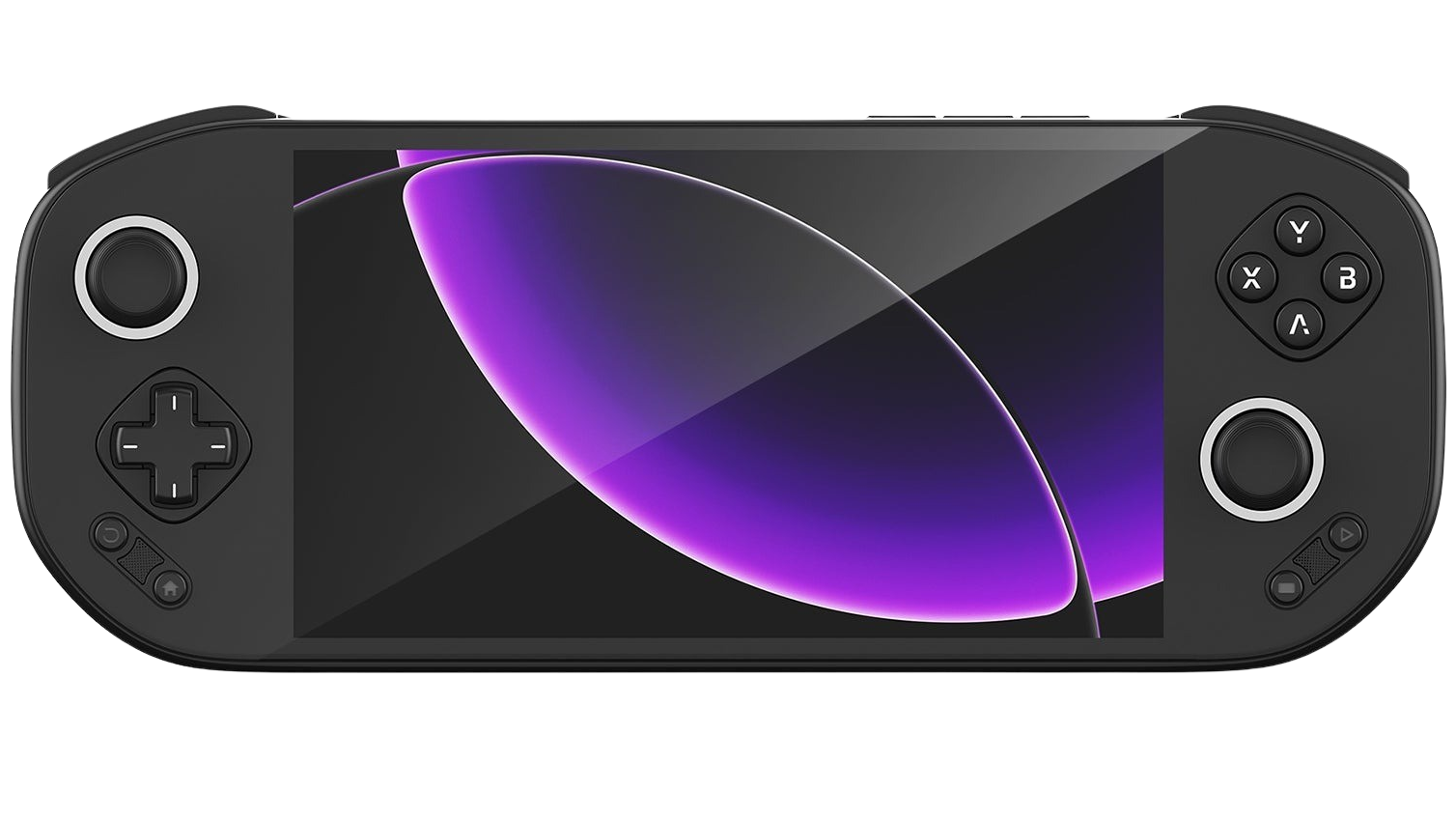
MANGMI Pocket Max
Build and Ergonomics
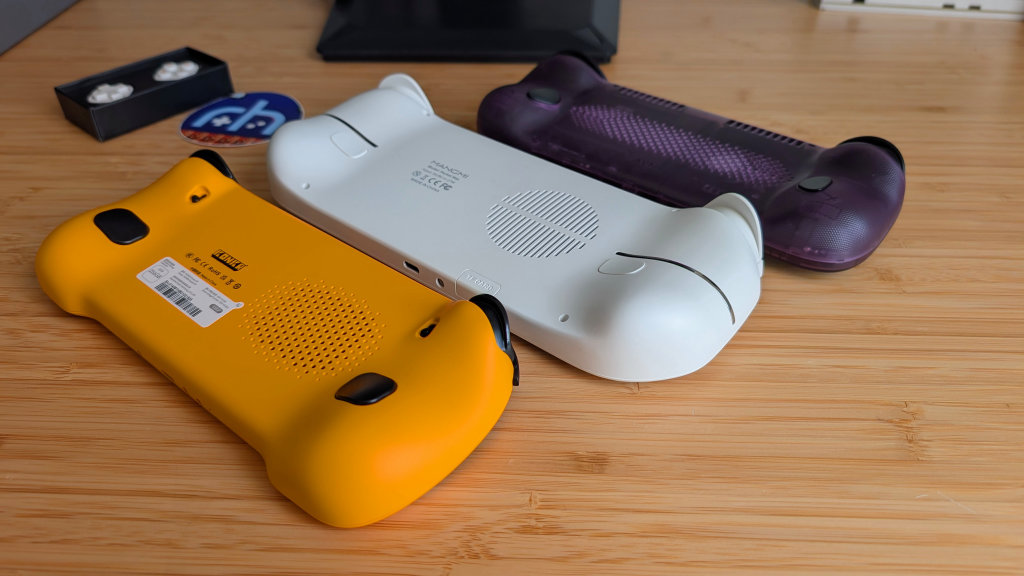
When it comes to quality, I think Mangmi has done pretty well for the price point once again. They’re using a similar plastic to the Pocket Air, which isn’t the most premium, but is still usable and acceptable at the higher price point. They do attempt to upscale things by adding an admittedly dumb glass front panel, but aside from adding weight and an easier point of failure, it doesn’t do much for me.
As for ergonomics? Wow, they’re good. Beefier grips than a Portal, with nice inset controls, means it’s going to be super comfortable if your hands are the right size. With the larger handhelds, I’d put the ergonomics of the Mangmi Portal Max above the AYN Odin 2 Portal, the Abxylute One Pro, and the Konkr Pocket Fit. Maybe on par with something like the G Cloud.
Controls
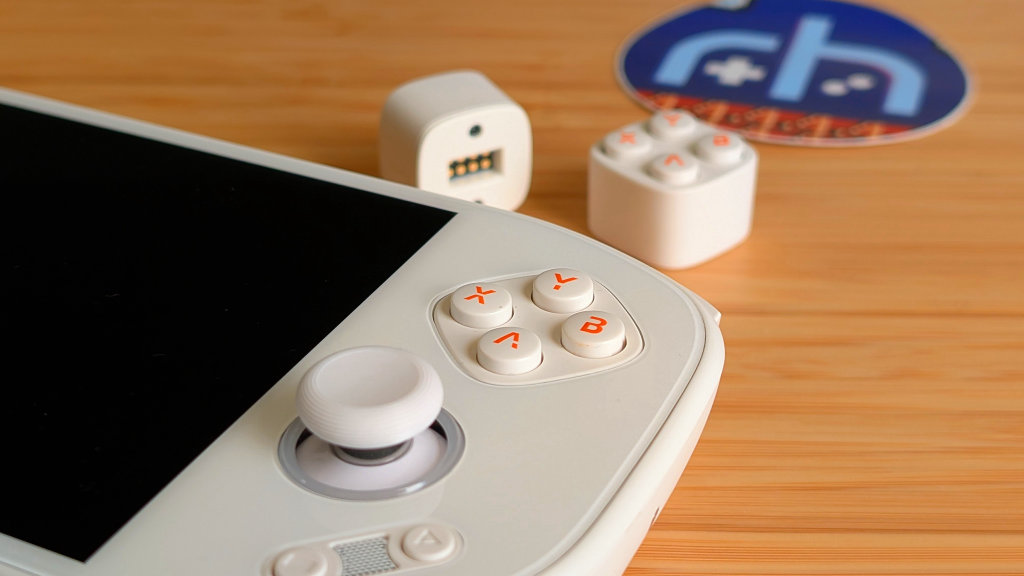
Controls are 95% good, 90% questionable, but before even talking about quality, I want to mention the $15 add-on: swappable controls. Just like the $1,000+ Ayaneo 3, the Mangmi Pocket Max features a swappable d-pad and face buttons. If you’re not a fan of membrane options, Mangmi offers the option to switch to a microswitch setup if that’s your preference. In the end, the clicky face buttons felt pretty bad to me, but I definitely preferred the clicky dpad and put that into the Pocket Max instead.
As for the rest of the controls, your sticks are going to be full-sized TMR sticks, which have a solid range of motion, but still feel like they’ll need a stick protector. Something I haven’t used since Ayn Loki. The Triggers on the back have a full range of motion, but feel a bit awkward at times if your fingers slip towards more pointed tips.
The two negative parts in my eyes are the back buttons, which are a bit hard to press and are loud. As well as the L1/R1 buttons. While not inherently awful, they are a bit narrow and, on my unit, feel hollow and empty when you press them. Overall, though, these are really good controls for a handheld at this price.
Screen
The absolute top-tier portion of this handheld is the screen. A 7”, 144hz AMOLED panel means you’re getting some of the best quality you can in an Android handheld. We’ve seen super similar screens to this a few times, including both the Ayn Portal and Ayaneo Pocket Evo, and it wouldn’t shock me if they were all identical still. If you’re looking to game stream with full-sized controls, without spending a few hundred dollars, you can’t go wrong with this screen. And of course, it’ll look better than something like the Logitech G Cloud or Abxylute One Pro with their IPS panels.
Software
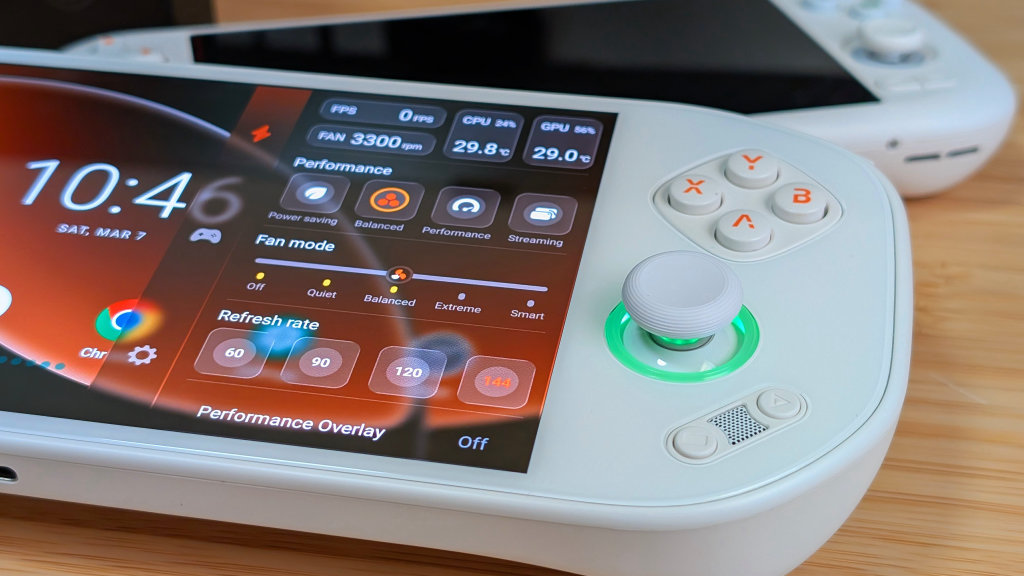
When it comes to software, I think things are pretty bare bones for the most part. Mangmi’s launcher allows you to set performance profiles, fan speeds, and your screen’s refresh rate all in one place. Handheld settings also allow you to set things for screen time off, and a personal favorite of mine, automatic shutdown.
I’ve accidentally left some Android handhelds in sleep mode for longer than I’d like to admit, and I’ve gotten confused at random Android notifications coming from my bookshelf. This will help with that issue, as you can set it for as low as 2 days.
Performance
Synthetics
When it comes to performance, there are only a couple of handhelds that you need to compare to the Mangmi Pocket Max. The 865 in the Retroid Pocket Flip 2, which can be had for cheaper, the G2 Gen 2 in the Retroid Pocket G2 for a similar price, and the 8 Gen 2 in the slightly more expensive Portal or RP6, though I’m using my Odin 2 Pro.
In Geekbench, the Pocket Max matches the Flip 2 pretty well, while falling decently behind that of the G2 Gen 2 and even further behind the 8 Gen 2. Enough so that paying extra for the increase in performance may be worth it alone. Touching into GPU performance, the Mangmi Pocket Max lands above the RP5 decently in OpenCL, but in Vulkan, it falls behind by about the same amount. And as expected, the G2 Gen2 nearly triples the GPU performance with the 8 Gen 2 pushing just a bit further.
Lastly, with 3DMark Wild Life stress testing, the Mangmi Pocket Max has one of the best scores I’ve gotten, with a 99.3% stability. Easily passing the 97 and 94% scores on my more powerful handhelds.
Emulation
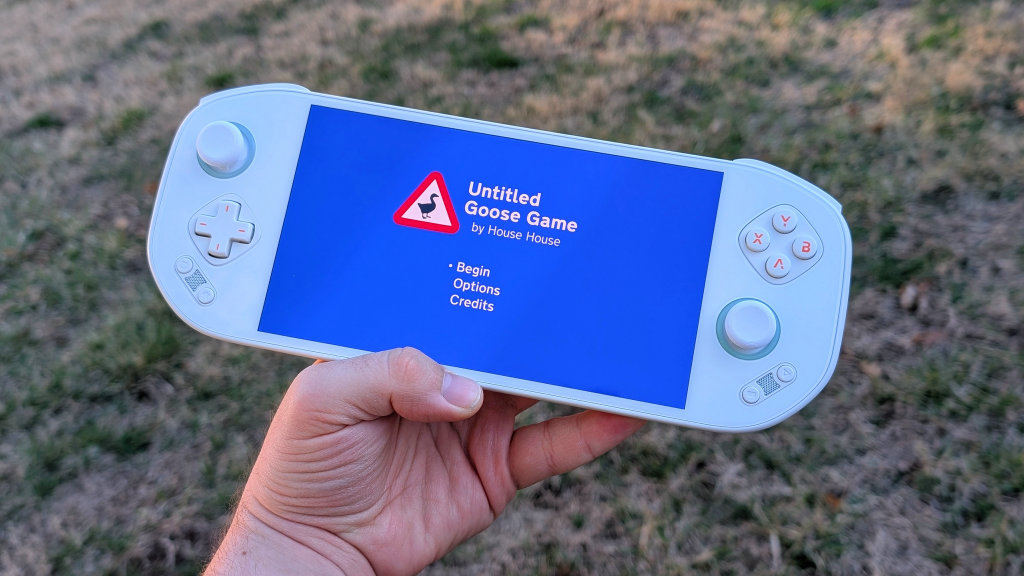
When it comes to emulation performance, you can expect a similar setup to the Retroid Pocket 5 or Flip 2. That means you’ll happily cover everything up through GameCube at native or higher resolutions. Touching into PS2, and you may need to turn things down to native more frequently, but it’ll all still be playable. 3DS, Nintendo Switch, and even x86 emulation will toe towards the lighter end of things. But thanks to the time, effort, and development given towards the Snapdragon 865, you’ll find a lot of games and drivers to be compatible with this device right away.
The one emulation touch I really will look forward to is going to be the hopeful inclusion of ROCKNIX if the team manages to get things sorted there.
Android + Streaming
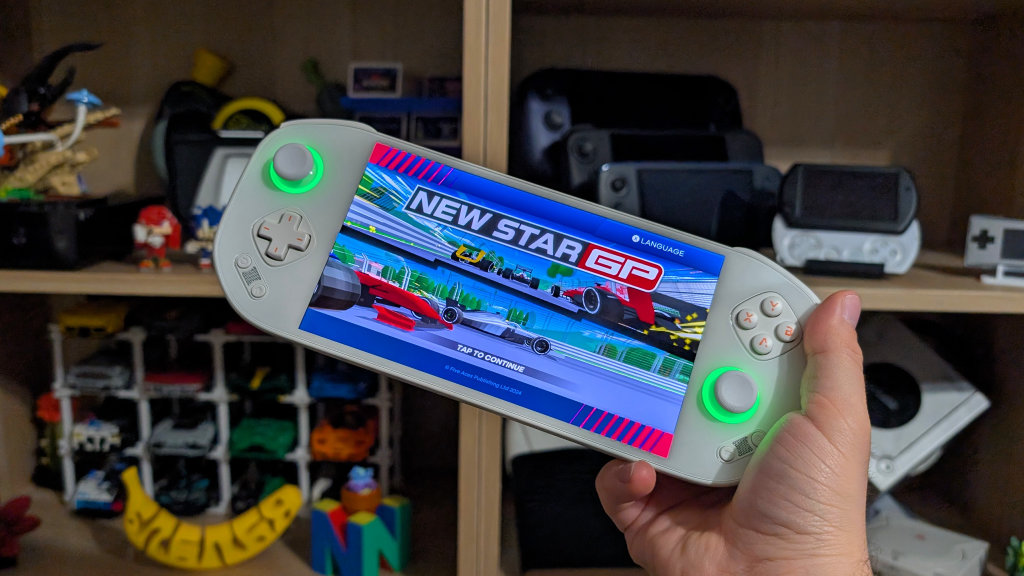
Android gaming has been my biggest use for the Pocket Max. After watching the latest Android games video from Rob, I was able to pick out some of my favorites, including New Star Grand GP, and play them on the Pocket Max. With sticks this size, racing games and a lot of 3D movement games will feel a lot better and at home on this handheld.
If native gameplay wasn’t your thing, the Pocket Max also nails it in streaming. Utilizing my Artemis/Apollo setup, I was able to stream Forza Horizon 5 directly to my Max with minimal latency. That being said, input lag is more obvious to me in racing games than anything, and occasionally, I could feel the dip.
Final Thoughts
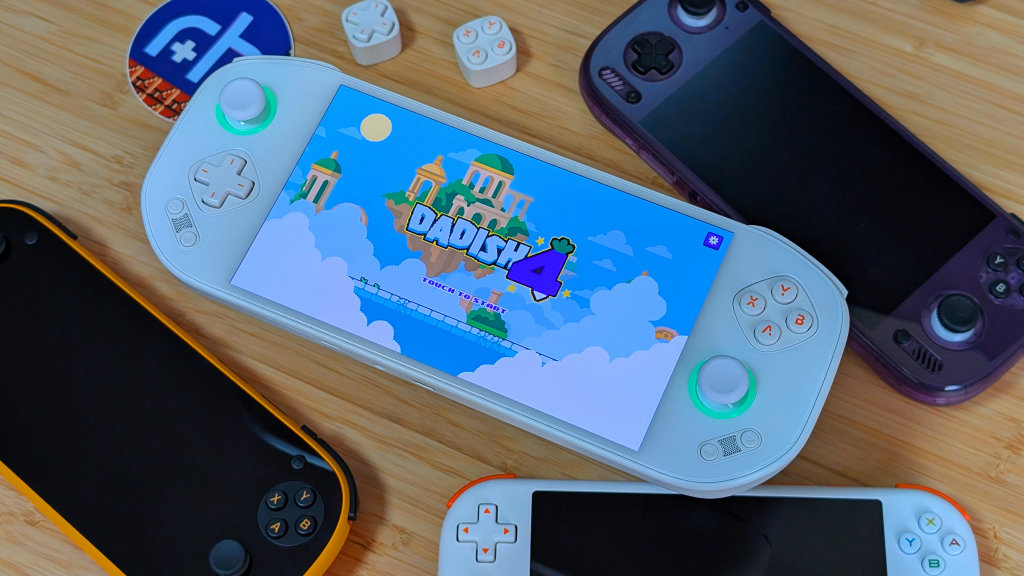
Should you buy the Mangmi Pocket Max? That depends. At $200, I think it’s a great value over the RP5 and is something I’d rather pick up. I’ve even found myself grabbing this over something like the Konkr Pocket Fit. That being said, at its $220 or “soon to be” $240 price tag, it’s a no-go. You’re landing over the smaller, but more performant G2 Gen 2, or even worse, the indefinitely on sale Odin 2 Portal. Those two handhelds offer a lot more in quality and performance over the Mangmi Pocket Max.
That being said, the Pocket Max offers better ergonomics, better sticks, and better control customization than either. And for that reason, this is going to be one handheld I don’t plan on getting rid of anytime soon. I always like having a big, comfortable option to play Android games on, and this one is it.

2 Comments
Got this at the early bird pricing of $200. For that, it’s worth every penny.
It’s not pricey, AYN is just almost undercutting it with a great deal right now.