

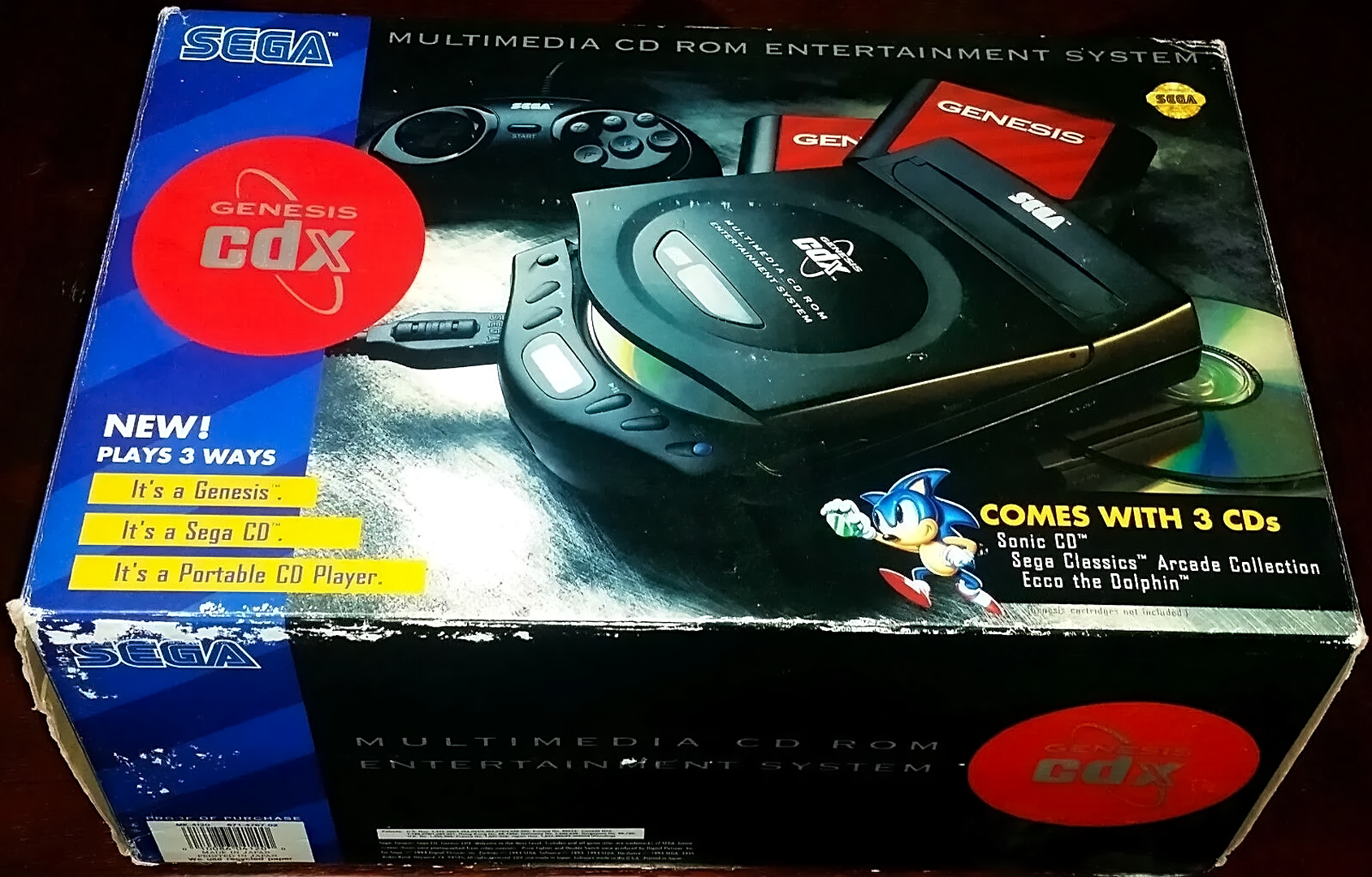
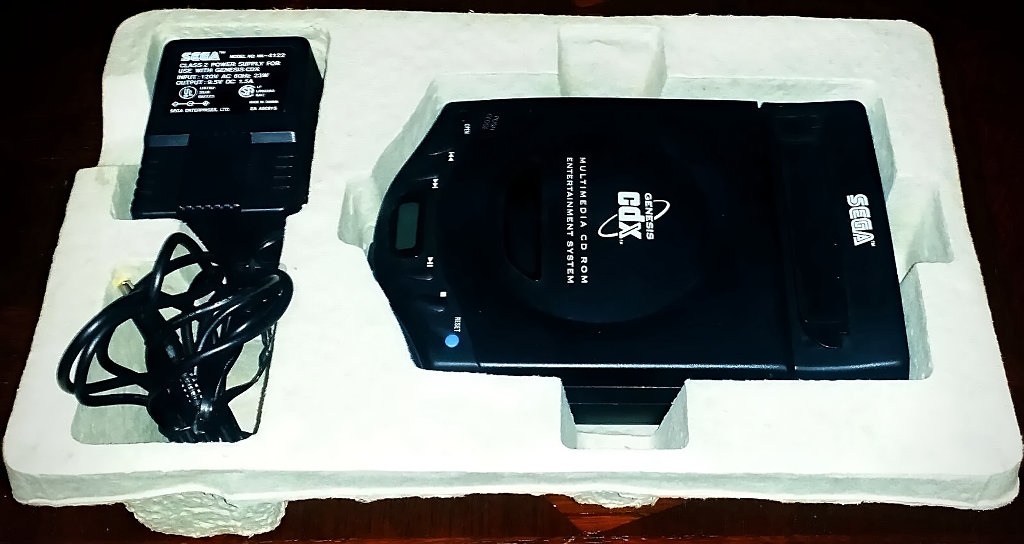
Sega released the CDX in North America in April 1994 as a last-ditch effort to generate interest in the struggling Sega CD format. Known as the Multi-Mega in Europe, Japan, and Brazil, the device combined a Genesis, Sega CD, and portable CD player into a single compact unit slightly larger than a standard Discman of the era. The sleek black design featured a top-loading CD drive, a cartridge slot on top of the unit, and an orange backlit LCD display that showed track numbers when playing audio CDs or displayed “GAME” when a cartridge or CD-ROM game was inserted.
The CDX launched with a $399 price tag, making it one of Sega’s most expensive offerings and a tough sell when consumers could buy a Genesis and Sega CD separately for less. The hardware included all the features of both systems, and could run on standard AC power for gaming or switch to two very doomed AA batteries when used exclusively as a portable CD player, though the battery life was poor, and the lack of skip protection made portable use impractical.
Packed With Compromises
The CDX’s compact design required trade-offs that made it feel less robust than the standalone systems it replaced. The build quality was solid, with a heavy feel and metal construction that suggested durability, but the internal components told a different story. Opening the unit revealed tight, cramped spaces where heat dissipation became a problem during extended gaming sessions. The CD drive mechanism, already notorious for reliability issues in the standard Sega CD units, was even more prone to failure in the CDX’s compact housing.
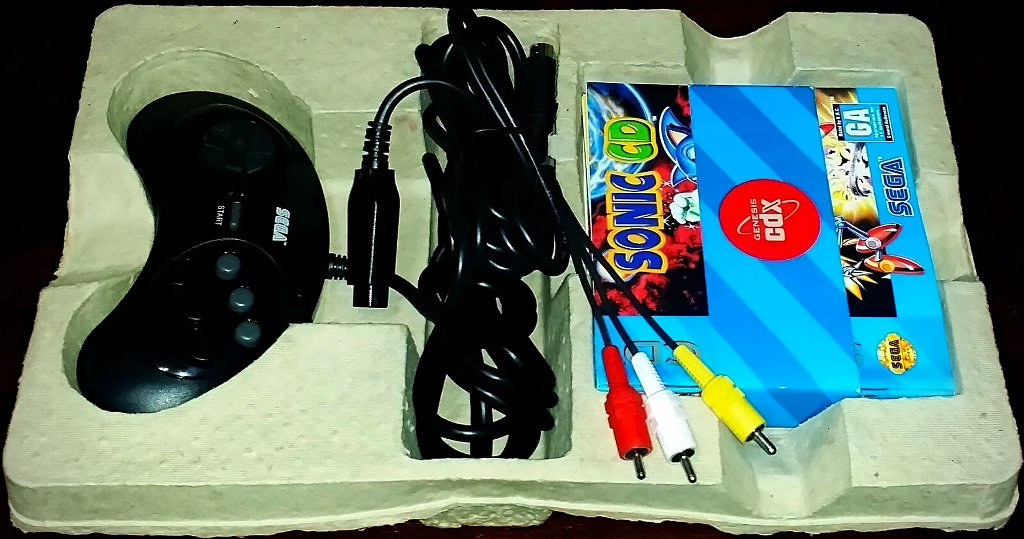
The two controller ports were positioned far apart on the front panel to accommodate the CD controls between them, and the cartridge slot on top meant Genesis games stuck up prominently when inserted, adding to the unit’s already substantial height. Interestingly, the CDX could play CD+G discs, which were primarily karaoke discs, though this feature saw minimal use outside Japan. It was fully compatible with the Power Base Converter for Master System games and even supported the 32X add-on, though Sega, masters of marketing, explicitly stated the CDX was not designed with 32X compatibility in mind.
A Library Showing Its Age
The CDX had access to the full Genesis library as well as all of the Sega CD titles released in North America. This should have been a strength, but by 1994, the Sega CD’s game library was already widely regarded as underwhelming. The add-on had never achieved the success Sega hoped for, lacking must-have exclusives and suffering from a flood of poorly-made FMV games that exploited the CD format’s storage capacity without delivering compelling gameplay.
The Sega CD added hardware functionality, including a faster CPU and sprite scaling and rotation capabilities, but most developers never fully exploited these features. The promise of CD-quality audio during gameplay and superior storage for larger, more ambitious titles never materialized into the killer apps the platform needed. By packaging the Genesis and Sega CD together in the CDX, Sega was essentially doubling down on hardware that the market had already rejected.
Timing and Market Reality
Production of the CDX ceased when the Sega 32X hit the market, with Sega going so far as to call the CDX a “novelty item” rather than a console designed for mainstream audiences. The company had moved on to the 32X and was preparing for the Saturn launch, leaving the CDX as an expensive curiosity for hardcore Sega fans.
The short production run means the CDX is now rarer and more expensive than standard Genesis and Sega CD consoles combined. Collectors prize it for its unique design and place in Sega’s hardware history, but actual usability remains questionable decades later. The CD drive mechanisms in surviving units frequently need refurbishment or replacement, and the compact design makes repairs more challenging than servicing standard Sega CD units.
A Pattern Emerges
The CDX’s failure fits into the broader narrative of Sega’s early-to-mid 1990s hardware chaos. The Sega CD launched in 1991 and struggled to gain traction. The CDX arrived in 1994, trying to revive interest in that failed add-on while simultaneously competing with the Genesis for sales. Six months later, the 32X launched, asking consumers to invest in yet another add-on for a system that was clearly being phased out. The Saturn arrived ONE DAY LATER with a $399 price tag that matched what the CDX had cost just a year earlier.
Consumers who had invested in the Sega CD, then the CDX, then potentially the 32X, watched each purchase become obsolete as Sega shifted focus to the next hardware experiment. The CDX epitomized this problem: a premium-priced consolidation of two systems that the market had already moved past, released at exactly the moment when Sega should have been building confidence in the Saturn instead of confusing consumers with more Genesis variations.
The Sega CDX remains one of gaming’s most elegantly designed failures, a compact all-in-one solution to a problem that didn’t exist. Sometimes, combining two unsuccessful products doesn’t create success; it just creates an expensive reminder of both failures in one sexy package.
Photos courtesy of Console Variations
What did you think of this article? Let us know in the comments below, and chat with us in our Discord!
This page may contain affiliate links, by purchasing something through a link, Retro Handhelds may earn a small commission on the sale at no additional cost to you.
