

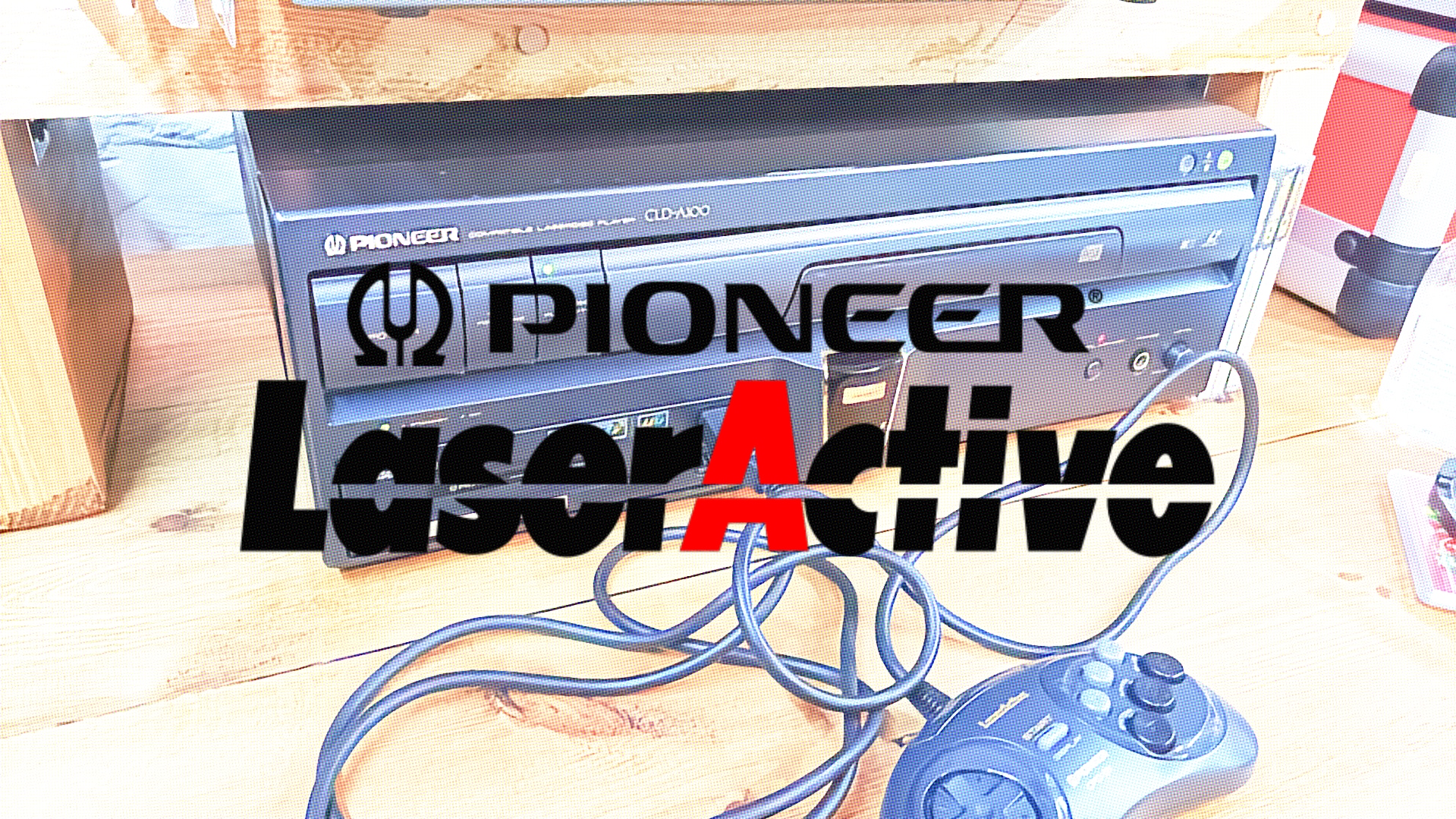
In 1993, Pioneer noticed that CD-based systems were becoming popular, and concluded that the real future of entertainment was not cartridges or CDs but LaserDiscs the size of manhole covers. That meant the LaserActive, which tried to combine premium quality home theater with gaming, and an educational computer within a top-of-the-line player, would be priced at $1000 (non-inflation-adjusted) when it was launched.
That is correct, $1000 in real human dollars in early nineties America, and that price was prior to purchasing any hardware or software capable of playing games. Speaking of hardware, they sold a “Virtual Reality” 3D headset. I wasn’t able to find much information about it, but I imagine it was awesome and great for your eyes.
The LaserActive needed add-on modules called PACs to support different systems. The Sega PAC allowed it to play Genesis and Sega CD games, and the NEC PAC let it play TurboGrafx 16 and TurboGrafx CD games. Each PAC costs another $600, meaning a fully equipped LaserActive setup could reach prices normally associated with used cars.
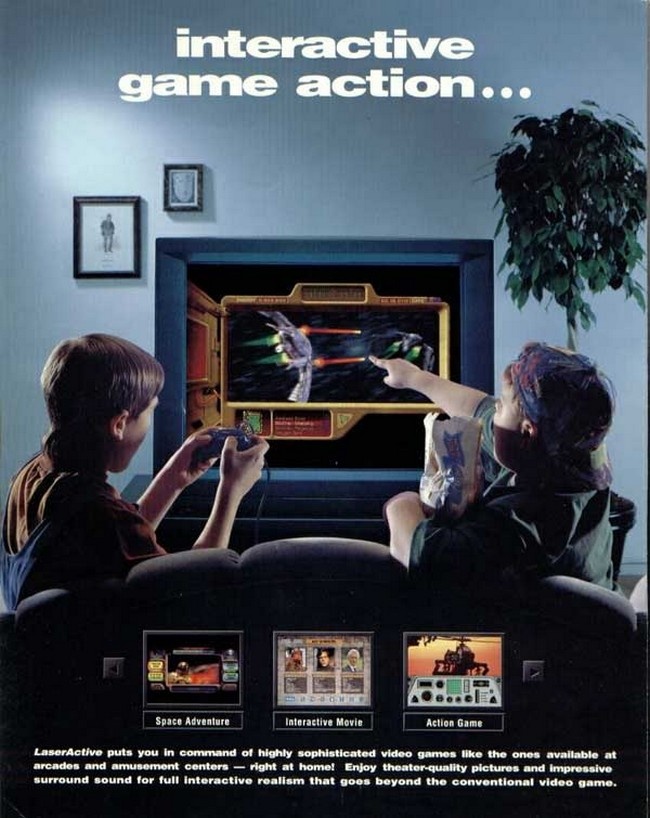
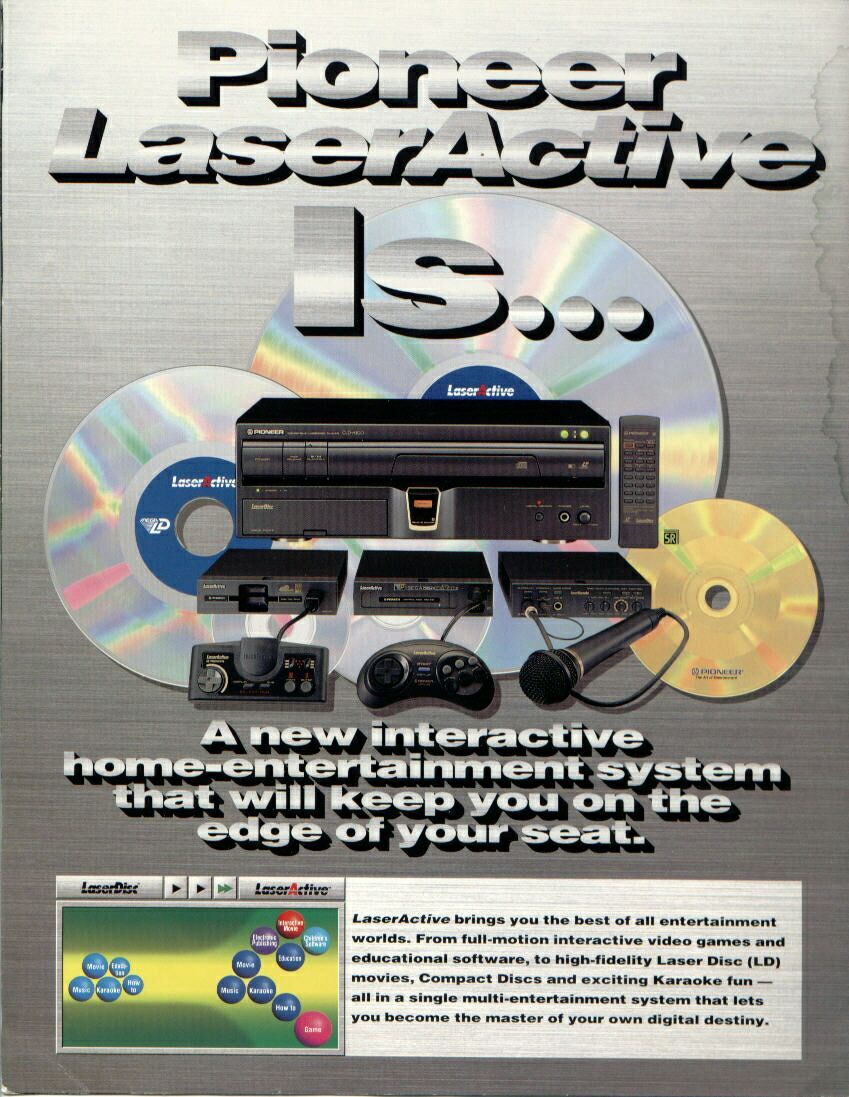
Customers who bought one generally fell into two categories: wealthy enthusiasts desperate for the most cinematic experience possible, or tech collectors who had not yet learned the warning signs of a doomed product.
The LaserActive library was mostly interactive movies. The system specialized in FMV titles like Hi-Roller Casino, Space Berserker, 3D Virtual Australia, and a series of educational discs that felt like field trips recorded through a fishbowl. Some games used camera footage mixed with sprite overlays, a technique intended to create the illusion of high fidelity, while still being limited by the technology of the day.
A few titles had real ambition. Vajra and Road Blaster looked fantastic in Laserdisc quality, and J.B. Harold delivered sharp detective storytelling. These bright spots, though, were buried under piles of slow-paced, expensive FMV experiments that made the Sega CD look restrained.
The system also inherited the entire Sega Genesis and PC Engine libraries if you owned the PACs, but that raised the question: why spend over two grand to play games you could enjoy on fifty-dollar consoles?
By 1996, the LaserActive was finished, and the market had long since moved on. CD-based systems were cheaper, and the PlayStation and Saturn were pushing real 3D graphics. LaserDiscs themselves were declining as consumers pivoted to DVDs. Pioneer stopped manufacturing the units, and their PAC add-ons became some of the rarest and most expensive accessories in gaming history.
Today, the LaserActive is legendary. It is the final boss of retro collecting, a system that requires commitment and ample shelf space. It is a monument to an era when companies thought combining every technology into one machine would create perfection.
What did you think of this article? Let us know in the comments below, and chat with us in our Discord!
This page may contain affiliate links, by purchasing something through a link, Retro Handhelds may earn a small commission on the sale at no additional cost to you.
