

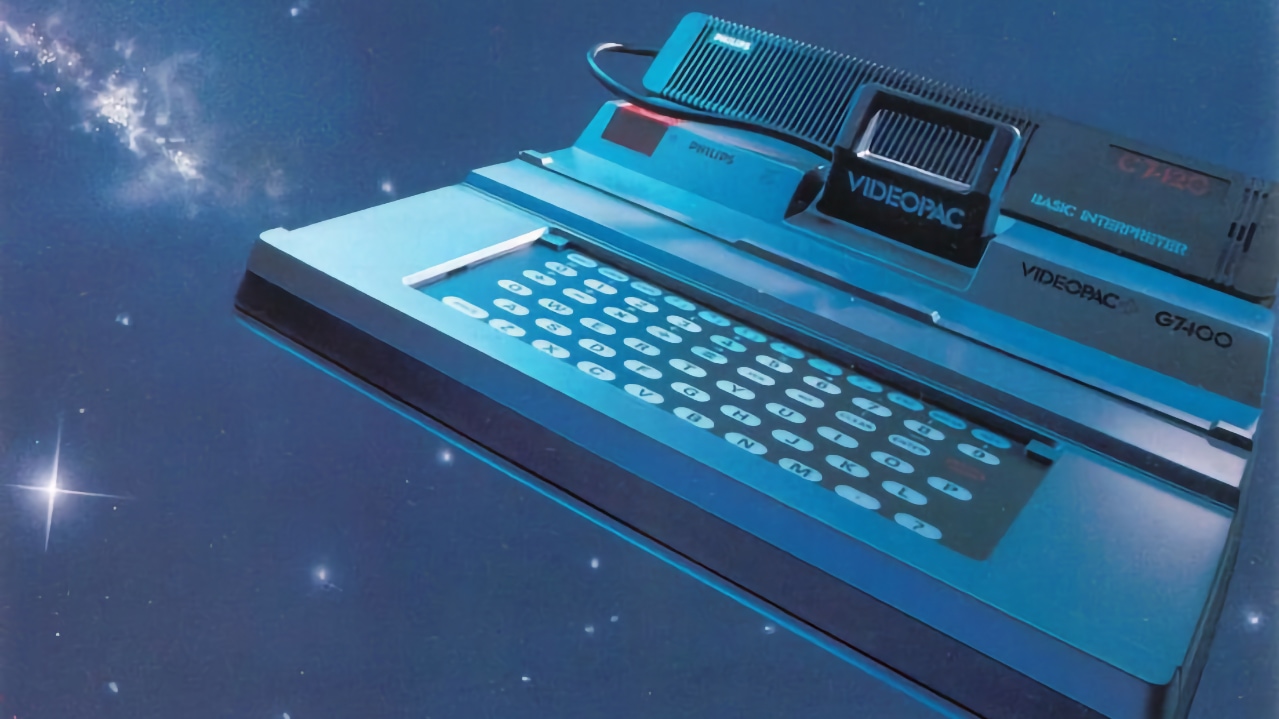
Some consoles fail because they are bad, while others fail because the competition crushes them. Then there are the rare machines that fail because the world simply moved on while the engineers were still drawing up the blueprints. The Philips Videopac G7400, also known in North America as the planned (but never released) Magnavox Odyssey³, belongs firmly in that last category.
This was the system meant to bridge the gap between the aging Odyssey² and the fast-approaching 8-bit era. It was supposed to modernize the library, add better graphics, extend the life of the platform, and hold Philips’ position in Europe. Instead, it became a quiet casualty of timing, circumstance, and a changing industry.
The G7400 was released in 1983, primarily in Europe. By then, the Odyssey² ecosystem was already in decline. Atari and Coleco were dominating the North American market, and Japan was preparing to change everything with the Famicom. The G7400 tried to keep pace by offering higher resolution, improved color, enhanced sprites, backwards compatibility, and support for “Plus” games that added new graphics overlays
This should have been enough to give the platform new life, but the console was stuck between generations. The visuals were noticeably better than the Odyssey², but still miles behind the ColecoVision and the upcoming NES. The upgraded “Plus” titles often amounted to older games with new background art. The hardware was competent, but the leap was too small and too late.
The Odyssey³ was meant to be the North American equivalent, with a redesigned case, sleeker styling, and a marketing push planned for late 1983. Then the video game crash detonated across the industry. Retailers slashed orders and warehouse shelves filled with unsold inventory, and Magnavox, already unsure about the platform’s viability, canceled the Odyssey³ before it reached stores.
Prototypes exist, brochures exist, but the system itself was never officially launched. It became a ghost, remembered mostly by historians and collectors.
The G7400 had the misfortune of releasing just as the entire European market was shifting toward home computers. The ZX Spectrum, Commodore 64, MSX, and Amstrad CPC were offering deeper software at prices that made dedicated consoles look outdated, and even the ColecoVision struggled in this environment.
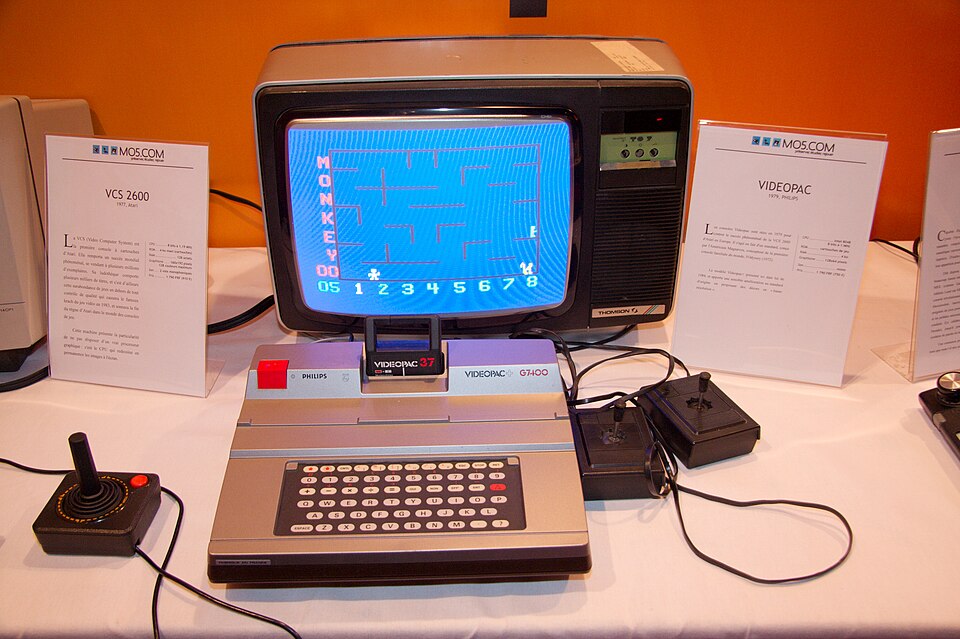
The G7400 limped along for a short time in select regions, sold a handful of enhanced games, and then quietly disappeared. Philips discontinued the system shortly after, and by 1984, the Odyssey line was effectively dead worldwide.
The G7400 and Odyssey³ are fascinating examples if a company trying to evolve a platform while the world leaped into a different technological era. Neither system was incompetent or misguided; they were simply outpaced. The G7400 came at a time when incremental upgrades could no longer compete with full generational leaps. The industry stopped carrying old hardware along for the ride and left it behind.
