

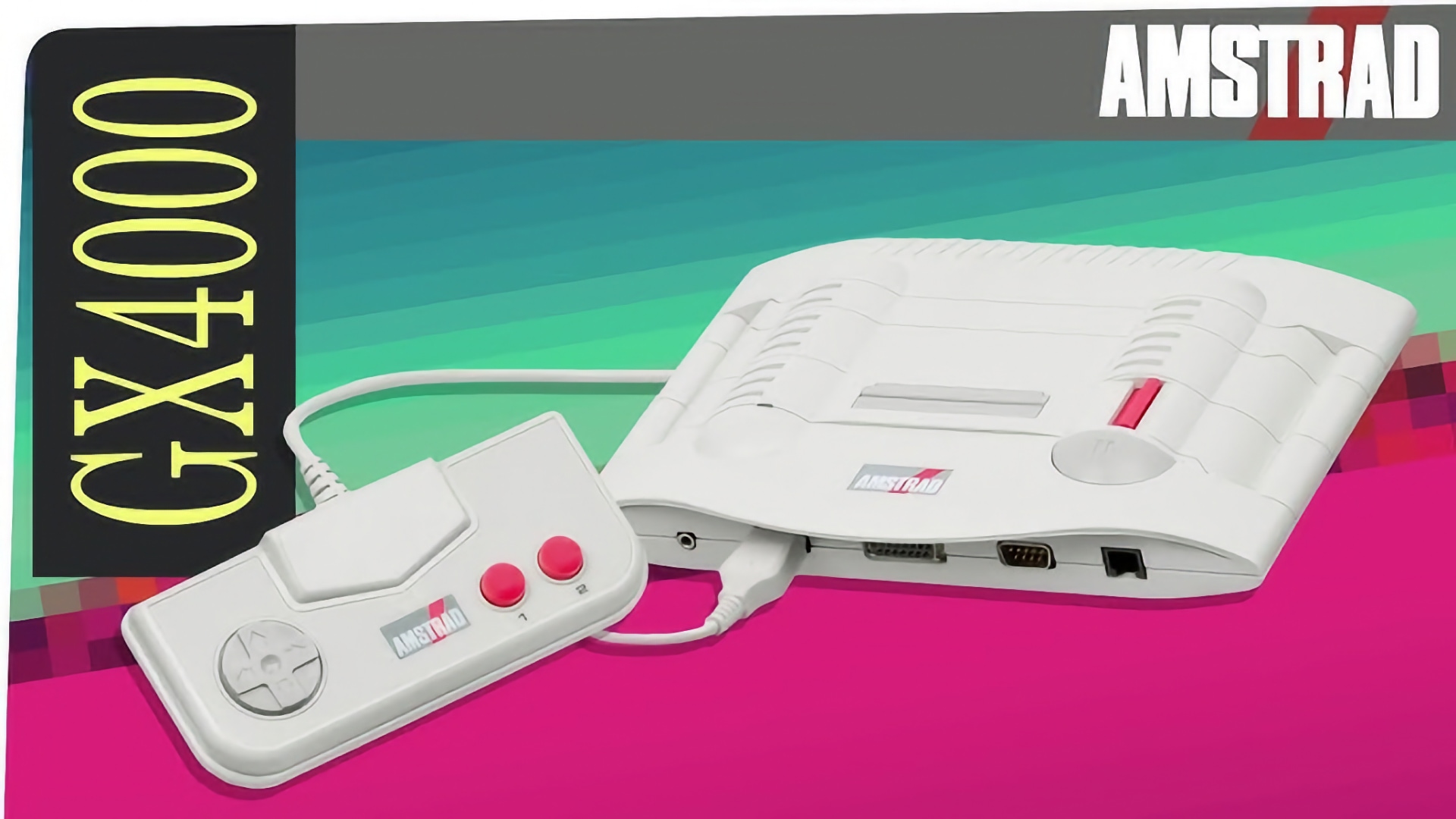
As Sega and Nintendo prepared to usher in the 16-bit age, Amstrad decided to join the console market in 1990 with the GX4000, a sleek white machine that looked like a toy spaceship and performed like an underpowered home computer. It was built to compete with the Genesis and Super Nintendo, but it only ended up competing for space on the clearance shelves.
The GX4000 was based almost entirely on the hardware of the Amstrad CPC Plus computers. Same chipset, graphics, sound, and architecture. This meant the system was cheap to manufacture and easy for Amstrad to support. It also meant the GX4000’s entire identity relied on developers making games that were not just CPC ports with a fancy cartridge label.
Developers did not do that.
In fact, the GX4000’s most famous trait is that it has one of the smallest and most recycled retail libraries in console history. The official count sits somewhere between twenty-five and thirty titles, depending on regional variants. Most of these games are functionally identical to the CPC Plus versions, sometimes bit-for-bit the same, simply reissued as cartridges. The phrase “dedicated library” becomes questionable when the system’s catalog is basically the leftovers from a computer platform that Amstrad had already been selling for years.
There were, however, a few attempts to give the GX4000 something unique. You could call them exclusives, although you would need generous grading. The puzzle game Blue Angel 69 exists only in GX4000 form and never saw a CPC release, and the cartridge version of Dick Tracy differs from its CPC equivalents. The pack in title, Burnin Rubber, is technically a port, but belongs to the GX4000 in a way that elevates it to mascot status. A handful of enhanced titles like Pang, RoboCop 2, and No Exit look better than their CPC ancestors and at least try to justify the hardware.
This left the console with a strange problem: its best games were upgraded CPC ports. Its exclusive games were incredibly few, and its identity became permanently tied to the impression that it had no library at all.
The system itself was not awful. The chassis looked futuristic, the color palette was bright, and the audio capabilities were solid. But hardware cannot survive without software, and the GX4000 launched with a catalog that looked like an afterthought. Within a year, retailers slashed prices, stock vanished, and Amstrad quietly abandoned the console.
What remains is an oddly charming console made of recycled parts. The GX4000 did not fail because it was bad; it failed because it arrived with a library so small that even generous historians have trouble pretending it existed.
