

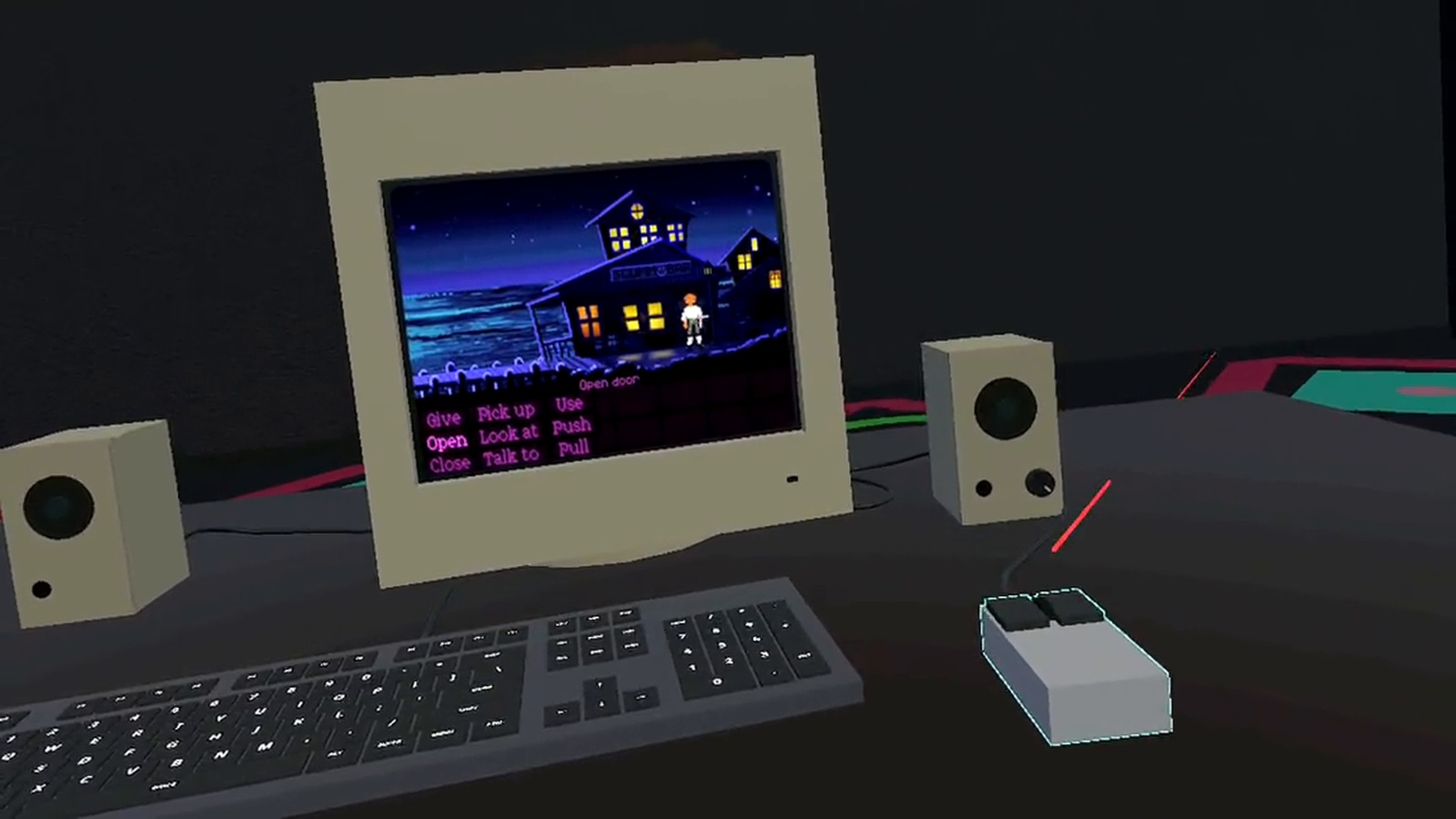
RetroXR’s latest update wants your virtual games room to feel a little more like the real thing, right down to the awkward peripherals. The project’s recent post covers versions 0.12 and 0.13, adding morphing arcade cabinets, optional power simulation and a long list of emulator cores.
The Morphing Arcade Cabinet reads MAME’s hardware information and rebuilds itself around the game you insert. Shooters get guns, racers get steering wheels, and other setups include dance pads, motorbikes, drums, guitars and flight controls. These are approximations of real cabinets rather than exact reproductions, but it is a better fit than asking every arcade game to live in the same generic box.
Cabinets also get an attract mode that plays scraped video until somebody interacts with them. The emulator only starts when you grab a controller, press a button or insert a coin. Then there is the wonderfully unnecessary business of plugging things in. Optional power simulation makes devices depend on adapters, batteries and regional sockets. It is off by default, and rooms without wall outlets still power everything.
Other additions include a working PocketStation memory card and handheld, a four-player Game Boy adapter, the Game Boy Player and a Super Scope. The 32X now passes the Genesis video signal through its proper cable arrangement. Recreating that particular wiring mess in VR is a very specific kind of nostalgia, though whether you can blow on cartridges remains to be seen.
The new core list includes RPCS3, Xenia Edge, Vita3K and several older computer systems, but platform restrictions and performance limits need attention. PS3 and Xbox 360 cores on Quest are offered to try, not as a promise of playable performance; later-generation systems may struggle and netplay remains experimental. RetroXR’s appeal is more personal: building the games room, and the cable drawer, you wish you still had.

Source: RetroXR developer update
