

When I find the time to actually sit back and play some games on my Android handhelds, one of the things that I never really considered was the “power-to-performance” ratio. It’s something that many people talk about when discussing x86 handhelds, specifically with how efficient they are (or aren’t).
However, Android handhelds have reached the point of maturity that the same kind of conversations can be had. And now, we have apps and utilities that go beyond the constraints of what the stock software experience might offer. One such app is ClusterTune, which arrived earlier this year and was “inspired by the Odin 3 underclocking scripts people have been using.”
Essentially, instead of needing to dive into the settings app and run a series of scripts, ClusterTune handles all of that for you with just a few taps. All of this is done without the need for root access, which is something that previous solutions usually required.
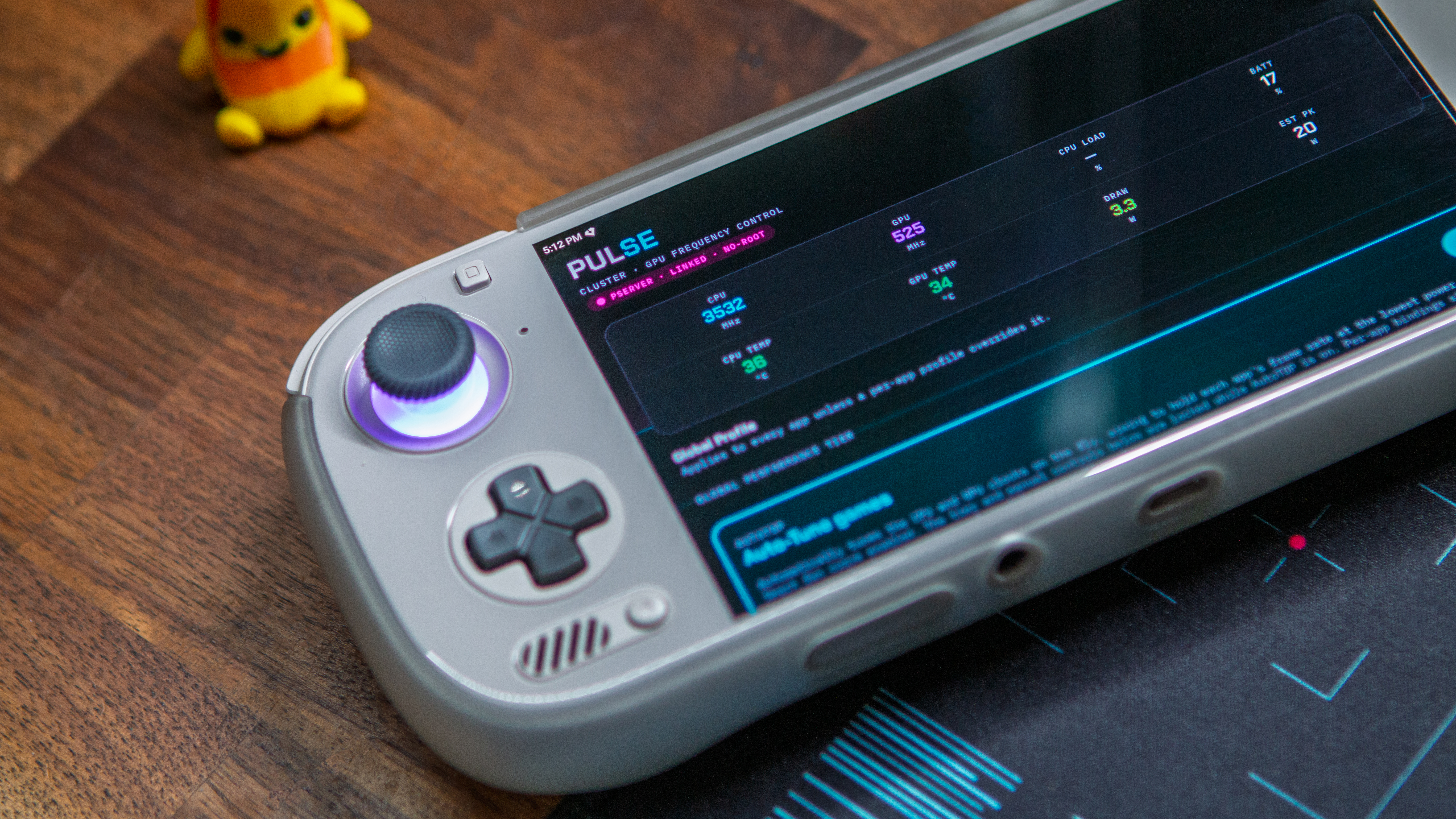
More recently, PULSE from Kei’s Retro Gaming arrived, offering much of the same functionality, but with some rather useful additions. Notably, where PULSE differs from ClusterTune is thanks to the AutoTDP functionality. Here’s the description directly from the GitHub listing:
AutoTDP is a closed-loop controller that auto-tunes your CPU and GPU clocks, in real time, to hold a target FPS at the lowest power possible. Point it at a game, give it a target (e.g. 60), and it does the rest — trimming clocks while frames are smooth, giving them back the instant a scene gets heavy, and learning each game’s floor as it goes.
However, what if you prefer being in control of the performance? Well, PULSE has you covered there too, as you can manually control everything from the performance/power tiers to the prime-core boost limits, and everything in between. There’s even a built-in HUD that will show you all of the pertinent readings, complete with different styles, depending on how much information you want to appear.
The most recent update, version 1.19.5, brings even more goodies to our handhelds, thanks to the new Quick Access bar. Once the update is installed, you’ll need to manually enable this new feature, at which point you can set a button combination to have it appear or disappear. Thanks to a recommendation from Kei, I set PULSE to appear when pressing the back paddles, two buttons that never get used anyway.
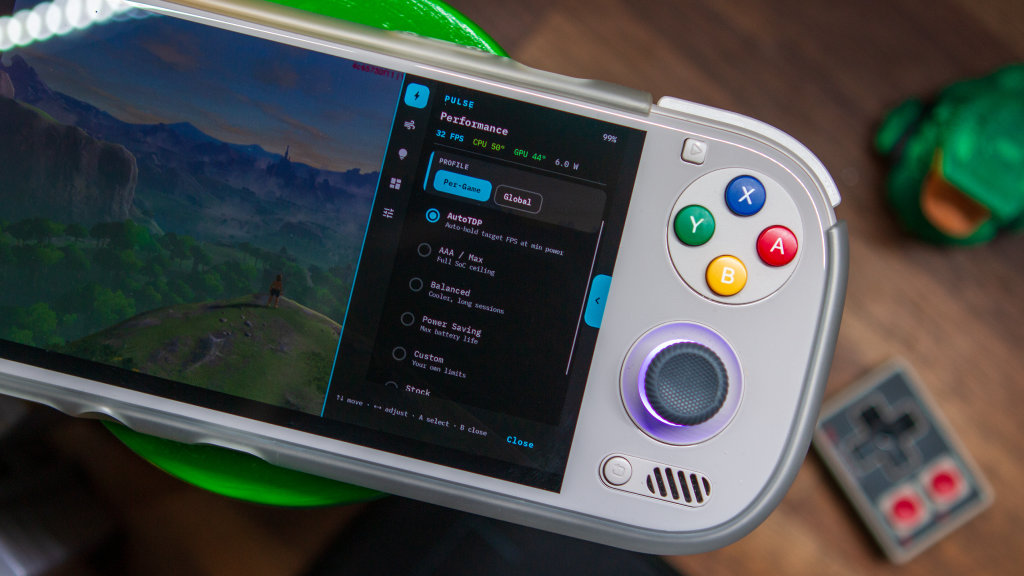
When activated, the QAB gives you the ability to make changes and customize performance “on the fly.” Whenever one of the settings is adjusted, a message appears to let you know, providing confirmation that the tweaks have been applied. It even lets you switch between the various power profiles that can be created within the app, all without skipping a beat.
There are also settings to make use of one of the cooler features of PULSE, which is “Joystick RGB”. When enabled, PULSE will change the color of the joystick LEDs to one of the following:
- Battery info-LED
- Heat info-LED that tracks SoC temperature
- Manual per-stick color picker
While this might not matter to everyone, it’s nice having some type of visualization of how your Android handheld is performing, without needing to pause your game.
As for compatibility, the PULSE app only “officially” supports the AYN Odin 3, Thor, and Retroid Pocket 6. You can definitely try it out on other Android handhelds, but there’s a chance it might not work as advertised due to Qualcomm’s “PServerBinder service” found on AYN and Retroid handhelds.
If you want to take it for a test drive, hit the link below to check it out, and be sure to drop a comment letting us know what you think. Regardless of whether you use ClusterTune or PULSE, it’s pretty awesome to see these kinds of apps even available on our Android handhelds, providing even more functionality than we could have imagined.