

In the mid-1980s, while home gaming was still recovering from the industry crash, RDI Video Systems had a vision of the future. They believed the next great leap in interactive entertainment would not come from cartridges or simple sprites, but from full motion LaserDisc video (an idea eventually revisited by Philips, with a similar level of success), voice recognition, and a computer that talked back like something out of a sci-fi movie.
This vision became the Halcyon, a machine so ambitious it feels less like a console and more like a prop from a Twilight Zone episode. It was designed by Rick Dyer (above, oozing confidence), the mind behind arcade hits Dragon’s Lair and Space Ace, and it promised to bring that same cinematic quality into the living room. The pitch was simple, the console would show animated or live action sequences on LaserDisc, listen to spoken commands and respond with branching storylines.
The reality was that the Halcyon was priced at about $1,600 in 1985, which is roughly $5,000 today. That didn’t include any additional game discs, each of which required their own costly (and cumbersome) LaserDiscs. The system also needed a player compatible with its control interface, adding even more to the total investment. The barrier to entry was so high that only a tiny number of units were even produced.
Officially, only two games were completed. The first was Thayer’s Quest, a port of the LaserDisc RPG Dyer had previously built for arcades. The second was NFL Football, a live action story simulation where players gave voice commands to control plays. Several more titles were announced, including a horror game called Orpheus, but none reached market. In practice, the Halcyon stands as a console with a catalog smaller than some plug and play toys.
Voice recognition was another problem. The system relied on 1980s-era speech processing, which was notoriously inaccurate. The console required careful microphone positioning and quiet rooms, and even then it typically failed to understand simple commands. The idea was visionary, but the technology was not remotely ready.
Within a year, RDI was in financial collapse. The Halcyon never saw a wide release, and most surviving units are prototypes or pre-production builds that never reached retail. The company folded, and the system passed into legend, remembered mostly through magazine advertisements and trade show demonstrations.

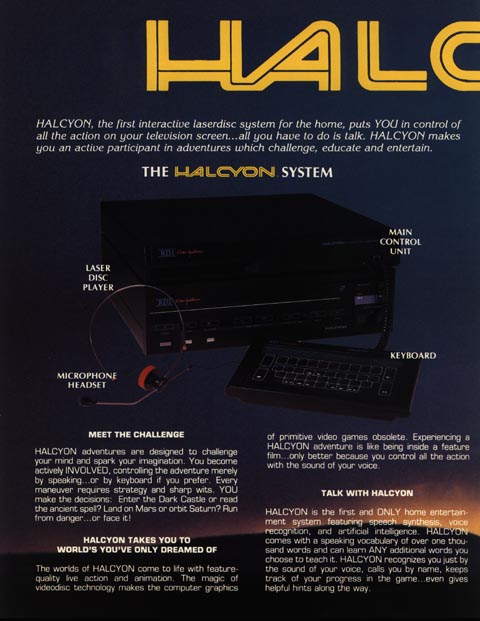
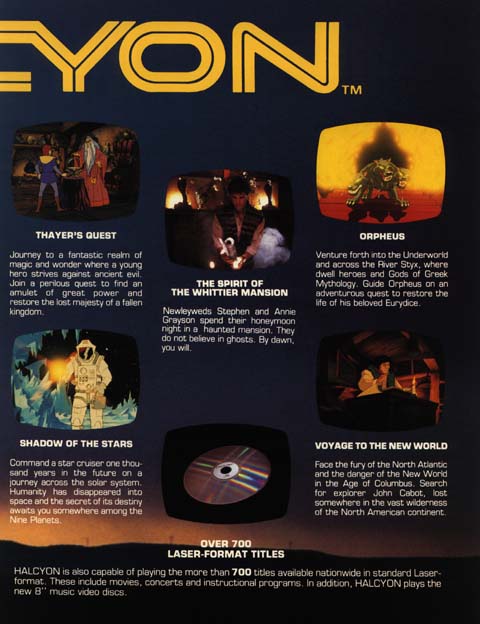
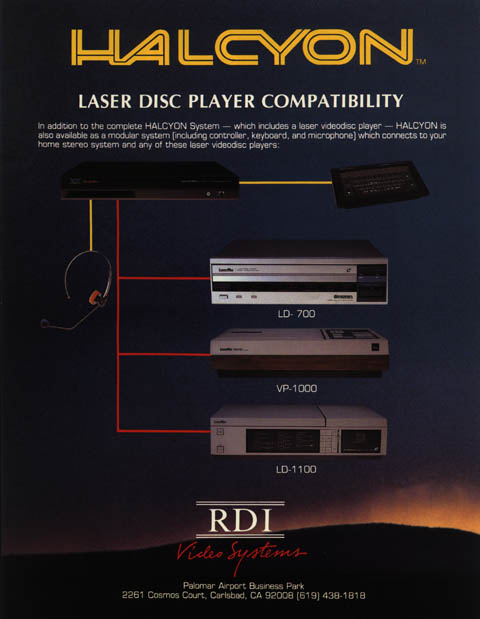
Today, the Halcyon occupies a tiny but important blip in gaming history. It captured the moment when developers believed cinema could merge with traditional gameplay, creating a new medium that felt closer to interactive film than arcade action. It was bold, wildly expensive and doomed from the jump.
Ultimately, the RDI Halcyon aimed for the future and overshot by a decade. Its ideas eventually resurfaced in modern FMV games and voice controlled systems, but the world of 1985 was not ready for a talking LaserDisc console. It was too early, too ambitious and too costly to survive.
What did you think of this article? Let us know in the comments below, and chat with us in our Discord!
This page may contain affiliate links, by purchasing something through a link, Retro Handhelds may earn a small commission on the sale at no additional cost to you.
